Page 92 of 116

Daniel Boyarin

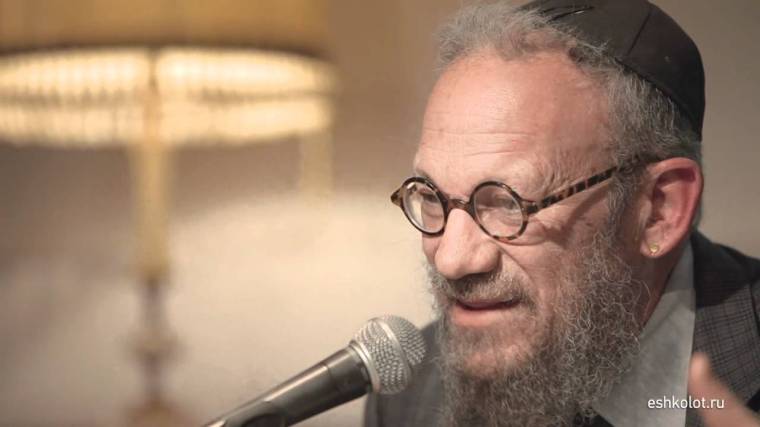
I’m working on the final chapters of a book for Baker Academic Press, An Early High Christology: Paul, the Lord Jesus and the Scriptures of Israel. It should come out in fall 2017.  Along the way I’ve come across Daniel Boyarin’s book The Jewish Gospels: The Story of the Jewish Christ (New York: The New Press, 2012).  Boyarin is a well known Talmudic scholar, a professor at University of California, Berkley. Daniel Boyarin
Boyarin makes a cogent case that for the first few centuries (AD or CE, if you prefer), the situation between Jews and Christians was complicated.  There were Jewish Jesus-followers who kept kosher and non-Jewish Jesus-followers who did not.  These seemed to exist more or less side-by-side in churches and synagogues up until the Council of Nicea (AD 325).  In important ways this was a time before the parting of the ways had occurred, and Judaism and Christianity were not distinguishable religions. In fact, Boyarin argues, the whole notion of what a religion is or is not is modern not ancient one.  In particular, movements were not set apart by checklists of beliefs or confessions as they are now.  Jewishness was then as it is now an amalgamation of ethnicity and practices.  As many scholars have argued, religious movements were distinguished by their practices more so than their beliefs.

Some Jews of the second temple period, Boyarin thinks, were expecting a second divine figure to be incarnated as a human.  He knows of course that this is a controversial statement but he goes about working through biblical and extra-biblical texts to make the case.

Christology, that is,  thoughts and ideas about Jesus’ significance, is first of all a “Jewish discourse” before it becomes an anti-Jewish discourse (p. 6).  Many Jews apparently accepted Jesus as God because they were awaiting a divine Messiah to come to earth in human form (incarnation).  Some of those Jews, predisposed as they were to these beliefs,  went on to accept Jesus as that divine figure.  Others said, “Not so fast” because they didn’t think this particular, unremarkable Jew fit the bill.

Boyarin’s entire project calls into question those interpreters, like Bart Ehrman and Maurice Casey, who think Jesus was a Jewish prophet who is exalted and came to be regarded as divine “in some sense.”  This escalation of Jesus from human to divine status took place, according to some scholars, outside Judaism where the constraints of monotheism were no longer viable. Boyarin regards Christology as a Jewish conversation through and through.

Boyarin’s book is worth a read.  I find myself in broad agreement with him about many aspects of the origins of Christianity.  For example, he challenges the accepted notion that the title “Son of Man” is a reference to Jesus’ humanity while “Son of God” refers to his deity.  I have for years contended the opposite.  The “Son of Man” designation links Jesus to  Daniel’s vision (ch. 7) of a heavenly figure who comes upon the clouds (a clear, theophanic description) and is granted an everlasting kingdom.  So “Son of Man” is actually a divine not human title (I’m aware of the debate whether “the Son of Man” is a title: I’m not arguing that here).  “Son of God” is originally a designation of the royal Davidic King (2 Sam 7:12-16; Ps 2:7; 4QFlorilegium), and therefore a human not a divine figure.  There are many other points of agreement I have with him.  What  I am not yet convinced that the belief in a divine-Messiah actually precedes Christianity.  What do you think?

Marcion the Making of a Heretic

I chair an SBL group called “The Extent of Theological Diversity in Earliest Christianity.”  This fall when we meet in San Antonio (November 2016), one of our sessions will be dedicated to a review of Judith Lieu’s new book, Marcion the Making of a Heretic: God and Scripture in the Second Century (Cambridge University Press, 2015).  Lieu offers one of the most comprehensive accounts of his controversial life and influence.  Marcion was the arch-heretic of his day. Most of what we know about Marcion comes from opponents such as Justin Martyr, Irenaeus, Tertullian and Origen.

Marcion was one of the most prominent figures of the second century.  His teachings about God, Jesus, creation, and Scripture caused his detractors to define clearly what they considered the right teaching and practices ought to be.

If you are in San Antonio this fall, come and join us.

. Marcion Making of a Heretic

Women in Ministry

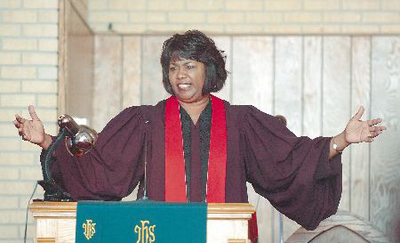
One of the issues which continues to trip up modern evangelical Christians is the role of women in ministry.  The school where I teach, Houston Graduate School of Theology, actively affirms women in all ministry roles.  woman minister

Recently, however, I took a group of students to a seminary retreat in north Texas.  While there, one of our female students encountered a young man who insisted that women’s roles in ministry should be limited.  Based upon his reading of a few biblical texts, he criticized any attempt for women to take roles as pastors, elders or leaders of churches or para-church groups for that matter.  My student came back confused about the whole matter.

A friend recently sent me a link to a site in Australia which lays out key quotations from various evangelical scholars on women in ministry.  Some of theses scholars are still with us.  Others have fallen asleep in Jesus (to borrow Paul’s phrase).  Their insights and conclusions are well worth considering.

Here is that link:

http://newlife.id.au/equality-and-gender-issues/prominent-biblical-scholars-on-women-in-ministry/

The Wife of Jesus

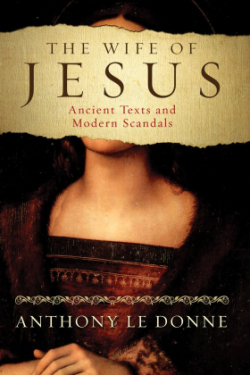
Anthony Le Donne is a young scholar who has tackled some tough subjects.  In this particular book he addresses the question recently on a lot of minds: Was Jesus married?  The book is entitled: The Wife of Jesus: Ancient Texts and Modern Scandals.  It is published by Oneworld Publications in London.  The first copyright is 2013 so I’m a bit late telling you about it.wife-of-jesus

Although the question whether Jesus was married has been around a long time, Dan Brown’s The Da Vinci Code certainly kindled everyone’s imagination.  If you’re prone to sensational readings of history and wish to see conspiracies under every rock, then Brown is your guy.  More recently ,the announcement and publication of the badly named Gospel of Jesus’ Wife made it a matter of scholarly concern.  I’ll have more to say about that later, but what Le Donne has done is to take a controversial subject and make sense out of it historically and socially.  Perceptively, he notes that the modern response to the question—whether excitement or repulsion—has more to say about us than it does the historical Jesus.  In many ways the question of whether Jesus was married and how we respond to it provide a mirror of ourselves and our times.  In the final chapter he writes: “This book, in large part, has been about ancient and modern attempts to project sexual identities onto Jesus” (p. 147).

Le Donne examines a wide variety of texts from the ancient world,  accounts about the asceticism of John the Immerser in the NT Gospels to non-canonical accounts which some people take to describe an intimate relationship between Jesus and Mary Magdalene in the Gospel of Philip.  Le Donne reads widely in Greek and Jewish sources contemporaneous with Jesus and in the first half of the Christian century.  He seems to be able to argue for it—yes, it is likely Jesus was married as was typical of most Jewish men­—and against it­—no, there is no solid historical evidence he was married.  As a historian, Le Donne knows the difficulty of arguing from the general to the particular.  What is true of most people is not necessarily true of a particular person.   Though most Jewish men married between the ages of 20 and 30, not everyone did.  There was already an impulse toward asceticism and self- denial in Jesus’ day.  John the Immerser and the desert covenanters of Qumran appear to offer contemporaneous examples.

Le Donne offers a helpful construct for what was typical of Jewish males in the first century.  The term he uses is “civic masculinity”; it represents the gender role most Jewish men would play in their day.  It would include things like marriage and having children, working a trade and taking responsibility for one’s economic well-being, passing the faith along, seeking to own and work the land, etc.  Jesus, according to Le Donne, may have been raised to accept this role, but he may have subverted it in his public ministry.  Jesus , he says, “invested in the two-sided coin of economic disobligation and celibacy.”  Such a lifestyle was probably considered “crazy” by ancient standards and “anti-family” by modern.

Mark Goodacre, NT Professor at Duke University, says it well: Le Donne’s book is “a crystal-clear, compelling yet historically robust account of what we can and can’t know about the wife of Jesus.”

Kyrios Christos Centenary Publication

I’m reblogging a post from my friend, Larry Hurtado. If you are interested in studies in Christology, you need to check out this volume of Early Christianity. It is dedicated to Wilhelm Bousset’s classic volume KYRIOS CHRISTOS published over 100 years ago.

larryhurtado's avatarLarry Hurtado's Blog

The latest issue of the journal Early Christianity (vol. 6, no. 1, 2015) is given to several articles assessing Wilhelm Bousset’s classic work, Kyrios Christos (1913; English trans. of the 5th edition 1970; new edition of the English trans. Baylor University Press, 2013).  The articles derive from a special session held in the annual meeting of the Society of Biblical Literature in 2013.  Here is the table of contents:

David Capes, “Introduction:  A Centenary Celebration of Bousset’s Kyrios Christos” (3-4)

Cilliers Breytenbach, “Bousset’s Kyrios Christos:  Imperfections of a Benchmark” (5-16)

Larry W. Hurtado, “Wilhelm Bousset’s Kyrios Christos:  An Appreciative and Critical Assessment” (17-29)

Kelly Coblentz Bautch, “Kyrios Christos in the Light of Twenty-First Century Perspectives on Second-Temple Judaism” (30-50)

Lutz Doering, “Wilhelm Bousset’s Die Religion des Judentums im neutestamentlichen Zeitalter” (51-66).  (This article actually focuses on another of Bousset’s major works, which continued to be used, especially…

View original post 224 more words