First appeared in print in Christianity Today, December 2018, under the Title “Prepare for the ‘Day of the Lord'” (p. 76)
Matthew Aernie & Donald Hartley. The Righteous & Merciful Judge: The Day of the Lord in the Life and Theology of Paul. Studies in Scripture & Biblical Theology. Bellingham, WA: Lexham Press, 2018.
These days it is out of fashion to talk about judging and judgment. Ours is a much more “tolerant” day—or so we’re told. But as our authors, Aernie & Hartley, correctly describe, throughout the counsel of Scripture the idea of God coming in judgment to right all wrongs and settle all scores is at the heart of God’s revelation. Yet the specter of Marcionism is still with us in the church especially when we divide the Scriptures into parts and imagine that the first is dominated by justice and wrath, the second by mercy and grace. As our writers point out, such mischaracterizations undermine the unity of Scripture and subverts the true story of God in the world. Some of the most wonderful passages of forgiveness, restoration, and grace are found in the Old; some of the most unsettling about justice, wrath, and judgment are found in the New. 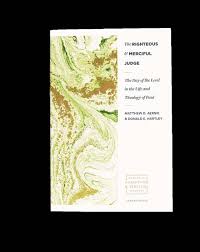
The project Aernie and Hartley pursue in this book is to consider the theme of “the day of the Lord” in Paul’s letters. They argue that it is not some subsidiary crater to Paul’s theology, but it stands as a major motif in his thinking. They stop short of calling it the center, but they do make it central by arguing that “every aspect of his theology was in some way affected by the concept” (p. 5) So their book examines the theme of “the day of the Lord: in scholarship, the Old Testament, extracanonical Jewish literature, Paul’s call/conversion on the Damascus Road, and the language of the day of the Lord and associated themes in Paul’s letters. As a result, they shed much needed light on an ignored and marginalized feature of Paul’s theology.
Like most scholars Aernie and Hartley pursue their task systematically working through time, asking first: where this concept came from? But, of course, scholars don’t tend to agree on much and that includes how and where the notion of “the day of the Lord” entered into Jewish consciousness. Some think it came from the holy war tradition; others from enthronement ceremonies when YHWH is installed as King. Some think it came from within Israel itself; others imagine it was adopted and adapted from the Canaanites or the Babylonians. The starting point remains elusive. What is clear is that the OT is rich in associations around the notion that God will visit the nations, including Israel, in judgment, power, and restoration.
While the phrase “the day of the LORD” is not found in the Books of Moses, our authors claim the theme sits just beneath the surface in passages that portray YHWH as coming to visit his people in blessings and curses. The prophets developed the language of God’s visitation into the language we know, “the day of the LORD.” Only later, among the prophets does the phrase “the day of the LORD” become a technical term for a day of final judgment. As such, depending on how a people are currently situated toward YHWH—whether faithful to the covenant or not—it is a day that prompts fear or a day awaited with joy.
In the past, periods of famine, scarcity, war and ultimately exile could be construed as “days” of judgement in typological patterns of what is to come: the final, definitive, eschatological day of the Lord. When that day comes, God will make the world right. In the final assize of history anything wrong in Israel or the nations must be judged. All that is right is destined to be redeemed and restored. These patterns are found throughout the Hebrew Scriptures but they are also present in later Jewish collections such as the Pseudepigrapha and the Dead Sea Scrolls. This was the symbolic world that Paul inherited.
One of the more interesting features of the book is how Aernie and Hartley interpret Paul’s Damascus Christophany as “a proleptic day of the Lord.” In other words, Paul had his own day of judgment when he encountered the risen Lord. Instead of getting what he deserved, i.e., wrath, he found mercy. Instead of being marked out for destruction, he was transformed, converted, and called to a new mission. In this encounter the persecutor replaced the false identity of Jesus he had developed for the true identity as Messiah, Son of God, and Lord. Now that the moment of Paul’s own judgment had arrived and he had found grace, he began to think that the final judgment for all was closer than he ever imagined.
The last portion of the book goes deeply into Paul’s language associated with “the day of the Lord.” For Paul, “the day of the Lord (YHWH)” had become “the day of the Lord Jesus Christ” (1 Thess 5.2) or more simply “the day of Christ” (Phil 1.10). Words of coming (Parousia), “revelation” (apocalypsis), and “appearing” or “manifestation” (epiphania) season his discourse as he likens the coming of Jesus to judge the living and dead to various manifestations of God in the Scripture. The final chapter offers the most detailed exegesis in the book.
The big idea Aernie and Hartley pursue offers an important corrective for the academy and the church. The current western mood is to avoid anything that smacks of judgment. We want a merciful, forgiving, anything-goes kind of god, not one who demands something of us and will ultimately judge us. We cannot adequately deal with Paul’s life, mission and theology until we grasp where he believed the telos toward which history was moving. The next thing we await is the final, definitive coming of Christ in glory, power, and judgment.


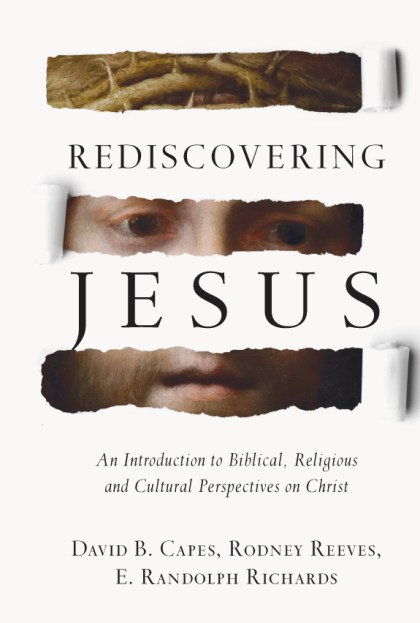 agent whose task is to liberate the world from evil, oppression, sin, sickness, and death. The world that Jesus enters is hostile and contrary to the human race. The Messiah appears in order to claim all that God has made on behalf of heaven. In Mark’s account Jesus moves quickly along “the way” challenging and disrupting demonic powers, disease, religious authorities, storms and, ultimately, the power of Rome itself.
 A Word in Edgewise
You must be logged in to post a comment.