Jesus and the Easter Bunny
Last year I wrote a article for the E3 Foundation on Easter bunny and Jesus. Here is a link. Just in case you are interested.
I found some things I had not expected.

Thoughts on the New Testament . . . and Other Stuff by David B Capes
Last year I wrote a article for the E3 Foundation on Easter bunny and Jesus. Here is a link. Just in case you are interested.
I found some things I had not expected.
Recently I sat down with N. T. Wright, Research Professor for New Testament and Early Christianity at the University of St. Andrews.
Me:
Professor Wright, I tell my students that every good book, every important book has a “big idea.” What is the “big idea” behind your book, Paul and the Faithfulness of God (Fortress 2013)?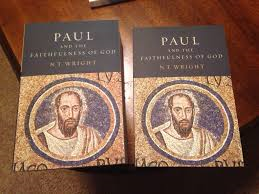
Wright:
The big idea is to see how Paul does something which I think he is not usually given credit for, which is that he basically invents something which in hindsight we could call Christian theology. Now that may seem rather odd, because didn’t the Jews have theology? Well they did and they didn’t. Didn’t the pagans have theology? Well not really. They talked about the gods but that wasn’t a big topic of analysis. Paul has this vision that because of who Jesus is, because who the Holy Spirit is, everything that they had known about God as in the Jewish Scriptures has to be reworked from top to bottom, particularly for this reason: that Paul believes that what has happened through Jesus, his death and resurrection has radically defined the people of God so that the people of God are no longer defined as they were in Israel by circumcision and the Sabbath and the food laws and the things which marked out Jewish people from their non-Jewish neighbors. So if you are going to have a community which is a single community which is very important for Paul, the unity of the church is very, very important for Paul–not for us and that’s a problem by the way but a topic for another conversation. If this community is to be united and holy but without those markers to keep it place, how are you going to do that when Paul’s answer is that the whole community needs to be involved in this prayerful, worshipful, Scripture-soaked reflection on who God is, who God’s people are, and what God’s future is for God’s world. So in a sense this book is about Pauline theology and I expound all the details of Pauline theology, but back of that is this sense that Pauline theology as a whole is something which he is doing with his congregations because he realizes that without that they are not going to be able to be the people they are called to be.
They way I put it is this. You know this saying: “Give someone a fish and you feed him for a day. Teach him to fish and you feed him for life.” Paul isn’t content just to give people dogmas: “Here is a true doctrine which you ought to believe.” He does that and that will help for a while. What he wants people to do is to grow up in their thinking, to mature as Christians in their thinking, so that then they will be able to sustain their life and the life of the church in days to come because he won’t always be just to tell them: “believe this, don’t do that, whatever.” So teaching people to think Christianly which then emerges as Christian theology. That is the heart of it.
I am fortunate to be chair of an SBL Program Unit called: “The Extent of Theological Diversity in Earliest Christianity.”
Here is our description as listed on the SBL site:
Description: Focusing on the evidence for Jesus’ death and resurrection as a narrative used to shape the identity of emergent communities, and on the alternatives to this narrative preserved in early Christian sources, this Consultation explores the origin, nature and extent of theological diversity in earliest Christianity from the beginnings until approximately 180 CE. By fostering a conversation involving the testing of various reconstructions of early Christian history against the range of relevant evidence, the unit seeks to bring greater precision to the study of “orthodoxy and heresy in early Christianity.”
This fall one of the two sessions we will sponsor seeks to address the question: “How Did Jesus Become God?” Bart Ehrman has written a book on the topic and it will be published in March 2014 by HarperCollins. Here is the full title: How Jesus Became God: The Exaltation of a Jewish Preacher from Galilee. Ehrman has agreed to let us offer a session in review of his book. We are in the process of putting together the panelists for the review session. Ehrman will give a response to his reviewers. I haven’t seen the book yet. I am still waiting for my advance copy.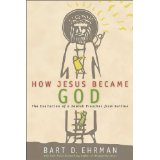
Ironically, a daughter company of HarperCollins, Zondervan, commissioned a book in response which is scheduled to be published this spring as well. Michael Bird pulled together a group of contributors to “answer” Ehrman’s historical reconstruction. Other than himself these include Simon Gathercole, Chris Tilling, Craig Evans, and Charles Hill. Zondervan will release the book this March as well under the title: How God Became Jesus: The Real Origins of Belief in Jesus’ Divine Nature—A Response to Bart Ehrman. Apparently HarperCollins shared the electronic manuscript of Ehrman’s book with Zondervan in order to provide—what can only be described as—a timely response. I’d be interested in how all of this happened. If you compare the front covers of each book, you can see how similar they are. 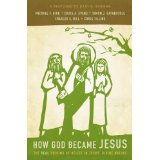
Needless to say this promises to be a great conversation over an important and controversial topic.
Here are some of the people we are talking with about being on the panel. I’ll announce the final panel in about a month:
Bart Ehrman, University of North Carolina, Chapel Hill
Larry Hurtado, University of Edinburgh
Dale Martin, Yale University
Michael Bird, Ridley Melbourne College
James McGrath, Butler University
Craig Evans, Acadia Divinity College
If you are planning on being at SBL in San Diego in November 2014, be sure to look up our group and join us for the dialogue.
Recently someone asked me this question: Did Jesus offer sacrifices at the Jerusalem temple? I thought it was a great question so I thought I’d attempt to address it. Now to answer it properly would take more time and space than I have, but let me at least point toward an answer. The question is a historical question not one based on any particular theological agenda. How likely is it that Jesus of Nazareth would have made pilgrimage to the temple and offered a sacrifice or sacrifices there? 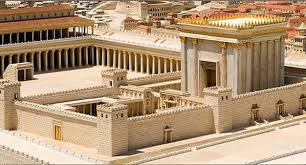
Now the Gospels make it clear that Jesus did go the temple on occasion as a child and as an adult, but there is no account of Jesus himself actually offering a sacrifice at the temple. That may not mean that Jesus did not offer a sacrifice while there.
Now the main activity of the temple was sacrifice. That is why there were 24 courses of priests. Technically, only priests offered sacrifices but the sacrifices were provided by worshipers, usually male head of households. The worshipers brought the sacrifices (animals, wine, grain, etc) to the prescribed place and handed them over to the priests.
The temple was a busy place. According to the law, the sacrificial system had been established by God; it was therefore good (Psalm 119). Even if some of the prophets had railed against empty ritual and ethical lapses, they did not condemn the temple itself and sacrifices wholesale (e.g., Amos 5:21-27). Almost universally, it was the temple leadership who got an earful from the Jerusalem prophets. But we must remember that not all sacrifices were “sin” or “guilt” offerings. Many sacrifices were for peace offerings, fellowship offerings, votive offerings, offerings of consecration.
Let’s consider a few episodes from the New Testament and see if they shed any light on our question.
After Jesus is born and the time of Mary’s menstrual impurity had run its course, Luke reports that Mary and Joseph took the baby Jesus to Jerusalem to present him to the Lord at the temple. This was in keeping with Mosaic law (Leviticus 12.6-8). We’re told they offered a sacrifice in accordance with the law, a pair of two young pigeons (Lev 5.11).
When Jesus healed the leper (Mark 1:40-45), he instructed him to go to the priest and offer for his cleansing what Moses commanded (Leviticus 14:1-32). The declaration that a leper was cleansed involved sacrifices in the temple. Would Jesus have directed the man to go to the temple and sacrifice if he was teaching his disciples to neglect the temple worship completely?
And there is the matter of the temple tax (Matthew 17:24-27). The tax collectors seek out Jesus and his disciples in Capernaum. They appear to frame the question as if they expected Jesus to somehow object. Perhaps Jesus’ teachings and actions had aroused their suspicions. But Peter lets them know in no uncertain terms that did pay the temple tax. The tax is described in Exodus 30:11-16 as a half a shekel “a contribution to the LORD.” When Peter approached Jesus at home, Jesus appears to claim exemption; but in order not to make waves Jesus instructs Peter to go fishing. And when he does he catches a fish that had swallowed a coin worth enough to pay the annual temple tax for both of them. The temple tax was used for the upkeep of the temple which included the sacrifices. 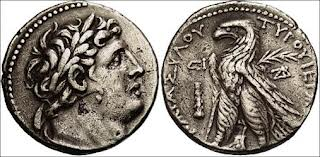
Then, there is the Last Supper which many consider a Passover meal (though there are debates about it). John, for example, has Jesus crucified on the day of preparation for the Passover (19:31). But there may have been calendrical debates going on at the time because Mark (14:12-25) and the Synoptics present it as a Passover meal. Jesus sends two of his disciples into the city to make preparations which likely included securing a place for the meal and securing the food itself which would have included the lamb from the temple. Even if Jesus himself did not sacrifice in the temple, he had others do it for him. This suggests he had no argument in principle with the sacrifices.
But what about the temple incident (Mark 11:15-19 and par.)? I’ve written about that elsewhere. As a prophet, Jesus is enacting (God’s) judgment upon the temple and predicting its destruction. An event which happens in AD 70. Essentially, the operation of the temple had become robbery under the temple authorities, and the place where the Gentiles were allowed to gather and worship was overrun by animals and merchants. The sanctity of the temple and its purpose had been lost. The problem was not the sacrifices themselves—they had been set up and ordained by God—the problem was with those who superintended the temple.
So what are we to make of this? In the end I see no reason to deny that Jesus like any good Jew of his day would have made pilgrimages to the temple and offered sacrifices there. Based on Hebrews some may wish to conclude that Jesus did not offered sin sacrifices, but there were other ranks of offerings and sacrifices which the righteous Jew could and should make at the temple.
Finally, when opponents accused Jesus of trying to abolish the law and the prophets (Matthew 5:17), he claims boldly he comes to fulfill them not to neglect or abolish them. Nothing could be more central to the law than the sacrifices.
Epiphany was January 6th. It marked the end of the Christmas season. Between Christmas day and Epiphany are the 12 days of Christmas, which most know these days through the English carol.
The word “epiphany” comes from the Greek; it means “manifestation” or “appearance.” It was used primarily in religious texts to describe the appearance of a god. Essentially, Epiphany as a holy-day is the celebration that God has become a human being in Jesus of Nazareth. In the west the holiday is commonly associated with the arrival of the wise men to see the baby Jesus. In the east Christians link Epiphany to the baptism of Jesus in the Jordan by John the Immerser. You may recall the heavenly voice said as Jesus came up from the water, “This is my Son whom I love, with him I am well pleased” (Matthew 3:17). In baptism God’s Son is revealed to the world.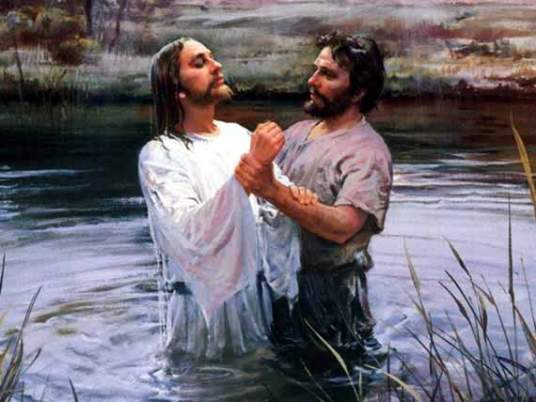
When you read the Gospels, it is clear that John’s baptism is about repentance and the forgiveness of sins. So the question arises: Why did Jesus need to repent? Or what sin was Jesus guilty of that he needed to be forgiven? In Matthew ‘s account of Jesus’ baptism we are told that John finds Jesus’ request to be baptized puzzling for he demurs and says “I need to be cleansed by You. Why do You come to me?” (Matthew 3:13-14). But Jesus convinces John to superintend his baptism.
So why was Jesus’ baptized? The rest of the New Testament and Christian tradition claim that Jesus was without sin so he had no need to repent—in the traditional sense of the word—and be forgiven.
Let me suggest several reasons why Jesus went to John and insisted that the prophet dip him in the Jordan River. First, Jesus wanted to identify with John. When Jesus heard what John was doing in the desert—calling people to change their ways and announcing the arrival of the kingdom of God—the Nazarene wanted to be there, to drink it all in, for he sensed in his spirit that it may be his time. Second, Jesus wanted to identify with the women and men who were coming to John in repentance and faith. These were the “poor in spirit” Jesus would declared “blessed” in his Sermon on the Mount. Put another way, Jesus wanted to identify with sinners. Later, as controversies increase around him, he will be criticized for being a friend of sinners. Third, Jesus’ baptism marks a turning point in his life. The word translated “repentance” in most Bible translations means “a change of mind” (metanoia). Now a true change of mind is always accompanied by a corresponding change of behavior. After his baptism everything changes for Jesus. He will leave behind the carpenter shop to become an itinerant preacher and healer. He will leave behind his home in Nazareth to set up his headquarters in Capernaum. He will leave behind a private life and become a most public person. Jesus’ baptism is the turning point of his life. Fourth, Jesus’ baptism foreshadows his coming death, burial, and resurrection. Now I must admit that this last reason is more speculative, but it is certainly consistent with the story as it unfolds in the Gospel. When Jesus submits to John’s baptism, because of who he is—God’s Son, the Anointed One–he gives baptism an entirely new focus. Those who follow Jesus in baptism will do so as an act of initiation into the Christian faith; through baptism they participate in Christ’s life, death, and resurrection (Roman 6). For Christ-believers baptism is the start of their new life; it is the turning point of their lives just as it was for Jesus.
There could be no better way to close out the Christmas season than with the baptism of new believers. I know many churches wait until Easter to baptize, but it makes sense for churches to follow the rhythm of the Church calendar and celebrate Jesus’ baptism and his revelation to the world by participating in the events celebrated at Epiphany.


You must be logged in to post a comment.