Page 99 of 116

Teaching the Didache (The Teaching of ‘the Twelve’)

Not long ago I taught a brief series at Christ the King Lutheran Church on the Didache, an early Christian manual on ethics, practices, leadership and eschatology.  Most scholars date it to the end of the first or beginning of the second century AD. A Greek manuscript of it—dating to about 1073 AD—was  discovered by accident in a library in Constantinople by Philotheos Bryennios in 1873 (Have you noticed how some of the best stuff is discovered by accident?  The Dead Sea Scrolls.  The Nag Hammadi library.  Chocolate mixed with peanut butter.)  The Didache was published about a decade later.  Some early church leaders wanted to include it the New Testament but Eusebius (Ecclesiastical History 3.25.1-7) reckons it among the spurious documents.Christ the King Lutheran Church
There are four essential questions which this early Christian document addresses:

  1. How are we/ Christians to live?
  2. What are our essential practices?
  3. Who is to lead us?
  4. How will all of this end?

The Didache begins with the doctrine of the two ways, a Jewish way of instruction which goes back to Deuteronomy 30.  There are two ways: the way of life and the way of death.  The way of life (according to Deuteronomy) is to know what God says and observe it.  Obedience leads to life, blessing and prosperity.  Disobedience leads to destruction, “curse,” and adversity.  Jesus adopts the same teaching in his parable of the wise and foolish men who built their houses on the rock and sand, respectively.  Didache adopts this Jewish theme and makes it part of its instruction—probably to baptismal candidates.  In fact, there is very little “Christian” about the Didache‘s first six chapters.  It is not until you get to baptism and Eucharist that the true Christian identity of the document emerges.  Some people see it as Jewish ethical instruction slightly Christianized.  That is a fair characterization at least in the first six chapters.

I like this little Christian document for many reasons.  First, as a historian of early Christianity it is primary evidence for how Christ-followers are organizing their common life: what they believe, how they behave, how they conduct their gatherings, and how they deal with traveling and resident leaders.  Second, the Greek of the Didache is easy enough that a second year Greek student can usually translate it with a dictionary in hand.  There are a lot of unique words, especially among the lists of virtues and vices.  Third, and this is related to the first, the Didache and other books of the Apostolic Fathers are some of the first commentators on the New Testament.  They speak the Greek language.  They share a common cultural situation with the later apostles and second to third generation of believers.  So how they read the NT is probably closer than we who read it in a post-Reformation, post-Enlightenment, post-colonial, post- Holocaust world.  In other words, the fathers have much to teach us if we will just spend some time with them. Lake Apostolic Fathers
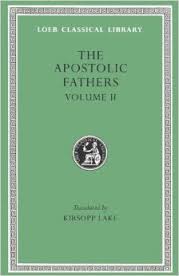
There are plenty of versions available, free-online.  A classic translation was done by Kirsopp Lake in the Loeb Classical Series.  He translated it in the early 1910s so it sounds at times like the King James Bible.  The version I use now is a translation of all the Apostolic Fathers by Michael Holmes published by the Society of Biblical Literature.  Over time I hope to come back and comment further on this early Christian document.  In the meantime, why not take some time, look it up and read it.  It is brief.  You can probably read through Didache in 15-20 minutes.

Thanks to Bob Moore (pastor), Karin Liebster (co-pastor) and Matthias Henze (professor at Rice University) for the opportunity to teach through the text.  I look forward to going back and teaching another of the Apostolic Fathers or coming to teach the Didache at a church near you!

In the Future Universities Will Not Need Libraries

Recently I heard a college administrator say that in 15-20 years we will not recognize higher education.  He may be correct.  Given the number of changes in the past ten years and the kind of changes that are coming, how colleges and universities educate those who matriculate is likely to shift in ways we cannot now imagine.  As an analogy consider this: who could have imagined 20 years ago that in our hands we can hold a device that links us to the Internet and nearly every person on the planet (those with technology)?  The computing power in each smart phone was unthinkable 20 years ago.

The Lanier Theological Library's Main Hall
The Lanier Theological Library’s Main Hall

That leads me to college and university libraries.  Will we need them?  Many college administrators are answering “no” and beginning to scale back the resources allocated to providing students with a library.  Not that they will go away completely; but they are likely to become unrecognizable compared to libraries in the past.

Libraries after all are expensive to build and maintain.  The space required to house books, journals and other resources costs a great deal.  The staff needed to run the library too is costly, especially if the library is open the kind of hours students want to use it.  9 am to 5 pm just won’t cut it. Then there are the books and journals themselves.  They are expensive to acquire, process and keep on the shelves.   The amount of material being published these days is off the charts.  If you take a single discipline and consider what is published annually, it could well run into thousands of books and journals.  Multiply that times all the disciplines offered in most major universities (often 50 or more), and you see that maintaining an up-to-date library for students and community is a daunting proposition.

So why go to the expense and effort when 99% of the knowledge and information in the world is available on the Internet? All you need is a laptop and/or a smart phone and access to the World Wide Web, and you can research nearly any question.  At least that is how some people are thinking about it these days.  Make sure every student has access to these devices and you don’t really need a library card or a library for that matter.  Vendors are making available every book published in digital format.  The same is true for most of the best journals.  If they are not available today, they will be by 2020.  You don’t need a book to view an ancient manuscript.  The Dead Sea Scrolls are just a few clicks away.   You don’t need a CD to listen to Bach.  It’s available on the World Wide Web. What we need is a device and access.  Perhaps that is how college and university libraries will morph.  They will become portals to all the knowledge in the world. Publishers, libraries, museums, and other educational resources will figure out ways to monetize their collections—they already have.

So library space could be reallocated to other purposes necessary for the “modern” university.   Library staff would become technology experts and be available for consultation with students and faculty.  Those who can’t make the change will be retired early or made redundant.  After a while attrition will do its deed. Millions of dollars could be re-routed for other necessities: student services, satellite campuses, distance education, or purposes we can’t imagine today.  Students wouldn’t need to get dressed and go to the library; they could sit in their pajamas and surf the NET from the comfort of their dorms. Instead of sitting at a library table they could enjoy a good cup of coffee or tea in their favorite shop as they access the world.  Think of the time and effort saved.  No more walking or driving to the library.  We can save a buck and save the planet all in one day.

Now, before I put my cards on the table, what do you think? In the future will colleges and universities need a library?

The Gospel of Thomas

Not long ago I wrote an brief article for the E3 Foundation on the Gospel of Thomas.  Many consider it as a reliable witness to Jesus. Others disregard it altogether. What it does offer is a glimpse of how theologically diverse early Christianity (second century AD) was.  There is a significant debate over whether and to what extent the Gospel of Thomas is Gnostic. It is less Gnostic than many of the texts we find in the Nag Hammadi Library. But there are elements in it which cause me to regard it a “Gnostic-Lite.”

Here is a link to that article:

http://www.exploregod.com/what-is-the-gospel-of-thomas 

Mark Lanier at HBU

Announcing the A. O. Collins Lecture, Fall 2014

Who: Mark Lanier

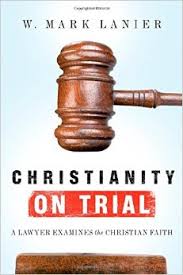
Title: “Christianity on Trial: A Lawyer Examines the Christian Faith”

When: November 6, 2014 7.00-8.30 pm

Where: Belin Chapel, Houston Baptist University

Free and open to the public


Who is Mark Lanier?

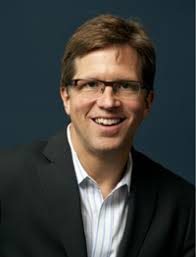
Mark Lanier is a trial lawyer and founder of the Lanier Law Firm. U. S. News and World Report’s Best Lawyers named him to its Best Lawyers in America list for nine consecutive years and as the 2013 Top Class Action Attorney in America.  His courtroom work has been featured in The Wall Street Journal and The New York Times, and he is a frequent guest on CNBC and Fox Business News.  He is the founder of the Lanier Theological Library in Houston, TX, and he teaches biblical literacy at Champion Forest Baptist Church. Mark Lanier

What Others are Saying about the Book . . .

Alister McGrath calls Mark’s book: “A witty, well­­-paced and thoroughly engaging account of the place of evidence in the courtroom and in life.  Mark Lanier makes a powerful case for the trustworthiness and reasonableness of the Christian faith.”

David B. Capes says: “Historians, scientists and lawyers are after the same thing: to discover what really happened.  Mark Lanier, one of America’s best lawyers, introduces us to history’s expert witnesses regarding our most profound questions and tells a convincing story sure to convince any jury.”


The A. O. Collins Lecture Series

The A. O. Collins lectures began in 1993 with the goal of bringing recognized scholars to address the university community in current trends in theology, religious studies and philosophy.  The series is named for Dr. A. O. Collins who chaired HBU’s Department of Christianity and Philosophy until his retirement in 1990. Over the last two decades, due to the generosity of former students and friends of the university, top scholars from around the world have lectured on our campus on a wide range of topics on religion and philosophy.

Some of our past lecturers have included:

Dr. Richard Hays, Duke Divinity School
Dr. James H. Charlesworth, Princeton Theological Seminary
Dr. Walter Brueggemann, Columbia Theological Seminary
Dr. Charles Talbert, Baylor University
Dr. Ellen T. Charry, Princeton Theological Seminary
Dr. Luke Timothy Johnson, Emory University
Dr. Alan Segal, Barnard College, Columbia University
Dr. Samuel Proctor, Duke University
Dr. John Howard Yoder, University of Notre Dame
Dr. James W. McClendon, Jr., Fuller Theological Seminary
Dr. Michael J. Gorman, St. Mary’s Seminary
Dr. Larry Hurtado, University of Edinburgh
Dr. Emanuel Tov, Hebrew University
Dr. Craig Evans, Acadia Divinity College
Dr. Richard Bauckham, St. Andrews University.

Please join us for this lecture.  It is an important event for our campus and community.  Should you have questions, please contact the acting chair of the Department of Theology, Dr. Ben Blackwell, at 281-649-3000.

Christianity on Trial

Other “Christianities”

Gnostics were not the only sects to produce Gospels and accounts of Jesus’ life.  There are texts and traditions produced by other Christianities in the first to the fourth centuries AD. Christ enthroned

With the ancient world filled with stories of the births and adventures of semi-divine beings like Hercules and Apollonius of Tyana, it is little wonder that early Christians wanted to know more about Jesus.  So infancy Gospels were conceived and legends were born to answer fundamental questions like: Where did Jesus come from? Who were Jesus’ parents? Did Jesus possess power and wisdom even as a child? The two most famous accounts are the Protoevangelium of James and the Infancy Gospel of Thomas.  In the NT Jesus’ parents serve an important but subsidiary role.  The infancy gospels are dedicated to raising their profile. The Protoevangelium of James, for example, is actually about the nativity of Mary and her remarkable life before she was chosen to give birth to Jesus.  While there is some overlap with NT accounts, there are details added about her parents (Joachim and Anna), her upbringing in the temple, her betrothal to Joseph and her virginal birth.  The Infancy Gospel of Thomas focuses on the miraculous deeds performed by Jesus between ages 5 and 12.  Initially Jesus used his powers to curse and cause injury to others. But after being warned by villagers to control little Jesus or move, Joseph takes Jesus aside and trains him to use his power for good rather than harm.  This was apparently a popular account among many Christians because scholars have discovered numerous copies of it in various languages. 

After the fall of Jerusalem (AD 70) Jewish Christianities flourished in places like Pella until the fourth century AD.  The dominate sects were the Ebionites, Nazoreans, and Elkasaites.  Though most of their Gospels are lost, fragments of their Gospels are contained in the writings of church leaders like Eusebius, Jerome, Epiphanius, Clement of Alexandria and Origen. Jewish Christianities typically held to a low Christology, that is, they did not believe in the deity of Jesus and thought God adopted the man Jesus as His Son.  Other features included esteem for the Jerusalem church and the family of Jesus, an apocalyptic orientation, a staunch anti-Paulinism, and an affirmation that Christians must continue to observe Jewish law.

The Jesus of these other Christianties was eventually rejected by what became orthodox Christianity. Over time these movements died off and the literature they produced was no longer copied and transmitted to the next generation.  That is why the historical record about them is so fragmentary.