Page 3 of 26

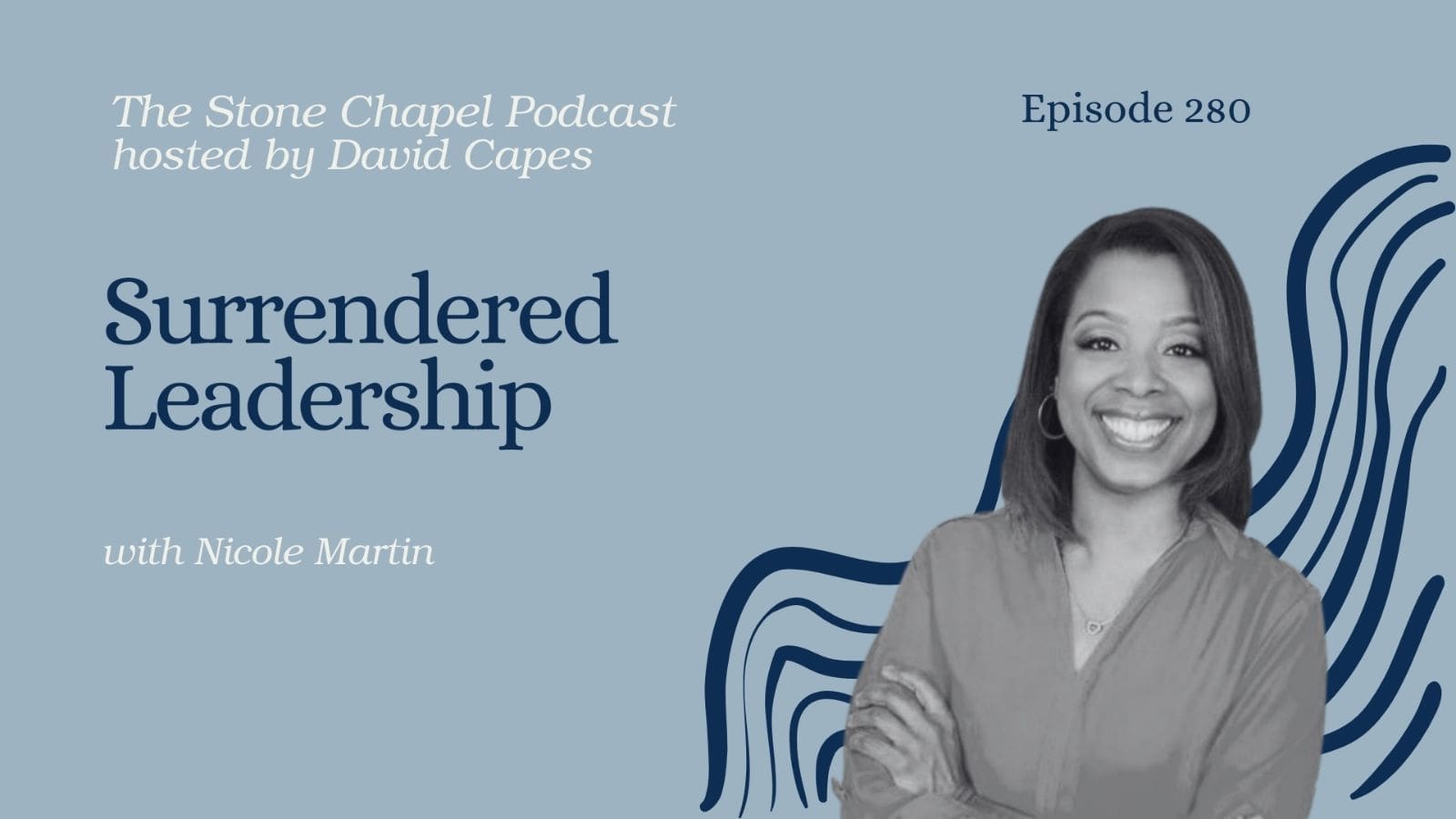
Surrendered Leadership? with Nicole Martin
You can find previous episodes of “The Stone Chapel Podcast” at Lanier Theological Library.

“The Stone Chapel Podcast” is part of the ChurchLeaders Podcast Network.

This episode has been edited for clarity and space.

Nicole Martin
Hi, I’m Nicole Martin, and I’m the President and CEO of Christianity Today.

David Capes
Nicole Martin, Nicole, great to see you. Welcome to “The Stone Chapel Podcast.”

Nicole Martin
Thank you, David. It’s great to be on with you.

David Capes
I’m delighted that we can do this. You’re going to be coming here to the Lanier Theological Library and giving a lecture in a few weeks. We want people to know a little bit about you and a little bit about what you’re going to be talking about. And some will be able to get here in person, but for those who can’t, they can find your lecture on the library’s YouTube channel. All right, let’s start in this way. We know now that you are the president of Christianity Today. Congratulations, by the way.

Nicole Martin
Thank you.

David Capes
We’re so pleased for you and for the publication, it’s brand and all that it means. But for those who don’t know you, who is Nicole Martin?

Nicole Martin
Oh, that’s such a big question. I am first and foremost, a child of God. I’m a child of Pastor Leonard Massey. My dad was a pastor for many years, and Dr. Alfreda Massey, who worked in school systems and as superintendent for many years. I’m the mom of Addison and Josephine Martin. Addie is 13. Josie will be 11 by the time we come together. My husband Mark and I have been married for 15 years. I live in Maryland, and currently serve at Christianity Today, located in Wheaton. It has been an honor and a joy to be able to assume this position at this time.

David Capes
It’s a great publication with a great history that started back in the 1950s. It’s almost as old as I am, I think. Billy Graham was a big part of that, and such a great influence. It has been led well over the years. Christianity in general, and Christianity in the United States, has been through a lot since the 1950s. Christianity Today has been there as a guide and as a friend for so many. The only thing wrong with Christianity Today is, I don’t think you’ve ever published anything that I’ve written. We’ve got to correct that!

Nicole Martin
We must correct that, yes!

David Capes
All right, you’re coming to the Lanier Theological Library, and you’re going to be here February 27 and 28, 2026. You’re going to be lecturing in our stone chapel with a lecture entitled “Surrendered Leadership”, which is a fascinating title. I’ve got your books here. You have several books out, and this one is called “Nailing It: Why Successful Leadership Demands Suffering and Surrender.” I think you’re probably going to be talking about some things that you wrote here. Another great book of yours which is fairly recent is, “Made to Lead: Empowering Women for Ministry.”

So you’ve been writing about leadership for a while. Let’s talk a little bit about what are you going to be doing when you come here to the Lanier Theological Library?

Nicole Martin
One of the things that we will do together is to really redefine what leadership looks like from a biblical lens. It’s so easy for us to get caught up in more secular principles of what people think it means to lead. The world would suggest that in order to lead, you need power. In order to lead, you need deep influence. In order to lead, you need to be willing to stand up against the people that you lead at times. And while that may be true in some respects and contexts, it is not always the only narrative or definition for leadership according to Scripture. What we have seen over the years is we’ve assumed that we can have the resurrection victory of our lives and of our leadership without understanding the
cost of the cross.

And I would suggest that we lead best when we recognize that crucifixion always comes with reward and that resurrection always comes at a cost. There are some things that we will have to crucify in ourselves, in our lives, in our behaviors, in our patterns, in order for Christ to be resurrected. To be alive and well within us. In order for us to walk in that victory, whether we like it or not, and I wish there were another way, but biblically speaking, you cannot walk in victory without recognizing what needs to be surrendered. So that’s why this title is so challenging to each of us, because you cannot live a life with Christ without being willing to sacrifice and surrender things so that Christ might be redeemed, resurrected and glorified through us.

David Capes
You’re finding this in the words of Scripture. And in the example of Christ as well.

Nicole Martin
Yes, absolutely. And Jesus is the example. And he speaks the example as well. He is the embodiment of what it looks like to lead. He gets down on his hands and knees and washes the feet of the disciples and he says, this is what real leadership looks like, my paraphrase. In John 12, he tells them, after doing great miracles, unless a seed falls to the ground, it remains but one seed. But if it falls, if it dies, then it counts for the fruit of many.

And then he embodies that upon the cross. Not death as martyrdom or as defeat, but a willing sacrifice so that we might live. And then John goes on further and says, the same spirit that rose Jesus from the dead lives in you. If I sacrifice my ego, for example, if I say in the words of Jesus, this is my will, God, but not my will, your will be done. If I’m willing to lay these things down at the cross, what I’ll find is a resurrected sense of ego that is rooted deeply in the person of Jesus Christ. And then I can lead from a place of love and not from a place of competition or defeat or deficiencies of some kind. It’s a powerful thing to really reconsider what the cross and resurrection looks like as it relates to our sense of
leadership.

David Capes
Leadership Studies. I’m trying to remember when I saw the first PhD in leadership, and all these books about leadership. I think they started the 70s or 80s. I may be misremembering.

Nicole Martin
Yes, I think you’re right.

David Capes
It’s been around for a while, and there are some places where you can get a PhD in leadership, but they all seem to be saying pretty much the same thing. And what you’re saying now, is not exactly it.

Nicole Martin
You know, I was wrestling with that when I first started writing this book. I did do my Doctor of Ministry in leadership, redemptive leadership. And I kept thinking, why is it that what I’m reading about leadership doesn’t always line up with what the Word says? And I think part of this is we take a silver bullet approach to leadership. If it works well for that person in that context, then it’s got to work for everybody in every context. And that’s just not true.

Secondly, I think we discount the servant leadership of Christ because it’s not fun. Who wants to lay down their lives? Who wants to sacrifice? We would all prefer to have followers that would obey us and stay with us till the end. Jesus didn’t have that. He called a bunch of followers who all betrayed him at some point or another. If that’s what the picture of leadership looks like, nobody wants to sign up for that. So we create other narratives. You can get millions of followers and let that be the marker of your success. You can build a million-dollar business and let that be your marker of success. But Jesus comes along and says, that’s not all there is to it. It’s not invalid. It’s not that that isn’t real. It’s just that that is not all.

When we really tap into the cross, not just for leadership, but for life, when we really examine the cross and what cruciform living looks like, we will find that there is life in death. That when I die to the principles of this world, that often cause me to hurt other people to get ahead, when I die to those things, I find life in Christ. Again, going back to the Gospel of John, not just life, but life and that more abundantly. What we crave, requires a sacrifice, and if we are willing to lay it down before the cross, we will live more abundant lives and lead in more abundant ways than we ever have before.

David Capes
Is this leadership for a business? Is it for a parachurch organization? Is it for the church? Will it work in every situation?

Nicole Martin
I wrestled with that. I remembered when I first started writing, the core question is, who are you writing to. I think this is leadership for anyone who is weary of old ways of leading, who wants to see new results in leadership, and for those who are trying to adapt to new leadership styles. Either because they’re just getting started, or they’ve been at it for a while. And for me, I intentionally do not define the context of leadership, because I don’t think Jesus does that.

Jesus speaks to the disciples as leaders, and they were fishermen. Some might say in that context, a fisherman is not a leader. Fisherman only works with fish, but he speaks to them as leaders. He speaks to the woman at the well, and people would say she’s not a leader, but then she goes and tells the whole town about a man who told her everything that she had ever done. I don’t want to discount those whom God would call to influence the lives of others, and that’s why I think leadership is what we make it and what we decide.

David Capes
It sounds like almost anybody can become a leader. You can talk about fishermen, and the woman at the well. You’re not talking about people who are already leaders at some level. These are people who are everyday people. As the leader of Christianity Today, have you had a chance to try out some of this already?

Nicole Martin
Yes, and I think most people who have ever written something would say, there it’s a different reality to conceptualize something in words and then to try it out with your actions. But by the grace of God, we are living in a time that requires a different way of showing up. Not showing up with prowess and elitism and an assumption of knowing all of the details but showing up with humility. Showing up with a desire to know and to learn.

Leading CT has been a privilege, even for the few weeks that I’ve been in this role, not just because of the organization itself, but because of the people. We have some of the most thoughtful, prolific writers that I can think of on our team. We have organizational leaders in our operations that are faithful to God. So it’s been an honor for me to come alongside and not say, here’s where we’re going, but to ask, what do you need. How can I serve you? How can I show up best?

And that does require a dying. It requires a dying to my own sense of how things need to be, and it requires a desire to say, God, what do you want this to be? I described to someone recently when they asked, how’s it going? I said, this is one of the greatest faith walks I have ever taken in my life. But what an opportunity for a leader in a position of influence to surrender it before Jesus and say, God, not my organization, but yours. Not my will asserted on these people, but your will for your people. And that’s what I get to do every day. I get to say, in the words of Henry Blackaby, God show us where you’re working and help us to join you there. And that’s truly a privilege.

David Capes
I love the way you said that in resurrection, there is a cost. I’ve never thought about that before, but I think you’re exactly right. Would you parse that out a little bit for us? What does that mean? Because we think of resurrection as the reward. Resurrection is life, and now all the good stuff comes. But in fact, as you said, in leadership and maybe in other parts of life, resurrection does come at a cost.

Nicole Martin
Yes, yes, it does in simple ways. It shows up in our vision. We step into positional leadership, leading an organization or an elder board or a small group, and you have this vision. We are going to be a people who have this type of culture and achieve these goals. Well, if we were to assume that we could just reach those goals without any hardship, conflict or trials, then we would be deceived, and we would be ready to forsake those things when the troubles come.

Resurrection comes with a cost, and what I mean is we get to those goals through sacrifice. We achieve those milestones, and we create that structure and that culture by giving up some things along the way. And we’ve got to be intentional and have our eyes wide open on what that takes. But I also think the joy comes once you recognize the cost of resurrection, then you really celebrate it.

It reminds me of the story of Jesus healing the woman of many demons, and he says in my
paraphrase, that she will rejoice. She knows the cost of her deliverance. And I know I’m butchering the story, but Jesus is recognizing, acknowledging the fact that those who have been delivered from much will also own and recognize their deliverance in a different way. It’s the widow who gives of her little, and Jesus recognizes her. The cost of what she has given up results in great reward. And when we think back on our own lives, we would have to admit the times when we had to work hard to get something are the times when we appreciate it the most.

And God forbid the day that we assume our resurrection victory is free. God forbid the day that we assume our salvation is free. No, our salvation came with the cross, and that was a cost. Our resurrection victory comes with the cost of the cross, and as long as I can keep that in mind, I’ll never take it for granted.

David Capes
So how has your book done out in the market? Nailing it: Why Successful Leadership Demands Suffering and Surrender.

Nicole Martin
That’s a hard question, because, you know, according to the standards of the world, I did get my one little screenshot a week after it released that said, “top new release”. It was only for just a few minutes. I got a screenshot before it went away. Is that something to celebrate? Sure!

I think we’re still tracking to see. Books are interesting seeds to plant in the soil of the kingdom. Sometimes you see the fruit right away and you recognize, oh my goodness, people are buying this. What a wonderful thing. But sometimes the seed takes a while to germinate. I am grateful for those who have purchased it. I am grateful for opportunities like these when I get to talk about it, but I’m still trusting that God will use this book to produce harvest in people’s lives that maybe I can’t see or calculate right now.

David Capes
Well, the success will come along with your continued persistence in describing this to people on podcasts and speaking opportunities about the nature of leadership. What it really looks like, what it really costs, and those kinds of things. Rather than thinking now I’m on top of the world because I’m CEO, and my brain must be somehow anointed. That everything I think is going to be a good idea. Usually, we have one very good idea among about 5,000 that are not so good. Just figuring that out, and as you said, surrendering that, and really, truly listening to the people that you’re working with. Who are, in your case, brilliant writers, brilliant people, in terms of looking at culture and what’s happening.

I’m just so excited that you’re going to be here and you’re going to be speaking to us, and we’re going to be blessed and encouraged and instructed and corrected as needed by you in this particular time. Dr. Nicole Martin, thanks for being with us today on “The Stone Chapel Podcast.”

Nicole Martin
Thank you so much, David.
Matthew and Luke on Jesus’ Birth

with Caleb Friedeman

To hear the podcast click here.


This transcript has been edited for clarity and space.


David Capes
Let’s talk about some of the specific things that you find in Matthew’s birth account and then let’s talk similarly about Luke as well. What’s happening in the birth narratives that we really need to payattention to.


Caleb Friedeman
I think part 1 cues us up to be attentive when we come to Matthew, besides just resituating the burden of proof, it also really makes us think about sources and how an author is using them. Because sourcesare one of the historiographic features. And by the way, I don’t think that Matthew cites sources, so he doesn’t use the historiographic feature of sources in his birth material. But what he does do is usesources pretty evidently. I do a pretty close analysis of both the genealogy and the birth narrative proper.


And one of the really fascinating things is a lot of scholars agree that Matthew is using sources for his genealogy, and particularly the Old Testament. Places like First Chronicles 1-3, places like Ruth 4 are pretty evidently in view there.

So he’s using these sources and actually following them fairly closely. And where he departs from
those sources, he seems to be operating within a range of flexibility that was acceptable for Jewish genealogies. So that’s interesting, and it doesn’t track very well with the idea that this is just legendary. Matthew is following sources. If all he wants to do is write a legendary genealogy, why not just take every big name, Old Testament figure that he admires. Why not put Isaiah in there, regardless of whether they were related in any way. Why not just have a random assortment of the hall of faith or something like that?


David Capes
Yes, why not put Moses in there. Throw Noah in there.


Caleb Friedeman
Exactly, yes. Obviously, he likes Isaiah a lot because he cites him. Why not include people like that in there if this is just legendary genealogies of sources. Though, we find, I think, sources heavily implied by the birth narrative proper. A lot of scholars tend to focus on Matthew’s use of the Old Testament as being something that counts against historiographic intent. I actually think a close analysis of that material pushes the other way.

Because when you look at Matthew’s fulfillment citations, to me it’s quite evident that those citations and the texts that he’s selected depend on the story. Why would you pull this precise group of texts together unless you already had traditions about Jesus that made you think about them. Because most of them are not things that you would just readily relate to a Davidic Messiah figure just in the abstract. You would need to have traditions about Jesus in front of you.
And then you say, okay, how does Jesus fulfill this part of the Old Testament. Oh, I see a connection here. And by the way, you can also pull the citations out, and the story works pretty well without them.And I’m not the first scholar to have observed that. It seems to me that Matthew is pretty evidently working with some existing traditions, and then he is adding these fulfillment quotations into that. He’s working with some kinds of sources when he’s writing this birth material. Those are just a couple of the key points that I make about Matthew. And then for both Matthew and Luke, I talk some about the time elapsed. We can come to that in just a minute.


David Capes
Well, let’s move over to Luke. What are some of the features then that we need to pay attention to in Luke historically?


Caleb Friedeman
Just a few quick points here. I think it makes us take Luke 1:1-4, the preface, very seriously. And what I mean by that is, many of these ancient biographers like Luke will include a blanket note about their sources at the beginning of the biography. Prior to the birth material that seems to apply to the whole. Philo, for example, does this in his life of Moses, and Luke does a similar thing here. Because we have analogies for this kind of thing. It makes us say, wait a second. We can’t just bracket out the birth material when Luke has just made this claim about going back to those who were eyewitnesses and servants of the word.

We really need to think about how this material relates to that. Luke employs the historiographic feature of sources in Luke 1:1-4 and that applies to the birth material also. Though I argue that Luke actually presents Mary, Jesus’s mother, as a source within the birth material itself. Twice. Luke 2:19, and 2:51 where he describes Mary as preserving all the words in her heart. Based on my published dissertation. I’ve done that work there, and I reprise it here. But I make a fresh case for why we should regard that as a source marker.

And the last thing I’ll say, in terms of a historiographic feature, is I think Luke also employs what I wouldcall negative evaluation in the genealogy. When he says that Jesus was the Son as was thought, of Joseph. So that could be distancing. Where he just saying, I’m not willing to take responsibility for that claim. I think, though, when you read it in light of the rest of the account, where it’s pretty clear that Joseph is not Jesus’ biological father, then it’s suggesting a negative judgment on the idea that Joseph was Jesus’s father in a normal biological sense.


David Capes
Yes, that’s said in the genealogy? Okay, that goes over into chapter 3 then as well.


Caleb Friedeman
Yes, and that’s another interesting piece of it too. If we’re asking where Luke’s birth material is, he includes the genealogy later in the midst of adult material. Which again, makes It very difficult at that point if you want to hold the legendary intent hypothesis. Because what is going to cue the reader to shift from reading historically? Because the first part of Luke 3 is about Jesus’ adulthood, then you go to ahistorical in the genealogy, and then back to historically in the temptation, which comes right after the genealogy. That doesn’t really make sense.


Here’s the other really interesting thing to me, though. If that analysis is correct, and Luke employs nhistoriographic features 1,2,3.4, times. Three instances of sources and one instance of evaluation. I can’t find anywhere else in the Gospel of Luke where he does that, where he employs historiographic features. So that would actually mean he uses historiographic features more in the birth material and in relation to the birth material than he does in relation to the rest of the life. So obviously Luke 1:1-4 is going to apply to the whole life. But that gives you one use of sources, the historiographic feature for the whole life, where you actually have three other historiographic features that pertain specifically to the birth material. So if there’s any material in the Gospel of Luke, that we should be clear that it’s intended to be historical, it’s the birth material.


David Capes
It’s right there because it has those markers as opposed to every other place. Well, that’s fascinating. That really is fascinating. Your next job is to parse all this out. You’ve clearly made the case that it’s the intent of Matthew and Luke to write a historical account of the birth in the origin stories of Jesus. Now we got to go into the story itself and to carefully go through and to make some judgments about individual pericope or episodes within that material.


Caleb Friedeman
Yes. I think one of the interesting things about making that kind of case is the point that I make about time elapsed regarding Matthew and Luke versus other ancient biographers. I mentioned earlier that we have 360 years on average between the subject’s birth and when people like Nepos, Philo, Plutarch and Suetonius are writing about their lives. Obviously, scholars take different positions as to when the Gospels are written. But, if you just take a fairly consensus date of, let’s say somewhere in the 70s. 70 to 80 let’s say for both Matthew and Luke, well, that would mean that they’re far closer. Closer by centuries, almost three centuries closer than most ancient biographers were, most of the time to the events they’re writing about. And probably
would have had access to sources that accord with that kind of distance. So potentially an eyewitness source, or at least someone who would have known an eyewitness.


David Capes
Yes, and that’s part of Richard Bauckham’s case in his book, Jesus and the Eyewitnesses. Well, we’ve got to come back to this, and we’re going to follow what you’re going to say about it in the next few years. Because I have a feeling there’s some articles and there’s some books following up on this. It needs to be done. Dr Caleb Friedeman, thanks for being with us today.

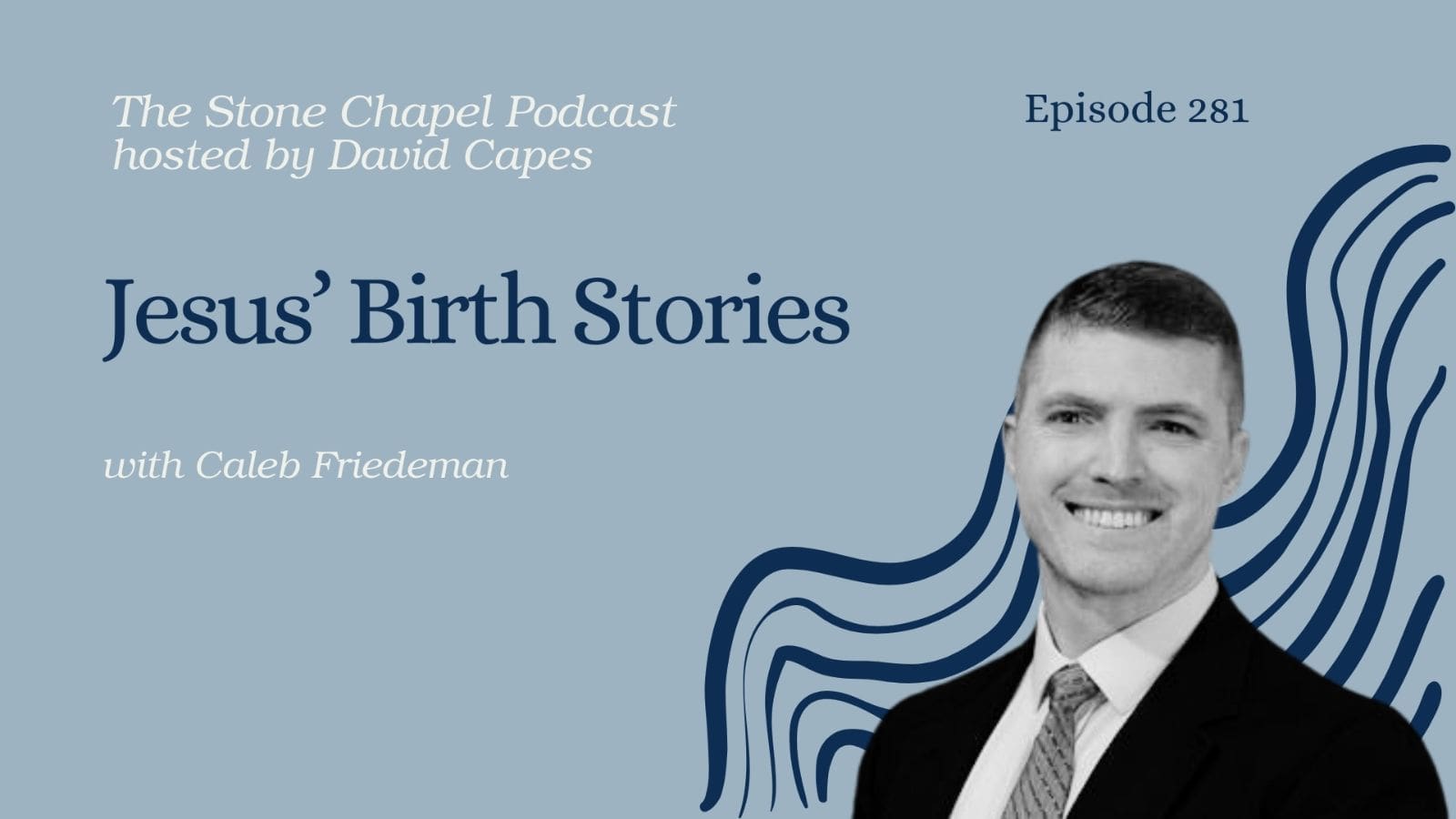
Jesus’ Birth Stories with Caleb Friedeman

To hear the podcast click here.

This transcript has been edited for clarity and space. 

Caleb Friedeman 

Hi, I’m Dr Caleb Friedeman, and I serve as David A. Case Chair of Biblical Studies and Associate Research Professor of New Testament at Ohio Christian University. 

David Capes 

Dr Caleb Friedeman. Caleb, good to see you. This is your first appearance on The Stone Chapel Podcast

Caleb Friedeman 

Yes, great to be on. Thanks for having me. 

David Capes 

I got to know you at Wheaton College a few years back when you were there, and since then, you have finished your degree. You’ve graduated, got your PhD, and are doing great work at your university. 

Caleb Friedeman 

Yes! I had a great time at Wheaton and enjoyed getting to spend a little bit of time together there. And the Lord blessed me with the opportunity to come to Ohio Christian University after I graduated, I’ve been here for going on eight years now. It’s hard to believe, in some ways. It’s been a good ride. And have had a lot of opportunities to preach, to teach, to write, and just feel very blessed. 

David Capes 

Well, you’ve written some great things, and the book that we’re going to talk about today is no exception to that. It’s a very interesting thesis, that is cutting some new ground. But let’s give a little bit more information about you. For those who don’t know, Caleb Friedeman, who is he? 

Caleb Friedeman 

I grew up in Jackson, Mississippi, and the Lord led me through my education. I went to Asbury University for undergraduate, and then Wesley Biblical Seminary for an MA. Then I went to Wheaton College for PhD work, which, of course, is where you and I met. Then the Lord opened up this job at Ohio Christian University. Right after that, I am married to Isabella. She’s from Honduras, and we have one son, Paul. I’m an ordained elder in the Church of the Nazarene. So, I am both a biblical scholar, but I also have a pastoral piece to my calling as well. And I do have some interest outside of writing and teaching. In high school I was a competitive power lifter, and I play piano and guitar as well. Transcribed by https://otter.ai – 2 – 

David Capes 

Well, you’ve written a terrific book entitled Gospel Birth Narratives and Historiography. The subtitle is Reopening a Closed Case. It’s published by Baylor University Press. It’s a really impressive book. Congratulations on it. First of all, let’s talk a little bit about it. What’s the big idea of the book? What are you trying to do here? 

Caleb Friedeman 

Well, as the subtitle implies, the Gospel birth narratives have really been a closed case when it comes to historical Jesus scholarship, for quite some time, I’d say. Easily, reaching back five to six decades, and maybe even longer. Just as one sounding on that, if you do a run through major books on the historical Jesus over the last 40-50, years, you’ll be hard pressed to find a substantive discussion of Jesus’s birth and childhood, even in significant, lengthy monographs. And sometimes, if you do find any kind of discussion, it’s simply to say why they’re disregarding the material. We do have these two birth narratives in Matthew 1-2 to and Luke 1-2, but scholars typically haven’t taken them very seriously. And so I try to dig into that in the book, and I distinguish between two things, two kinds of skepticism you can have toward a source. 

One is skepticism of intent, which is basically to say, I don’t think that this source is intended to be historical. For example, if someone is trying to reconstruct the historical person Don Quixote, using the novel Don Quixote, then you might protest that this source is not intended to be historical. So, you’re just off on the wrong foot from the beginning. But the other kind of skepticism would be skepticism of truth. So that basically says, I recognize that this source is intended to be historical. I just don’t think that it’s correct at a given point. 

If you look at those two, they’re both valid, and they’re both very important to use at certain points if we’re trying to do historiography. But skepticism of intent is a lot more efficient if you can pull it off. Which is to say, if I can convince you that what you’re looking at is more like Don Quixote or Goldilocks or something, than it is like Thucydides or some other historian or some historical biography, then we don’t really need to discuss the historicity of individual events. Because we’re just not dealing with that kind of a source. 

And what I basically suggest in the introduction to the book is that the unique skepticism the scholars have leveled at the gospel birth narratives really is unique. I don’t know of another part of the gospels that we disregard in that way. That unique skepticism really depends on the skepticism of intent, because it’s hard to produce truth-oriented reasons that would justify ignoring historical sources in that way. And interestingly, you have had a good number of scholars, who really articulated a skepticism of intent. Even people like John Meyer, for example, doesn’t think that the birth stories are intended to be historical, necessarily. 

David Capes 

So, you have these two kinds of skepticism. Both can be useful in their own way when you’re dealing with the right kind of material, as you articulate. Since Richard Burridge’s work on the Gospels, a lot of Transcribed by https://otter.ai – 3 – 

people accept the idea the Gospels are meant to be an ancient kind of biography. That means they are intended to be taken as historical. 

Caleb Friedeman 

Yes, and I think Burridge and that whole trend of recognizing the Gospels are ancient biographies is really where my project starts. And interestingly, one of the things that I agree with scholars, whom I disagree overall with, is the fact that the Gospels are ancient biographies. And certainly, if not that, at least that ancient biographies give us the best comparisons for how we should be reading the gospels. One thing that’s interesting is, if you look at scholars who have made these kinds of arguments for why birth material should be regarded as legendary or, ahistorical, they’re typically appealing to ancient biographies. 

You might say the argument goes something like this. From the other side, the side that I’m pushing back against scholars will say something like this: birth material, or birth stories in ancient biographies was not intended to be historical. The Gospel birth narratives are in ancient biographies, and so the gospel birth narratives also are not meant to be historical. 

I basically take that argument on and say, I’ll grant you that we’re dealing with ancient biographies here and that that needs to be the backdrop. But I actually disagree on all points. I basically say, let’s start with ancient biographies and look and see how it seems like their authors intended them to be read. My argument is basically birth material in ancient biographies was intended to be historical. And as ancient biographies, then the birth material that we find in the gospels, like in Matthew 1-2 and Luke 1-2 is also intended to be historical. I spend the first part of the book dealing with a range of different ancient biographers and looking at how they write their birth material. And then I get into the gospel birth narratives in part 2. 

David Capes 

Let’s talk about some of those historians, or historical figures that you’re talking about. Give us a bit of a rundown. 

Caleb Friedeman 

I’m basically looking for biographers who wrote within a century of the Gospels on either side. And I’m also looking ideally for biographers who have written more than one biography that has birth material we can look at because a sample size of only one biography for an author isn’t the most helpful. I end up going with Cornelius Nepos, and he is actually our first Roman biographer. And then I do Philo, who only has one biography, his Life of Moses. But that has been such a major player in these discussions. Because it’s our only Jewish biography at all that it’s worth dealing with, even given that we only have the one. And then I also do Plutarch. Of course, many people are going to be familiar with Plutarch’s Lives, and those are some of our most important sources for reconstructing what ancient biography was like. And then I do Suetonius as well. I spend a chapter on each of those authors. 

Just a little bit of the backstory of this book too. I mentioned earlier that there are these scholars who are making these cases about ancient biographies. When I was getting into scholarship, even preparing for PhD work, I started to read this scholarly literature about gospel birth narratives. And it wasn’t just Transcribed by https://otter.ai – 4 – 

about the historical parts. I was just reading things like Raymond Brown’s Birth of the Messiah and reading a whole range of works about the gospel birth narratives. And I kept encountering this claim by various authors that this material wasn’t intended to be historical. They were citing ancient biographies to back this up. And at some point, I just said to myself, okay, I want to go read this stuff for myself and see what’s going on. 

I started reading the kinds of biographies that were cited. For example, Plutarch’s Life of Alexander or Romulus or Suetonius Biography of Augustus. I just kept noticing these features that didn’t really track with the story I’d been told about what these biographies were supposed to be doing. For example, they would do things like cite sources for the information they were giving. Well, that’s an odd thing to do if you’re just writing something that’s meant to be legendary. I don’t find a lot of source citation in fairy tales. I would see something like that, or I would find a biographer mentioning differences among their sources. There are three accounts of how this happened. Here’s how the first one goes. Here’s how the second one goes. Here’s how the third one goes. And then they might even go further and say, and I’m going to evaluate these and tell you which one I think is the most accurate or truthful. Or maybe I’ll come up with my own reconstruction of what’s going on. 

And then one last thing is they would sometimes distance themselves from more miraculous or supernatural kinds of claims, or just more fantastic kinds of things. What I mean by distancing is basically putting distance between their authorial reputation and the claim that’s being made. Instead of simply asserting that, a God had intercourse with the subject’s mother and then that led to this person being born. They might say it is said that and then give the tradition. Plutarch might not want to be held accountable for that material, but it allows him to pass on this information into sources without taking responsibility for it, which again, indicates a historiographic consciousness. 

Those four things that I just mentioned, I call those historiographic features, and they’re the basis of the analysis in this book. Those would be sources. And by that, I mean citation of sources in some form or indication that an author has sources. And then transparency, that’s where you note differences between accounts. Then evaluation, where you evaluate the trustworthiness of those accounts, and then distancing, where you distance your reputation from a claim. I basically use those as at least one key part of my analysis when I get to these ancient biographers, and then also when I talk about the gospel birth narratives in part two. 

David Capes 

You have these criteria that you’ve looked at and evaluating. Now, Plutarch writes, in his Lives, I think about 50 plus different people. But he doesn’t give birth narratives to everyone right? 

Caleb Friedeman 

Correct! 

David Capes 

So, birth narratives aren’t necessarily a given feature of every biography. 

Caleb Friedeman Transcribed by https://otter.ai – 5 – 

Yes, that’s right. I would say some people have failed to notice that, and other folks have noticed that, but failed to consider the significance. One of the things that I talk about for Cornelius Nepos, Plutarch and Suetonius, because that’s the only place where you have the opportunity to talk about absence. Because obviously Philo has got birth material, so he’s not going to have absence because he has no other biography. When I am looking at these authors that have multiple ancient biographies, one of the things I talk about is how we make sense of the absence of birth material from their biographies. 

So not only do we find historiographic features in the birth material of many of these biographies, we also find that many of their biographies don’t have any birth material at all, or that the amount varies a lot. In some cases, you might have only a line or a sentence or two on somebody, or just even a very short sentence, if they’re just spinning all this out of whole cloth, and they don’t need any sources. They’re just making stuff up. Why not just have the same amount of birth material for everyone, or have the amount of birth material scale to how much they like the figure that they’re writing about. Which, again, just doesn’t seem to be the case. 

You find all kinds of places where you don’t have that kind of scaling. For example, I believe Thrasybulus is one of Cornelius Nepos favorite subjects, and he doesn’t give him birth material. Why? If all this stuff is meant to be is some sort of legendary, non-historical anticipation of what this person is going to become as an adult. It just doesn’t seem to make a lot of sense. I think that the better explanation for that absence is actually that the reason we have absence, in some cases, is either because the biographer lacks sources, which is the kind of problem a historian or a historical biographer would have for sure. Or the information in their sources just wasn’t relevant or interesting enough to include. But what that really keeps out of bounds is the idea that, they’re just making this stuff up. 

David Capes 

Yes. I like that. I think that’s an important part of the argument. Now, what we find too, in the New Testament is that Mark begins and has no birth narrative. And same thing is said of the Gospel of John as well. There’s not really a birth narrative. There’s a theological prologue in GJohn that talks about his pre-existence. But that seems to be of a different class than saying the things that you say in these birth narrative 

Caleb Friedeman 

Yes, I would say the fact that Mark and John don’t have what we might call a birth narrative proper has actually become a lot less surprising to me the more that I’ve studied ancient biographies Because you just begin to recognize this is not a requirement or even a norm necessarily that you’re going to have these. There are too many exceptions to say that this was a universal requirement, or even something that was odd to leave out. 

Just for example, as you look across those four authors that I mentioned, Nepos, Philo, Plutarch and Suetonius, I analyze 95 biographies from those authors. I can only discuss so many of those in detail in the chapters, but I give tables at the end of the book in appendixes that actually give an analysis of historiographic features of things like omens and miracles if they’re there. Then something called time elapsed, which we can come back to. But I give my analysis and those tables at the back. Transcribed by https://otter.ai – 6 – 

If you go through and look, I also talk about where the birth material actually is in each life. I think it’s 18 of the 95 that don’t have any birth material whatsoever. And then that’s even being very gracious, because I’m counting things like, if there’s a sentence that pertains to the person’s childhood or birth. I’m including that as birth material. So on that count, actually, if you were to grant that any kind of claim about someone’s childhood or birth counts as birth material, then you might say that Mark and John have a little bit because, you’ll find a mention about being the son of Mary or the son of Joseph. 

David Capes 

And it’d not necessarily in the first chapter or the first writing that you encounter, but you encounter in the story that he has brothers and sister and those types of things. 

Caleb Friedeman 

And by the way, if you want to say, let’s not count that kind of stuff, and you then had a harder line analysis for all these other ancient biographies that I deal with. Well, you might end up saying that a lot more than 18 don’t have birth material. 

David Capes 

Yes, exactly. 

Caleb Friedeman 

I just say that I think what we find as you cross the four Gospels and whether or not they have birth material is within the range of what we’d expect for ancient biographies. I don’t think that it’s particularly unusual that Mark and John don’t have a birth narrative, and then that Matthew and Luke do. 

David Capes 

I guess the bottom line is that ancient biographies, when they did talk about birth material, their intention was to say, I’m writing history here, and I’m making judgments about that history. And so when we come to the Gospels, we can say that at least the intention of Matthew and the intention of Luke is to say that I’m writing history here. Not only in the things that Jesus said and did as an adult, but also in the stories of his origins, the stories of his family. Even those that are interlaced with some dream interpretation and visions and those kinds of things. 

Caleb Friedeman 

I think that’s exactly right. And I guess the way that I would put it is Matthew and Luke and other ancient biographers wrote their birth material with historiographic intent. That’s to say that they didn’t have a unique approach to this material vis a vis other parts of their biographies. All I’m really saying is we need to read this material the same way we would read anything else in a nature biography. Instead of treating it as a special case, we just should approach it with the same kinds of assumptions that we approach their accounts of the person’s adulthood. And that should be self-evident, but I think it hasn’t been in scholarship, and that has generated the need for this kind of book. 

In addition to historiographic features and the absence of birth material that I look at, I also look at a couple other elements. One is their use of supernatural elements. Here I include both omens, which are Transcribed by https://otter.ai – 7 – 

things that today we might call coincidences, but the people in ancient times often saw significance to. You would maybe have a coincidence, and then you would interpret it in a certain way. So that would be something like an omen. Then you actually have supernatural events, which you might call miracles, where the biographer is actually affirming that something happens. One thing that’s really interesting coming out of that is that number one, you really don’t find biographers typically making miracle claims in birth material a lot. 

Usually, if they’re going to relate something supernatural, I would say the vast majority of the time, they’re going to include a historiographic feature that’s going to either distance them from it or make it just an act of transparency, where I have this in my sources. But it’s actually fairly rare to find a biographer affirming that kind of stuff. The number of supernatural claims that you find in birth material and these four ancient biographers that I deal with is actually fairly minimal. 

The other thing that’s interesting that I look at is the time elapsed between the subject’s birth, and when the biographer is writing the biography. And obviously it’s a little hard to analyze that, because you don’t know exactly when these things were published or and it’s even harder to say when the research began. When did Plutarch begin researching this person’s life? But I do that kind of calculus, just as a broad way of making a comparison. If you look across those four authors and their biographies, what I find is that the average time elapsed across all 95 biographies from those four biographers is over 360 years. 

David Capes 

Wow, that’s a long time. 

Caleb Friedeman 

That’s the kind of remove that they’re operating in. And. It doesn’t tell you anything about their intention, but it does tell you something about the kinds of sources they would have had available to them, or that they wouldn’t have had available to them. For example, in very, very few, if any cases, are these four biographers, outside the Gospels, going to have access to eyewitness sources, or even to family members of the person. Or people who knew eyewitnesses well. 360 years. Then you do a comparison to Matthew and Luke, and it becomes really interesting. 

But I just wanted to mention those two things, because they are pretty important for part one of the book. What all that does I think, is resituates the burden of proof when you get to the gospel birth narrative. If ancient biographers tended to write their birth material intended to be historical, then that means that if we’re going to deny that for Matthew and Luke, we need to have really good reasons why. But prior to that kind of analysis, I think many people would have said, well, you need to have extraordinary reasons to think that Matthew and Luke did intend their birth material to be historical. And I’m saying actually no, it’s the other way around. 

David Capes 

Yes. There are certain assumptions driving scholarship very often. And I’m curious what your conclusions were about the time between the events of the birth of Jesus and then the writing of that. You’re not talking about 360 years. You’re talking about, in some cases, maybe 60 years later, or 70 Transcribed by https://otter.ai – 8 – 

years later. There are some that would date Luke, and Matthew, or both into the second century. But more and more, it’s interesting to note that people are actually beginning to date the Gospels a bit earlier than they were just even a few years ago. This is really fascinating. You’ve done a fantastic job. We’re talking to Caleb Friedeman about his book, Gospel Birth Narratives in Historiography: Reopening a Closed Case. So, is it closed again, or is it still open? What do you think? 

Caleb Friedeman 

Well, I guess the case that I want to open is actually talking about the historical value of what Matthew and Luke are saying about Jesus’s birth and childhood. I think the reason it’s reopening a closed case is because it’s saying these are historical sources that we need to analyze as historical sources. As opposed to simply dismissing them as being legendary or non-historical. The analysis that you still need, or where the scholarship still needs to be done, is to say, if they’re intended to be historical, how well do they achieve that? I would say, by and large, scholars haven’t really even been asking that question for several decades. You might be able to find a few exceptions to that, but I would say by and large, we really haven’t been asking the question about truth. If we’re talking about intent and truth, I think I’ve done my best to answer the intent question in this book. Now the truth question remains, where I’d like to see us do more work. 

David Capes 

Dr Caleb Friedeman has been with us today to talk about his book, Gospel Birth Narratives in Historiography: Reopening a Closed Case. It’s a fascinating book, an important contribution to the study of the New Testament and of the life of Jesus, the historical Jesus. He is reopening a case that has been closed on many accounts. Thanks for being with us today. Dr Friedeman. 

Caleb Friedeman 

Thanks, David. It’s been great to be here. 

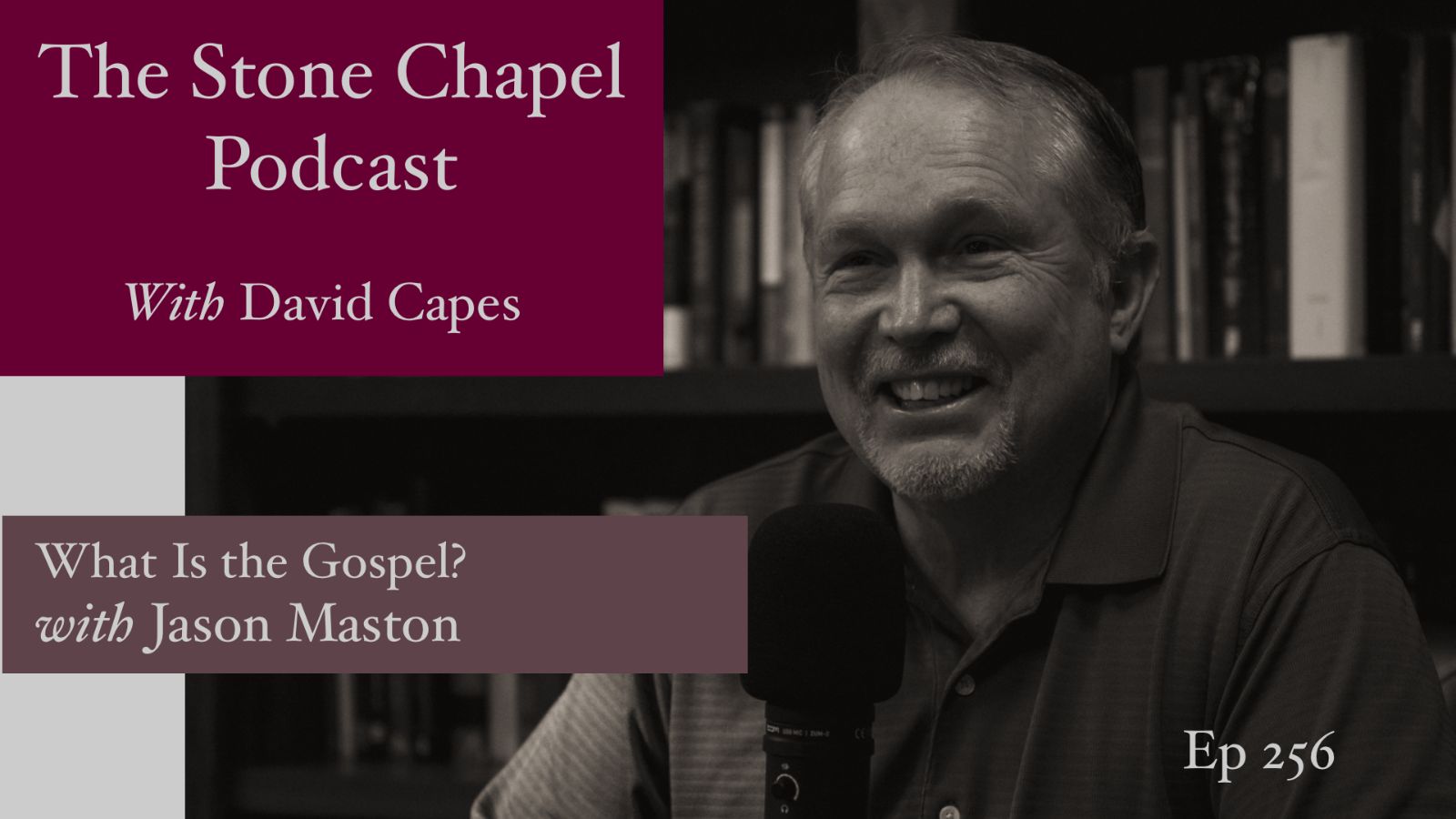
What Is the Gospel? with Jason Maston

To hear the podcast click here.

Internet debates sometimes make it into published, academic or popular books. On this episode, I talk with Jason Maston about a book he and Michael Bird edited: “Five Views on the Gospel” (Zondervan Academic, 2025). Every Christian who listens to this episode will find themselves represented in the discussion. And if you listen carefully, you may learn something new.

“The Stone Chapel Podcast” is part of the ChurchLeaders Podcast Network.

For a transcript of this episode put this URL in your browser: https://churchleaders.com/podcast-episode/stone-chapel-gospel-jason-maston
This podcast is about 22 minutes in length.

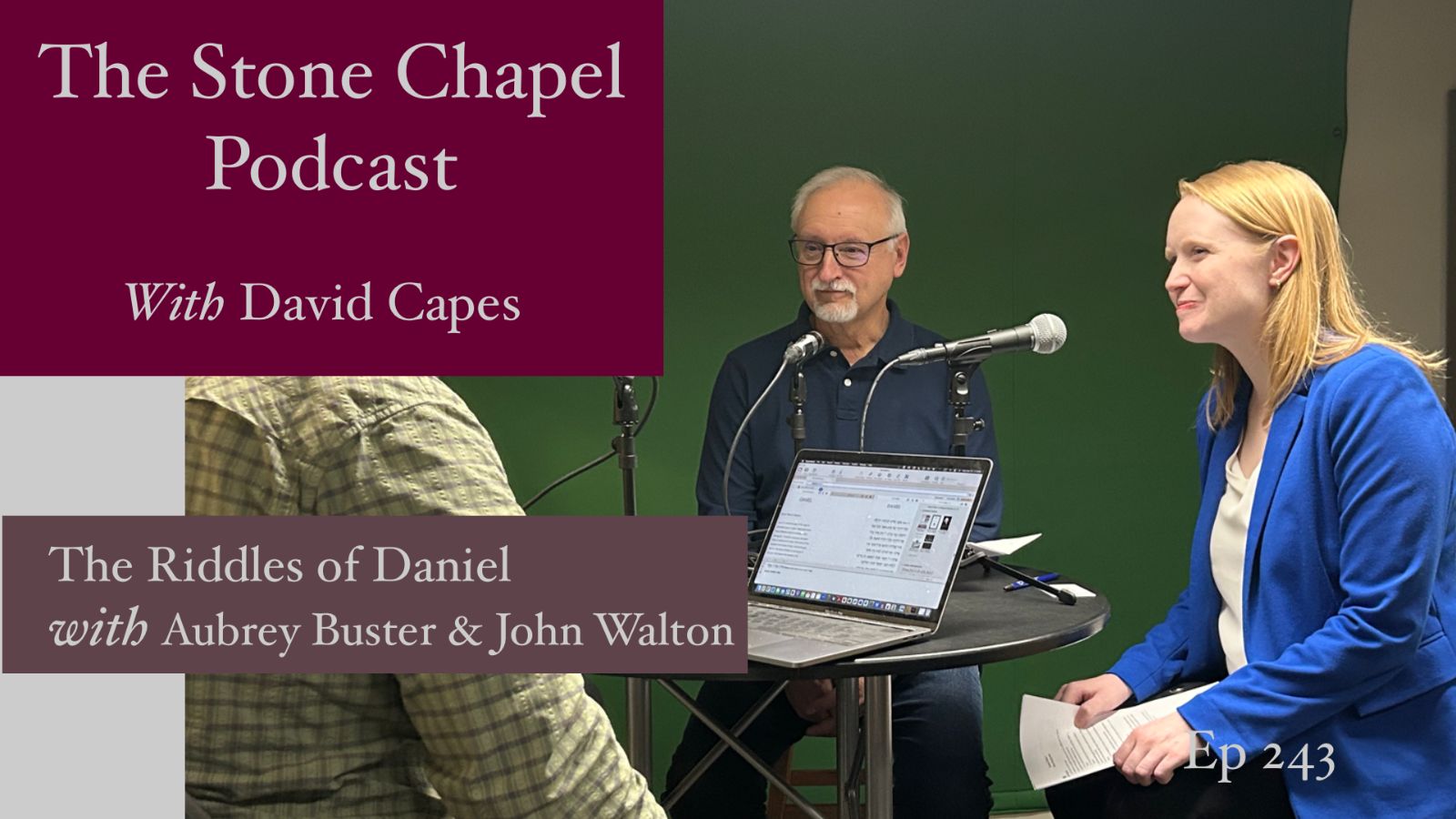
The Riddles of Daniel with Aubrey Buster and John Walton

To hear the podcast (20 min, The Stone Chapel Podcast) click here.

Drs. Aubrey Buster and John Walton have been hard at work for seven years writing a commentary on the book of Daniel. They join David Capes on “The Stone Chapel Podcast” to talk about some of the key questions surrounding the book. Daniel is one of the most colorful books in the Old Testament. It is often misunderstood and misapplied. Buster and Walton will solve every riddle!


“The Stone Chapel Podcast” is part of the ChurchLeaders Podcast Network.
For a transcript of this episode click here: https://churchleaders.com/podcast-episode/stone-chapel-riddles-daniel-aubrey-buster-john-walton
This podcast is about 20 minutes in length.