Page 12 of 26

The Bilingualism of Ruth with Timothy Lim: Ruth 2:21-23

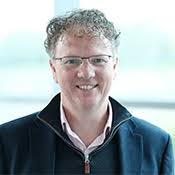
The narrator of the book of Ruth preserves small but telling mistakes in the Hebrew uttered by the character Ruth, who was a Moabite immigrant to Israel. How are these clues to the narrator’s intentions? Dr. Timothy Lim is Professor of Hebrew Bible & Second Temple Judaism at The University of Edinburgh. He works broadly in the Hebrew Bible, ancient Judaism, and the origins of Christianity, while concentrating in the biblical canon and the Dead Sea Scrolls. He has published The Earliest Commentary on the Prophecy of Habakkuk, among other things.

To hear the podcast click here and scroll down to the podcast, published July 25, 2023.

Making a Car out of Spare Parts with Mark Lanier: Acts 15

At a crossroads in the nascent Christian mission the “apostles and elders” conferred to discern where the Spirit of God and the Scriptures were leading them. The question: What is required of the Gentiles for salvation? James cited Amos 9 which foretold the restoration of David’s “fallen tent” so that the “remnant” of humankind would seek the Lord. As Mark Lanier explains, it is that word “remnant” that ties into a major OT theme. Mark Lanier is a practicing attorney, a teacher in his local church in Houston, Texas, and the founder of the Lanier Theological Library (co-sponsor of this podcast) among other projects in service of the church. In earlier episodes he talked about the library and about the word Behold! in Matthew’s Gospel.

To hear the podcast click here and look down the list of our latest podcasts.

Exegetically Speaking” is a weekly podcast of the friends and faculty of Wheaton College, IL and The Lanier Theological Library. Hosted by Dr. David Capes, it features language experts who discuss the importance of learning the biblical languages—Hebrew, Aramaic, and Greek—and show how reading the Bible in the original languages “pays off.” Each podcast lasts between seven and eleven minutes and covers a different topic for those who want to read the Bible for all it is worth. Click on the ⓘ symbol below for each episode to read the description.

If you’re interested in going deeper, learn more about Wheaton’s undergraduate degree in Classical Languages (Greek, Hebrew, and Latin) and our MA in Biblical Exegesis

You can also hear Exegetically Speaking on SpotifyStitcherApple Podcasts, and YouTube. If you have questions or comments, please contact us at exegetically.speaking@wheaton.edu. And keep listening. 

The Divine Warrior Myth and Andy Angel

Andy Angel came to the Lanier Theological Library in Houston and discussed with David Capes some ideas he had about “The Divine Warrior” in Scripture. 

Who is Andy Angel? 

Andy is the Director of Formation for Ministry in the Diocese of Oxford in the UK. 

He arranges and plans for the theological education of the clergy and the lay people in the Anglican Church. 

Andy is an Englishman and an Anglican clergy.  For a time he served as a pastor-teacher in Lima, Peru. He is a husband and father.  And he’s is also an author. 

“The Divine Warrior” What does that mean?

There are passages in the Bible that describe God as a warrior for his people.  When they are defeated, when they are down for the count, God arrives to fight for them. 

And God’s coming is described in amazing pictures and images, such as God coming on the clouds, the falling of the stars from heaven, the mountains melting beneath his feet, the valleys quaking at his presence. 

This is more than metaphor;  it is figurative language, because the truth of it cannot be captured in words. As an example, he talks at length about Psalm 18. 

Jesus as the Divine Warrior

Also in this podcast he turns his attention to an upcoming book about the Divine Warrior occurrences in the book Mark. 

He is exploring how and to what extent Jesus’s conflicts with the demonic forces, diseases, and human power structures picture Jesus as the Divine Warrior. 

If this is what Mark had in mind as he wrote his Gospel, he is operating with a very high Christology.

Andy’s Books

Here are more of Andy’s books:

Intimate Jesus: The Sexuality of God Incarnate

The Jesus You Really Didn’t Know

Playing with Dragons: Living with Suffering and God

For a transcript of this podcast, click here.

More resources

Want more Stone Chapel Podcasts on some great topics. Just click here.

What’s more, you can get information on upcoming lectures at Lanier Theological Library. Just click here.

To hear the podcast (about 20 min.) click here.

“To Cast the First Stone” with Tommy Wasserman

To cast the first stone is an expression in English and in Swedish.  It comes from a beloved passage in John’s Gospel (7:53—8:11). 

Tommy Wasserman talked recently with David Capes on The Stone Chapel Podcasts about a book he co-authored with Jennifer Knust.  It is entitled To Cast the First Stone: The Transmission of a Gospel Story (Princeton University Press, 2018).

Who Is Tommy Wasserman? 

Tommy Wasserman grew up in Sweden and became a follower of Jesus during his teen years. He has distinguished himself as one of the world’s top textual critics of the New Testament. 

His judgment and attention to detail sets him apart in the discipline.  His enthusiasm for textural criticism is infectious.

He is a professor of New Testament at the Örebro School of Theology in Sweden and a professor of biblical studies at the Ansgar Theological School in Norway. 

To Cast the First Stone Stories

One of the well known stories from the Gospel of John has to do with a dramatic confrontation between Jewish leaders and Jesus over a woman “caught” in the act of adultery. 

Even casual Bible readers observe a change in the type or the addition of brackets around the story.  If they read in the margins, they discover that the earliest and best manuscripts do not contain that story. 

So, it is unlikely that it was in the first version of the manuscript.  Only later did this episode enter into the tradition. 

Jennifer and Tommy take great care to trace how this account came into the early manuscripts and has become a mainstay of our own Bible tradition

What Scholars are saying about the book

Here is what Chris Keith has to say about it:

“Knust and Wasserman use the story of the adulteress to illustrate the fascinating transmission history of gospel literature and the various personalities and forces that contributed to the process. To Cast the First Stone will undoubtedly become the standard book on this story.”

Chris Keith, author ofThePericope Adulterae, the Gospel of John, and the Literacy of Jesus

To watch the panel discussion featuring Tommy Wasserman and Dan Wallace click here.

To watch David Capes’ interview with Tommy Wasserman and Dan Wallace at Biblical Literacy (Champion Forest Baptist Church) click here.  

More resources

To hear the podcast (20 min.) click here.

Want more Stone Chapel Podcasts on some great topics. Just click here.

What’s more, you can get information on upcoming lectures at Lanier Theological Library. Just click here.
A Visit to Tyndale House with Peter Williams

To hear the podcast (18 minutes) click here.

Cathy, my wife, and I visited Tyndale House recently when we were in the UK. 

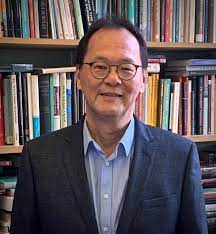
It was our first time there, and we were welcomed warmly by many including Peter Williams. Peter is the Principal and CEO of Tyndale House Center for Biblical Research in Cambridge.

Tyndale House

Peter describes Tyndale House as “a residential research library and worshiping community.” 

It started in 1944, before D-Day, as a center for Bible research.  While Europe was engulfed in war, many with vision saw the need for such a center. And they imagined it in the shadow of one of the world’s great universities.

Peter has been with us before on The Stone Chapel Podcast to talk about Tyndale House.  To hear that podcast (18 minutes) click here.

A New Initiative

On this visit to Tyndale House Peter and I discussed an important plan the staff has to become a greater and greater resource to majority world scholars. 

The fact of the matter is that resources (like colleges, universities, libraries, accommodations, and lecturers) are not spread evenly around the world.

Most churches in the world are not staffed by trained pastors. And as the church in the west grows greyer, the church in the global south is younger and more energetic.

What Tyndale House is doing

So Tyndale House is making more space and greater resources available to church leaders from Madagascar, Egypt, Congo, Brazil and many other countries around the world.

Some of these church leaders and scholars come from war zones and countries where Christians are in a persecuted minority.

For them Tyndale House is an oasis in the desert, but inevitably all return home with friendships, connections, and learning that lasts a lifetime.

To learn more

To learn more about Tyndale House go to their website: Tyndalehouse.com.  They have podcasts, newsletters, and other resources available. 

Peter was one of our earliest lecturers at the Lanier Theological Library.  To watch his first lecture with us click here.

More resources

Would you like a transcript of this podcast? Click here.

And you can get more Stone Chapel Podcasts on some great topics. Just click here.

What’s more? You can get information on upcoming lectures at Lanier Theological Library. Just click here.