Page 16 of 17

Working through Philippians: Paul’s Dilemma

Paul’s Dilemma—1:12-30

Paul wanted the Philippians to know that his imprisonment had not stopped the advance of the gospel.  First, the whole praetorian guard was abuzz with the message of Jesus the Anointed due to Paul’s influence.  Second, other preachers (“brothers”) had been emboldened despite Paul’s chains; they spoke the word of God without fear, motivated by love (1:12-14).  Third, for reasons unknown, some had taken an adversarial posture to Paul and were attempting to exploit his imprisonment and thereby inflict him with their own injury (1:15-17).   Despite their partisan preaching, the imprisoned apostle was encouraged and pleased.  The reason is this: no matter what their motivations were, Christ was being preached in places and in ways that promised a great harvest for the gospel.Paul

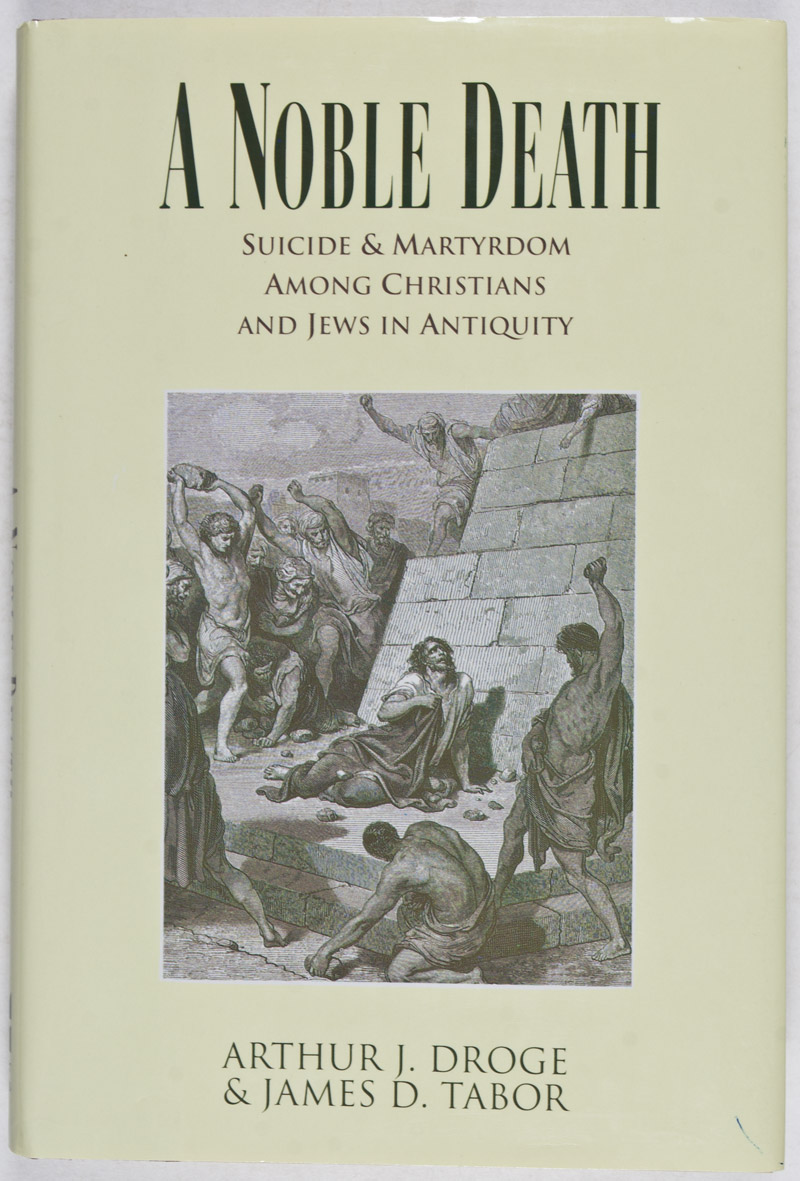
If you read between the lines of Paul’s letters, it seems he expected to be released soon from his chains.  The Spirit of Jesus working together with their prayers would lead to his deliverance.  Still, what he wanted more than anything was to honor Christ in his body, whether in life or in death.  He wrote famously: “for me to live is Christ, to die is gain” (1:21).  This was his dilemma; he was pressed between the two (1:23).  On the one hand, he could go on living; life in the flesh, even in prison, meant that Christ would have his body through which to live.  On the other hand, he desired to depart this flesh and to be with Christ, a state far better for him personally and perhaps even the gospel.  If his imprisonment had meant the advance of the gospel on so many fronts, how much more his death might lead to even greater progress.  Some have wondered whether Paul was contemplating suicide or forcing his martyrdom, chosing the time and place of his death rather than falling prey to Roman cruelty on their terms.  This sounds strange to modern ears, but in the ancient world suicide did not have the stigma we associate with it.  In some cases it was a “noble death,” the lesser of two evils.[1]  What seems sure is that Paul felt he had some control over his life and death at this time.  For now, he would choose life, not for his sake, but for the sake of the gospel and for the Philippians (and likely his other churches). Noble Death by Tabor
Philippians 1:27-  Live consistent with the gospel

So Paul was confident he would live, be released and make his way back to Philippi to aid in their progress and joy in the faith.  Whether he was present or absent, he urged them to live lives worthy of the gospel.  For Paul this meant a radical unity of spirit and mind in the presence of diversity, the continual threat of self-interest, and the potential  threat of active opponents (1:27-30).  The gospel of reconciliation required that they stand firm in one spirit and strive together, as if they were a single soul, for the sake of the good news.  Not only had God granted them the gift of faith, leading to salvation, but they also were gifted to suffer for Christ’s sake.  This meant entering into Paul’s sufferings and imprisonment as well as facing their own adversaries.

The unity Paul desired for the Philippian church was consistent with the call they received to be “in Christ.”  It was not baseless or powerless.  It acknowledged the presence of Christ’s comfort, the motivation of love, the participation and power of the Spirit, and the reality of divine mercy and compassion (2:1).  Given these spiritual resources, it was well within Paul’s right to ask them to fulfill his joy by having the same mind, same love, and the same soul (as it were).  On a practical level, this meant (a) doing nothing from selfishness, (b) considering the surpassing value of others over oneself and (c) looking out for the interests and needs of others rather than constantly self-seeking.  The most persistent nemesis of the church’s unity is found in the members’ personal agendas and lack of humility.

Next time we will consider the Philippian hymn, an amazing passage which many believe was an ancient Christian hymn sung or chanted in churches around Paul’s mission.  With it Paul makes Jesus “the lordly example” of what a life of humility and service look like.


[1] See James Tabor’s excellent book,  A Noble Death: Suicide and Martyrdom among Christians and Jews in Antiquity 

Working through Philippians

Over the next few weeks I plan to work my way through one of Paul’s best known letters, the letter to the Philippians.  Some of these thoughts have been published earlier in the book I co-authored with Randy Richards and Rodney Reeves, Rediscovering Paul: An Introduction to His World, Letters and Theology (InterVarsity, 2007).  I expand them significantly here.   I welcome your comments.  Rediscovering Paul cover

A few initial thoughts

The letter to the Philippians is often referred to as “the epistle of joy.”  The title is well deserved because “joy” and its sister traits abound in the letter from beginning to end.  Despite the circumstances attending the letter—Paul’s imprisonment, the threat of false teachers and apparent rifts in the congregation—Paul prayed with joy (1:4), endured incarceration with joy (1:18), instructed the Philippians on how to fulfill his joy (2:1-11), pondered the possibility of his death with joy (2:18) and admonished them to live joyfully (3:1; 4:4).  For the apostle joy is not a mood that can be worked up or attained apart from faith; it is the gift and the fruit of the Spirit.   Joy (Greek, chara) is the by-product of the work of divine grace (Greek, charis).  Those who have received God’s favor through Christ Jesus are able to experience joy even in the midst of suffering.  Therefore, joy is not dependent on favorable circumstances; it is based upon “the Lord” and his work in our lives.  That is why Paul encouraged them to rejoice “in the Lord.”  The Lord is both the cause and the sphere of life’s joys.  Moreover, a believer is able to rejoice in suffering with the full assurance that these hardships are producing a wealth of patience, character and hope (Rom 5:3-4).  Joy’s sisters are hope and peace.  Hope manifests in joyful waiting for the fullness of salvation at the parousia (Phil 3:20-21).  Peace, according to Paul, protects our hearts and minds by turning anxieties into thanksgivings (4:4-7).

Philippians 1:1-11

Paul addressed “the epistle of joy” to the saints at Philippi “with the overseers (episkopois) and ministers (diakonois )” (1:1).[1]  This is the some of earliest evidence we have for the division of labor and shared leadership in the early church.  Although we cannot distinguish accurately the functional differences between overseers and ministers[2], this is clear evidence that “offices” existed at this time.  Based upon its use in other places, we may conclude that overseers engaged in a ministry of teaching and providing general leadership and guidance to the churches.  Similarly, “ministers” took on teaching and preaching responsibilities in the church and may have served as traveling missionaries.[3]  The fact that Paul listed “overseers” before “ministers” in Philippians 1 and 1 Timothy 3 may indicate a fledgling hierarchy in the making.

In other letters Paul described ministry functions in terms of spiritual gifts or charisms (e.g., 1 Corinthians 12, Romans 12, Ephesians 4).  Because of this–and perhaps modern anti-institutional bias–some interpreters have tried to distinguish sharply between charism and office.  They theorize that Paul’s charismatic, Spirit-led communities lost their “enthusiasm” giving way to less dynamic, hierarchical institutions.  According to this perspective, the loss of charism was inevitable as time progressed and regrettable.  Some have even used this as part of a developmental model to argue that letters like Philippians, 1 Timothy and Titus—letters that refer to established offices–were written later, perhaps even into the second century AD.   But are charism and office so different as to be mutually exclusive?  Not at all.  First, even in those letters where charism figures prominently (especially 1 Corinthians), some gifts are considered higher gifts.  Prophecy is always ranked first among the charisms.  Furthermore, the gifts themselves are under the control of the gifted.  They are to use them to build up the congregation in an orderly fashion.  Second, most scholars today agree that Philippians is a genuine letter of Paul written just a few years after 1 Corinthians.  The letter clearly depicts a church where overseers and ministers were active, recognized and set apart from the rest of the congregation for a continuing work of leadership, preaching and teaching in the church.  They may have even been paid for their service.[4]  In the end, no good reasons exist to suggest these leaders in Philippi were somehow less Spirit-led or Spirit-gifted than Paul’s other congregations.  The work of the Spirit does not necessarily contradict order and hierarchy.

In a sense Philippians is a celebration of the friendship and partnership that existed between the apostle and the first church founded in Macedonia.   In his thanksgiving he set the tone of the letter by explicitly citing “your partnership in the gospel from the first day until now” (1:5) as the basis for his gratitude toward God.  Paul was confident that the one who began the good work [in that partnership] would complete it at the day of Christ Jesus (1:6).  The apostle concluded the letter by thanking the Philippians for their recent financial gift.  In so doing they became “partners in his affliction,” namely, his imprisonment for the sake of the gospel (4:14).  This was not a new arrangement but a renewal of concern for their imprisoned founder.  Indeed no church partnered with Paul in the ministry more than the Philippians (4:15).  They were partners in the gospel and in God’s grace (1:5, 7).  They shared the fellowship of the Spirit (2:1) and hopefully would imitate Paul in seeking to share the sufferings of Christ (3:10).  From first to last, this letter celebrates their partnership and, no doubt, deepened their resolve not to abandon Paul in his time of need.


[1] Some translate episkopos with “bishop” and diakonos with “deacon.”  We must be careful not to read later church polity and ecclesiastical offices back into Paul’s Christian communities.

[2] Paul provided instructions for the qualifications for “overseers” and “ministers” in the Pastoral letters (1 Timothy 3) but he did not set up any sort of “job description.”

[3] Ellis, Pauline Theology: Ministry and Society, 95-96.

[4] Ellis, 95-96.

Paul and Scripture (pt. 1)

Paul’s theology developed in large part due to charismatic exegesis, i.e., Spirit-inspired interpretations and proclamations of Israel’s sacred Scripture.  For the apostle the gospel of Christ fulfills God’s promises to Israel.  The death, burial and resurrection of Jesus are “according to Scripture” (1 Cor 15:3-8).  This does not mean that the OT predicts the death, burial and resurrection of the Messiah.  It does mean that Paul finds the story of Jesus a compelling climax to God’s covenant with his people.  In this sense all of Scripture finds it focus in the man from Nazareth.St. Paul 

Paul is a man immersed in Scripture.  He speaks its language.  He thinks, hopes and imagines in its symbols.  He writes his letters with it resonating in his ear.  Like a tuning fork it provides for him pitch, even as he produces the timbre.  He situates his discourses within the symbolic world created by Israel’s sacred texts. But already these Scriptures are awash in intertextuality with fragments of earlier stories echoing in the later chambers of sacred words and promises.   Paul continues the intertextual practices of his ancestors in faith, extending Scripture beyond their day to his own, finding its fullness in the Lord Jesus Christ.

Paul’s considered the Scriptures “holy” and prophetic (Rom 1:2).  They are the oracles of God entrusted to Israel (Rom 3:1-2).  He proclaims that all Scripture is God-breathed and beneficial for teaching, reproof, correction and training in righteousness (2 Tim 3:16).  He appeals to Scripture at key moments as the final word (Galatians 3-4).  When God speaks, that settles the matter.

When writing to his churches, Paul used the OT in three ways: (1) quotations, (2) allusions and (3) appropriations of theological themes. Some of these are intentional; others appear to be unintentional.  But this is what you would expect from someone steeped in Scripture.  Although it is not possible to distinguish accurately between a quotation and an allusion, most scholars have concluded that Paul cites the OT approximately ninety to one hundred times in his extant letters.  He quotes from sixteen books altogether, but mostly from the Pentateuch, Psalms and Isaiah.  The majority of his citations are found in Romans, 1 and 2 Corinthians and Galatians.  Allusions to Scripture are more numerous; sometimes just a few words can conjure up the appropriate biblical image for Paul to make his point.  There are some letters without explicit citations; still one finds echoes of scriptural themes and appropriations of biblical imagery in nearly all the apostles correspondence.


Busy Isn’t a Virtue

In the January-February edition of Relevant magazine (relevantmagazine.com) there is an article by Christine and Adam Jeske entitled “13 Signs You Need to Get Unstuck.”  Number 7 in their 13 signs is this: “Your Standard Response to, “How Are You? Includes the Word ‘Busy.’”  Their article got me thinking about several things but especially about a problem which I think many of us have.  Whether we are “busy” or not—and we usually are—that has become everyone’s stock response.  How many times have you told someone you’re “busy” in the last week or heard others say they are “busy”?  I know I have.  It seems like we are addicted to busy-ness.busy image

We treat busy as if it is some virtue, but it is not.  Drug dealers and sex-traffickers can be busy.  So can health care workers and CEOs. But busy is not a virtue. In fact, it can be a real problem for our souls if we think somehow our worth is tied up with how busy we are.  Are we trying to justify our existence or our value?  Are we trying to underscore that we have skills that in short supply?  As Christine and Adam point out, we are all expendable, the sooner we realize that the better.

The real virtues, the real excellence of life, are found in other things.  Aristotle set the course for ethics when he defined the virtues as a balance between deficiency and excess.  The four cardinal virtues are: temperance, prudence, courage, and justice.  The Church over the centuries added to this number three theological virtues: faith, hope, and love (see 1 Corinthians 13). As you read carefully through the Scriptures, you will come across various lists of virtues.  Nowhere will “busy” be listed among them.  Here’s an example.  Paul lists the fruit of the Spirit as: unconditional love, joy, peace, patience, kindheartedness, goodness, faithfulness, gentleness, and self-control (Galatians 5:22). Do you see “busy” in there.  No.  I didn’t think so. Virtue, not busy-ness, is where true excellence and value are found.

The answer to our addiction to busy-ness involves repentance.  The Greek word which translates “repentance” means literally, “a change of mind.”  In other words, we have to change the way we think about these matters. We must realize that busy-ness can and will kill you physically and spiritually.  We must confess to God and ourselves that our true value is not found in how much we accomplish but in becoming a person “conformed to the image of  [God’s] Son” (Romans 8:29). We must create sacred times and spaces to rest and live according to a different rhythm.  The Scriptures call this “the Sabbath.” Take a nap. Read something just for fun. Go for a walk. Share a meal with a friend. Take a real vacation.  Your work—for yourself, for your boss, and for God—will become more meaningful and productive if you learn to live into a restful rhythm of life.  A friend of mine says it this way (pardon the alliteration): divert daily, withdraw weekly, abandon annually.  The point is this: God made us to rest regularly in order to be at our best as we partner with Him in the ongoing work of creation.

The next time someone asks you, “How are you?” Resist the temptation to justify your existence by saying , “Oh, I’m busy . . . “  Instead, break the cycle of addiction and try some other response like, “I’m learning to rest.” 

What do you think is the best response to the question: “How are you?”


The Curse of the Law

There is a phrase in Galatians 3.13 which is often misunderstood:

 “Christ redeemed us from the curse of the law, having become a curse for us—for it is written, “Cursed be everyone who hangs on a tree– . . . “ (RSV)

The phrase I’d like to consider is “the curse of the law.”  What did Paul mean by it?  How did/does Christ redeem us from it?  All this talk of blessing and curses probably strikes you as kind of strange.Torah scroll

Well, let’s back up to consider the broader context of the letter. 

Not long after Paul left the churches he founded in Galatia false teachers moved in and started teaching a form of the gospel which was not good news at all. These false brothers were insisting that non-Jews live like Jews in order to get in on the benefits of Christ.  What does it mean to live like a Jew?  Well, several things.  They would have to observe Sabbath as a day of rest, keep certain dietary rules and regulations, celebrate Jewish holidays, promise to uphold all of God’s law, which included men being circumcised.  Paul referred to these as “the works of the law.”

When Paul heard his churches had been infiltrated by these Judaizers (as we call them), he fired off the letter we call “Galatians.”  His essential argument is this: no one—Jew or Gentile—is put into a right and proper relationship with God by doing “the works of the law.” Instead, the faithfulness of Jesus has made it possible for those who put faith in Jesus to be made right with God.

In Galatians 3 Paul argues that faith all along has been what made rightness with God a reality.  It started with Abraham and his covenant.  It’s evident in the message of the prophets as well.  Those who trust in “the works of the law”—remember, dietary rules, Sabbath observance, circumcision—soon find they are living contrary to the law.  For Paul, it is clear the law is not the means of salvation. To try to make the law into something it was never intended is foolish.  The law does not justify.  It never did.  It was never meant to. 

So here is where our phrase “the curse of the law” comes in.  Jesus, God’s Anointed, has redeemed us from the curse of the law.  What did Paul mean?  To some degree it depends on what “of” means? You need to know that the word “of” is not found in Greek.  It is commonly supplied in English to express the relationship between two words (e.g., the love of God, the friend of sinners, the rock of ages).  In Galatians 3 the words are “curse” and “law.” So what is their relationship? In large measure it has to do with how the Greek genitive case—now I’m getting really technical—is interpreted.  Let’s start with what Paul did not mean.  Paul did not mean that the entire law is a curse.  That would be what is known as an epexegetical use of the genitive.  So: “Christ redeemed us from the curse, namely, the law, . . . “ Some have taken this approach and unfortunately missed Paul’s point altogether.  No Pharisee like Paul would have ever thought of the law as a curse.  If you want to know what Jews like Paul thought of the law, read Psalm 119.  The longest chapter in the Bible is a celebration of the law, its goodness and its benefits.  After that, notice that even before he came to Christ Paul felt confident before God precisely because he was  blameless before the law (Philippians 3:4-6). I think we can safely rule out the epexegetical genitive.  Well the best candidate for understanding what “of” is may be found in the partitive genitive.  The partitive genitive expresses the relationship between a part and a whole.  For example, in the phrase “one of my friends”.  The set is “my friends.” The subset is “one.”  The “one” is part of a whole, “my friends.”  This is probably the best way to read the phrase “the curse of the law.”  The set is “the law.” The subset is “curse.”  The phrase “the curse of the law” could be rendered “the part of the law that pronounces curses.”

“OK,” I can hear you saying, “now in English.”  If you haven’t noticed, there are places in the law—especially Deuteronomy 27-28 (part of the law)—where curses are pronounced against those who violate the terms of the covenant.  Ancient treaties and covenants always included a list of blessings and curses, announcing what would happen if one party kept or broke their promises.  It’s much the same today in modern contracts when a lawyer spells out the trouble you’ll be in if you violate the agreement you made.  In those days the penalties for breaking a promise were called “curses.” I suggest the best way to read Galatians 3:13 is this way: Now Jesus the Anointed, the Liberating King, has redeemed us from that curse-part of the law. How? He did it by becoming a curse for us, that is, becoming subject to the law that said “everyone who hangs on a tree is under the curse of God” (Deuteronomy 21:23).  Since Jesus hung on the cross, he fell under the curse. Now how did the cursed one—Jesus—liberate us from the part of the law that pronounces curses?  In a word, resurrection.  When God raised Jesus from the dead, he vindicated him as His Messiah and effectively reversed the curse, not just the single curse which affected Jesus but the entire system of curses which affected all of humanity.  In the resurrection Jesus became the curse-buster. As a result, the curses associated with the first covenant have been rendered null and void through Christ’s faithfulness. This apparently had been God’s purpose all along.GhostbustersLogoLarge

I’ve met Christians who question why we read the Old Testament.  “The New Testament has all we need,” they say.  “Jesus did away with ‘the curse of the law.’”  Well, yes and no.  He did away with that part of the law that pronounces curses, but he didn’t do away with honor your father and mother, or do not steal, or do not murder.  He didn’t do away with love God with all your heart, soul, mind, and strength.  In fact, Jesus repeats these directives, affirms them, and makes them central to his own teaching.  Yes, Jesus reversed the curse so that blessing might extend to all people who put faith in Him.  But the law in all its beauty and goodness remains.