Page 3 of 4

Paul’s Gospel

A few years ago (March 2009) I was invited by Father Donald Nesti, director of the Center for Faith and Culture at St. Mary’s Seminary, Houston, TX, to give a lecture on Paul’s Gospel at St. Mary’s Seminary in Houston, Texas.  I was one of four lecturers on the topic.  The first lecture was by Ben Witherington, the second Carol Osiek, and the final lecture was given by Daniel Cardinal DiNardo (I think it was before he was Cardinal). It was a great experience for me.  I thought I’d share the link with you.  They did a marvelous job capturing the PowerPoint with the lecture.  Comments are always welcome.


The Grandmothers and Grandfathers of Jesus–“The Begats”

Here at the beginning of Advent are a few thoughts for you to consider.

Like a lot of people I tried reading the Bible through one year.  I was in my teens and was working my way through the King James Bible.  When I came to Matthew 1, often called “the Begat” chapter, I remember my eyes glazing over and skipping ahead.  You see the first part of Matthew 1 is a carefully-crafted geneaology of Jesus.Gospel of Matthew  Here is how the beginning reads in the KJV:

1 The book of the generation of Jesus Christ, the son of David, the son of Abraham.

Abraham begat Isaac; and Isaac begat Jacob; and Jacob begat Judas and his brethren;

And Judas begat Phares and Zara of Thamar; and Phares begat Esrom; and Esrom begat Aram;

And Aram begat Aminadab; and Aminadab begat Naasson; and Naasson begat Salmon;

The “begats” continue through three ranks of fourteen generations.  I found the list of names terribly uninteresting and irrelevant so I scooted ahead.  I knew little to nothing about these people and the whole thing seemed to be TMI–too much information.

Well, now I have a different perspective.  I find the Begat chapter one of the most interesting and provocative chapters in Matthew’s Gospel.  Let me give you a few reasons why.  First, in a day when geneaologies did not include the names of women–despite their obvious importance in “begetting” children–Matthew includes the names of  several key women to signal that in the Kingdom of God women will have a new and important role.  Second, Matthew also included allusions to people with scandalous pasts.  Tamar, for example, played the harlot and was impregnanted by her father-in-law.  David fathered Solomon through the wife of another man, Uriah.  Remember Bathsheba?  Matthew could have ignored those embarrassing moments, instead he highlighted them and brought them front and center in order to show that Jesus would be a friend of sinners: an important theme in several of the Gospels.  Third, Matthew underscores how Jesus’ family line includes non-Jews like Ruth the Moabite, grandmother to King David.  She had converted to Judaism (see Ruth 1) and ultimately married into what would be a royal line.  If the blood of the nations is already flowing in the family of Jesus, then it makes perfect sense that magi from the east would hurry to greet and worship the new born king and Matthew would end his account with the Great Commission.  Go and make disciples of the nations.

There is more to the geneaology than this, but these are a few of the highlights.  These may be just a list of names to us, but to Matthew and his first hearers they were their spiritual and physical ancestors.  For him it was like opening up a family photo album and telling a few stories.  And the best story was yet to come.

A. O. Collins Lecture featuring Dr. Richard Bauckham

The School of Christian Thought at Houston Baptist University is pleased to announce that Professor Richard Bauckham will deliver the A. O. Collins lectures for fall 2013.  Professor Bauckham’s title for this lecture is: “Mark’s Topography: The Cognitive Map of a Capernaum Fisherman.”

The geographical information in Mark’s Gospel, especially about Galilee, has often been thought to be confused and certainly presents some problems. The lecture uses the idea of a ‘mental map.’ The way we construct our spatial environment in our minds is very different from the maps we see on paper or on screen. A close look at Mark’s geography shows that it makes very good sense if it reflects the mental map of a Galilean fisherman based in Capernaum.
bauckham

The lecture will be held November 5, 2013 in Belin Chapel at 7.00 pm (Central) on the campus of Houston Baptist University.  The lecture is free and open to the public.

A Brief Biography:
Richard Bauckham was until recently Professor of New Testament Studies and Bishop Wardlaw Professor in the University of St Andrews, Scotland, and is now Professor Emeritus at St Andrews.  He was born in London in 1946, and educated at Downhills and Merryhills primary schools and Enfield Grammar School. He then studied at Cambridge, where he read history at Clare College (gaining a B.A. Honours degree, first class, and a Ph.D.), and was a Fellow of St John’s College for three years.  After teaching theology for one year at the University of Leeds, he taught historical and contemporary theology for fifteen years at the University of Manchester, before moving to St Andrews in 1992.  He is a Fellow of the British Academy and a Fellow of the Royal Society of Edinburgh.  He retired in 2007 in order to concentrate on research and writing, and is Senior Scholar at Ridley Hall, Cambridge, where he does some teaching for the Cambridge Federation of Theological Colleges. He is also a Visiting Professor at St Mellitus College, London. From 1996 to 2002 he was General Editor of the Society for New Testament Studies Monograph Series. He is an Anglican (but not ordained), and was a member of the Doctrine Commission of the Church of England for some years. In 2009 he was awarded the Michael Ramsey prize for his book Jesus and the Eyewitnesses, and in 2010 the Franz-Delitzsch-Award for a volume of collected essays, The Jewish World around the New Testament. He has traveled widely giving lectures and conference papers. Though his permanent home is now in Cambridge, he returns to St Andrews frequently. When he can find the time, he writes poetry, and has also written two children’s story books about the MacBears of Bearloch (published on his website: http://richardbauckham.co.uk/).

His published works include:
Jesus and the God of Israel (Eerdmans, 2008)
Jesus and the Eyewitnesses (Eerdmans, 2008)
Climax of Prophecy: Studies on the Book of Revelation (T & T Clark, 2000)
2 Peter, Jude in Word Biblical Commentary (Thomas Nelson, 1983)
The Testimony of the Beloved Disciple: Narrative, History, and Theology in the Gospel of John (Baker, 2007)
The Theology of the Book of Revelation (Cambridge, 1983)

The lecture will be held in Belin Chapel in the Morris Cultural Arts Center on the campus of Houston Baptist University.
The A. O. Collins lectures began in 1993 with the goal of bringing recognized scholars to address the university community in current trends in theology, religious studies and philosophy.  The series is named for Dr. A. O. Collins who chaired HBU’s Department of Christianity and Philosophy until his retirement in 1990. Over the last two decades, due to the generosity of former students and friends of the university, top scholars from around the world have lectured on our campus on a wide range of topics on religion and philosophy.

Some of our past lecturers have included:
Dr. James H. Charlesworth, Princeton Theological Seminary
Dr. Walter Brueggemann, Columbia Theological Seminary
Dr. Charles Talbert, Baylor University
Dr. Ellen T. Charry, Princeton Theological Seminary
Dr. Luke Timothy Johnson, Emory University
Dr. Alan Segal, Barnard College, Columbia University
Dr. Samuel Proctor, Duke University
Dr. John Howard Yoder, University of Notre Dame
Dr. James W. McClendon, Jr., Fuller Theological Seminary
Dr. Michael J. Gorman, St. Mary’s Seminary
Dr. Larry Hurtado, University of Edinburgh

Please join us for this lecture.  It is an important event for our campus and community.  Should you have questions, please contact the acting chair of the Department of Theology, Dr. Ben Blackwell, at 281-649-3000.


Working through Philippians: Paul’s Dilemma

Paul’s Dilemma—1:12-30

Paul wanted the Philippians to know that his imprisonment had not stopped the advance of the gospel.  First, the whole praetorian guard was abuzz with the message of Jesus the Anointed due to Paul’s influence.  Second, other preachers (“brothers”) had been emboldened despite Paul’s chains; they spoke the word of God without fear, motivated by love (1:12-14).  Third, for reasons unknown, some had taken an adversarial posture to Paul and were attempting to exploit his imprisonment and thereby inflict him with their own injury (1:15-17).   Despite their partisan preaching, the imprisoned apostle was encouraged and pleased.  The reason is this: no matter what their motivations were, Christ was being preached in places and in ways that promised a great harvest for the gospel.Paul

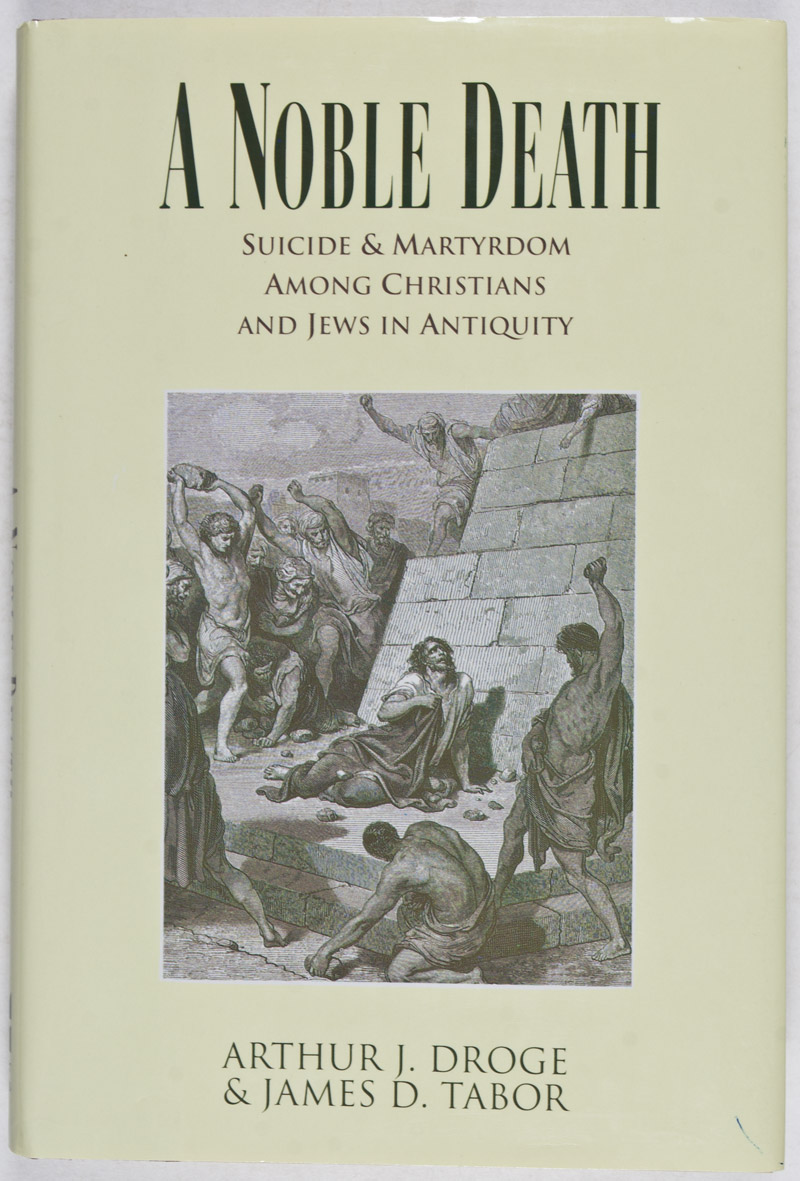
If you read between the lines of Paul’s letters, it seems he expected to be released soon from his chains.  The Spirit of Jesus working together with their prayers would lead to his deliverance.  Still, what he wanted more than anything was to honor Christ in his body, whether in life or in death.  He wrote famously: “for me to live is Christ, to die is gain” (1:21).  This was his dilemma; he was pressed between the two (1:23).  On the one hand, he could go on living; life in the flesh, even in prison, meant that Christ would have his body through which to live.  On the other hand, he desired to depart this flesh and to be with Christ, a state far better for him personally and perhaps even the gospel.  If his imprisonment had meant the advance of the gospel on so many fronts, how much more his death might lead to even greater progress.  Some have wondered whether Paul was contemplating suicide or forcing his martyrdom, chosing the time and place of his death rather than falling prey to Roman cruelty on their terms.  This sounds strange to modern ears, but in the ancient world suicide did not have the stigma we associate with it.  In some cases it was a “noble death,” the lesser of two evils.[1]  What seems sure is that Paul felt he had some control over his life and death at this time.  For now, he would choose life, not for his sake, but for the sake of the gospel and for the Philippians (and likely his other churches). Noble Death by Tabor

Philippians 1:27-  Live consistent with the gospel

So Paul was confident he would live, be released and make his way back to Philippi to aid in their progress and joy in the faith.  Whether he was present or absent, he urged them to live lives worthy of the gospel.  For Paul this meant a radical unity of spirit and mind in the presence of diversity, the continual threat of self-interest, and the potential  threat of active opponents (1:27-30).  The gospel of reconciliation required that they stand firm in one spirit and strive together, as if they were a single soul, for the sake of the good news.  Not only had God granted them the gift of faith, leading to salvation, but they also were gifted to suffer for Christ’s sake.  This meant entering into Paul’s sufferings and imprisonment as well as facing their own adversaries.

The unity Paul desired for the Philippian church was consistent with the call they received to be “in Christ.”  It was not baseless or powerless.  It acknowledged the presence of Christ’s comfort, the motivation of love, the participation and power of the Spirit, and the reality of divine mercy and compassion (2:1).  Given these spiritual resources, it was well within Paul’s right to ask them to fulfill his joy by having the same mind, same love, and the same soul (as it were).  On a practical level, this meant (a) doing nothing from selfishness, (b) considering the surpassing value of others over oneself and (c) looking out for the interests and needs of others rather than constantly self-seeking.  The most persistent nemesis of the church’s unity is found in the members’ personal agendas and lack of humility.

Next time we will consider the Philippian hymn, an amazing passage which many believe was an ancient Christian hymn sung or chanted in churches around Paul’s mission.  With it Paul makes Jesus “the lordly example” of what a life of humility and service look like.


[1] See James Tabor’s excellent book,  A Noble Death: Suicide and Martyrdom among Christians and Jews in Antiquity 

“God’s Restorative Justice”

There is a phrase in Paul’s letters that is notoriously difficult to translate.  It occurs at key moments in major letters like Romans and 2 Corinthians.  Most often the phrase is translated into English as “the righteousness of God.” cropped-p52.gif

Notice how the New American Standard Version renders Romans 1:16-17: 

                 16For I am not ashamed of the gospel, for it is the power of God for salvation to everyone who believes, to the Jew first and also to the Greek.

            17For in it [the gospel] the righteousness of God is revealed from faith to faith; as it is written” But the righteous man shall live by faith.”

Now Romans 3:21-22 (NASV):

            21But now apart from the Law the righteousness of God has been manifested, being witnessed by the Law and the Prophets,

            22even the righteousness of God through faith in Jesus Christ for all those who believe; for there is no distinction; . . .

Now I must admit that I like the NASV translation; I have preached from it for years.  It is probably the most literal translation into English we have.  If you have the time, interest, and skill in doing a word study, it is an important translation to have around. Unfortunately, it tends to obscure the meaning of important phrases.  People without a background in Scripture may be left scratching their heads.

So what does “the righteousness of God” refer to?  It is an important question.  Without getting that straight you can’t make heads or tails out of what Paul is saying in these key passages.  Scholars, by the way, have been debating the significance of this phrase in these letters for centuries.  So it is no easy task.

When we were translating THE VOICE, we spent a great deal of time working through Paul’s language in these passages.  We ended up with what I think is a faithful and helpful rendering.  Here is The Voice translation of Romans 1:16-17:

                 16For I am not the least bit embarrassed about the gospel.  I won’t shy away from it, because it is God’s power to save every person who believes: first the Jew, and then the non-Jew.  17You see, in the good news, God’s restorative justice is revealed.  And as we will see, it begins with and ends in faith.  As the Scripture declares: “By faith the just will obtain life.”  

 Now Romans 3:21-22:

             21But now for the good news: God’s restorative justice has entered the world, independent of the law.  Both the law and the prophets told us this day would come.  22This redeeming justice comes through the faithfulness of Jesus, the Anointed, who makes salvation a reality for all who believe—without the slightest partiality.

Now, we think this translation may help shed light on what Paul is getting at here in these verses.  Still we decided to put some commentary with it to help people think through it.

The phrases “God’s restorative justice” and “this redeeming justice” refer to the same reality.  For Paul the good news—the gospel—is located in history in the incarnation and sacrificial death of Jesus. By “God’s restorative justice” Paul means first that justice and rightness belong to God; they reflect his character.  God, and no one else, determines what is right and what is just.  But as we all know, character is reflected in action.  “Justice” and “righteousness” are nouns of action.  This means that God’s justice must express itself in some way.  So it is in the nature of a just God to act, to restore, to redeem, to repair the world.  This God did primarily through His Son, Jesus the Anointed, the Liberating King. 

Paul would not shy away from these bold claims.  The gospel is power.  It is God’s power to restore the world to what it can and ought to be.  But how do we get in on what God is doing?  Well, Paul says, it begins with and ends in faith.  It begins with God’s faithfulness to His creation, then His covenant people.  It continues with Jesus’ faithfulness to God to enter our broken realm to give Himself in love to begin its repair.  It ends with us, hearing and responding in faith and following faithfully in his footsteps. 

Now read the passage again with these things in mind.  Do you see it?  Did you get it?  Recognize that from the beginning God has been at work to restore our world so badly damaged by sin and corruption.