
The New Testament in Color (Part 1) with Esau McCaulley

David Capes
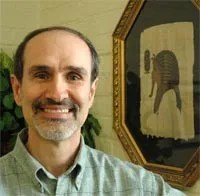
Joining me today is Esau McCauley, Associate Professor of New Testament and Public Theology at Wheaton College. He worked with NT Wright, our friend from the University of St Andrews.
David Capes
Welcome. We’re so glad that you’re here.
Esau McCaulley
Oh, thank you. Happy to be here. I’m enjoying it, it’s a beautiful, beautiful space.
David Capes
Yes and you’ve had a chance to enjoy our Yarnton property.
Esau McCaulley
Yes! How many people have done both? I’ve done double duty.
David Capes
You are twice blessed.
Esau McCaulley
I have to go back once the library is finished there, so I can see it fully operational.
David Capes
We’re going to be talking about your commentary that you led. It’s a great project, and it’s called the New Testament in Color: A Multiethnic Bible Commentary. Tell us about this project.
Esau McCaulley
My first book looked at the contributions of the African American church to understanding Christianity in America, and the distinctive ways in which African Americans have read the Bible and made sense of it. And so, when I wrote that book, it was supposed to be a part one of a two part series. But a lot of people bought the first book. And then wanted to talk about it, some people attacked it, so you’ve got to defend it. So it took longer to help people understand what I did and didn’t mean by African American biblical interpretation. Maybe we’ll talk about that for a second to help everyone understand New Testament in Color.
David Capes
That was one of my questions down the way. Let’s talk a little bit about that, because you wrote a chapter on that here.
Esau McCaulley
Yes, when we think about African American biblical interpretation, we could get this idea that skin color creates interpretations of the Bible. Like there’s something in the melanin that makes you a magical Bible interpreter. That’s not what I mean at all. What I mean is the color of your skin impacts the way that you’re treated, and when you’re treated a certain way, it raises certain kinds of questions that you then go to the Bible and answer. A good example is a lot of African Americans are told that Christianity is a white man’s religion. So, we have to show from the Bible that Christianity isn’t a white man’s religion. And I doubt that most pastors in white churches have had people come and say, Christianity is the black man’s religion, prove to me that it isn’t. So the questions that are raised in an African American context aren’t the same questions that are raised in other contexts.
The other example that I use, is say it’s 1954 and Brown v. Board of Education has just passed. Now African Americans are thinking through the questions of how we’re going to be Christians in this new context. Now consider, it’s also 1954 but it’s a white pro-segregation congregation, and the pastor has to stand up and make the case from the Bible. Different context produces different questions. Now you still turn into the Bible for answers. The Bible is still the authority, but the kinds of questions that you ask are influenced by your context. Then sometimes because of your context, you ask questions that lead to insights that people might not otherwise notice.
Another example that I give is say you’re getting ready to teach a youth group, and you’re looking through the Bible. You’re thinking, what’s a good message to say to 15-year-olds. And because 15-year-olds are in your head, you see exactly how this part in Paul, will speak exactly to the experiences of a 15 or 16 year olds. Those insights are there, but you didn’t notice them, because normally you think about preaching to adults. In actuality, the people who you imagine when you read the Bible influence the kinds of things that you notice, and it influences the kinds of things that you bring out of the text. So if we only have one group of people in mind when we interpret the Bible, it leads to the possibility that we don’t see things that are there. I’m not talking about distorted meanings. I’m talking about motivated readings, the things that you notice because you’re attending to them based upon your experiences.
Maybe another example of this, not to belabor the point. Let’s say you’re a woman, and you’re told that women are intellectually inferior. You ask the question what does the Bible actually say about women. And as a woman, you might be really motivated to get this right, because this matters for who you are. Motivated readings aren’t necessarily bad, sometimes they can help us or sometimes they can hinder us. Motivated readings are a fact of reality, and African Americans in the United States have had unique experiences that have required us to answer questions that other communities haven’t. And there’s a deposit of reflections that have arisen from a community that we call the black church, that have formed habits of reading. And so that’s what we call African American biblical interpretation. Not skin color producing readings, but skin color producing experiences that we then bring to the text that influence our reading.
If that is true of African Americans, it’s also true of people from other cultures. We thought what happens if you bring different cultures together to create a commentary that itself reflects what the church is supposed to be, people from every tribe, tongue and nation, reading the Bible together to make sense of it. The New Testament in Color is black, white, Asian and Latino scholars who are together working on a commentary on the New Testament. Not that we all did each one individually, but each person wrote a commentary on a particular book. We have Native American peoples, First Nations indigenous peoples, African Americans, Asian Americans, Latinos and white scholars. We wanted to focus on North American minorities. We saw things like the Asian Bible Commentary and others that were more Bible commentaries looking at evangelicalism, listening to the voice of the global church. And we said, it’s great to listen to the global church through the African Bible Commentary, the Asian Bible Commentary. These things are important, but what about the ethnic minorities in our midst? What we wanted to do was to create something that brought together the ethnic minorities in the United States along with the majority culture, because white is a culture, and bring them together to create a commentary.
David Capes
There are white scholars here, as well as black scholars. Gene Green, Michael Gorman, Amy peeler is one of the editors. Janette Oak. Tell us about Janet.
Esau McCaulley
Dr. Oak is an Asian American scholar at Fuller Seminary. She focuses on I & II Peter. She’s also working on a commentary right now on all three letters of John. She is an accomplished scholar, Associate Professor at Fuller. She’s published tons of stuff. Amy peeler is a colleague at Wheaton. We love Wheaton. Amy is a Hebrews scholar, and she also deals a lot with gender, and is helping us understand how the Bible describes women and the gifts that God has given to women and how the church needs to embrace the entire body of Christ to effective ministry. She’s a great New Testament scholar. She did a commentary on Hebrews. Her commentary on Hebrews just came out sometime recently. There’s Osvaldo Padilla. He’s a Latino scholar at Beeson Divinity School, which is in Alabama, you know, God’s country! He is working on the commentary on the Pastorals.
All of them are accomplished scholars. We wanted three things from the people who participated. One, we wanted them to affirm that Scripture is the final authority for Christians, for faith and practice. Although we agree to disagree on a lot of stuff, we wanted to say we agree on the Bible. The second thing we said was we wanted the creeds to function as the consensus around Christian belief as well. So the Nicene Creed, the Apostles Creed. We said, there’s a bunch of denominations here and we think the creeds are a good summary of what it means to be a Christian. So If you say you’re pro-creed, and you say you like the Bible, you could be in the commentary. Beyond that, we gave people freedom. We also said we didn’t want people to speak for their entire ethnicity. I’m not speaking for black people, but I’m a black person speaking from that perspective. This is not the black view on A, B and C. It’s more of a person who’s being unapologetically themselves in the interpretive process.
David Capes
Let’s talk a little bit about your own journey growing up in Alabama. Your own experiences. You were born in the 70’s I I take it.
Esau McCaulley
I like to call myself a child of the 70s. I was born in October of 1979. I’ve lived in the 70s, the 80s, the 90’s to 2000’s, the 2010’s and the 2020’s.
David Capes
Six decades. Wow. It’s you were barely in the. 70s.
Esau McCaulley
That month and a half in the 70s is a wild time.
David Capes
Talk about your journey toward faith.
Esau McCaulley
I think that a lot of the times I talk more about decisions for Jesus rather than a decision for Jesus. I feel like a significant part of my spiritual journey is, over time, giving over more and more of my life to God. Because I was raised in a Christian home. My grandparents, on both sides of my family, were Baptist ministers. My mom was a minister. She became a minister after I did so I always say she followed me into ministry. She got ordained, a couple of years ago. We were in church every Sunday. We were kind of from a rough part of town, and so we tended towards binaries. You were either in the church or in the streets. And so I was in the church, but the levels of my piety waxed and waned over the years. And so I didn’t say it out loud to the pastor, but I’ll come to church on Sunday and if you preach a good sermon, I’m going to be a Christian that week. If you don’t, you lost me. I’ve always kept that with me, because I know what it’s like to go into church and say, if I don’t hear a word from God today I don’t know what’s going happen.
That was most of my childhood, and I would say that for me, Christianity was in periods in my life, more of a survival mechanism. It was the way out of my neighborhood. And maybe I can say, to make a very long story short, I was a college football player, division three at the University of the South. And it was shocking to go from the poverty of my high school to college at the University of the South, where there’s so much money and so much wealth. They joked because in football we had “two a days”, where you practice twice a day. Tennessee was super hot, and I was the only person who actually ever gained weight during “two a days”. Because I never had that much food in my life. You could just go to cafeteria and eat whenever you want. I couldn’t believe it.
But one of the things that I realized is that after I was no longer in this place where I didn’t recognize my need for God, I said, Oh, God had done what he needed to do. He got me to college, and I was in college. It was a more theologically progressive place, where I took the religion classes. They told you that none of this stuff was true, and all of the kind of stuff you hear as a stereotype of religion and higher education. It’s really good to tell a college student that God doesn’t care what you do. It wasn’t that intellectually stimulating. There were the fraternity houses down the road and the professors telling me I can do what I want. That’s a toxic mix for a college student. And I kind of drifted away from my faith for a little bit in college. Then there came this particular moment in college.
It was Christmas break when I had a significant spiritual moment in my life. I’m home for break, and I’m back in my room, but it’s no longer mine, because when you leave our house, there’s too many people to leave an empty room. So it was my sister’s bedroom and everything’s pink now. I was listening to Etta James, like old school and Billie Holiday; this sad jazz music on this thing called Napster. If you’re a certain age, you remember when you could download illegal music before there were streaming services. I wasn’t praying or anything. I’m just listening to sad jazz music. Because I had everything that I wanted in college. I was no longer worried about what I was going to eat. I was doing well in school. I was doing well in sports. I was not praying. I was just listening to depressing jazz music because it felt like it matched my mood.
I had this idea that I think comes from God. It was like a sentence, fully formed. What happens when you receive everything you ever wanted, but it’s not sufficient to bring you joy. And I said that has summarized my college experience. And then the answer to the question that the Spirit was, maybe you should try God and take him seriously. And so that was the spiritual transformation. But because I had been in college and I had all of the intellectual stuff taken away from me, I had to go through this process of reading myself. I had to say, I know I’ve had this experience of God, but now I had to make intellectual sense of this and that. And actually, the study to make sense of what I’d experienced spiritually led me down the road to becoming, ultimately, an academic. I began to answer those questions that I received in those courses.
Jeannine asked me, what is it that I like doing the most? And I said, talking to students about the Bible and giving them the confidence to live their lives on the basis of each text. Because I know what it’s like to have a professor whose goal was to take that away from students. I want to give that back to students, to say we are not fools for trusting in the God who revealed these texts. And so that’s a little bit of my spiritual journey.
David Capes
Great story.
This is the end of part one of my interview with Esau McCaulley. Part two is coming up next week.



You must be logged in to post a comment.