Preston Sprinkle has gone from uncertainty to certainty on the question of women in leadership in the churches. He sets his reasoning and thinking through scripture in a new book, From Genesis to Junia. The subtitle describes it as an honest search for what the Bible really says about women in leadership. Preston joins David Capes on The Stone Chapel Podcast to talk through some of the issues.
All right, we’ve got people listening to this podcast that are in every part of the world, and they may not use creeds in their church. Let’s start with a very basic question. What exactly is a creed?
Michael Bird
A creed is normally something that the ancient churches put down to express and define its faith. Both the content of their faith, but also the boundaries of their faith. We are the people who are committed to this articulation of the gospel, this story. We believe these truths about God the Father, God the Son, God the Holy Spirit. The creeds put it down in a simple way that can be understood, can be learned, can be repeated in the context of worship, or also it can be utilized in the context of discipleship.
David Capes
You could use it as a platform for discipleship. I grew up in a tradition and people listening to this podcast may have and they say things like that, “no creed, but the Bible”. That statement assumes that you have a Bible.
Michael Bird
Yes, exactly. Or you have one translated into a language you can read,
David Capes
And that assumes you can read. Throughout much of the history of the church, people couldn’t read and there weren’t Bibles in every home.
Michael Bird
Yes, exactly. Before Bible apps, before the printing press, the main way people encountered scripture was through what they heard in church. They learned things they were taught early in their faith. Maybe they memorized Psalms and prayed elements like that. That’s why I get a little bit confused when people say the Bible is the center of our faith. Now, I’m a biblical scholar. I really do love me some Bible. I know you do too, David. But what was the center of people’s faith before the printing press?
One of the main ways people learned Christian doctrine was, from their priest or pastor in their church, teaching them. Simple things by the prayers they prayed, being able to recite the Lord’s prayer or the Apostles Creed was the main foundational tools that people had when they wanted to understand who God was towards them. The Creed is like a portable theological syllabus you can take with you wherever you go. Wherever you can recite the Lord’s Prayer, you can begin thinking, praying, teaching and speaking about God, just by using the Apostles Creed as the template.
Now you’re an Anglican by confession, and you confess weekly, like other Anglicans, the Nicene Creed, which is longer. And you could write the same thing with the Nicene Creed, as you do with this, but it would be a longer book!
Michael Bird
Well, Anglicans are technically meant to say the Apostles Creed every day. We’re meant to say the Nicene Creed on Sunday, and I think we’re meant to say the Athanasian Creed on Trinity Sunday. But that one’s very long. We don’t normally do that. But you’re right, the Nicene Creed does sound very similar to the Apostles Creed, but it’s longer. That was a creed that was based in a more polemical context, where the church was trying to figure out, who is Jesus in relation to God the Father. Is Jesus semi divine, miniature divine, or is he divine in the same way as God the Father? And it kicks off with the Creed of Nicaea in 325 AD and then climaxed when the Creed of Nicaea augmented or polished up a bit in 381 AD, in the first council of Constantinople. So, yes, that is very similar to the Apostles Creed, but it’s got a little bit more of a focus on the person of Jesus, God the Son, and a little bit more of a polemical rationale behind it as well. It’s saying, these are where the limits of the Christian faith are.
David Capes
I’ve always thought it’s kind of interesting because the Creed begins with something like pisteuo or credo. “I believe.” I believe. But it’s almost always “we”. We do that together. There are times that I would want to say, this is what we believe. We believe in God the Father. We believe in the Holy Spirit. We believe in the Holy, apostolic, catholic Church. I have a little bit of a push back there. I wish we would say this together, as with what we believe. Because we have come to this faith together. We’ve not come to it in isolation. I didn’t arrive here on my own. I arrived here as a result of the ministry and the witness of thousands of people before I was ever born.
Michael Bird
Yes, and that’s the amazing thing. When you recite the Apostles Creed, you are joining a chorus, a communion of people around the world, right now. Think about it horizontally, but also then vertically. There are men and women well over a thousand years who have been reciting this creed as a statement of their unity in the one God. So it’s about, one LORD, one faith, one baptism, that we all share. And the symbol of that sharedness of our unity with each other is the way we recite the Apostles Creed.
Another interesting fact is in a lot of churches, it’s customary to recite the Apostles Creed after the sermon. The logic there is, after you’ve heard the sermon from a teacher, it’s like now evaluate that against what it says in the creed. So, you go from the sermon to the Creed to remind you of what we’ve just heard but now think of it over and against the Apostles Creed. Hopefully the two are unified together. That provides, if you like, the immediate report card or the lens, the context in which you should remember and evaluate the sermon you’ve just heard. To ensure that you’re not just getting the ravings and strange, peculiar thoughts of some rando preacher! We now confess the Apostles Creed, because that is the context which we understand and evaluate the Word of God when it’s preached and presented to us. So that’s another interesting tradition.
We should give everybody cards, and they can hold up a card from 1-10.
Michael Bird
A scoring card, a scoring system.
David Capes
Yes, exactly but the Russian judge would always lower it several levels. You know how that goes with the Russian judge!
Michael Bird
Yeah, I know. I know
David Capes
One of the things you talk about here, is the idea of faith is fact. I think that’s the way you put it. And people today say you have facts or you’ve got faith and they’re not the same. And I love that little section where you talk about having faith based on fact.
Michael Bird
Faith is certainly far more than ascent to facts. There’s an element of trust. There’s an element of fidelity, even, dare I say, allegiance. But faith does include assenting to certain revealed truths about God. That God is Father, Jesus is Lord, the Holy Spirit is the promise of the Father. What faith does, and this is faith as articulating the content of what we believe, that’s an important element. In the ancient world, Christians were not unique by having important religious or theological beliefs. You can find that in Greco-Roman philosophy. You can find that in various cults, religions and popular practices in the ancient world.
Where Christians were unique, is that they had an enthusiasm to police the boundaries of belief. That is where Christians were very, very unique.They don’t have theology. No, they did have a theology. They did have beliefs. You can read Cicero’s on the nature of the gods as a good example of debates about theology in the ancient world. But Christians really did want a certain degree of precision, particularly when it came to who God is and the relationship of God the Son to God the Father. And it was using belief as the boundary for what it means to behold, believe in God and follow the Lord Jesus Christ. So, faith as fact, was one of the more interesting and the more unique features of the first Christians.
David Capes
Yes, interesting. I really appreciated that section. One of the sections too, that I liked was the harrowing of Hades. That is a piece of the creed that some people would like to do without. You make a good argument that it’s important that we think about that, that we confess that, that we understand that as well.
Michael Bird
Yes, part of the problem is that our older English renderings of the Creed, now the Apostles Creed, is initially a Latin creed. A lot of early translation says that Jesus descended to hell, and people have found that problematic. Because hell is the place of eternal punishment for sinners who rebel against Transcribed by https://otter.ai – 5 –
God. What would Jesus be doing there? You’ve also got the problem of whether hell actually exists yet. Because in the book of Revelation, it says, “Hades will be poured into the lake of fire”. You’ve got the idea that hell doesn’t exist [until in the future]. This is a future state for the wicked who remain resolute in their rebellion against God. So, people have always found that problematic.
The problem goes back to the fact that there are different Latin words for a place in the afterlife. There is inferna and there is Infernum. If I can remember correctly, inferna refers to the waiting place of the dead like Hades, but Infernum refers to the place of everlasting judgment. We could say that there’s a distinction between Greek it would be Hades, the waiting place of the dead and Gehenna, which is hell, the place of everlasting judgment. That distinction got lost in the early Middle Ages, and some Latin manuscripts would interchange inferna and Infernum. So, there was a bit of a confusion that was introduced at at that point.
People would say things like, Jesus descended to hell. What is far more likely and what is more in keeping with what we find in the New Testament and other creedal traditions about the church is to say that Jesus descended to Hades, or he descended to the place of the dead, and that also means we have to bring back Holy Saturday. Now we have good Friday, and the death of Jesus for our sins, and the atonement. We have the resurrection. But on Holy Saturday, Jesus participates in death. He goes down to Hades, experiences the full consequences of death in that way. And then leaves Hades, and comes back to life.
And one area where the Christian tradition has really gone to town, in art, song, poetry, has been talking about what Jesus was doing in Hades and how he took everyone out of Hades, all the saints since Adam. He took them out of Hades and took them up to heaven with Him. So, it’s been a whole tradition discussing that. When Christ descends from Hades into the resurrection and then his ascension, he’s also taking with him all of the Old Testament. saints who are translated from Hades into this new heavenly abode. It’s a very interesting feature of what we would call individual personal eschatology, and something I think is notoriously misunderstood in creeds and confessions these days.
David Capes
I think you make a good point in the book. Here is the blurb on the back of the book by Amy Peeler.
With his quintessential clear and playful prose, Mike Bird presents the glories of the faith received from the apostles. And in the second edition, he makes personal contemplation and communal conversation about Christian faith even more achievable.
That’s great praise! What did you do in the second edition to enhance personal contemplation and communal conversation? What happens here?
Michael Bird
Well, generally, I added about 10% more content to the book. I added a few more paragraphs, clarifying a few things here and there, but at the end of each chapter, I would also add these brief reflections and some questions that people might want to consider and think about. That’s something I’ve tried to do. It’s more than, there’s the resurrection of Jesus, or there’s something on the Holy Spirit. I wanted to give Transcribed by https://otter.ai – 6 –
people some material to think about and to consider after what they’ve read, what they’ve contemplated in this chapter. One of the other things that inspired me to update this book is I found out it’s being used as one of the textbooks for seminary courses in prisons in the United States. Generally, when I talk to my publisher about markets, it’s not one I’m really going in after.
David Capes
That’s not one that you think about. There are a lot of Baptists imprisoned in Texas. I don’t know why! It’s a fun book, and I see that you have readers work with one another too in it. There are also QR codes where they can get information. You’re actually teaching through the book. For people like me that can’t get enough of Mike Bird, where do we go to get more of you teaching and speaking?
Michael Bird
Oh, there’s a few different places. I’ve got my own podcast with the N.T. Wright, called the Ask N.T. Wright, Anything Podcast. I’ve got a sub stack called Word from the Bird, which I spend a lot of time playing around with. And also a YouTube channel called Early Christian History. So that’s kind of what I do in my copious amounts of spare time when I’m not teaching, academic “deaning,” and all those sorts of tasks. I try to put a few things out in the virtual world.
David Capes
For the cost of a premium coffee in the United States, you can have a Word from the Bird on sub stack. That’s the best $7 I spend every month.
Michael Bird
Bless you, and if anything, I hope I’m stopping you from drinking more coffee.
David Capes
Well, you can’t stop me from doing that. In fact, I drink coffee as I watch you, because I know you love coffee so much!
Michael Bird
Yeah, the inside joke here is I have a pathological hatred of coffee. I can’t stand the taste, the smell, or the fact that people spend so much time raving about coffee.
David Capes
Well, there we go. Mike Bird, thanks for being with us today and being a part of this. We’re talking about his book today, What Christians Ought to Believe: An Introduction to Christian Doctrine Through the Apostles Creed. It’s a great book and I would recommend it. I may be using this soon as a teaching tool in our church. Thanks, Mike.
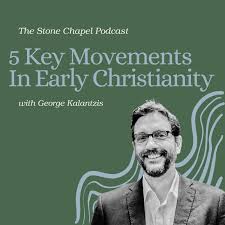
Hi. I am George Kalantzis, and I teach theology at Wheaton College, where I also direct the Wheaton Center for Early Christian Studies.
David Capes
Dr George Kalantizis, welcome to The Stone Chapel Podcast. It’s a great pleasure to be with you. We are here at the Lanier Theological Library. You’re going to be teaching a class on early church history beginning tonight for our certificate program. I have to tell you, there’s been a lot of excitement around this class.
George Kalantzis
Thank you. It’s a great opportunity to try to do 500 years in five hours!
David Capes
That’s all we’ve given you for 500 years? I don’t know what that boils down to per decade or per century, but maybe just one hour per century. It’s going to be coming pretty fast. You’re working on some other projects as well. What are you working on now?
George Kalantzis
I’m finishing a book right now on seven questions that framed and shaped the Christological discussions in the first six centuries. Basically, how did the answer, any answer to Jesus’s question, “who do you say that I am”, frames and brings further questions that need further clarity. And in that process, how the church developed a grammar and a lexicon on how to understand and how to speak of the one we worship.
The other project is on the theology of refugees. It’s not a theology for refugees, but it’s a theology of refugees. I’ve been working with the International Association for Refugees for almost a dozen years now. Refugee work in southeast and the eastern part of Africa, hearing the voices of our brothers and sisters who have been displaced. Who have been forcibly displaced, seeking refuge. How do they see God? How do they hear God? Who does God reveal himself to be to them? It’s the same God we worship. Based on our location where we are as we speak of God and expect to hear God in particular ways. They hear God differently. Their emphasis, for example, is a lot more on the Old Testament. The emphasis is on the prophets and the messages of the prophet, the emphasis on the liberation from oppression.
David Capes
That’s what they know, that’s what they’re experiencing.
George Kalantzis
That’s their experience. God is a lot more, can I use the word tangible, to them than perhaps the God of the universe is to us.
David Capes
A lot of times, people think of God in a far-off way. As in, I’m going to God one day when I die. But they have to begin to see God working in their lives, working in history.
George Kalantzis
Yes, even in relationships.
David Capes
Yes, which is very scary, because they have been, as you said, forcibly displaced. They’re not there in Khartoum or some other place because they want to be. They’ve been forced there by some power, some political power.
George Kalantzis
Political, economic, health. They’re fleeing cholera. They’re fleeing famine. They’re fleeing civil war. They’re fleeing militias. Ten or twelve years ago I remember a question from Pastor Steven, a Presbyterian pastor of South Sudanese. When he spoke, he lifted his left arm, half of it was missing because he was cut off by a machete in an attack. And when we asked him, what do you expect from the next week that we’re going to be together.
He raised his hand and said, by the end of the week, I want to be able to forget. Forget that I had to dig with my hands a shallow grave to bury my wife as we were fleeing the conflict. He never stopped being a pastor. He never stopped being a man of God, and now he’s one of the leaders of the Christian movement in refugee camps. But that relationship is a very different relationship with God and certainty of God than perhaps I have in the suburbs of Chicago.
David Capes
Living in easy circumstances. I can’t wait to see that book. Eerdmans is publishing that. Today we’re going to turn our attention to the history of the Christian faith and discuss briefly, the first 500 year period of the early church. From the time roughly toward the end of the first century, into the fourth, and fifth centuries. What are you going to be talking about in that class?
George Kalantzis
All stories begin with Alexander the Great.
David Capes
You say that because you were born in Athens!
George Kalantzis
You don’t have a middle name of “the” for nothing! We’re going to work through five movements, some of the five key developments in the story of Christianity. And it’s not just simply church history; it’s history of Christianity. In other words, more broadly as a movement than just simply ecclesial. The first one is the break with Judaism. How do the two faith traditions, by the end of the first century, beginning into the middle of the second century, start moving away from one another?
David Capes
Yes, because they’ve been mostly one [people].
George Kalantzis
They have been. It sometimes surprises people when I remind them, Jesus was a Jew. So, we’re all the apostles.
David Capes
Yes, everybody that wrote the New Testament.
George Kalantzis
That’s right. But then we have varying discussions, especially in the second century, as Christianity moves beyond the Judea centered experience into the diaspora experience. That’s where we have interactions with Hellenistic or diaspora Jews and Hellenistic Christians or pagans converted to Christianity. To whom do the scriptures belong? And by that, they mean the Hebrew Bible. What happens with the law? Do we keep the law? Who are the true people of God? That has can be seen perhaps as a bit theoretical. But the lived experience of these people is not just simply theoretical. Because being a Jew, or of the genus of the Jew, as the Romans would recognize them, the religion of the Jews carried with it legal standing. Being a Christian did not carry that.
David Capes
It was a new thing, a new religion [as far as the Romans are concerned].
George Kalantzis
It was a superstition. We had no legal standing. So, do Christians claim the status of the Jew? Do the Jews claim the Christians as their team? How does that work? Fundamental break with Judaism that happens both in theology, but also in legal standing and in outlook.
The second is the movement of interacting with the world around them, because now we’re moving from a Jewish environment such as Palestinian, Judea, Samaria, Benjamine to a much broader environment that is Hellenistic, with its culture, with its philosophy. And we have a variety of Hellenistic Judaism, but also Philo in Alexandria, in Ephesus. But also we have middle Platonism. We have middle philosophical systems that are operative, about God, about ontology, about metaphysics, about morality. So how do Christians adopt, adapt, and interact with those philosophical systems? In the beginning was the logos.
David Capes
You’ve got a pretty important Greek term there.
George Kalantzis
That’s right. What do you want to do with that? We’re going to bring that all the way up to the second, end of the second century, beginning of the third with Tertullian of Carthage, the first great Latin theologian who gave us words and concepts like trinitas, trinity to describe what is “three in one” God. Sacraments, etc.
So how does Christian movement interact with, adopt and adapt aspects of Greco-Roman culture and philosophy. Because not only did they take them in, but they changed them again. In the beginning was the word. That’s not a Jewish concept; that’s a Greek concept. John continues in 1:14 and the Word became flesh. Well, his name was Jesus, right? We adopt and we adapt.
The third would be what is this thing? We call it the church, the ecclesia. Great. How do we organize ourselves? When do we worship? To whom do we pray? How do we pray? Do we baptize? How do we baptize? What is this like? How does it function? So, church organization within that context. And what we’re going to see is that sometimes we think that the earliest church starts with a set organizational system, including worship.
David Capes
Just like what I do every week. People think the same way as I do. They do exactly what we do every week.
George Kalantzis
And from there, it diversifies. In actuality, it’s exactly the opposite. There is so much diversity in the earliest generations, and slowly, slowly, it takes us a few 100 years to standardize, sometimes per region, other times per language, etc, our worship and structure. The Eastern Church and the Western Church don’t have the same structure and organization. The fourth one is going to be what do we actually believe? Who is this Jesus? And if we confess with our mother church and tribe that “Hear O Israel, the Lord, your God, the Lord is one”, but now you have two or three. How do you do that?
David Capes
Really looking at the idea of the Trinity that has developed, that it’s already around. It’s not that it just is birthed in that century. But there’s not really been a system that puts it all together.
George Kalantzis
We don’t have the grammar yet. Pliny, the younger, the famous governor of Bithynia in the second century, in 111 AD said “they pray to Christ as if to a God”. Already from the third generation [of Christians] in Bithynia, up in Pontus and Bithynia, Christians pray to Jesus as if to a God. In other words, praying to Jesus as God is the earliest that Christians do, from very early on. Okay, that’s great, but how do you not have two gods? So, you need to develop language to talk about it.
David Capes
To talk about it, about the oneness of God. At the same time, have a trinity.
George Kalantzis
So what is one? What is three? How do they relate? Does God the Father have a son, produce a son? That’s not a novel idea for the Greeks and the Romans. All their gods are born. They have mothers and fathers. So is that who he is? And if the father birthed the son, who’s the mother? Of course, here we have to talk about Mary. So that basic doctrinal definition, when we come and say, I want to be part of the community, and we say, great, this is what we believe. This is what we believe, and this is what you’re going to be baptized into. “I believe in one God, the Father, the Almighty maker of heaven and earth, of all things visible and invisible”. What does that mean? And if all things have been created by him, by the father, then what about Jesus, or the Holy Spirit. So basic definitions, that’s going to preoccupy the bulk of our time on the second day.
The same person who came over and said, I want to be part of this community, we say this is what we believe? But we don’t stop there. We also say, and this is how we live our life, which is the fifth part. Which is what are the patterns of spiritual and moral life that Christians had in the same letter, letter 96, Pliny to the Emperor Trajan.
Pliny says this is the total sum of their worship. Remember, this is a pagan speaking right, trying to get it right. But he’s a pagan. He has no idea who the Christians are. It’s the first time he meets Christians. He says they gather on a specific day, early in the morning, they pray antiphonally with one another, in other words, back and forth, back and forth from the Psalms, basically. Then they take an oath with one another, to not commit adultery, to not commit murder, do not commit theft, to return a deposit. Then they go away, and at the end of the day, they gather together again for a common, ordinary meal. Can you imagine if our Sunday services ended with an oath? You turn to your neighbor and you take an oath. Like, this week, this is how I’m going to live my life.
David Capes
I’m not going to murder.
George Kalantzis
I’m not going to commit adultery. We will be having a different kind of discussion.
David Capes
It’d be a different kind of service.
George Kalantzis
So how do these patterns develop? How many times a day do you pray as Christians? What days do you fast? Why do Christians fast on Wednesday and Friday? Good question. Because we’re not Jews who fast on Monday and Thursday. It’s community formative. Rituals are community formative.
David Capes
These are the things that we do that set us apart from other people.
George Kalantzis
A simple thing that Christians did from early on, was to cross themselves. You make the sign of the cross. We don’t do it, or at least Protestants don’t do it. But Christians did because they marked themselves in public. You cross yourself in view of others, right across yourself. Others see you.
David Capes
It’s not something you do in private.
George Kalantzis
That’s right. You don’t do it in private only. You do it in public and people see you. And that has consequence in the late third century.
So we’ll come all the way up to there and see the transformation. We’ll close with the transformation of the Roman world from a pagan world to a Christian world.
David Capes
Where Christianity does become legal at that point.
George Kalantzis
That’s right. It becomes tolerated. It becomes legal, and it becomes the only within the span of 120 years.
David Capes
Which, in historical terms, is very fast. Now, persecution seems to have been an important part of the history. You’re going to be addressing throughout.
George Kalantzis
That’s in the break with Judaism, the response to the Roman world. There are reasons for the persecution. Persecution is not “because I don’t like you”. They are accusations. Christians are accused of being seditious traitors because they don’t take an oath. They don’t pledge allegiance to the Roman state and to the Roman emperor, pure military state, like the Romans are. How do you respond to people who do not pledge allegiance to the Caesar.
David Capes
Or do they want to serve in a military? That became a problem as well.
George Kalantzis
That became a problem, especially when Christians are recognized or claimed to not be Jews. Because Jews were exempted from military service for religious reasons. But that was almost 200 years before. It has a long tradition in the Roman world. But you, your group, your people, say you’re not Jews, so you’re not covered by the exemptions of the Jews.
David Capes
History is just messy, the birth of the Christian church in Palestine in the first century, and then its growth in the next 500 years. It’s just really phenomenal to see the expansion of it but also the things that have to take place in order for it to become a religion that is tolerated and then eventually favored, in the Roman world.
George Kalantzis
Christianity, did not grow by leaps and bounds. For the first almost 250 years, Christianity was roughly around 2% [of the population of the Roman empire].
David Capes
Of the Roman of the Roman population.
George Kalantzis
Yes. And then it starts reaching into the sociologically important 10% and then by the end of the third century, it reaches roughly in the mid 20%.
David Capes
By then, they’re formidable.
George Kalantzis
They’re a formidable group politically. Because if a group that is 2% or less of the population, you don’t know anyone in that group. 2% of 100 people that you meet on the street.
David Capes
Maybe 2 in 100.
George Kalantzis
Maybe two, yes. And how do you recognize them? But at10% you think wait a minute. I know some of these people.
David Capes
Yes, I’ve met them. I think I work with one or two of them.
George Kalantzis
When they reach 25%, they live in your neighborhood. So now you pay attention. So how does that work? The other accusation was that they were atheists, and that is not just simply that Zeus in your heart. For the Romans, the relationship with the gods is sacred and pragmatic. It matters if the gods are turning against you as a person, as a city, as a province, as an empire. You’re done for.
David Capes
Calamity is coming.
George Kalantzis
Calamity is coming. Now flip the equation. When calamity comes. Why does it come? And everybody’s thoughts turn.
David Capes
We have 10% of the people who are Christians, and they’re really messing all of us up.
George Kalantzis
That’s right. So, their atheism puts all of us in danger.
David Capes
But the word atheos doesn’t mean what we mean by it.
George Kalantzis
It means that they don’t worship our gods. They don’t give honor to our gods. Romans don’t care if Jesus is in your heart, or Zeus is in your heart, or nobody’s in your heart. They just don’t care. What they care is that each one of us acts in public according to the rituals of Roman religion.
David Capes
And that ensures the safety of the city and all the people. I’m really fascinated by what we’re going to be doing tonight. I appreciate you coming all this way and sharing with us a little of what, what you know.
George Kalantzis
We’re basically doing 16 weeks in five hours.
David Capes
Okay, let’s see how quickly you can talk and we can listen to George Kalantzis, thanks for being with us today on The Stone Chapel Podcast.
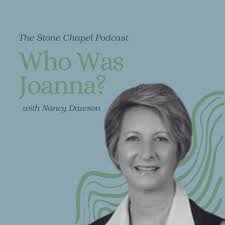
Hi everybody, and welcome to The Stone Chapel Podcast. My name is David Capes. Joining me today is Dr Nancy Dawson, who has been with us before, several times to talk about remarkable women in the Bible, and she’s working on this amazing book called All the Women of the Bible. We’re going to be talking today about one of those women, and her name is Joanna. Dr Nancy Dawson, welcome back to The Stone Chapel Podcast.
Nancy Dawson
Thank you, Dr. Capes!
David Capes
You’ve been here before to talk about the women who are mentioned in the genealogy of Jesus in the Gospel of Matthew. And you’ve also been here before to talk about your book, All the Genealogies of the Bible. You’re working on another one called All the Women of the Bible. Tell us about that project.
Nancy Dawson
There was a theme there. It’s a very exciting project. Broadman and Holman have asked me to write that book. Of course, it covers Old Testament and New Testament women. There’s around 350 women. So it’s a comprehensive, and a little bit daunting task, But very exciting and insightful to see the roles that women have. And why are they there? Why are they mentioned? How do their stories dovetail with what else is going on in the narratives and their overall importance. When you look at a fleshed out view of the women, you see how important they are. They do counter cultural things. I see that they foreshadow many of the characteristics of Christ and also divine characteristics. Through their actions, sometimes words, but definitely through their actions, they do these remarkable things. They are noteworthy.
David Capes
All right, so when should we be able to go to Amazon or go to our local bookstore and pick that up?
Nancy Dawson
It’ll probably be a couple of years. I’m in the middle of the research right now, which I enjoy so much, but getting that down into words and edited takes time.
David Capes
You like the research better or the writing better?
Nancy Dawson
I definitely like the research better. That’s my background but I’ve always been interested in teaching the Bible and writing about men and women.
David Capes
Well, you’re a great teacher. I’ve seen you teach here. I’ve had you come to the course I teach for Truett seminary on the gospels and the book of Acts. You’ve done a great job in those classes. You’re a good teacher as well as a good researcher, and a great writer.
All right, Joanna, let’s talk about Joanna. Joanna is a person that a lot of people may not know very much about. She’s mentioned in passing in some ways, but she’s mentioned in some very important times and places. Let me read one of these texts from the Gospel of Luke. And it’s Luke, chapter eight, verse one.
Soon afterward, he (Jesus) went on through the cities and villages, proclaiming and bringing the Good News of the Kingdom of God. And the 12 were with him, and also some women who had been healed of evil spirits and infirmities. Mary called Magdalene, from whom seven demons had gone out, and Joanna, the wife of Chuza, Herod’s household manager. And Susanna and many others who provided for them out of their means.
Nancy Dawson
Remarkable. Number one, you probably haven’t ever heard a sermon about her, but she’s this Galilean aristocratic woman who is healed by Jesus of evil spirits, along with Mary Magdalene and Susanna. And remarkably, she becomes a disciple or follower of Jesus. The text says that she’s the wife of a Herodian official. And of course, they’re talking about Herod Antipas, who was the successor of Herod, the Great, his father. And this is a real poignant place in the text that tells you about her background and what information she might have about that royal court. And then, she becomes this faithful follower throughout Jesus’s ministry, and she’s going to be a witness, along with other women, to the crucifixion and the empty tomb.
David Capes
She’s gone from Galilee at that point, the Galilean ministry, down to Judea, so she’s traveled with them. Is that correct?
Nancy Dawson
Yes. Her name means “God has given graciously”. She’s named after her father, which might be common these days. Her father’s name was John or Yohanan, and this was a common practice in the Second Temple period. There was research done by a wonderful scholar named Tal IIan, who worked on Jewish women in the Greco Roman world and about 3- 4% of the women are called Joanna. It’s a very common name. Around 46% of the women are called Mary. So, this is why you always see terms of disambiguation for the Mary figures, like Mary of Magdala or Mary mother of Jesus.
And some scholars have speculated that she should be equated with the Junia figure of Romans 16. I don’t adhere to that, but some scholars have said this is a possibility, but they’re usually very tentative, in making that association. She’s married to Herod Antipas’ steward named Chuza. He was an appointee of Herod and had a lot of court responsibilities, overseeing his estates, possibly acting like a steward or a guardian over the ones that would be up and coming for inheritance under Herod Antipas.
David Capes
And they lived in Tiberias you said.
Nancy Dawson
They lived in Tiberias, which was on the western shore of the Sea of Galilee. That town was basically built by Herod Antipas around AD 18-20 but noteworthy is it was built over a cemetery, and so this is not something that goes down well.
David Capes
That’s not really kosher! Tiberias is a thriving city today. If you go to Israel, you’ll see it on that western shore.
Nancy Dawson
It’s part of Galilee. It’s one of the major cities. Jesus grew up in this small Nazareth hometown in the Sepphoris area and so that’s the general area. But what we see with Joanna is that she’s definitely from this elite, aristocratic background. She’s Jewish, and whether her husband was a believer or not, is not clear.
David Capes
You mean a believer in Jesus?
Nancy Dawson
In Jesus. She seems to be a type of informant, both to the Herodian court and also to Jesus and his followers of what’s going on. More than once she said Herod Antipas has heard about Jesus, and he’s curious, and he wants to see him. But he wants to see him so that he’ll perform a miracle for them.
David Capes
He wants to see a show, doesn’t he?
Nancy Dawson
Yes, that’s exactly right. But you can see that there’s this definitely negative overlay. She’s from a wealthy background, so has the luxury of the socially elite. Also, this is a highly Romanized place. The Jews do not like the taxation. They do not appreciate any of the political domination, the economic exploitation. Heron Antipas actually had to pay people to come and live in Tiberias.
David Capes
Like Alaska today, you have to pay people to go live up there. There’s a couple of things I found fascinating from this. She’s mentioned specifically, as well as Susanna, as providing for Jesus and his ministry out of their own means. Let’s discuss that part of it.
Nancy Dawson
These women are following Jesus and that’s strange and counter-cultural for the day. You don’t hear about women being in the entourage of John the Baptist. This is something you hear about only with Jesus. So, this is very striking for that time. Jesus invites women and approves of them being a part of a mixed entourage. So that’s very noteworthy.
What you see is that she is supporting Jesus out of her own personal finances. There was a great book written in 2002 by Richard Bauckham called Gospel Women, and he researched where women would have the ability to have discretionary funds that they could use, possibly separate from their husband. Because Chuza may not have been supportive of this. She has at least some disposable funds at her discretion.
And there’s seven sources. One is that you could have inheritance from your father. Usually, this is like the prodigal son. The father is dead, and then you receive it. But there’s also property that can be acquired by a deed of a gift from your father or mother or your husband. That she could use also. There was at the time of marriage, ketubah money, the marriage contract money. That was what her husband would pay to her in case they were ever divorced or something would happen to him.
David Capes
A prenuptial agreement in a way,
Nancy Dawson
Exactly, yes. She could have tapped into that. The dowry that was paid by her husband to her father, sometimes that is given to the daughter.
David Capes
This could be considerable money that you’re talking about.
Nancy Dawson
Yes, or possibly property. Something like Barnabas, who sold his property to support the ministry. And it could be something like this that she availed, this source of funds and monies to give. And this is so consistent with her name which means “God has given graciously”. Then you see that she, in turn, gives graciously. This is a striking aspect of ministry.
David Capes
There’s a lot of talk these days among scholars about benefactors and patrons and those kinds of things. Benefaction is a particular kind of giving, but what I hear you saying is this is not really “benefaction.”
Nancy Dawson
Not according to that traditional female patron benefactor role where a wealthy person is giving money or provisions for a community in return for status or honor. Instead, she actually joins this itinerant band of followers of Jesus. She is not regarded in any special way. We know from the story of the widow with two mites, she gave everything that she had, and so that was what was praised. Not how much you give, but that you give willingly and graciously. And this is what she does.
David Capes
It’s striking to me that she leaves behind a rather a luxurious life for this itinerant life, sleeping in tents and walking lots of distance and probably doing lots of washing clothes at the river, those kinds of things.
Nancy Dawson
Yes. We don’t really know. The text is silent on what these women actually do. But Luke is so poignant in mentioning this; that it’s women who support the ministry. It doesn’t mean that men did not support the ministry, but Luke is making a statement on what is generally true. And so, you see the mention of her in a Luke 8:3 and then we’re going to see that Luke mentions her again in Luke 24. There’s an inclusio, a literary inclusio about Joanna that I find is again, remarkable.
David Capes
Let me read that text. We’re looking at Luke 24:9.
Now at daybreak on the first day of the week Jesus had been discovered as raised from the dead. Then they, (that is these women) who observed this returned from the tomb and announced all these things to the eleven and all the others. The women were Mary Magdalene, Joanna and Mary, the mother of James, and others who accompanied them, also told this to the apostles. But their story, (that is, the women’s story,) seemed like nonsense, so they did not believe them.
What do you learn from that?
Nancy Dawson
The testimony of women was considered unreliable. I think it was J.D. Atkins on one of the Exegetically Speakingpodcasts that said the old lexicons say that sounded like hum-bug. It’s like just an old wives tale. We’re not going to believe that. It’s just a silly tale that women are saying. But what you see is in all the Gospel accounts, it is women who are present at the crucifixion, at his burial, at the empty tomb and at the resurrection. Now John 19:25 also mentions one of the disciples that was at the crucifixion, and that was John the Beloved Disciple, but you don’t hear any mention about men. And again, this is noteworthy. These women have a staying power, a presence, even in these difficult moments. They’re not running away.
They’re not afraid. They’re there at the crucifixion and they’re at a distance, it says. But then at the burial, they’re taking spices to the tomb of Joseph of Arimathea; and they prepared the body, but because it was a Sabbath, it wasn’t completed. It was done in haste.
David Capes
They had to, by the rules the Sabbath, stop what they were doing with the idea that the when the Sabbath is over, the first day of the week has arrived, which was a day of work, then they would go back finish the job.
Nancy Dawson
And so, this is what the women do. They complete this proper burial ritual. They prepare spices and take them in. They complete that process. But when they arrive at the empty tomb, two angels are there, and they say to the women,
“Why are you looking for the living among the dead? He is not here, but he has risen.”
And the next phrase that’s used is,
“Remember how he spoke to you when he was still in Galilee, and He would be crucified and rise on the third day”.
And then they remembered his words.
David Capes
In other words, the women were there when Jesus was saying all this.
Nancy Dawson
Yes. You see that they don’t even have to touch Jesus or eat with Jesus, or remember the scriptures. They remember his words. And this is what we’re all called to do, is recall the scriptures, recall what Jesus has said. And so, they become these incredible eyewitnesses and servants. Joanna left a life of ease. She reminds me a little bit of Old Testament Abigail, who was married to Nabal, the fool. And she leaves that life of luxury and becomes a wife and follower of the Son of David, and so, there’s these interesting parallels.
David Capes
Yes, there are interesting parallels. What’s one thing you take away from Joanna as you think about your own life here in the 21st Century?
Nancy Dawson
What I see is that we always need to be flexible. We need to consider and be ready to leave that life, that maybe we have had, and be willing to follow a new path. And that Jesus can use you with whatever you bring. For Joanna it was possessions, but it was also a kind of fidelity, and this is what we’re called as Christians to do. And Luke probably uses Joanna as a source for information. The material that’s unique to Luke is called the L material in text criticism. She is giving these personal insights. This is what we all bring. It’s a personal insight. God can use you and remake you. And transform you.
David Capes
I like the idea that Luke is naming his sources, throughout the gospel. He does it, I think, with Mary as well, and in an earlier passage. This is a great, great help, honestly. Maybe somebody will feel now they need to do a sermon on Joanna and encourage women and others who are there, who have the ability to give a gracious gift and be a gracious blessing. Dr Nancy Dawson, thanks for being with us today on this podcast.
Nancy Dawson
Thank you so much.
Description
Dr. Nancy Dawson is back on The Stone Chapel Podcast to talk with Dr. Capes about a woman in the New Testament who followed Jesus. Few could name her or tell us anything about her. Her name is Joanna. She came from elite circles to follow the Nazarene in a less than luxurious life. Luke tells us (Luke 8:1-3) that she supported Jesus’ work financially and was a close follower of him.
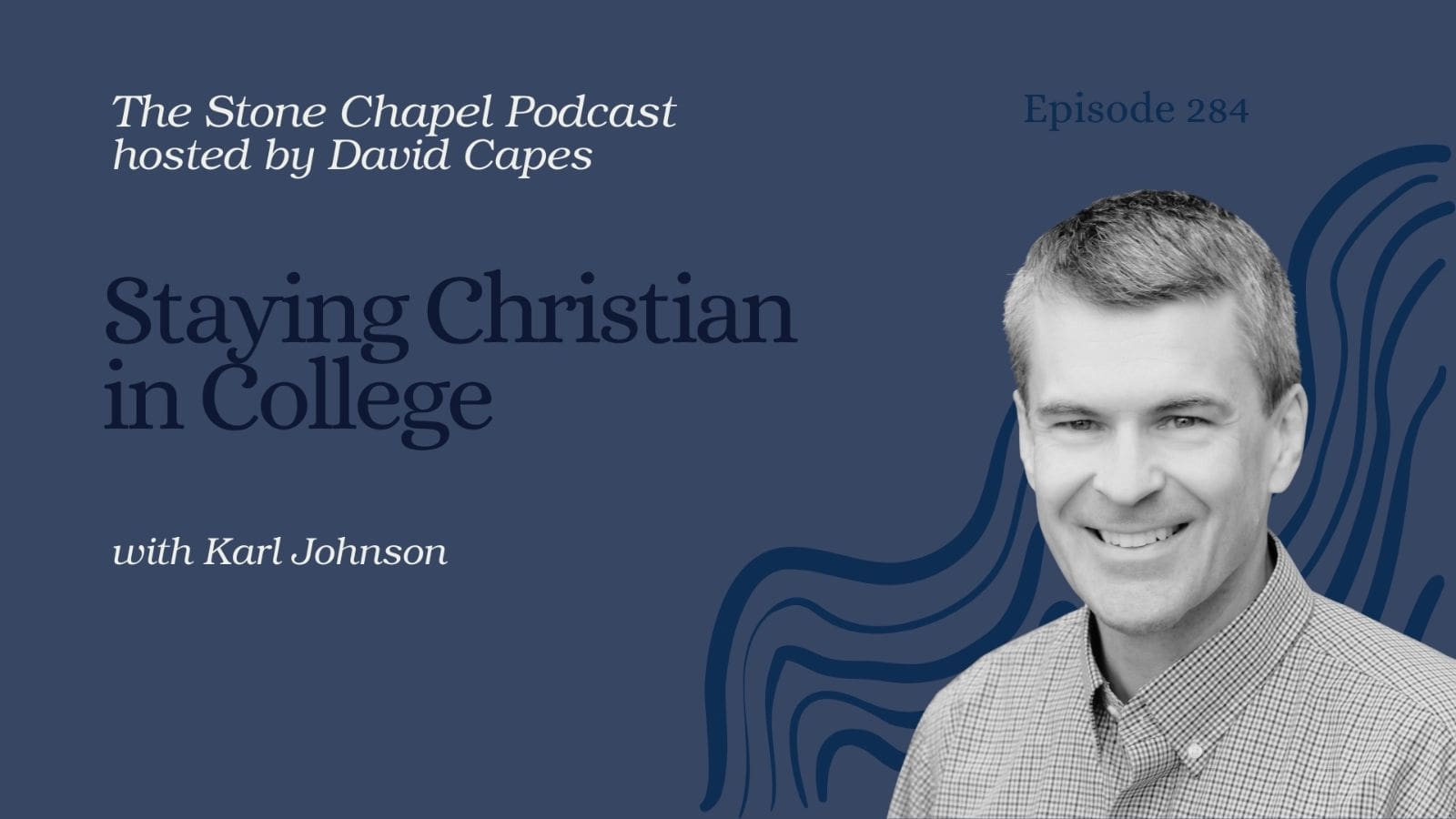
Here is a transcript of my conversation with Karl Johnson. You can hear the podcast here.
This transcript has been edited for clarity and space.
Carl Johnson
This is Carl Johnson. I’m the Executive Director of the Consortium of Christian Study Centers.
David Capes
Dr Carl Johnson, good to see you. Welcome to The Stone Chapel Podcast.
Carl Johnson
Thank you. It’s great to be here with you, David.
David Capes
We are here face to face, and that’s always better. I like it when that happens. We’re going to talk about Christian study centers here in just a few minutes. But before that, let’s talk about you. For those who don’t know you, who is Carl Johnson.
Carl Johnson
Well, a brief way to put it is, I am an accidental Christian educator. I never, never imagined I would be doing what I’m doing now. I’m from the metro New York area. I went to Cornell University, and I had a career in outdoor adventure education. So, I was teaching rock-climbing, white-water paddling, back country travel, wilderness medicine, climbing big mountains internationally. And it was great. I mean, who doesn’t enjoy that sort of thing, right? But somewhere in my 30s, I was at the university, and I got to thinking, the university can hire somebody else to do what I’m doing here. I also have this itch to start a new kind of organization that bridges the gap between the church and the Academy and brings a Christian intellectual presence to the secular university. The university is not going to hire somebody else to do that. And so ,I need to do it.
David Capes
So you were the guy. It sounds like you sensed a call.
Carl Johnson
Yes. I sensed a call. Pulled together a group of pastors and professors. I said, here’s what’s burning in my heart. I don’t know if it’s a crazy idea or not. What do you all think? And they said, we think we should do it. This was back in the late 90s, early 2000s.
David Capes
There are a lot of people today who are concerned about what’s happening in higher ed. And particularly if they send their sons or daughters off to places like Cornell, will they come back with any faith intact at all, or will it be dashed on the rocks.
Carl Johnson
Yes, this is a question that people have been asking me for about 25 years or more. There’s not an easy answer to that. There are real challenges with secular universities. I think we want to steer a middle course between not underestimating these sorts of concerns, but also not overstating them. Probably the most important thing I can say, is that right now, I think it’s actually a better time to attend secular universities for Christian students than a generation ago.
David Capes
Really now, why do you say that?
Carl Johnson
There’s more vibrant Christian intellectual activity on many of our campuses and more resources. And I think part of the change is this. A few generations ago, the difference that it made being a Christian on a campus where there was a greater cultural consensus around certain sorts of issues, the difference wasn’t as stark. Then you get into the post 60s. That’s when those who were in graduate school in the 60s became professors say, in the 80s. That might have been a kind of peak secular moment around that time.
But then in the 90s, Christians start finding their voice, their scholarly voice. And there’s a whole renaissance of Christian scholarship and philosophy and history that began trickling over to other disciplines. Christian professors start having fellowships and organizations where they’re convening association of Christian economists and so forth, where they become more comfortable speaking in a Christian voice. Now you go to some campuses, and you have not just the traditional campus fellowship ministries that have been there for a long time, but you also have on at least three dozen campuses now, these Christian study centers. Which typically have a building that provides a physical hub for the Christian community on campus. And you’ve got students involved in all those fellowships, coming and going, coming and going with the door swinging thousands of times a week. Some of them even have residential facilities.
There’s this visible hub of Christian intellectual activity on these campuses. And there’s speaker series that are coming in monthly or more. Christian professors, some from Christian colleges, some from other secular universities, Veritas Forums and other events that are just giving students plenty of reason. A generation ago, students would go to campus and they have this crisis of faith. Oh, it looks like all the smart people here, all the professors and most of the other students are not believers. And it’s just not like that anymore. Now, there’s so much visible Christian intellectual activity on many campuses, though not on every campus. So, I say it’s actually a better time than it was a generation ago.
David Capes
That’s great to hear. When you “heard” this call was the Christian Study Center movement up and running?
Carl Johnson
Not really. When this idea started burning in my heart there were important intellectual questions that it’s hard to get an answer for either from the church or the university. Because pastors are very busy with other sorts of things or because the university is often just so secular and the faculty members, frankly, are so very specialized that they often are not very well equipped to deal with broad questions of meaning and purpose in the good life.
But these things were burning in me and I started talking to people. Finally, somebody said, you should take a look at what’s happening in Charlottesville, Virginia, because there’s this thing there. It’s called the Center for Christian study. And so, I wrote a letter to the director, and he wrote back, sent me some of their materials, and I saw what they were doing with this public speaker series. I thought, wow, that’s incredibly exciting. I want to do something like that.
And at the very same time, I drove from Ithaca down to New Haven for one of the very first Veritas Forum events. And I heard this whole lineup of speakers that included people like N. T. Wright, who at that time nobody had really heard of. He was a much younger guy at that time, as we all were, and so I got this vision of Christian scholarship. I pulled together these pastors and professors, and I said, hey, let’s do something. Let’s create a new organization and bring in visiting Christian scholars.
But at that time, we’re talking late 90s, early 2000s there was really only one very well established Christian Study Center in Charlottesville. And then there were, a few other very fledgling centers. And so, I started one at Cornell. At that time, I would say, in the early 2000s there was one big center and a handful of others. And in 2007 I invited all the folks I knew doing similar work up to Ithaca for a long weekend. We put our heads together, and we’ve resolved to form what is now the consortium of Christian Study Centers. And in our first year, we had half a dozen member centers.
2008 was when we incorporated. The first little get together that I referred to was in 2007 and in 2009 we’ve got a full-time director, Drew Trotter. Over the years, we’ve grown from that original half dozen member centers to now three dozen, and we’ve got another dozen that are in the startup phase.
David Capes
The goal is to be on secular university campuses, right?
Carl Johnson
That’s the concept, yes.
David Capes
How does your organization exist alongside of InterVarsity and maybe the Catholic Newman Centers and those kinds of things?
Carl Johnson
What we’re seeking for is a very collaborative relationship with the campus ministry ecosystem. And I’ll just use a concrete illustration of what that can look like in practice. When I was on the Cornell campus working in outdoor education back in the 90s, there were probably a dozen or more campus fellowship organizations, and they would occasionally bring in a visiting speaker, and I would sometimes go to hear the speakers. They would usually have 30 or 40 students in attendance, because it was just the students in that organization that would come to hear the speaker. I started networking with the campus minister saying, hey, let’s work together. If one of us is going to bring in a speaker, let’s all co-sponsor and make it a campus wide event. We started doing that, and the attendance increased tenfold. We started getting 300-400 people showing up at events. And it wasn’t really rocket-science. All these students were already there on campus.
David Capes
It was just a matter of using a university facility.
Carl Johnson
Yes. We’re on campus for these events. Part of the origin of the center that I started was, in fact, collaboration. That’s part of the DNA of the organization. And now that most of our centers have buildings, we try to let our buildings be a resource that helps all those other organizations advance their mission and their ministry. We have libraries that are available for them to use, whether it’s for Bible study prep or something else. We have meeting space for them to use, which is increasingly important, because some organizations are actually getting kicked off campus, and it’s harder to have access to space on campus for certain ministers. Providing a space, you know, is a value. We like to say, we gather, we serve and we unify the campus ministry organizations on a weekly basis.
David Capes
What would the ministry look like on a weekend when you don’t have a big speaker? Are students coming and going and are there other meetings going on? How does that work?
Carl Johnson
Yes, t varies a little bit from one campus and one center to another. Many of our centers now have what we call fellows programs. These are cohorts of students that commit to meeting together over the course of usually a semester or a year to go through some sort of a great books type curriculum. They are reading certain books and articles together and discussing them. So it might be every Sunday evening or every Monday evening for a semester or for the year, and some of our centers are now sufficiently built out that they’ve developed that curriculum over not just two or three years, but even four years.
It really ends up adding up to something like a Christian liberal arts education that’s getting layered on top of whatever their major is. And many, many, many students these days are in the STEM disciplines, right? And we’re at a lot of state universities. There are big engineering schools and whatnot. My own son is at Cornell, studying engineering, and he’s involved in the center there, and he’s getting a pretty good liberal arts education layered on top of his technical training. So, the Fellows program is a key aspect of what we do, because there’s sustained, ongoing, formative impact on the students.
But then there are other sorts of discussion groups and movie nights that might be one off sorts of things we do, a lot of public reading of Scripture events on some campuses. My successor at the Cornell center does this thing every fall where he gets some food trucks and they read an entire Gospel, say the Gospel of Mark out loud, out on the patio. And they’ll have over 100 students come and just sit just in silence while they listen to the entire book of Mark being read out loud.
David Capes
It’s like the way Mark wrote it, not verse by verse, but the whole thing.
Carl Johnson
Right, exactly! It’s almost like this ancient monastic practice that’s getting reincorporated into the modern secular universities, with food trucks.
David Capes
I love it. That’s exciting. You’re heading off to Singapore. Is this becoming an international thing, or is it mainly North America? What’s the geographic?
Carl Johnson
Yes, I am. It’s mainly North America. I get a fair number of calls and inquiries from folks in other countries, and there are a few fledgling Christian study centers in other countries that are modeled after what they see happening here in North America. There are challenges to getting these centers established in other countries. One aspect of that is financial, and then there’s also just networking kinds of challenges. But there’s a lot of interest out there.
I’m going to spend an entire week in Singapore, and the purpose of the visit is three-fold. There’s a lot of Christian families in a place like Singapore who are sending their children to the United States for higher education. They’re asking the same kinds of questions that you were asking earlier. What happens if I send my kids to these institutions? What are the opportunities there? How concerned should I be? I’m going over to let them know what the landscape looks like here and what the opportunities are.
But then the other part of it is to let them know more about this model and to let them figure out what if any implications it may have for their local context. For example, in Germany, there’s now several of these small Christian study centers. And one of the reasons is precisely that the theological seminaries are not flourishing. As they shrink and die, the Christians who are there are very concerned about what is the future of Christian education in our country? And where can we provide theological training for future pastors as well as lay persons? And so the question arises, well, where are the students? And in almost every country these days, the answer is, they’re at the state funded universities. That’s where the overwhelming number of students are, and so it makes sense for Christian organizations to essentially set up camp where the students already are and to provide some education and training opportunities right there.
David Capes
So a freshman student arrives on campus in the fall. How does he find you?
Carl Johnson
Well, these days, if they’re looking, it’s not hard. With all the online searches, an awful lot of the students will find these centers before they arrive.
David Capes
So they already know it exists.
Carl Johnson
Exactly. It’s not that hard. Many of the centers also run a 24- or 48-hour pre-orientation retreat, so that students can actually arrive a day or two early. They might be in a group with anywhere from a couple dozen or even more than 100 other students that they can get to know so they have some semblance of Christian community with other students in their class before orientation kicks in. But we can also mix in some upper-classmen Christian students to provide them with a little bit of here’s how life works at this university. We bring in a couple of Christian faculty members to give some brief talks. Yes, there are Christians here on the faculty, even though we don’t always speak in a Christian voice. So you might not know that, but yes, we’re here. We bring in a few pastors to give some short talks, to let them know about their local churches, and extend an invitation to join them for Sunday worship. And so by the time orientation begins, the incoming students have met other fellow first year students, upper class Christian students, Christian faculty members and local pastors.
David Capes
That’s a great strategy. This is bound to cost a lot of money. I’m thinking about the buildings right next to a place like University of Virginia or Cornell. How is all this funded?
Carl Johnson
Mostly from alumni, parents secondly, and there’s occasionally, a few foundation grants that will help with a particular project, here and there. But it’s individual donors, mostly alumni and parents. And it’s not impossible to kick things off in a very bootstrapped kind of a way. That’s certainly the way I did things, back in the day. And we would just have faculty members and parents doing talks on faith and vocation, and I would interview them, and students would come out and listen. You do what you can with the resources that you have.
But yes, it’s true, especially once you get into buildings, it requires a lot more resources, millions of dollars, to be sure. One of the reasons, among others, that I’m enthusiastic and even bullish on this movement is precisely because there’s a business model that works pretty well. One aspect of that is that, depending on the building you have, the buildings themselves can generate revenue. The ministry that I started, we purchased two large Greek houses that each have about 20 residents, so now we have 40 residents paying rent to the ministry. And we purchased the building outright with money that was donated. And we don’t pay tax, because we’re a non-profit organization, so we’re not paying property tax.
So all of that revenue is funding ministry staff who are ministering to the student residents. You know, it’s what I tell the donors. It’s like a double return on investment. Because if you put all that money in an endowment account, you put a million dollars in an endowment account. You might get $80,000 a year, or something like that. Now we get that much money in rent for every million dollars of equity in the house, and that rent is going directly to support the staff who are serving the students who are living in the asset. It’s really a remarkable model. And then some of the centers have commercial real estate. In Florida, there’s this very, very well built out coffee house, Pascal’s Coffee House as part of the Center at the University of Florida in Gainesville. Up in Minnesota, Anselm house, they’ve purchased a building that has 70,000 square feet, and the majority of it is rented out to commercial organizations that are paying rent supporting the ministry. So there’s all kinds of opportunities here, I think, even on the building front, for the ministries to become sustainable as a byproduct of getting into real estate.
David Capes
That’s an exciting kind of project that you’re helping to lead right now. You estimate that there are about three dozen centers. Do you see that growing?
Carl Johnson
Absolutely. I get more inquiries all the time. In the month of December, I think I received about 10 inquiries through our website from people saying, I would like to start a study center on such and such a campus. I received another one yesterday. I mean, these things are coming in as fast, almost faster than we can respond to them. It’s really incredible. But there are very healthy startup efforts at UCLA, in particular right now. It’s one that I’m watching. We have inquiries from some other well-known universities, and then there are some other universities that are not as well known. But that’s one of the signs of the spread of the movement, is it’s not just the campuses with 1000s of students and big resources and big recognizable names. Sometimes I get inquiries from institutions, and I have to look them up to see where they are. I’m not familiar with them, but you know, the persons inquiring have been exposed to the movement at one of the larger campuses.
David Capes
I think parents who hear this, grandparents who hear this, might be encouraged and not so discouraged from sending their sons and daughters, grandsons, granddaughters, off to a well-known university because they know that they can find Christian community, Christian Fellowship, Christian teaching, and maybe even almost like a liberal arts degree in Christian theology there. This is a great movement’
Carl Johnson
I’ll say, for the record, I want it to be known. I’m a huge fan of Christian colleges. My wife, Julie, and I have five children, we sent three of them to Christian colleges and two of them to secular universities. When people ask me, what’s the better route to go, my answer is, there is no one right answer. It depends on the child, their interests and the opportunities that are before them.
We’ve had students come to some of the universities where we have centers, and they said, well, actually, my first choice was a Christian college, but I got so much more financial aid here that I didn’t really have a choice. I had to come here. But now that I’m here, I’m happy that I’m here, because I didn’t know there were all these opportunities for Christian learning here. But the bottom line, reality is that approximately 80% of students from Christian homes and families attend secular universities. That’s just the way the numbers work, and so I think it’s important in the broadest sense of church strategy. If we want to serve the next generation, we need to be thinking about, what are we doing for the Christian students at secular universities. And of course, it’s not just the Christian students. I mean, we’re doing a lot of public events as well.
David Capes
Some non-Christian students become Christians. I’ve talked to so many people who became Christians in college.
Carl Johnson
Absolutely, it’s a very incredible time.
David Capes
And a lot of that has to do with movements like the Christian Studies Center Movement.
Carl Johnson
Yes, absolutely.
David Capes
Carl Johnson, thanks for being with us today on The Stone Chapel Podcast.
Carl Johnson
Thank you, David.
Description
TSCP 284 Staying Christian in College with Carl Johnson
Many parents (and grandparents) are concerned to send their sons and daughters off to secular colleges because they may lose their faith. But Carl Johnson, Executive Director of the Consortium of Christian Study Centers, thinks this is a good time to send them to them to certain elite universities. Why? Well keep listening and you’ll find out.
The Stone Chapel Podcast is part of the Church Leaders Podcast Network.
For more information about the Christian Study Centers see their website: https://cscmovement.org/
The Stone Chape Podcast is created and produced by the Lanier Theological Library and Learning Center in Houston, TX.




You must be logged in to post a comment.