Page 20 of 126

Eternal Life? Select Psalms with John Walton
Did the OT Israelites have a hope of eternal life in heaven? Ps. 49:15 is often understood to say that God will “take” the psalmist “to himself.” But the phrase “to himself” is not in the Hebrew. It is by noticing such things in that and similar passages that we are better equipped to answer the larger question as far as the original author is concerned. Dr. John Walton, Professor of Old Testament at Wheaton Graduate School, is a frequent contributor to this podcast. His publications include Ancient Near Eastern Thought and the Old Testament: Introducing the Conceptual World of the Hebrew Bible and Old Testament Theology for Christians: From Ancient Context to Enduring Belief.

To hear the podcast (8 minutes) click here.
A Collection, Sunday, and Sabbath with Jon Laansma

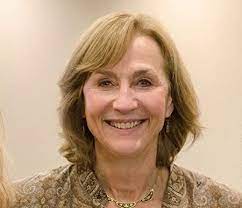
In 1 Cor. 16:2, is Paul stipulating that funds be set aside “individually” or “at home,” and is there evidence here of a special “Lord’s Day” meeting of the church? Jon Laansma is Gerald F. Hawthorne Professor of New Testament Greek and Exegesis in the Classical Languages program at Wheaton College. He has authored articles on the Lord’s Day and Sabbath in the Dictionary of the Later New Testament and its DevelopmentsThe Encyclopedia of the Bible and its ReceptionEarly New Testament Apocrypha, and the Dictionary of the New Testament Use of the Old Testament (forthcoming, Baker).

To hear the podcast (13 minutes) click here.

Adam and Eve as Temple with Ingrid Faro

Dr. Ingrid Faro, Northern Seminary

Congratulations to everyone on the team in Wheaton. This is the 200th episode, and it is a great one. Thanks, Ingrid. Now on to the next 100!!!!

Hints of the identity of the man and woman together as God’s sacred space have been latent but unrecognized in the Hebrew language of Gen. 2:21-22. In this, our 200th episode, Dr. Ingrid Faro uncovers what the language has to tell us. She is the Coordinator of the MA in Old Testament Program at Northern Seminary in Lisle, IL, where she teaches the Hebrew Bible. Among other things, she is the author of  Evil in Genesis: A Contextual Analysis of Hebrew Lexemes for Evil in the Book of Genesis. She recently lectured at the Lanier Theological Library on “Deconstructing Evil,” and her forthcoming book is Demystifying Evil: A Biblical and Personal Exploration (IVP).

To hear the podcast (10 minutes) click here.

Apron Yourself with Humility with Dennis Edwards

Dr. Dennis Edwards

Dr. Dennis Edwards is Vice President for Church Relations and Dean of the Seminary at North Park University. Among other things, he has authored Might from the Margins: The Gospel’s Power to Turn the Tables on Injustice and 1 Peter (The Story of God Bible Commentary Book 17). Today’s topic: A word otherwise unused in the NT is chosen by Peter to command all his readers to “clothe yourselves” with humility. These one-time (hapax legomena) words can be interesting. What might be the implications in 1 Peter 5:5?

To hear the podcast click here.

“Exegetically Speaking” is a weekly podcast of the friends and faculty of Wheaton College, IL and The Lanier Theological Library. Hosted by Dr. David Capes, it features language experts who discuss the importance of learning the biblical languages—Hebrew, Aramaic, and Greek—and show how reading the Bible in the original languages “pays off.” Each podcast lasts between seven and eleven minutes and covers a different topic for those who want to read the Bible for all it is worth.

If you’re interested in going deeper, learn more about Wheaton’s undergraduate degree in Classical Languages (Greek, Hebrew, and Latin) and our MA in Biblical Exegesis

You can hear Exegetically Speaking on SpotifyStitcherApple Podcasts, and YouTube. If you have questions or comments, please contact us at exegetically.speaking@wheaton.edu. And keep listening. 

Nullifying the So-Called Intelligence with Chris Fresch

Dr. Chris Fresch

In 1 Cor. 1:19 Paul quotes from Isaiah 29:14. His Greek wording differs markedly from the Hebrew of the OT passage, but is close to the Greek version of Isaiah then in use (LXX, Septuagint) . . . and nods to Psalm 33:10. Why would Paul do this? Dr. Fresch also wrote a blog post on this issue: “Paul the Paraphraser or Paul the Septuagint Quoter?” Dr. Chris Fresch is Lecturer in Biblical Languages and Old Testament at Bible College SA in Adelaide, South Australia. Among other things, he has authored Discourse Markers in Early Koine Greek: A Cognitive-Functional Analysis with an Application to LXX Translation Technique (SBL Press, 2023).

To hear the podcast click here.