Page 28 of 126

Artificial Intelligence with John Lennox

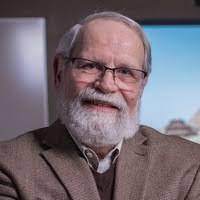
Prof John Lennox

John Lennox, retired Professor of Mathematics at the University of Oxford, joins David Capes to talk about his book, 2084: Artificial Intelligence and the Future of Humanity. 

Dr. Lennox was born in northern Ireland to remarkable parents who were Christians. They  allowed him to read and search widely for himself.

In a climate of violence his parents treated everyone—Catholic and Protestant—with dignity. 

Lennox is an outstanding Bible teacher and scientist.  He has written dozens of books that have been translated into many different languages.  To learn more about John, see his webpage: www.johnlennox.org.

The title of John’s book, 2084, has a not-so-cryptic nod to George Orwell’s book 1984.  Many of Orwell’s “predictions” have come true: universal surveillance, use of technology to suppress the population, etc.

Artificial Intelligence (AI) is all around us and is raising questions in thoughtful minds.  In particular: what implications does it have for the future of humanity? 

There are two kinds of AI: narrow AI which is a system that functions to do one thing that, in the past, humans could do.  And because it is crunching a ton of data, it can do that one thing often better than humans do. 

But there are those who are interested in creating  an advanced AI that can do everything that humans can do and do it better. 

Whether that is achievable or not, we must wait and see. But it begs the question: what is a human being? 

Lennox is convinced of the biblical worldview that holds that humans bear the image of God in a unique way that cannot be shared with a machine. 

So, there are ethical problems in thinking about the limits of AI.  As with a lot of things, the technological advances are ahead of our ability to think ethically about it. 

John is already updating his book.  Because technology is moving so quickly, he is trying to keep his book up to date.  Look for a new edition in two to three years.

To hear the podcast (20 minutes) click here.

“Intimate ally,” with Tremper Longman

Dr. Tremper Longman

Dr. Tremper Longman III, Emeritus Professor of Biblical Studies and Distinguished Scholar of Biblical Studies at Westmont College, has written more than 20 books, including Revelation Through Old Testament Eyes and Intimate Allies. He was one of the main translators for the New Living Translation and has served as a consultant on other popular translations of the Bible including the Message, the New Century Version, and the Holman Standard Bible. Tremper helps us reconsider the Hebrew wording of Genesis 2:18 usually translated as “a helper suitable to him” or “a help meet.”

To hear the podcast click here.

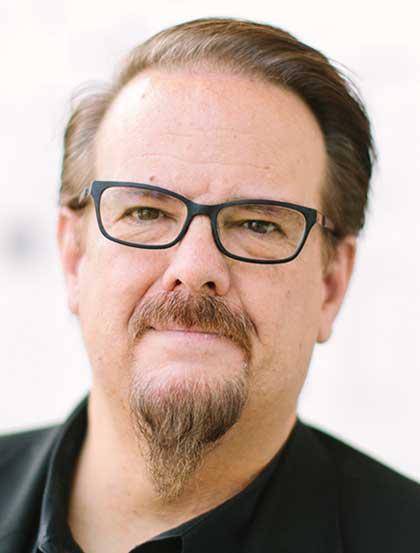
This Stuff Owns Me with E. R. Richards

Dr. Randy Richards is the retiring Provost and Chief Academic Officer and will be the Research Professor of New Testament at Palm Beach Atlantic University. He has authored several books and articles, including Inscriptions and Papyri in the forthcoming ALNTS series (with James Harrison) and Misreading Scripture with Individualist Eyes (with Richard James). Luke 12:20 is often translated something like, “Your soul will be required of you.” But the Greek verb is active and plural: “They will demand your soul from you.” Who or what is “they”?

To hear the podcast (10 minutes) click here.

Equestrian Theophilus with Steve Walton

Dr. Steve Walton is Professor of New Testament at Trinity College in Bristol, U.K., an ordained priest/presbyter in the Church of England, and former Secretary of the British New Testament Society. His many publications include (with David Wenham), Exploring the New Testament, vol. 1: The Gospels and Acts. He is currently working on a major critical commentary on Acts for the Word Biblical Commentary Series. Luke directs the opening words of his Gospel to one “most excellent Theophilus.” Is Theophilus a real person’s name (probably) and is there anything more we can infer about him and his significance for Luke from the little said in the first verses of Luke’s Gospel combined with knowledge of the surrounding world?

To hear the podcast (8 minutes) click here.

Book-Aid with Christine Pulsford

The Stone Chapel Podcast

Recently, David Capes was in London and visited mission-central for Book-Aid.  This UK charitable trust has been around 35 years and provides quality Christian books at “affordable, local prices” in the United Kingdom as well as countries in Africa.  Christine Pulsford, daughter of the founders and now director, joins David to talk about the history and mission of this unique ministry. 

Book-Aid collects books from hundreds of supporters at collection sites across England, Scotland, Ireland, and Wales.  Then they sort them in their headquarters and ship them.  Book-Aid supplies Bibles and Christian literature to their partners living around the world where books are wanted but not easily found or affordable.

The books are sold and not given away. This ensures the dignity of the books as well as those who receive them.  Also, they are sold in bookshops.  This creates jobs in places where jobs are scarce.  Book-Aid staff are keen on sending the right kind of books to their partners. Books that are too “academic” or in the wrong languages are sold online to provide income for the charity.

If you find yourself in London, make your way to south London to see their incredible book shop. If you’re not in London, you too can help by donating to the charity at their website www.book-aid.org.  David toured the book shop and saw hundreds of great books he wanted to buy. 

Joining Christine and David on the podcast is Rob Bradshaw, librarian at Spurgeon’s College in London.  He is one of their trustees at Book-Aid.  In addition to all his volunteer work, Rob runs a website called “Theology on the Web” (https://theologyontheweb.org.uk).  Rob does in the digital world what Book-Aid does in the print world.  Rob and David did a podcast together in January 2021.  To hear the podcast (20 minutes) click here.

To hear the podcast click here.