Thoughts on the New Testament . . . and Other Stuff by David B Capes
Author: David B. Capes
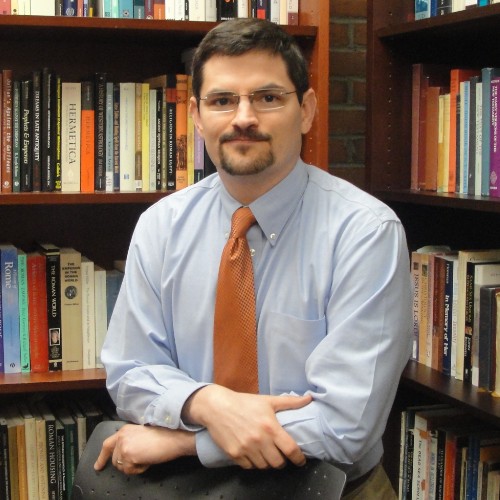
David B. Capes is the Director of Academic Programming at the Lanier Theological Library in Houston, TX. Prior to that he was Dean of the School of Biblical & Theological Studies Department and Professor of New Testament at Wheaton College. From 1990 to 2017 he served in faculty and administrative positions at Houston Graduate School of Theology and Houston Baptist University. He is the author, co-author, editor, and co-editor of fourteen books including The Divine Christ: Paul, the Lord Jesus, and the Scriptures of Israel (Baker Academic, 2018), Old Testament Yahweh Texts in Paul's Christology (Baylor University Press, 2017), Rediscovering Paul: An Introduction to His World, Letters and Theology, 2nd edition (InterVarsity Press, 2017), and Slow to Judge: Sometimes It's OK to Listen (Thomas Nelson, 2014). For the last 14 years he has co-hosted a popular weekend radio show in Houston on AM 1070 KNTH called "A Show of Faith." He and his wife, Cathy, have been married for forty-seven years. They have three sons and three grandchildren. His middle son, Daniel, died in 2019; he was 36 years old. They make their home in Houston, TX
Dr. Christian Askeland, Senior Researcher at Museum of the Bible, is interested in the origins and diversity of early Christianity, endeavoring to reconstruct historically the movements from which the relevant texts and manuscripts arose. He has authored John’s Gospel: The Coptic Translations of its Greek Text. When reading scholarship about the NT, one frequently encounters references to the Coptic language and its texts. What is this language? When did it originate? How is it important for studying ancient texts and traditions?
Danny Carroll Rodas is an Old Testament ethicist who serves as the Scripture Press Ministries Professor of Biblical Studies and Pedagogy at Wheaton College and Graduate School in Wheaton.
He has been to the Lanier Theological Library on a couple of occasions, most recently to give a lecture in Spanish to members of our community. You can watch the lecture here.
In today’s podcast Dr. Carroll R. discusses the work of three Old Tesatament prophets: Isaiah, Amos, and Micah. He does an artful job explaining the history, culture, and poetry behind these prophets whose oracles were recorded a brief time after they were delivered.
The words of the Lord came to Hebrew prophets in their day but they continue to speak in ours.
Among other things, the Hebrew prophets were cultural critics in their time and can be in ours when our values and practices violate the decent and reasonable laws of God.
Questions emerge today about immigration, the environment, and our polarized rhetoric and politics. Does God have anything to say on these challenging topics.
Here is what Dennis Edwards of North Park Theological Seminary said about the book:
“Perhaps some of us employ the adjective prophetic hastily or uncritically, but many more of us are reluctant to heed the words of prophets–even the prophets identified in the Bible. Carroll demonstrates why and how biblical prophets speak to a myriad of social issues, including many that we presently face. His rigorous exegesis, historical analysis, and cultural awareness converge to give Bible readers a better understanding of Scripture’s prophetic tradition and how it applies right now.”
Danny joined us on the podcast a few months ago to discuss the Bible and immigration. Click here to listen to the podcast.
Dr. Randy Hatchett is Professor of Theology and Program Coordinator for Theological Studies and for Christianity at Houston Baptist University. Among other things, he has written Engaging Theology: A Biblical, Historical, and Practical Introduction. In this conversation with Dr. Capes he reminds us that at every step the study of biblical languages is crucial for reading the unfolding story of our texts (economy) and the necessary theologizing upon these texts (theology).
“Exegetically Speaking” is a weekly podcast of the friends and faculty of Wheaton College, IL and The Lanier Theological Library. Hosted by Dr. David Capes, it features language experts who discuss the importance of learning the biblical languages—Hebrew, Aramaic, and Greek—and show how reading the Bible in the original languages “pays off.” Each podcast lasts between seven and eleven minutes and covers a different topic for those who want to read the Bible for all it is worth.
Recently, I talked with my friend, Nijay Gupta, for a video podcast he is doing in support of a new book he has published, 15 New Testament Words of Life. It’s always fun to talk with Nijay. For more information about his book watch for my podcast with him on “The Stone Chapel Podcasts.” It’s a great listen and his book is a great read. An interesting way of making high end scholarship available for the widest possible audience.





You must be logged in to post a comment.