
Chapters and verses (pt. 3)
In two earlier posts I discussed where the chapters and verses come from in our Bibles and why in some cases The Voice translation deviates from standard practice. In today’s post I want to show you an example of how chapter divisions actually can cause us to miss key moments in the Bible.
It is not uncommon for people to read their Bibles chapter by chapter, as if the chapters are always the correct way to divide the text. So today’s reading may be Ephesians 1-3 and tomorrow’s Ephesians 4-6. Now if this is your reading, that’s not a bad division. Clearly, if you read carefully through Paul’s letter you see that chs. 1-3 stand together as a unit and chs. 4-6 do the same. But what if your reading in Matthew’s Gospel and you come to the end of ch. 16; you should not stop reading at the end of ch. 16 or you are going to miss something important.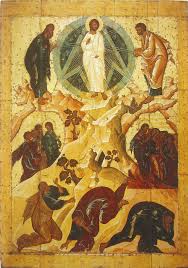
Here is how Matthew ch. 16 concludes (Jesus is speaking to his disciples):
28 I tell you this: some of you standing here, you will see the Son of Man come into His kingdom before you taste death.
Unfortunately, if you quit reading at the end of ch. 16 you may think the Son of Man coming into his kingdom has to do with his second coming. It is as if Jesus is promising to come back in the lifetime of at least a few of his disciples. Some people have read it that way. A few have decided since Jesus didn’t return in the lifetime of those disciples then the promise of his return cannot be trusted. But that is to misread the text. Jesus isn’t talking here about his second coming.
If you read through the chapter division in ch. 17 you realize what Jesus is actually talking about. Some of those standing there with Jesus that day were present at a very significant event that happened less than one week later. Here is what Jesus was referring to:
17 Six days later, Jesus went up to the top of a high mountain with Peter, James, and John. 2 There, something spectacular happened: Jesus’ face began to glow and gleam and shine like the morning sun. His clothes gleamed too—bright white, like sunlight mirroring off a snowfall. He was, in a word, transfigured. 3 Suddenly there at the top of the mountain were Moses and Elijah, those icons of the faith, beloved of God. And they talked to Jesus.
The story continues with Peter overwhelmed by the experience and a heavenly voice addressing them in the same words Jesus heard at his baptism. The transfiguration of Jesus fulfills his earlier promise that some of his disciples would have the privilege of seeing Jesus, the Son of Man, in kingdom glory before they taste death. They got a preview of things to come.
Now this is just one example. Here’s another. In 1 Corinthians 12-14 Paul is answering a question posed to him by the Corinthian Jesus-followers regarding the proper use of spiritual gifts. We don’t know their exact question but we do have Paul’s answer. Often people excerpt ch. 13 as “The Love Chapter” and read it at weddings, funerals or other events. When they do, they take it out of context. Paul ends ch. 12 with these words (quoting from the NKJV):
29 Are all apostles? Are all prophets? Are all teachers? Are all workers of miracles? 30 Do all have gifts of healings? Do all speak with tongues? Do all interpret? 31 But earnestly desire the best[d] gifts. And yet I show you a more excellent way.
The “more excellent way” is the way of “love” as the apostle described. Love then is not a spiritual gift at all. It is the atmosphere in which the gifts are to be practiced. Love in this context is not romantic love or feelings-oriented love. Love is action-oriented. To love is to will the best for another person regardless of the cost. It is not to like them or to have warm, fuzzy feelings toward them. It is to act in their best interest, again regardless of the cost. All the gifts must be practiced, according to Paul, in love or else preaching, prophecies, or other divine utterances are just noise.
Now, if you excerpt the “Love chapter” from 1 Corinthians and read it at your wedding, you’ve not a blasphemer or in mortal danger. It is an amazingly beautiful, poetic ode to the nature and character of love. But not romantic love. It is the love that is to be on display in every church toward every believer.
My point is that we read the Scripture best when we ignore the chapters and verses. Remember, they are not original. They were added in the middle ages to Bible reading easier. Ironically, in making it easier, they may have made it harder.


You must be logged in to post a comment.