Page 6 of 29

Announcing the Gospel in Fecund Language with Joseph Dodson: Col 2:15

The grammar, metaphors, background, and possible referents of the Greek wording of Colossians 2:15 make for rich challenges and possibilities for interpretation, translation, and application. As Dr. Joseph Dodson explains in this episode, choosing between options may not always be correct. Dodson is the Dr. Craig L. Blomberg Chair of New Testament at Denver Seminary. In addition to other publications, he co-edited, Paul and the Giants of Philosophy: Reading the Apostle in Greco-Roman Context, and is working on commentaries on Romans (Brill) and Colossians-Philemon (Holman).

To hear the podcast click here and scroll down to the podcast that published July 31, 2023.

“Exegetically Speaking” is a weekly podcast of the friends and faculty of Wheaton College, IL and The Lanier Theological Library. Hosted by Dr. David Capes, it features language experts who discuss the importance of learning the biblical languages—Hebrew, Aramaic, and Greek—and show how reading the Bible in the original languages “pays off.” Each podcast lasts between seven and eleven minutes and covers a different topic for those who want to read the Bible for all it is worth. Click on the ⓘ symbol below for each episode to read the description.

If you’re interested in going deeper, learn more about Wheaton’s undergraduate degree in Classical Languages (Greek, Hebrew, and Latin) and our MA in Biblical Exegesis

You can also hear Exegetically Speaking on SpotifyStitcherApple Podcasts, and YouTube. If you have questions or comments, please contact us at exegetically.speaking@wheaton.edu. And keep listening. 
The Bilingualism of Ruth with Timothy Lim: Ruth 2:21-23

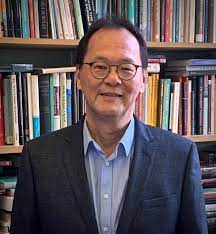
The narrator of the book of Ruth preserves small but telling mistakes in the Hebrew uttered by the character Ruth, who was a Moabite immigrant to Israel. How are these clues to the narrator’s intentions? Dr. Timothy Lim is Professor of Hebrew Bible & Second Temple Judaism at The University of Edinburgh. He works broadly in the Hebrew Bible, ancient Judaism, and the origins of Christianity, while concentrating in the biblical canon and the Dead Sea Scrolls. He has published The Earliest Commentary on the Prophecy of Habakkuk, among other things.

To hear the podcast click here and scroll down to the podcast, published July 25, 2023.

Making a Car out of Spare Parts with Mark Lanier: Acts 15

At a crossroads in the nascent Christian mission the “apostles and elders” conferred to discern where the Spirit of God and the Scriptures were leading them. The question: What is required of the Gentiles for salvation? James cited Amos 9 which foretold the restoration of David’s “fallen tent” so that the “remnant” of humankind would seek the Lord. As Mark Lanier explains, it is that word “remnant” that ties into a major OT theme. Mark Lanier is a practicing attorney, a teacher in his local church in Houston, Texas, and the founder of the Lanier Theological Library (co-sponsor of this podcast) among other projects in service of the church. In earlier episodes he talked about the library and about the word Behold! in Matthew’s Gospel.

To hear the podcast click here and look down the list of our latest podcasts.

Exegetically Speaking” is a weekly podcast of the friends and faculty of Wheaton College, IL and The Lanier Theological Library. Hosted by Dr. David Capes, it features language experts who discuss the importance of learning the biblical languages—Hebrew, Aramaic, and Greek—and show how reading the Bible in the original languages “pays off.” Each podcast lasts between seven and eleven minutes and covers a different topic for those who want to read the Bible for all it is worth. Click on the ⓘ symbol below for each episode to read the description.

If you’re interested in going deeper, learn more about Wheaton’s undergraduate degree in Classical Languages (Greek, Hebrew, and Latin) and our MA in Biblical Exegesis

You can also hear Exegetically Speaking on SpotifyStitcherApple Podcasts, and YouTube. If you have questions or comments, please contact us at exegetically.speaking@wheaton.edu. And keep listening. 

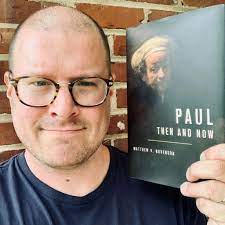
Son of David/Son of God with Matthew Novenson

The Greek sentence that opens Paul’s letter to the Romans includes carefully worded claims about Paul’s gospel. Crucially, Paul identifies some of what he means when he refers to Jesus as Christ/Messiah: He is a descendent of David and the Son of God. He is the latter not only as a result of the resurrection but in a special way through that event.

Dr. Matthew V. Novenson is Professor of Biblical Criticism and Biblical Antiquities at the University of Edinburgh. Among recent publications are (author) Christ Among the Messiahs; Paul, Then and Now; and (co-editor) The Oxford Handbook of Pauline Studies.

To hear the podcast click here.

Signs and Wonders with Ben Marx

In this episode, Ben Marx shares how close attention to the phrase “signs and wonders” brings into focus how Luke narrates God’s work of salvation in Jesus, to which the apostles and others bear witness. This plays out against the backdrop of Moses’ miracles and plots the growing reach of the good news from Israel to the nations. Ben Marx is Professor of New Testament at the Instituto Bíblico Sinodal de Arequipa, Peru, and is a Ph.D. candidate at Trinity College Bristol/University of Aberdeen. His thoughts on this episode’s topic will be published in the Journal of Pentecostal Theology.

Check out related programs at Wheaton:

To hear the podcast (8 min) click here.