
Page 28 of 29

Pablo Seguel: The Architecture of Language

A friend and former student of mine, Pablo Seguel, recorded an episode of Exegetically Speaking with me a while back in order to talk about his experiences as a architect in Chili helped him understand biblical languages. He reminds us that there is architecture to language just as there is architecture in erecting a strong building.

To listen to this 7 minute podcast please cut and paste the following URL to your browser:

http://exegeticallyspeaking.libsyn.com/the-architecture-of-language

or click here.

“Exegetically Speaking” is a weekly podcast of the friends and faculty of Wheaton College, IL and The Lanier Theological Library. Hosted by Dr. David Capes, it features language experts who discuss the importance of learning the biblical languages—Hebrew, Aramaic, and Greek—and show how reading the Bible in the original languages “pays off.” Each podcast lasts between seven and eleven minutes and covers a different topic for those who want to read the Bible for all it is worth.

If you’re interested in going deeper, learn more about Wheaton’s undergraduate degree in Classical Languages (Greek, Hebrew, and Latin) and our MA in Biblical Exegesis

You can hear Exegetically Speaking on SpotifyStitcherApple Podcasts, and YouTube. If you have questions or comments, please contact us at exegetically.speaking@wheaton.edu. And keep listening. 
The Literary Style of Hosea

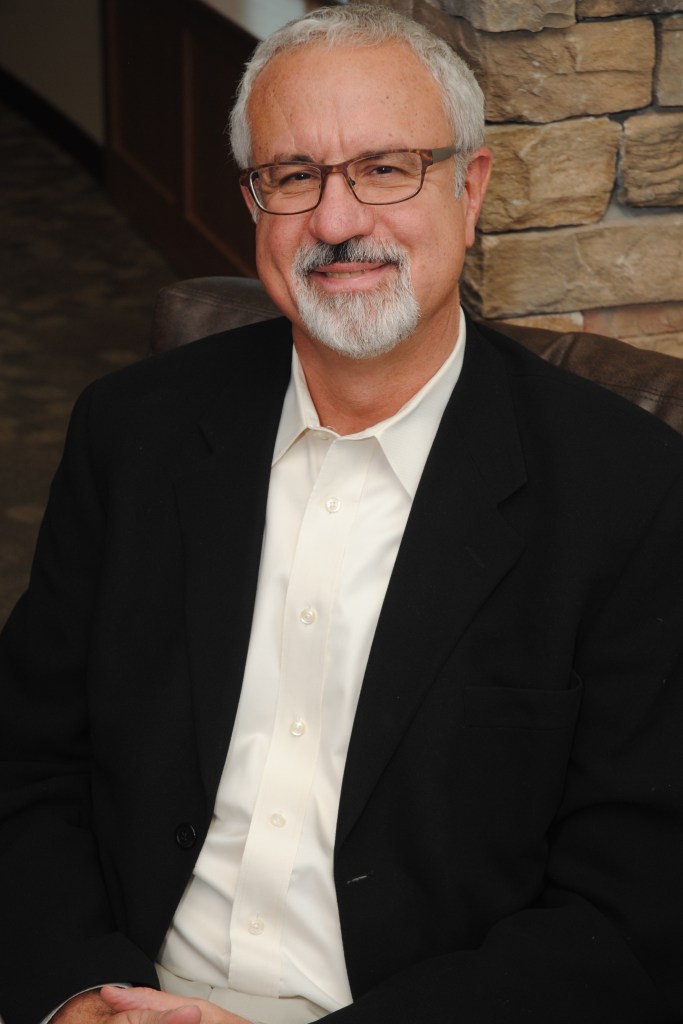
Recently I sat down with a friend, Danny Carroll, to discuss the ways in which Hosea attempted to persuade the people of Israel and Judah that they needed to change their ways. Here’s a more formal description:

Dr. Danny Carroll Rodas, Scripture Press Ministries Professor of Biblical Studies and Pedagogy at Wheaton College, moves us beyond Hosea 1-3 to consider the various metaphors used by the prophet to communicate the nature of God and the serious afflictions of God’s people.

Dr. Danny Carroll

You can cut and paste this URL:

http://exegeticallyspeaking.libsyn.com/literary-style-of-hosea

or click here.

Avoiding Transliteration in Doing Translation

Dr. David Capes, former Dean of Biblical and Theological Studies at Wheaton College, reflects upon moments when William Tyndale invented new words in English to capture the meaning of a Hebrew word. Transliteration only replicates the sounds of the original language, while a translation aims to capture its meaning.

Dr. Capes Lectures at St. Mary’s Seminary, Houston, TX

“Exegetically Speaking” is a weekly podcast of the friends and faculty of Wheaton College, IL and The Lanier Theological Library. Hosted by Dr. David Capes, it features language experts who discuss the importance of learning the biblical languages—Hebrew, Aramaic, and Greek—and show how reading the Bible in the original languages “pays off.” Each podcast lasts between seven and eleven minutes and covers a different topic for those who want to read the Bible for all it is worth.

You can hear Exegetically Speaking on Spotify, Stitcher, iTunes, and YouTube. If you have questions or comments, please contact us at exegetically.speaking@wheaton.edu. And keep listening. 
Syntax Matters: Titus 2:13

Dr. Jon Laansma, Gerald F. Hawthorne Professor of New Testament Greek and Exegesis at Wheaton College, joins me on “Exegetically Speaking” to show the ways Titus 2:13 illustrates how the knowledge of Greek grammar doesn’t usually lead to one “correct” interpretive conclusion, but to a range of viable interpretations. The gains are knowing the boundaries of what is viable and the ability to converse authoritatively with other qualified interpreters.

“Exegetically Speaking” is a weekly podcast of the friends and faculty of Wheaton College, IL and The Lanier Theological Library. Hosted by Dr. David Capes, it features language experts who discuss the importance of learning the biblical languages—Hebrew, Aramaic, and Greek—and show how reading the Bible in the original languages “pays off.” Each podcast lasts between seven and eleven minutes and covers a different topic for those who want to read the Bible for all it is worth.

You can hear Exegetically Speaking on Spotify, Stitcher, iTunes, and YouTube. If you have questions or comments, please contact us at exegetically.speaking@wheaton.edu. And keep listening. 
For the episode above cut and paste the following URL to your browser:

http://exegeticallyspeaking.libsyn.com/syntax-matters-titus-213

Or click here.

Syntax, not sin tax

Dr. Jon Laansma, Gerald F. Hawthorne Professor of New Testament Greek and Exegesis at Wheaton College, joins me on Exegetically Speaking to discuss what “syntax” is, why biblical scholars give it emphasis, some of the challenges to be faced in gaining mastery over this side of Greek grammar, and how to meet the challenges.

To listen to the episode cut and paste this URL into your web browser:

http://exegeticallyspeaking.libsyn.com/syntax-not-a-sin-tax

Or you can click here.