Page 25 of 30

Naming the Name of the Lord

Dr. Bill Mounce

Dr. Bill Mounce is the the founder and President of BiblicalTraining.org, and the author of a major commentary on Paul’s letters to Timothy and Titus. In a separate podcast titled “BiblicalTraining.org” we heard more of his life and work. In this episode he joins Dr. Capes to talk about the interpretation, translation, implications, and preaching of Paul’s reference to the “naming of the Name of the Lord” in 2 Tim. 2:19.

To hear the podcast click here. https://exegeticallyspeaking.libsyn.com/election-holiness-naming-the-name-2-timothy-219

“Exegetically Speaking” is a weekly podcast of the friends and faculty of Wheaton College, IL and The Lanier Theological Library. Hosted by Dr. David Capes, it features language experts who discuss the importance of learning the biblical languages—Hebrew, Aramaic, and Greek—and show how reading the Bible in the original languages “pays off.” Each podcast lasts between seven and eleven minutes and covers a different topic for those who want to read the Bible for all it is worth.

If you’re interested in going deeper, learn more about Wheaton’s undergraduate degree in Classical Languages (Greek, Hebrew, and Latin) and our MA in Biblical Exegesis

You can hear Exegetically Speaking on SpotifyStitcherApple Podcasts, and YouTube. If you have questions or comments, please contact us at exegetically.speaking@wheaton.edu

I Have Plans for You

Dr. Michael Graves, Wheaton College

Dr. Michael Graves is the Armerding Professor of Biblical Studies at Wheaton College. He has produced several books and articles, including a modern translation of Jerome’s Commentary on Jeremiah (IVP Academic, 2012). He is currently working on his own commentary on the same prophet. In this episode, Dr. Graves discusses the “tin woodman theology” behind a text of Scripture that is on many refrigerators, and rightly so: Jeremiah 29:11. 

To hear the podcast click here.

“Exegetically Speaking” is a weekly podcast of the friends and faculty of Wheaton College, IL and The Lanier Theological Library. Hosted by Dr. David Capes, it features language experts who discuss the importance of learning the biblical languages—Hebrew, Aramaic, and Greek—and show how reading the Bible in the original languages “pays off.” Each podcast lasts between seven and eleven minutes and covers a different topic for those who want to read the Bible for all it is worth.

If you’re interested in going deeper, learn more about Wheaton’s undergraduate degree in Classical Languages (Greek, Hebrew, and Latin) and our MA in Biblical Exegesis

You can hear Exegetically Speaking on SpotifyStitcherApple Podcasts, and YouTube. If you have questions or comments, please contact us at exegetically.speaking@wheaton.edu.
The Welfare of the City

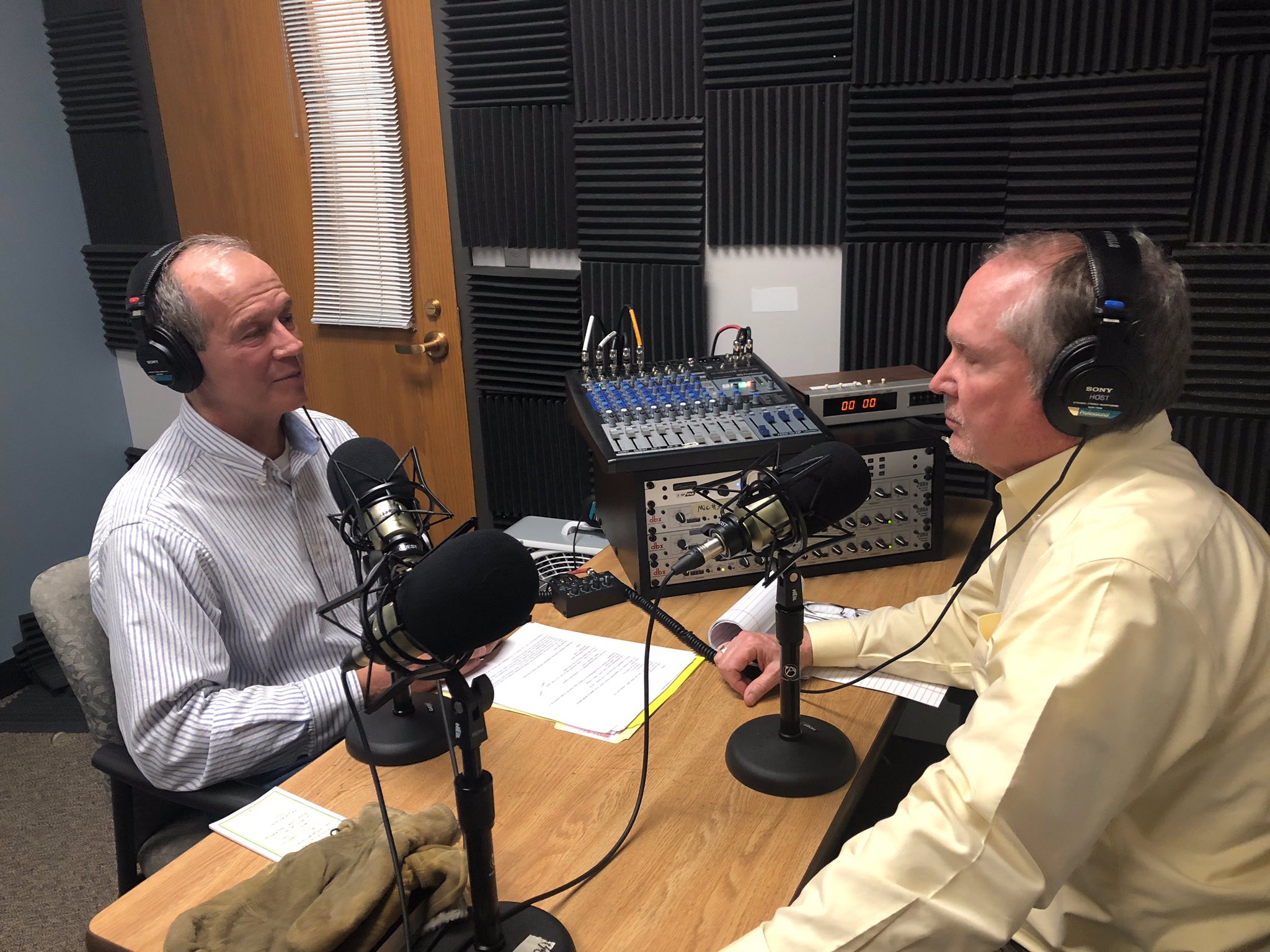
Dr. Philip Ryken, president of Wheaton College

Dr. Philip Ryken, president of Wheaton College and Professor of Theology, joins David Capes to discuss both the context and meaning of a popular verse these days, Jeremiah 29:7.  What is the semantic range of the word often translated “welfare” or “peace”?  How could that have meaning for people not living in exile? Or maybe we are and don’t know it.

To hear the podcast (10 minutes) click here.

“Exegetically Speaking” is a weekly podcast of the friends and faculty of Wheaton College, IL and The Lanier Theological Library. Hosted by Dr. David Capes, it features language experts who discuss the importance of learning the biblical languages—Hebrew, Aramaic, and Greek—and show how reading the Bible in the original languages “pays off.” Each podcast lasts between seven and eleven minutes and covers a different topic for those who want to read the Bible for all it is worth.

If you’re interested in going deeper, learn more about Wheaton’s undergraduate degree in Classical Languages (Greek, Hebrew, and Latin) and our MA in Biblical Exegesis

You can hear Exegetically Speaking on SpotifyStitcherApple Podcasts, and YouTube. If you have questions or comments, please contact us at exegetically.speaking@wheaton.edu

“I am black and beautiful . . . “

Dr. Aubrey Buster, Wheaton College

Dr. Aubrey Buster, Assistant Professor of Old Testament at Wheaton College, contemplates how a translation of an ambiguous word can reflect and/or lead to serious errors of perception, including perceptions of race and social class. A common Hebrew conjunction used in Song of Songs 1:5 could be read as “black but beautiful” or “black and beautiful.” The latter, “and,” is more likely contextually, though it has long been translated as “but.”

To hear the podcast (about 7 minutes) click here.

“Exegetically Speaking” is a weekly podcast of the friends and faculty of Wheaton College, IL and The Lanier Theological Library. Hosted by Dr. David Capes, it features language experts who discuss the importance of learning the biblical languages—Hebrew, Aramaic, and Greek—and show how reading the Bible in the original languages “pays off.” Each podcast lasts between seven and eleven minutes and covers a different topic for those who want to read the Bible for all it is worth.

If you’re interested in going deeper, learn more about Wheaton’s undergraduate degree in Classical Languages (Greek, Hebrew, and Latin) and our MA in Biblical Exegesis

You can hear Exegetically Speaking on SpotifyStitcherApple Podcasts, and YouTube. If you have questions or comments, please contact us at exegetically.speaking@wheaton.edu.

“Dark Joy”

Dr. Julie Newberry, Wheaton College

Dr. Julie Newberry, Assistant Professor of New Testament at Wheaton College, joins Dr. Capes on “Exegetically Speaking” to consider the ramifications of the kind of “dark joy” found among the Jerusalem leaders who conspired with Judas to betray Jesus (Luke 22:5).  Joy itself is morally ambivalent in Luke’s Gospel. Scoundrels can have joy over some dark act or evil agency.

To listen to the podcast (about 7 minutes) click here.

“Exegetically Speaking” is a weekly podcast of the friends and faculty of Wheaton College, IL and The Lanier Theological Library. Hosted by Dr. David Capes, it features language experts who discuss the importance of learning the biblical languages—Hebrew, Aramaic, and Greek—and show how reading the Bible in the original languages “pays off.” Each podcast lasts between seven and eleven minutes and covers a different topic for those who want to read the Bible for all it is worth.

If you’re interested in going deeper, learn more about Wheaton’s undergraduate degree in Classical Languages (Greek, Hebrew, and Latin) and our MA in Biblical Exegesis

You can hear Exegetically Speaking on SpotifyStitcherApple Podcasts, and YouTube. If you have questions or comments, please contact us at exegetically.speaking@wheaton.edu.