Page 23 of 30

Bearing God’s Name–Carmen Imes

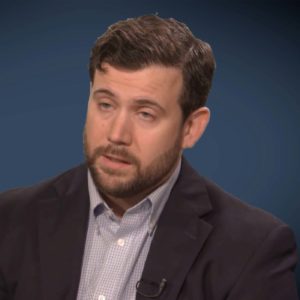
Dr. Carmen Imes

Carmen Imes (Ph.D., Wheaton College) is Associate Professor Old Testament at Prairie College (Canada). She has published several works including Bearing God’s Name: Why Sinai Still Matters (IVP, 2019). In this episode she discusses the command usually translated as “misusing” God’s name. It is about “bearing” God’s name so as to avoid misrepresenting who he is.

To hear the podcast (7 minutes) click here.

“Exegetically Speaking” is a weekly podcast of the friends and faculty of Wheaton College, IL and The Lanier Theological Library. Hosted by Dr. David Capes, it features language experts who discuss the importance of learning the biblical languages—Hebrew, Aramaic, and Greek—and show how reading the Bible in the original languages “pays off.” Each podcast lasts between seven and eleven minutes and covers a different topic for those who want to read the Bible for all it is worth.

If you’re interested in going deeper, learn more about Wheaton’s undergraduate degree in Classical Languages (Greek, Hebrew, and Latin) and our MA in Biblical Exegesis

You can hear Exegetically Speaking on SpotifyStitcherApple Podcasts, and YouTube. If you have questions or comments, please contact us at exegetically.speaking@wheaton.edu

The Second Commandment

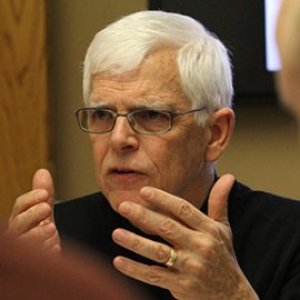
Dr. Michael Graves, Wheaton College

Dr. Michael Graves, Armerding Professor of Biblical Studies at Wheaton College, thinks about how a variety of biblical texts help us understand what it means for God to punish the children of those who sin “to the third and fourth generations,” and to show love “to a thousand generations” of those who love him.

To hear the podcast (about 7 minutes) click here.

“Exegetically Speaking” is a weekly podcast of the friends and faculty of Wheaton College, IL and The Lanier Theological Library. Hosted by Dr. David Capes, it features language experts who discuss the importance of learning the biblical languages—Hebrew, Aramaic, and Greek—and show how reading the Bible in the original languages “pays off.” Each podcast lasts between seven and eleven minutes and covers a different topic for those who want to read the Bible for all it is worth.

If you’re interested in going deeper, learn more about Wheaton’s undergraduate degree in Classical Languages (Greek, Hebrew, and Latin) and our MA in Biblical Exegesis

You can hear Exegetically Speaking on SpotifyStitcherApple Podcasts, and YouTube. If you have questions or comments, please contact us at exegetically.speaking@wheaton.edu

Relevance Theory

Dr. Gene Green

Dr. Gene Green is Professor Emeritus of New Testament at Wheaton College and Graduate School, and Dean of Trinity International University – Florida. In this episode, Dr. Green explains what “Relevance Theory” is, how he became interested in its contribution to biblical interpretation, and how it helps us “mind the gap” between “what is said and what is meant” – whether in our own everyday interactions, contemporary cross-cultural conversations, or our attempts to receive ancient texts with good understanding. For instance, what might Jesus mean by being a “friend” in John 15:15.

To hear the podcast (7 min) click here.

“Exegetically Speaking” is a weekly podcast of the friends and faculty of Wheaton College, IL and The Lanier Theological Library. Hosted by Dr. David Capes, it features language experts who discuss the importance of learning the biblical languages—Hebrew, Aramaic, and Greek—and show how reading the Bible in the original languages “pays off.” Each podcast lasts between seven and eleven minutes and covers a different topic for those who want to read the Bible for all it is worth.

If you’re interested in going deeper, learn more about Wheaton’s undergraduate degree in Classical Languages (Greek, Hebrew, and Latin) and our MA in Biblical Exegesis

You can hear Exegetically Speaking on SpotifyStitcherApple Podcasts, and YouTube. If you have questions or comments, please contact us at exegetically.speaking@wheaton.edu

Did Moses Have Horns?

Dr. Aubrey Buster, Wheaton College

Dr. Aubrey Buster, Assistant Professor of Old Testament at Wheaton College, explains a “denominative verb” of Exodus 34:29, which could be interpreted as either “rays of light” or “horns.” Translating it as “horns,” as did Jerome’s Vulgate, led to artistic portrayals of Moses with horns and fed into later anti-Semitic ideologies.

To hear the podcast click here.

“Exegetically Speaking” is a weekly podcast of the friends and faculty of Wheaton College, IL and The Lanier Theological Library. Hosted by Dr. David Capes, it features language experts who discuss the importance of learning the biblical languages—Hebrew, Aramaic, and Greek—and show how reading the Bible in the original languages “pays off.” Each podcast lasts between seven and eleven minutes and covers a different topic for those who want to read the Bible for all it is worth.

If you’re interested in going deeper, learn more about Wheaton’s undergraduate degree in Classical Languages (Greek, Hebrew, and Latin) and our MA in Biblical Exegesis

You can hear Exegetically Speaking on SpotifyStitcherApple Podcasts, and YouTube. If you have questions or comments, please contact us at exegetically.speaking@wheaton.edu.

“My Spirit Stands among You”

Dr. Andy Abernethy, Wheaton College

Dr. Andrew Abernethy, Associate Professor of Old Testament and Degree Coordinator for the Master of Arts in Biblical Exegesis Program at Wheaton Graduate School, walks us through a passage from a not-so-minor prophet, Haggai 2:4, to investigate the meaning of that wonderful promise, “My Spirit stands among you.”

To hear the podcast click here.

“Exegetically Speaking” is a weekly podcast of the friends and faculty of Wheaton College, IL and The Lanier Theological Library. Hosted by Dr. David Capes, it features language experts who discuss the importance of learning the biblical languages—Hebrew, Aramaic, and Greek—and show how reading the Bible in the original languages “pays off.” Each podcast lasts between seven and eleven minutes and covers a different topic for those who want to read the Bible for all it is worth.

If you’re interested in going deeper, learn more about Wheaton’s undergraduate degree in Classical Languages (Greek, Hebrew, and Latin) and our MA in Biblical Exegesis

You can hear Exegetically Speaking on SpotifyStitcherApple Podcasts, and YouTube. If you have questions or comments, please contact us at exegetically.speaking@wheaton.edu.