Page 2 of 3

Do We Need a New Lord’s Prayer?

Pope Francis is no stranger to controversy.  This week he suggested that Catholics need to re-translate part of the text of the Lord’s Prayer.  Now, before you say, so what?, consider that Christians the world over pray the Lord’s prayer weekly in worship and some daily in their personal devotions. It is part of the spiritual heritage of the ages.

Now, I realize, I’m limited in this post to the English language and more Catholics around the world don’t speak English than do.  But still, it seems, from my limited knowledge of languages, that the idea the Pope is concerned about is reproduced in other western language versions of the Lord’s Prayer. Pope Francis

In particular, the line in question is the one which says “lead us not into temptation” (Matt 6:13; Luke 11:6).  The phrase makes it seem, he says, as if God actively leads his people to be tempted to sin.  Instead, he says, we should translate the line “do not let us fall into sin.”

Now let’s see how three major English translations render that line.

And lead us not into temptation, but deliver us from evil . . .  (King James Version)

And do not bring us to the time of trial
but rescue us from the evil one.  (New Revised Standard Version)

And lead us not into temptation,
but deliver us from the evil one. (New International Version)

Four observations.  First, most western Christians have memorized the King James Version (KJV).  Second, the power of the KJV to shape modern translations should not be underestimated.  Even translations like THE VOICE use the same language.  Third, the NRSV comes closest to the Pope’s suggestion. Four, modern translations view the prayer as poetic and so render it in poetic verse.

The challenge of translation from one language to the next is a significant one.  I’ve written about this problem on this site. But with the NT it is even more challenging because we are even further removed from the original source than we might imagine.  Jesus spoke Aramaic.  The Gospels are written in Greek.  And most of us rely heavily on English translations.

Now, I think the Pope is onto something to which Christians—Protestant, Catholics and Orthodox—need to pay attention.  God does not tempt people to sin. They are tempted by their own desires, or so says James (1:13-15).

The crux of the matter is the meaning of the word peirasmos. It is a word that does not occur outside the New Testament, so we can’t appeal to other Greek texts from the period—what scholars call comparative philology.  Based on the NT itself, it seems the semantic field or range of meanings of this Greek word includes temptation (to sin) and trial or testing (of faith).  If we take the rest of the NT seriously, as it seems the translators of the NRSV, it is best to take this as something like “(to God) do not bring us to a time of testing.”  The opposite is this: “(God) rescue us from the evil one.”

It seems to me that the prayer of Jesus is similar to Jewish prayers from the same period.  They ask roughly the same thing.  “God, do not hand your people over to trials and tests, instead rescue them from evil.”  In the arc of the Scriptural story think of someone like Job, Abraham (and his near sacrifice of Isaac), and the people of Israel in exile.

Whether Pope Francis’ teaching on this makes it down to your average congregation, we will see. If I were a “bettin’ man,” I’d say it will.  In the end, no we don’t need a new Lord’s prayer, what we do need is good translations of the one we have.


Avoiding Transliteration in Translating the Bible

There are many words found in most Bible translations that aren’t translations at all.  They are transliterations.  Let’s consider some key words in the New Testament. Words like “Christ,” “baptism,” “angel,” and “apostle”  are not translations  from Greek to English but transliterations, that is, replicating  the sounds made by the words.William Tyndale

When scholars began to translate the Old and New Testaments into the English language, they faced enormous challenges. Not only were powerful people opposed to rendering the sublime texts of Scriptures in a common language such as English, but the English language itself did not have all the words needed to reproduce meaningfully what the original languages were saying. The solution was to invent words which did not exist in English. One example is the word passover .

In the fourteenth century when Wycliffe translated the New Testament into English, the word “Passover” did not exist in the English language. So when he came to those New Testament passages that referred to the Jewish Passover, Wycliffe transliterated the Latin word pascha—which is itself a transliteration of the Greek word pascha—into English as “pask” or “paske.” As you see, transliteration involves representing the characters of one alphabet in another alphabet; it has nothing to do with translating the meaning of the word, only the sound of it. How readers and hearers may have reacted to this new word we do not know. Did they understand what it meant, or was some further explanation needed?

In 1535 when Tyndale translated the Old Testament into English, he decided to invent a new word in English to communicate the meaning behind the Hebrew root pesach:

When your children ask you, “What does this ritual mean to you?” you will answer them, “It is the Passover sacrifice to the Eternal, for He passed over the houses of the Israelites when we were slaves in Egypt. And although He struck the Egyptians, He spared our lives and our houses” (Exodus 12:26–27).

The Hebrew root of the name of the Jewish festival alludes to the fact that God “passed over” the houses of the Israelites on his way to judging the cruelty of the Egyptian slave owners. Tyndale combined the two English words—“pass” with “over”—to create a single, new word which carefully and accurately reproduced the meaning of the Hebrew word. Transliteration, at its best, can only reproduce the sounds made in another language not their meaning. What Tyndale did by creating the word passover.  The Voice translation has done for other key words which, until now, have not been accessible to a modern audience.


The Ceremonial Washing of Baptism

We receive a lot of good questions about The Voice translation through this website and our facebook page.  Recently, we received a question from a fellow named Nathan who asked why we used the phrase “the ceremonial washing of baptism” where most Bibles simply have “baptism.”  Here is part of our response to him.

 Dear Nathan,

Let me suggest you take a look at The Story of The Voice (Thomas Nelson, 2013), a brief book which describes our translation philosophy, mission and an explanation of some of our translation decisions.  Perhaps that will explain things more fully. 

Briefly, our goal was to get people who have never read or do not regularly read the Bible started reading.  Many people don’t read the Bible because they find it hard and confusing.  We did this translation for them.  Our goal was not to replace anyone’s favorite translation. If you have a treasured translation, by all means read that.  But there is a growing number of people (hundreds of millions in the USA alone) who do not read the Bible for various reasons.  We wanted to give them a Bible they would understand in order to get them started reading the Bible and hopefully hearing the Voice of the Good Shepherd.baptism-top

As to the question you raised about how we translated the Greek word “baptizein” (verb most often translated “to baptize”) and “baptismata” (noun most often translated “baptism”).  We made a strategic decision in translating The Voice not to simply transliterate key words; we translated them.  For example, the transliteration of the Greek word “baptizein” is “baptize” (simply taking the Greek letters and putting them into a Latin alphabet); but the translation of “baptizein” is “to immerse or dip in water” (taking the meaning of the word from Greek to English).  So transliteration replicates the sound of a word; translation gets at the meaning of a word. Many key words in most Bible translations have simply been transliterated (e.g., Christ, angels, baptism, apostle, etc).  In order to communicate well with new readers we thought it was important to translate.  

Now back to “baptizein” and “baptizmata”.  When people who don’t know anything about the Scriptures read “baptism,” what do they understand?  It is confusing because some Christians immerse, some dip, some pour.  And whom do they immerse, dip or pour?  Sometimes children.  Sometimes teenagers.  Sometimes adults.  And why do they do it?  As a sign of prevenient grace, or as a sacrament to signify their chosenness by God, or to mark a person’s profession of faith.  So there is a lot of imprecision in the word “baptism” for people who know little to nothing of Christian tradition.  So what do we do as translators?

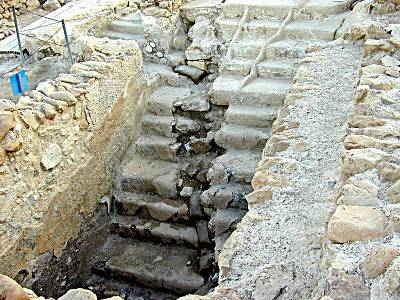
Well we went back to the original context.  The antecedent to Christian baptism is likely the immersion practices of second temple Jews like John the Baptist (John the Immerser).  Archaeologists have discovered hundreds of these immersion pools over the last 200 years.  It is so important that there is a tractate on immersion pools in the Mishnah.  Essentially, the purpose of these immersions involved washing or cleansing.  But the washing was not hygienic—people then knew nothing of germs–it was “ceremonial” or “ritual.”  By this is meant an action taken simply because God required it.  mikvaIf you read the OT carefully, then you realize how often God required people to wash or cleanse themselves and other things.  This is why they built all of these immersion pools around synagogues, the temple and other holy sites. Again, we’ve uncovered hundreds and we have only unearthed about 20% of the archaeological sites. So when we translated “baptizein” and its cognates we rendered it “the ceremonial washing of baptism” or “the ritual cleaning of baptism.”  The point of this translation was to help readers understand the context. Namely, baptism is a washing or cleansing which God required and is done not for and by man but for and by God.  In baptism God acts to cleanse, wash and purify.  Now there is more to the theology of baptism than this (identification with the crucified and risen Jesus, for example) but I don’t think there is less.  If you are a veteran Bible reader, then you probably know all of this.  But most people know little to nothing of this.  We did The Voice to help them. 

I hope after reading this you will understand how seriously we took the original context as well as the context of our modern audience.  That is why we call this a “contextually equivalent” translation.  I assure you it would have been much easier just to do what every Bible translation in English has done before.  But does that help modern readers who are not used to reading the Bible, read it for all its worth?  These decisions were intentional and a number of scholars, pastors, and editors thought through them before we went to print. 


The Best Selling Book in Norway Is Not FIFTY SHADES OF GREY

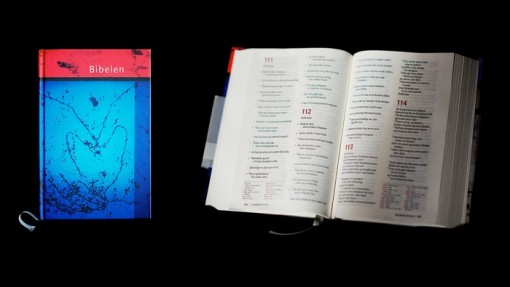
In 2012 the best-selling book in Norway is a new translation of the Bible–yes, you heard that right, the Bible.  The Norwegian Bible is even outselling Fifty Shades of Grey.  Now this has caught a lot of people off-guard because Norway is one of the most secular countries in Europe, and Europe—as you may or may not know—has only a thin veneer left of its Christian cultural heritage.  Only about 1% of Norway’s 5 million citizens bother to go to church.Norwegian-Bible-510x287

And there is something else.  In one of Oslo’s most popular theaters there is a new, long (six hour) play called “Bibelen,” the Norwegian word for “Bible.”  Thousands of people are flocking to see the production that modernizes the Bible’s stories for a skeptical 21st century audience.

The Norwegian Bible Society released the translation in October 2011 to replace the 1978 edition.  The goal was to improve the Bible’s readability and accuracy.  In a move which sounds very familiar, they turned to poets and writers to help tell the story for a new generation.  Here is how the Norwegian Bible Society puts it on their website:

In 2000 work started on revising the 1978 translations. Five years later the New Testament was published and the full Bible in both languages will be finished in 2011. In addition to the principle of using a modern and easily understood language, the translators now emphasize a much closer connection to the original texts in Hebrew and Greek.

The process they used was unique:

In addition to three full time translators, the Bible Society used scholars in Greek and Hebrew, theology and professional authors and poets, who are specialists in the Norwegian languages. Their participation in the project from stage one, has been an exciting and important feature. In addition to give the translated Norwegian texts a very high linguistic quality, it gave the new Bible broad publicity. It has been remarkable to see how nationally famed authors and poets appear in media as Bible translators, strongly recommending the new translation and talking with enthusiasm about their own participation. Their participation has underlined the cultural importance of the Bible in modern society.

Once the translation was complete, marketers packaged the translation in a variety of fresh and relevant ways.  For teenagers they came up with pink leather and denim covers.  For adults, they worked toward a more sophisticated look and feel.

Norway Bible launchNorway’s heritage is Lutheran.  Until last year Lutheranism was the official state religion, but an act of Parliament changed all that.  Government leaders made “official” what everyone already knew; Norwegians have little time and interest in church.  Everyone thought that they would little interest in the Bible too.  But the new Norwegian translation has certainly challenged that.

Why the change?  Some people are speculating that now people are immigrating into Norway from Africa and the Middle East and bringing a variety of religions with them, people from Norway are taking a second look at their cultural heritage.  They are rediscovering some important things in the Bible, things they have decided not to forget.  As one writer who worked on the project said, “Thoughts and images from the Bible still have an impact on how we experience reality.”

What I find interesting is how similar the new Norwegian Bible translation sounds to “The Voice.”  There are significant differences in how the Norwegian Bible Society went about it, but the concept of inviting writers and poets to work alongside Greek and Hebrew scholars to create a  new translation is apparently an idea which dawned on them and Ecclesia Bible Society/Thomas Nelson at about the same time. Is it coincidence?  Perhaps.  But I’m betting on Providence.

C. S. Lewis on Bible Translation

I recently attended a lecture by the Revd Professor Alistair McGrath of Kings College London and Oxford.  The lecture was hosted by the Lanier Theological Library, a private collection of nearly 80,000 theological books.  It was founded and opened to the public just 3 years ago by an amazing fellow named Mark Lanier.  Lanier is one of the top trial lawyers in the nation, and one of the most gifted Bible teachers you will ever hear.  For those of us who love books and all things English, the Lanier Library is a bit of heaven.  You can tell from the picture that it looks like the kind of library you’d find at Cambridge. Lanier Theological Library

Professor McGrath was invited by Lanier to give a lecture on the contributions of C. S. Lewis.  2013 marks the 50th anniversary of the death of C. S. Lewis.  He died the same day that President John F. Kennedy was assassinated, November 22, 1963.  I’m sure Lewis’ death was overshadowed by the death of the 35th president.

McGrath has written a definitive biography of Lewis to mark the occasion of his passing and reassess his contribution.  He titled it C. S. Lewis—a Life: Eccentric Genius, Reluctant Prophet.  If you are interested in Lewis’ life, I recommend you buy it and read it.  McGrath is a worthy interpreter of Lewis.

While I have read 7-8 of Lewis’ books in the past, I haven’t read everything Lewis wrote.  I discovered from listening to McGrath that Lewis had a great deal to say about Bible translation in a variety of essays and the preface to J. B. Phillips’ translation of the New Testament Letters (published 1947). 

 Here are a few things Lewis said about translation:

 . . . the Authorised Version has ceased to be a good (that is, a clear) translation.  It is no longer modern English: the meanings of words have changed. . . . The truth is that if we are to have translation at all we must have periodical re-translation.  There is no such thing as translating a book into another language once and for all, for a language is a changing thing. If your son is to have clothes it is no good buying him a suit once and for all: he will grow out of it and have to be re-clothed.

 We ought therefore to welcome all new translations (when they are made by sound scholars) and most certainly those who are approaching the Bible for the first time will be wise not to begin with the Authorised Version—except perhaps for the historical books of the Old Testament where its archaisms suit the saga-like material well enough. 

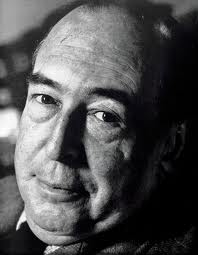
 Lewis went on to commend the translations of James Moffatt (1870-1944) and Ronald A. Knox (1888-1957).  They had translated the full Bible, beginning with the New Testaments. C S Lewis

 After having read some of what Lewis has said about translation, I wonder what he would think of The Voice.  Lewis loved stories; he was himself a master story-teller.  Would Lewis have appreciated the emphasis on story in The Voice?  Would he like the screen play format we used in dialogue that makes it clear who is speaking to whom?  Lewis praised human imagination and encouraged Christians to be imaginative when sharing the good news; more than any 20th century Christian leader he unleashed his imagination in expressing his faith.  What would Lewis think of the imaginative ways the poets and scholars worked together in order to discover the beauty of the poetry, the acrostics and the various literary techniques employed by each writer?  Well, we will never know what Lewis might think, this side of eternity.  What I do know is that the more I read Lewis, the more I think he would celebrate any serious attempt made to capture the hearts and minds of those who read the Bible.