Page 9 of 23

Christ among the Messiahs with Matt Novenson

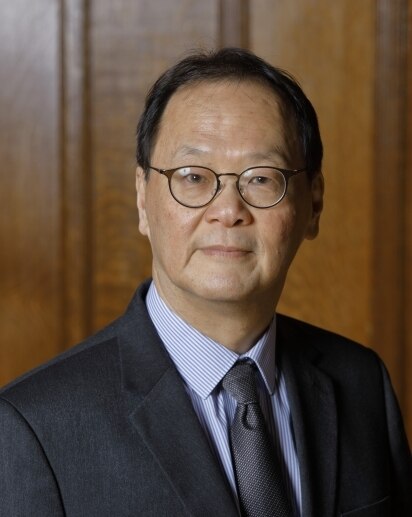
Matthew Novenson joined David Capes on The Stone Chapel Podcasts to talk about his important book, Christ among the Messiahs: Christ Language in Paul and Messiah Language in Ancient Judaism (Oxford University Press).

The book has made a big contribution to the study of Christology in the earliest years of the Jesus movement.  Though it has been out ten years, it is worth sharing with a new audience. 

Who is Matthew Novenson? 

Matthew is originally from Tennessee.  He now serves as the Professor of Biblical Criticism and Biblical Antiquities at the University of Edinburgh. 

Christ among the Messiahs 

For many years some scholars have regarded the word “Christ” as just another name for Jesus in the earliest writings of the New Testament, namely, the letters of Paul.  But Matthew makes a convincing case that the word “Christ” in Paul means “Messiah.”   

This may seem to some only natural, but it is a momentous thing.  It involves a whole new reassessment of Paul’s language and his Jewishness.  

We find messiah language in various places like the Old Testament, Paul’s letters, the Dead Sea Scrolls, and other second temple Jewish texts. 

Novenson often employs the word “honorific” as a noun to discuss Paul’s use of “Christ” in his letters.  It comes from the discipline of “classics,” namely, the study of the ancient Greek and Roman civilizations. 

Honorifics are like titles in a way but they were intended to magnify the name of the person. The most famous is Caesar “Augustus.” 

The idea that “Christos” as it referred to Jesus is not limited to name or title.  There is a third way, an honorific.

Novenson has done a great deal to shape the field of New Testament studies with this and other books.  

Other Books by Matt Novenson

Paul: Then and Now (Eerdmans)

The Grammar of Messianism: An Ancient Jewish Political Idiom and Its Users(Oxford UP)

For a transcript of this podcast, click here.

More resources

Want more Stone Chapel Podcasts on some great topics. Just click here.

To hear the podcast (22 min) click here.

Announcing the Gospel in Fecund Language with Joseph Dodson: Col 2:15

The grammar, metaphors, background, and possible referents of the Greek wording of Colossians 2:15 make for rich challenges and possibilities for interpretation, translation, and application. As Dr. Joseph Dodson explains in this episode, choosing between options may not always be correct. Dodson is the Dr. Craig L. Blomberg Chair of New Testament at Denver Seminary. In addition to other publications, he co-edited, Paul and the Giants of Philosophy: Reading the Apostle in Greco-Roman Context, and is working on commentaries on Romans (Brill) and Colossians-Philemon (Holman).

To hear the podcast click here and scroll down to the podcast that published July 31, 2023.

“Exegetically Speaking” is a weekly podcast of the friends and faculty of Wheaton College, IL and The Lanier Theological Library. Hosted by Dr. David Capes, it features language experts who discuss the importance of learning the biblical languages—Hebrew, Aramaic, and Greek—and show how reading the Bible in the original languages “pays off.” Each podcast lasts between seven and eleven minutes and covers a different topic for those who want to read the Bible for all it is worth. Click on the ⓘ symbol below for each episode to read the description.

If you’re interested in going deeper, learn more about Wheaton’s undergraduate degree in Classical Languages (Greek, Hebrew, and Latin) and our MA in Biblical Exegesis

You can also hear Exegetically Speaking on SpotifyStitcherApple Podcasts, and YouTube. If you have questions or comments, please contact us at exegetically.speaking@wheaton.edu. And keep listening. 

The Bilingualism of Ruth with Timothy Lim: Ruth 2:21-23

The narrator of the book of Ruth preserves small but telling mistakes in the Hebrew uttered by the character Ruth, who was a Moabite immigrant to Israel. How are these clues to the narrator’s intentions? Dr. Timothy Lim is Professor of Hebrew Bible & Second Temple Judaism at The University of Edinburgh. He works broadly in the Hebrew Bible, ancient Judaism, and the origins of Christianity, while concentrating in the biblical canon and the Dead Sea Scrolls. He has published The Earliest Commentary on the Prophecy of Habakkuk, among other things.

To hear the podcast click here and scroll down to the podcast, published July 25, 2023.

Making a Car out of Spare Parts with Mark Lanier: Acts 15

At a crossroads in the nascent Christian mission the “apostles and elders” conferred to discern where the Spirit of God and the Scriptures were leading them. The question: What is required of the Gentiles for salvation? James cited Amos 9 which foretold the restoration of David’s “fallen tent” so that the “remnant” of humankind would seek the Lord. As Mark Lanier explains, it is that word “remnant” that ties into a major OT theme. Mark Lanier is a practicing attorney, a teacher in his local church in Houston, Texas, and the founder of the Lanier Theological Library (co-sponsor of this podcast) among other projects in service of the church. In earlier episodes he talked about the library and about the word Behold! in Matthew’s Gospel.

To hear the podcast click here and look down the list of our latest podcasts.

Exegetically Speaking” is a weekly podcast of the friends and faculty of Wheaton College, IL and The Lanier Theological Library. Hosted by Dr. David Capes, it features language experts who discuss the importance of learning the biblical languages—Hebrew, Aramaic, and Greek—and show how reading the Bible in the original languages “pays off.” Each podcast lasts between seven and eleven minutes and covers a different topic for those who want to read the Bible for all it is worth. Click on the ⓘ symbol below for each episode to read the description.

If you’re interested in going deeper, learn more about Wheaton’s undergraduate degree in Classical Languages (Greek, Hebrew, and Latin) and our MA in Biblical Exegesis

You can also hear Exegetically Speaking on SpotifyStitcherApple Podcasts, and YouTube. If you have questions or comments, please contact us at exegetically.speaking@wheaton.edu. And keep listening. 

The Divine Warrior Myth and Andy Angel

Andy Angel came to the Lanier Theological Library in Houston and discussed with David Capes some ideas he had about “The Divine Warrior” in Scripture. 

Who is Andy Angel? 

Andy is the Director of Formation for Ministry in the Diocese of Oxford in the UK. 

He arranges and plans for the theological education of the clergy and the lay people in the Anglican Church. 

Andy is an Englishman and an Anglican clergy.  For a time he served as a pastor-teacher in Lima, Peru. He is a husband and father.  And he’s is also an author. 

“The Divine Warrior” What does that mean?

There are passages in the Bible that describe God as a warrior for his people.  When they are defeated, when they are down for the count, God arrives to fight for them. 

And God’s coming is described in amazing pictures and images, such as God coming on the clouds, the falling of the stars from heaven, the mountains melting beneath his feet, the valleys quaking at his presence. 

This is more than metaphor;  it is figurative language, because the truth of it cannot be captured in words. As an example, he talks at length about Psalm 18. 

Jesus as the Divine Warrior

Also in this podcast he turns his attention to an upcoming book about the Divine Warrior occurrences in the book Mark. 

He is exploring how and to what extent Jesus’s conflicts with the demonic forces, diseases, and human power structures picture Jesus as the Divine Warrior. 

If this is what Mark had in mind as he wrote his Gospel, he is operating with a very high Christology.

Andy’s Books

Here are more of Andy’s books:

Intimate Jesus: The Sexuality of God Incarnate

The Jesus You Really Didn’t Know

Playing with Dragons: Living with Suffering and God

For a transcript of this podcast, click here.

More resources

Want more Stone Chapel Podcasts on some great topics. Just click here.

What’s more, you can get information on upcoming lectures at Lanier Theological Library. Just click here.

To hear the podcast (about 20 min.) click here.