
Page 9 of 17

Jesus, the Lordly Example (Phil 2.12ff.)


The lofty thoughts of Jesus’ universal acclamation (Phil 2.9-11) did not hijack Paul’s original intent which was to set Jesus as the lordly example of humility and self-sacrifice.  He continued to drive the point home by appealing to the examples of Timothy, Epaphroditus, and Paul himself.  They have actualized the mind of Christ as their own life-stories will show and serve as examples for the church to imitate.timothy and epaphroditus
 

Implicit within the story of Jesus’ humiliation, incarnation, exaltation and acclamation is the promise that those who humble themselves will be exalted.  This teaching is certainly consistent with what we find elsewhere in the NT.   Nevertheless, the exaltation of the humble followers presents no counterpart, even remotely, to the universal acclamation of the Lord Jesus.  Still, even without developing the point, believers are left to ponder how God will exalt them for their humble obedience.


The only proper response in the face of so lordly an example is obedience, “working out your salvation with fear and trembling” (2:12).  This does not mean, of course, that people can save themselves; it means they cooperate with God’s transforming energy in them.  They work without grumbling so their light can shine in the midst of a crooked and perverse generation (2:14-15).  They hold on to the “word of life” now so that in the day of Christ (at the parousia) Paul can be proud (2:16).  After all, their apostle may be poured out as a libation on the altar, facing obedience unto death sooner rather than later.


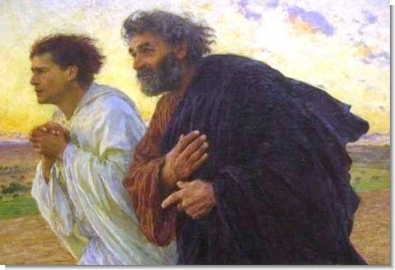
Timothy and Epaphroditus provided Paul with good examples of faithful followers who exhibited the mind of Christ.  Paul hoped to send Timothy soon to Philippi.  Like Jesus before him, Timothy was genuinely concerned about the Philippians’ welfare (2:20-21).  While others were watching out for themselves, Timothy would seek the good of Christ and his church.  Epaphroditus too had nearly died for the work Christ.  He had risked his life to serve Paul on behalf of the Philippians (2:29-30).  Now the apostle was going to send him back with his sincere thanks in hope they would receive and honor him.


Paul next turned to his own life as an example of one who had “the mind of Christ.”  Following a warning against the threat of false teachers (“dogs,” “evil workers,” “the mutilators,” likely referring to circumcision), the apostle claimed that believers were in fact the true circumcision (3:1-3).  After all they worship God in the Spirit, boast in Christ Jesus and place no confidence in the flesh.  It was this last remark, “no confidence in the flesh” that prompted Paul’s discourse on his own past.  Prior to his Christophany, Paul had quite a resume and enjoyed a number of bragging rights: (1) circumcised as per the Law on the eighth day; (2) from God’s covenant people; (3) from the important tribe of Benjamin; (4) a conservative, Hebraist Jew; (5) from a prestigious sect, the Pharisees; (6)  practiced “zeal” against the church; and (7) blameless under the Law regarding righteousness (3:4-6).  The pre-Christian Paul enjoyed a status nearly all would have envied.  But like the pre-incarnate Christ, he emptied himself of those gains and wrote them off as losses for the sake of Christ (3:7).   Indeed, he suffered the loss of all things and considered them “dung” compared to the excellence of what it meant to “know Christ” and be found in Him (3:8-10).  To “know Christ” implies intimacy and a knowledge based on experience.  It is knowledge of a person not knowledge about a thing.  The upshot of his own Christ-patterned humility meant that he left behind a law-based righteousness for the faith-based righteousness of God made possible through the faithfulness of Christ’s obedient sacrifice on the cross (3:9).  As Paul identified completely with the humiliation and death of Jesus, he expected also to share in his exaltation/ resurrection (3:10).  In that sense, Paul’s own story would be absorbed one day into the wider story of Christ.


Although Paul had journeyed deep into the knowledge of Christ, he had certainly not arrived at his final destination.  So he pressed on toward the goal of the upward call of God in Christ Jesus (3:14).  To do so he had to forget his past, namely, the “exalted” status he formerly enjoyed, and stretch out toward the future.  Those who wish to move toward perfection in the Christian life need not look back.


Paul invited the Philippians to join him in imitating Christ and to pay attention to those, like Timothy and Epaphroditus, who present a model for how to walk.[6]  They are not to follow the example of those who lives as “enemies of Christ.”  Their destiny is not exaltation with Christ but destruction and shame because their mind is not the mind of Christ.  Their mind is set on earthly things (3:18-19).  Genuine believers understand their citizenship is in heaven; they belong to another city.  As “resident aliens” they are not at home in the world; instead the waiting patiently for a Savior, the Lord Jesus Christ.  The Christian churches of Paul stand therefore as an alternative community in the world.  They do not look to Rome for guidance; they look to heaven.  They do not worship Caesar as Lord; they worship the Lord Jesus.  They expect only small benefits from any so-called earthly saviors; they wait ultimately for a Savior from heaven who will transform the world with power beyond belief.  Those who pattern their lives on the story of the Christ’s humiliation and exaltation can expect their humbled bodies to be transformed in conformity with the body of His glory.   As the apostle looked the future, the Christ hymn continued to echo in his inspired imagination.  We note here the following correspondences:

The humiliation of Christ (2:6-8) à  the body of our humiliation (3:21)

The exaltation of Christ (2:9)  à transformed to the body of his glory (3:21)

The universal acclamation (2:10-11) à  the subjection of all things (3:21)


Clearly the Christ hymn provided Paul with more than a pattern for humble service to others; it also provided the (implicit) promise that believers who enter into his humiliation will also enter into his glorious exaltation (3:20-21).


[1] E.g., Ralph Martin, A Hymn to Christ

[2] Dunn, Theology, 286.

[3] The reading the Dead Sea Scrolls on Isa 53:10 (e.g., 1QIsaa) is different that what we find in many Bibles today.  Whether the Servant sees “light” or “his offspring,” the end of the Servant poem depicts some kind of exaltation of the Servant who has poured out his life to death for many.   Martin Abegg, Jr., Peter Flint and Eugene Ulrich, The Dead Sea Scrolls Bible (San Francisco: Harper Collins, 1999).

[4] David B. Capes, Old Testament Yahweh Texts in Paul’s Christology

[5] Larry J. Kreitzer, Jesus and God in Paul’s Eschatology (JSNTSup, 19; Sheffield: JSOT Press, 1987), 116.

[6] The imperative in 3:17 is difficult to translate.  It means either “join together in imitating me” or “join me in imitating Christ.”  Both are possible since Paul clearly urged believers to imitate Christ elsewhere and he also encouraged others to imitate him as one who imitates Christ (see Eph 5:1; 1 Thess 1:7; 1 Cor 11:1; cf. Phil 4:9).

The Philippian Hymn–Phil 2.5-11

For Paul, the story of Jesus provided the greatest example of what this humility looked like when it was embodied in a life.  He found that story told powerfully and succinctly in an early Christian hymn.   No other passage in the NT has been studied more thoroughly.[1]    Given the poetic, parallel structures and its unusual wording, the hymn was likely a preformed tradition that Paul incorporated into his letter.  Exactly who wrote it, for whom and when are questions worthy of speculation but unlikely to bring certainty.  The fact that Paul included this preformed tradition in his letter to the Philippians indicates his complete agreement with its theology.  Even if Paul didn’t write it, he did agree with it.humble Jesus


Paul earnestly desired for the “mind” of Christ to shape the lives and community in Philippi.  He sets up Jesus as the lordly example of humility and selfless service.  The hymn is constructed around two movements: (1) the descent (katabasis) from equality with God to the humiliation of the cross and (2) the ascent (anabasis) from death to exaltation/ resurrection by God and universal acclamation by all creatures.  The descent can be graphically portrayed (2:6-8):

Though he was in the form of God

He did not consider equality with God as something to be grasped

He emptied himself

Taking the form of a servant

Becoming in the likeness of men

Being found in form as a man

He humbled himself

Becoming obedient to death

Even death on a cross


Likewise the ascent (2:9-11)


To the glory of God, the Father

“Jesus Christ is Lord”

Every tongue confess that

(of heavenly, earthly and subterranean beings)

Every knee shall bow

So at the name that belongs to Jesus

And bestowed on him the name above every name

Therefore God highly exalted him


There are a number of interpretive schemes for unraveling the meaning of this hymn.  James Dunn notices the number and the sequence of Scriptural allusions to Adam and concludes that the Christ hymn in Philippians 2 is “the fullest expression of Adam Christology in the NT” (cf. Heb 2:5-9).[2]  In particular he notes that Adam is made in image of God (cf. Gen 1:27) and is tempted to grasp at equality with God (cf. Gen 3:5).   The first man fails, of course, and becomes an obedient slave to corruption and death.  Ultimately, in Jewish tradition Adam is glorified.  For Dunn and other interpreters, Jesus provides the converse of Adam, particularly in that the second Adam did not try to grasp for equality with God (something He did not have).  Rather He emptied himself and humbled himself by being willing to die a criminal’s death on the cross.  Given other Adam-Christ typologies in Paul, there may well be a subtle allusion to Jesus as a new Adam who reverses the curse of Adam’s sin.  But this does not cover the interpretive canvas.


Michael Gorman suggests that the humiliation-exaltation pattern in the hymn is based upon a similar pattern found in the fourth servant song (Isa 52:13—53:12).  Although he does not discount other options, he believes the Christ hymn would have been patterned after and read according to the final servant poem augmented by Isa 45:23.  Isaiah’s servant song depicts the Servant of YHWH

  • exalted and lifted up (Isa 52:13)
  • despised and reject (53:3)
  • pierced for our transgressions (53:4)
  • led like a lamb to the slaughter (53:7)
  • cut off from the living (53:8)
  • he will see light (53:10)[3]
  • God allots him a portion with the great (53:12)


The humiliation and exaltation pattern in the fourth Servant poem does appear to provide further background for understanding the model for the Christ hymn.


One of the important interpretive questions we find in the text has to do with the meaning of the phrases “existing in the form of God” and “did not consider equality with God as something to be grasped.”  Most scholars take these as a reference to the preexistence of Christ.  Prior to his entrance into the world, he existed in the form of God.  Nevertheless, he decided not to hold onto his equality with God.  Instead he emptied himself and became a human being.  According to this construal, the hymn is a statement of the preexistence and incarnation of Christ, a divine person.  But not all agree that the doctrine of the preexistence of Christ occurs so early.  As we have seen, Dunn interprets this as an allusion to Adam made in God’s image (Gen 1:27) and seeking to become “like God” by eating the fruit of the tree of the knowledge of good and evil (Gen 3:5).  Accordingly, these phrases should not be read as referring to the preexistence or incarnation of Christ.


Again, while a subtle allusion to Adam is possible, some form of preexistence is clearly in view from one who was in the form of God and who became man.  If he had to become “man,” he was not “man” before.  There is no reason to conclude the Christ hymn does not assume the preexistence of a divine being who subsequently became the man we know by the name “Jesus.”  Yet the hymn is silent on the salient points we are interested in.  Some have tried to flesh out the extent of the self-emptying by naming which attributes he gave up on his journey toward the cross.  But this is more reading into (eisegesis) than reading from (exegesis) the text.  At the end of the day the decision to lay aside equality, empty himself and humble himself had only one thing in view: the cross.


As a result of his faith obedience, God super-exalted the crucified Jesus and gave him the name above every name (2:9).  Some, inspired more by our hymnody and praise choruses than Scripture, have wrongly concluded that “the name above every name” is the name “Jesus.”  But Jesus was a common name then and now.  It can hardly be a candidate for the name above every name.  The genitive case “Jesus” in 2:10 is best taken as a possessive genitive, i.e., at the name that belongs to Jesus.  Three things are certain about the “name”: (a) it is a name bestowed upon him in the exaltation-resurrection; (b) it is a name above every name; and (c) it is a name that belongs to Jesus.  So what is the name?  Given all we know from the hymn and given the reverence accorded the name of God in Hebrew Scriptures, the name must be LORD (kyrios), God’s holy, unspeakable name (Hebrew, YHWH).  In the Greek translation of the Hebrew Bible, kyrios (translated “Lord” in most versions) consistently renders the divine name, a name so holy it was protected by one of the ten commandments (Exod 20:7).  This conclusion is assured by the universal acclamation of all heavenly, earthly, and subterranean creatures.  When the name that belongs to Jesus is expressed: “every knee will bow, every tongue will confess, Jesus Christ is Lord” (2:10-11, alluding to Isa 45:23).  These phrases belong to one of the most significant monotheistic passages in the Old Testament and refer originally to the worship of YHWH.[4]  Paul has deliberately taken scriptural language regarding the veneration of Israel’s one God and applied it to the risen Jesus.  This is a remarkable appropriation of God’s name and worship addressed to Jesus.  As Larry Kreitzer noted: “it is difficult to imagine any first-century Jew or Christian even remotely familiar with Isa. 45 hearing this final stanza of Phil 2.9-11 without recognizing that words of theistic import have now been applied to Jesus.”[5]  Despite this, for Paul, the unique identity of God, including his name, and his exclusive right to worship are not threatened by the universal acclamation of Jesus as “Lord.”  Since the Father has bestowed upon the crucified Jesus His name, the apostle understood that the worship of Jesus by all creatures brought glory to God and fulfilled His will.


The Colossian Hymn–Colossians 1.15-20

Paul aimed to drive home the point of the sufficiency of Christ by quoting what appears to be a preformed tradition—either a hymn or a poem—that commemorates the person and finished work of Christ.  It is likely that either Paul or one of his associates was the author of this piece, although we cannot rule out composition outside the Pauline circle.  The hymn is based broadly on the Jewish wisdom tradition where divine wisdom (a) reflects the divine glory, (b) serves as the agent of creation and (c) the agent of redemption (Wisd 7:22-28; cf. Proverbs 8).   As early theologians like Paul mulled over the significance of Christ, they found wisdom an ever-ready concept through which to filter the activity of Jesus.  Wisdom language and texts provided them a wealth of symbols and images to construe their newly found faith in a variety of ways and contexts.  There is much to commend Michael Gorman’s judgment: Colossians is an “extended commentary on Paul’s claim that Christ is the wisdom and power of God (1 Cor 1:18-25).”[1]Jesus the sage


The hymn can be divided into two parts: (1) the Son as Creator of all things (1:15-17) and (2) the Son as Head of the Church and Reconciler of all things (1:18-20).  We have used the christological title “Son” in our description of the hymn because of its presence in 1:13.  There are in fact no christological titles in the surviving text of the hymn.  Unlike the Philippian hymn that ends with the triumphant acclamation, “Jesus Christ is Lord,” there is no overriding christological claim in the Colossian hymn.  What you do have is a well-constructed series of christological reflections patterned loosely on Jesus’ work as God’s wisdom.


The first stanza of the hymn declares the Son to be the “image of the invisible God, the firstborn of all creation” (1:15).  The phrase “image of God” resonates with the tonality of the Genesis narrative where a similar phrase refers to the creation of “the Adam” in God’s image and likeness (Gen 1:27; cf. 1 Cor 11:7).  But Adam’s twin he is not because he is also the agent of creation, the one through whom, in whom and for whom all things are made (1:16).  The emphasis on God’s invisibility stands in contrast to the Son’s incarnation and especially the reconciling blood of the cross (1:19-20).  Some have taken the phrase “firstborn of all creation” to mean that the Son is a created being.  This can hardly be the case, however, when in the next line He is heralded as the creative agent behind “all things in the heavens and upon the earth” (1:16).  The “first” is therefore not in reference to time but to status as v. 17 makes clear (“He is before all things”).   By “all things” the hymn explicitly cites heavenly and earthly entities, visible and invisible realities, along with an entire assortment of angels, principalities and powers.  These are the spiritual powers feared and placated in the folk religion around Colossae.  Whether or not they recognize it, these powers along with the rest of creation exist subservient to the Son who holds all things together (1:17).


The second stanza celebrates the headship of the Son over the church and the (eventual) reconciliation of all things—perhaps even the competing powers—by the cross.  Paul wrote: “And He is the head of the body (of) the church” (1:18).  The hymn is apparently combining two important Pauline emphases: (a) the church as the body of Christ (1 Cor 12:12-29 and Rom 12:3-8) and (b) the headship of Christ (1 Cor 11:2; cf. Col ???).   Paul and his co-workers were innovative theologians, evocative in their use of symbols and metaphors.  The image of the church as Christ’s body provided them with a variety of ways to configure the relationship.  Here the focus is on Christology not Ecclesiology so its construal emphasizes the headship and first-place-ness of Christ over against His people.  As the “firstborn from the dead” (1:18), the Son (cf. 1 Cor 15:20) leads the way from death to life.  He is the beginning of the new creation: in Him the resurrection from the dead has begun.  But there is more to affirm: the hymn continues “for in Him all the fullness [of God] was pleased to dwell” (1:19).   We have in this line a clear statement of what theologians refer to as “the incarnation,” namely, the man Jesus was the fleshy place of God’s indwelling.  This “indwelling” of God was not measured and cautious but total and daring.  In God’s good pleasure the totality of the divine nature and attributes filled the Son.  This made Him uniquely qualified to serve as the agent of reconciliation (1:20).  The working assumption of Paul is that humanity and the rest of creation had fallen out of God’s favor despite our glorious beginnings.  Furthermore, nothing below was able to establish peace, but God’s Son has come into the world and established peace through His blood on the cross.  For Paul, Christ on the cross was the locus of reconciliation.  And this reconciliation is not partial; it is universal with beneficiaries in heaven and on earth (1:20)


At one time the Colossians had been alienated from God because of evil.  “But now” God had reconciled them “through the body of His flesh” (1:21) so they could one day stand before Him holy and blameless.  The focus on the accomplished work of reconciliation was important for Paul because of how the Colossians were looking to other ascetic and spiritual strategies to “complete” their salvation.  The apostle wanted them to recognize that Christ was the agent of creation, the author of their reconciliation and the only true power in the universe.  What they needed to do now was to continue in that faith firmly established and not shift their focus to other, lesser powers.


[1] Gorman, 471.

Paul and His Co-Workers

The apostle Paul succeeds in his Gentile mission due in large part to a network of Christian brothers and sisters he began to establish shortly after his call to be an apostle (Galatians 1-2).  Depending upon how broadly the term is defined, eighty to ninety people are described as Paul’s co-workers in Acts and the NT letters attributed to him.  Some appear to relate to Paul as equals (e.g., Barnabas, Apollos, Aquila); others as subordinates (e.g., Timothy, Titus, Tychichus).  Some work closely with Paul (e.g., Timothy, Luke, Silas); others independently (e.g., Apollos, Prisca, Barnabas).  Some carry out their work primarily in a local setting (e.g., Philemon, Euodia); others travel with Paul or serve as his delegates when he cannot travel (Luke, Timothy, Titus).  Still, all of his co-workers act cooperatively with him in a wide variety of mission activities.  cropped-st-paul 

In his letters Paul refers to these associates by a variety of terms including “co-worker” (sunergos), “apostle” (apostolos), “brother” (adelphos), “minister” (diakonos), “fellow servant” (sundoulos), “fellow-soldier” (sustratiōtēs), and “fellow-prisoner” (sunaichmalōtos).   These terms are not synonymous, although various designations can complement others.  The types of services these associates provide Paul and his congregations depend primarily on the gifts given to each (e.g., Rom 12:6-8; 1 Cor 12:4-11).  Co-workers assist Paul in his travels, in his preaching and teaching ministry, in hosting church gatherings, in repairing problems in the churches, in meeting his needs while he is in prison, and in writing letters.  When Paul establishes a church, he identifies and trains local leaders to work in cooperation with him. He instructs leaders and congregations in person when present and by letter when absent. 

We should likely distinguish between “apostles of Jesus Christ” and “apostles of the churches.”  The phrase “apostles of Jesus Christ” refers to individuals who have seen the risen Jesus (1 Cor 9:1) and have been commissioned directly by him.  While the term “apostle” may be used narrowly to refer to “the Twelve” (e.g., Acts 4:35-37), Paul uses it more broadly to refer to others including himself, Apollos and Barnabas.  The phrase “apostles of the churches” extends the usage further by referring to individuals chosen and commissioned by local congregations (e.g., Epaphroditus [Phil 2:25] and Andronicus and Junia [Rom 16:7]). 

Remarkably Paul designates a number of women as “co-workers,” “ministers,” and “apostles.” Phoebe, Euodia, Syntyche, Apphia, Priscilla (= Prisca), and Junia exercise leadership locally and serve as traveling missionaries.  These women assist Paul in a variety of ways. The more affluent serve as benefactors, providing lodging, hospitality, and opening their homes to gatherings of the local churches.  Women gifted otherwise are involved in ministries of preaching and teaching.

Some of Paul’s co-workers contribute to the letters that he writes.  Eight of the thirteen letters attributed to Paul name co-senders.  As “apostle of Jesus Christ” Paul’s name and titles appear first followed by the names of others including Sosthenes, Silvanus ( = Silas), Timothy, and Titus.  The extent of their contribution is unclear, but it is likely that they have some role in composing the letter.  Likewise most of Paul’s letters bear the distinct marks of secretarial influence.  The secretary’s role may vary from letter to letter or section to section within a single letter.  At times a secretary may take dictation from the author; at others he may take on more of an authorial role.  The only named secretary in Paul’s letters is Tertius (Rom 16:22).  His greeting “in the Lord” demonstrates that he is not a hired pen but a co-worker in the mission.  In the final analysis Paul’s letters are not products of a single mind.  Properly understood, his letters are a collaborative enterprise, an interchange of ideas and traditions between Paul, his secretaries and his co-senders.

Early Christian Hymns

The first generation of Christ followers gathered regularly in house churches for instruction, encouragement and worship.  A central part of these gatherings was the chanting and singing of hymns.  Explicit reference to the use of hymns in the Christian church is found in Paul’s admonition to sing psalms (psalmoi), hymns (humnoi)  and spirituals songs (ōdē) with gratitudeto God (Col 3:16; cf. Eph 5:19-20).  These three terms likely refer to the practice of using the biblical Psalter along with distinctly Christian compositions.  The worship of God with hymns had its immediate background in Jewish synagogue practices.  Psalms, particularly messianic psalms, were used by early believers to express uniquely Christian perspectives on God’s recent actions in the world. Likewise, Eph 1:3-14 is constructed on a Jewish hymn-pattern known as the berakah (“blessed is . . . “). While the pattern is clearly Jewish, the author used it in a way that is explicitly Christian.  Gentile believers too would have also been accustomed to hymn-singing in the ethos of Greco-Roman religion. 

Scholars have detected hymns and hymn fragments throughout the Gospels, Acts, letters and Revelation utilizing various criteria including introductory phrases (e.g., “therefore it says,” Eph 5:14), poetic parallelism, special uses of relative pronouns and participles, the presence of unusual vocabulary and rhyming features, and disruptions to the context.  Although not all scholars agree, there is a general consensus that the following passages represent early Christian hymns: Rom 11:33-36, Phil 2:6-11, Col 1:15-20, 1 Tim 3:16, 1 Pet 2:21-24, Heb 1:3-4, Rev 4:8-11 and 19:1-4.  These hymns may have been preformed traditions quoted or alluded to by a writer or spontaneous compositions understood to be Spirit-inspired.  Some hymns are so clear and self-contained that later generations of Christians name them (e.g., the Magnificat = Luke 1:46-55; the Benedictus = Luke 1:68-79).  The New Testament contains both hymns to Christ and to God the Father demonstrating a binitarian shape to early Christian devotion.  Furthermore, the content of early Christian hymns is directed to soteriological themes such as creation, incarnation, and redemption.  For early Christ believers hymnic praise was essentially a response to God’s saving actions in Christ.

Though not all agree, many scholars think that the earliest extant Christian hymn is the hymn to Christ found in Phil 2:6-11.  The hymn consists of two parts.  The first narrates the descent and humiliation of the pre-existent Jesus to become a man and to suffer a merciless death on the cross.  The second describes the ascent and exaltation of the crucified Jesus by God to receive the adoration of every creature and confession “Jesus Christ is Lord.”  This hymn functioned to recall the essential story and therefore had a didactic purpose.  Paul utilized it further to make Jesus the lordly example of humility and service (cf. 1 Peter 2:21-24).

By its nature poetic or hymnic language appears to affect those who use it in significant ways. Whether it was chanted or accompanied with musical instruments, hymns were easier to memorize and recall than other forms of instruction.  Therefore, it seems that early Christians used NT hymns for several purposes: (1) to instruct, (2) to express praise and thanks to God, (3) to confess faith, (4) to form communal identity, and (5) to provide an example for proper behavior.