Page 36 of 50

The “Heart” of Philemon, Clint Burnett

Dr. Clint Burnett

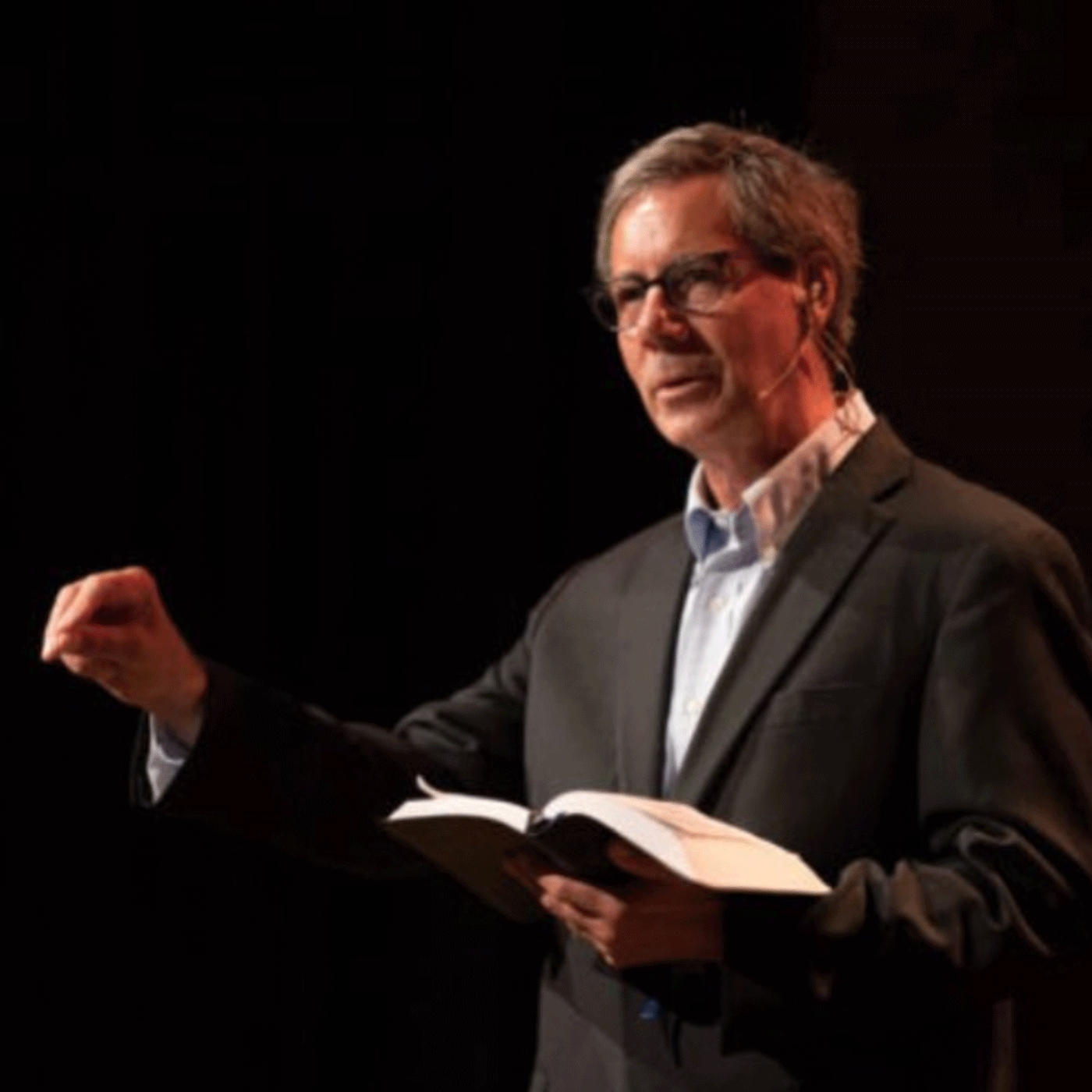
Dr. D. Clint Burnett, Lecturer in New Testament at Johnson University, specializes in the study of the material culture of the classical world and how it aids interpretation of the New Testament. In that vein, he has authored Studying the New Testament through Inscriptions (Hendrickson, 2020). In this conversation with David Capes he recounts his earliest years with the Greek language and demonstrates how even a little knowledge of Greek can illuminate a letter like Philemon.

To hear the podcast (7-8 minutes) click here.

“Exegetically Speaking” is a weekly podcast of the friends and faculty of Wheaton College, IL and The Lanier Theological Library. Hosted by Dr. David Capes, it features language experts who discuss the importance of learning the biblical languages—Hebrew, Aramaic, and Greek—and show how reading the Bible in the original languages “pays off.” Each podcast lasts between seven and eleven minutes and covers a different topic for those who want to read the Bible for all it is worth.

If you’re interested in going deeper, learn more about Wheaton’s undergraduate degree in Classical Languages (Greek, Hebrew, and Latin) and our MA in Biblical Exegesis

You can hear Exegetically Speaking on SpotifyStitcherApple Podcasts, and YouTube. If you have questions or comments, please contact us at exegetically.speaking@wheaton.edu. And keep listening. 

Walk-away-Joe and Deuteronomy 22, Sandy Richter

Dr. Sandy Richter, Westmont College

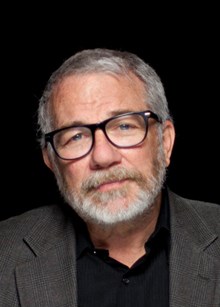
Dr. Sandra Richter, formerly Professor of Old Testament at Wheaton College, is The Robert H. Gundry Chair of Biblical Studies at Westmont College. Among her many publications are The Deuteronomistic History and the Name Theology (BZAW 2002) and Stewards of Eden: What Scripture Says About the Environment and Why It Matters (IVP 2020). In this podcast, she discusses the importance of Hebrew language in her work, Deuteronomy as an ancient law code, and how parallel texts and a shift of verbs in Deut 22:23-29 illuminate the laws regarding seduction and “rape” in vv. 28-29.

To hear the podcast click here.

“Exegetically Speaking” is a weekly podcast of the friends and faculty of Wheaton College, IL and The Lanier Theological Library. Hosted by Dr. David Capes, it features language experts who discuss the importance of learning the biblical languages—Hebrew, Aramaic, and Greek—and show how reading the Bible in the original languages “pays off.” Each podcast lasts between seven and eleven minutes and covers a different topic for those who want to read the Bible for all it is worth.

If you’re interested in going deeper, learn more about Wheaton’s undergraduate degree in Classical Languages (Greek, Hebrew, and Latin) and our MA in Biblical Exegesis

You can hear Exegetically Speaking on SpotifyStitcherApple Podcasts, and YouTube. If you have questions or comments, please contact us at exegetically.speaking@wheaton.edu. And keep listening. 

Understanding Transliteration in Bible Translation

Dr. David Capes, Lanier Theological Library

Our most popular podcast in the series “Exegetically Speaking” has been one I did on my own. It was entitled “Avoiding Transliteration in Biblie Translation.” But in fact, I’m not sure the title did the podcast justice because the gist of it was not about “avoiding transliteration” but about understanding it as part of the history and texture of our own, modern translations. It happens also to be the shortest podcast we did as well. If you don’t know what transliterations are, take five minutes and listen.

To hear the podcast (5 minutes)click here.

“Exegetically Speaking” is a weekly podcast of the friends and faculty of Wheaton College, IL and The Lanier Theological Library. Hosted by Dr. David Capes, it features language experts who discuss the importance of learning the biblical languages—Hebrew, Aramaic, and Greek—and show how reading the Bible in the original languages “pays off.” Each podcast lasts between seven and eleven minutes and covers a different topic for those who want to read the Bible for all it is worth.

If you’re interested in going deeper, learn more about Wheaton’s undergraduate degree in Classical Languages (Greek, Hebrew, and Latin) and our MA in Biblical Exegesis

You can hear Exegetically Speaking on SpotifyStitcherApple Podcasts, and YouTube. If you have questions or comments, please contact us at exegetically.speaking@wheaton.edu. And keep listening. 

Son-of-God-in-power, Romans 1:3-4 with Matthew Bates

Dr. Matthew Bates, Quincy University

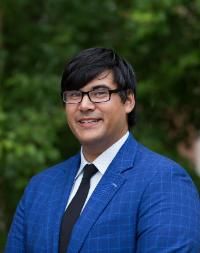
Dr. Matthew Bates is Associate Professor of Theology at Quincy University. He recalls how, having majored in physics as an undergraduate, he learned beginning Greek independently before jumping into second-year Greek in seminary. Among his several publications are The Birth of the Trinity (Oxford, 2015) and Salvation by Allegiance Alone(Baker, 2017). In this episode he reveals how Paul’s choice of verbiage in an important summary of the gospel indicates his conceptions of Christ’s nature and history, especially both his divine pre-existence and his exaltation.

To listen to the podcast click here.

“Exegetically Speaking” is a weekly podcast of the friends and faculty of Wheaton College, IL and The Lanier Theological Library. Hosted by Dr. David Capes, it features language experts who discuss the importance of learning the biblical languages—Hebrew, Aramaic, and Greek—and show how reading the Bible in the original languages “pays off.” Each podcast lasts between seven and eleven minutes and covers a different topic for those who want to read the Bible for all it is worth.

If you’re interested in going deeper, learn more about Wheaton’s undergraduate degree in Classical Languages (Greek, Hebrew, and Latin) and our MA in Biblical Exegesis

You can hear Exegetically Speaking on SpotifyStitcherApple Podcasts, and YouTube. If you have questions or comments, please contact us at exegetically.speaking@wheaton.edu. And keep listening. 

Reckoning with Race–Vince Bacote

Dr. Vincent Bacote, Wheaton College

Dr. Vince Bacote, Associate Professor of Theology and Director of the Center for Applied Christian Ethics at Wheaton College, joins David Capes to talk about his new book, Reckoning with Race and Performing the Good News: In Search of a Better Evangelical Theology (Brill, 2020).  Dr. Bacote is interested in rehabilitating the evangelical movement when it comes to how racial minorities fit into its life.  For too long the good news, while central to evangelical theology and life, has not always been good for minorities.  The polarization now in the west is due in large part because majorities and minorities are speaking past each another rather than finding a place at the table for one another.  According to Bacote, theology and ethics belong together and are not separate spheres of life and thought.  After discussing the meaning of “racism” and “critical race theory,” Bacote offers concrete proposals for what serious Christians and a thoughtful church can do next.  To learn more about Dr. Vince Bacote and his work, go to his website http://www.vincentbacote.com.

To hear the podcast (22 minutes) click here.

The Stone Chapel is a podcast of the friends and staff of the Lanier Theological Library in Houston, Texas.  It is hosted by Dr. David Capes, Senior Research Fellow at the library and former faculty member at Houston Baptist University and Wheaton College.  The purpose of the podcast is to bring to our audience great conversations from the world’s leading experts in theology, biblical studies, archaeology, Church history, the Dead Sea Scrolls, ethics, ministry, and a host of other topics close to the mission of the library.

The Lanier Theological Library is a magnet for scholars, church leaders and influencers.  For the last ten years, it has welcomed hundreds of academics and church leaders from across the globe for public lectures, study, panel discussions, consultations, and encouragement.

These podcasts as well as the Lanier library and the Stone Chapel are generously underwritten by Mark and Becky Lanier and the Lanier Theological Library Foundation.  If you have questions or comments, please be in touch: Email david.capes@lanierlibrary.org