Page 30 of 50

The Magnificat, with Amy Peeler

Amy Peeler, Wheaton College

Dr. Amy Peeler, Associate Professor of New Testament, has authored You Are My Son: The Family of God in the Epistle to the Hebrews (T&T Clark, 2015) along with articles on a range of NT texts and topics. Her next book, focused on the Incarnation and entitled Mother of God, will be published in 2022 (Eerdmans). She has team-taught a course on Mary, the mother of Jesus, and in this conversation she explains the contextual meaning, artistic form, and the liturgical importance of Mary’s song, known traditionally as the Magnificat.

To hear the podcast (11 minutes) click here.

“Exegetically Speaking” is a weekly podcast of the friends and faculty of Wheaton College, IL and The Lanier Theological Library. Hosted by Dr. David Capes, it features language experts who discuss the importance of learning the biblical languages—Hebrew, Aramaic, and Greek—and show how reading the Bible in the original languages “pays off.” Each podcast lasts between seven and eleven minutes and covers a different topic for those who want to read the Bible for all it is worth.

If you’re interested in going deeper, learn more about Wheaton’s undergraduate degree in Classical Languages (Greek, Hebrew, and Latin)and our MA in Biblical Exegesis

You can hear Exegetically Speaking on SpotifyStitcherApple Podcasts, and YouTube. If you have questions or comments, please contact us at exegetically.speaking@wheaton.edu. And keep listening. 
Words and the Transfiguration, Jon Laansma

Jon Laansma, Wheaton College

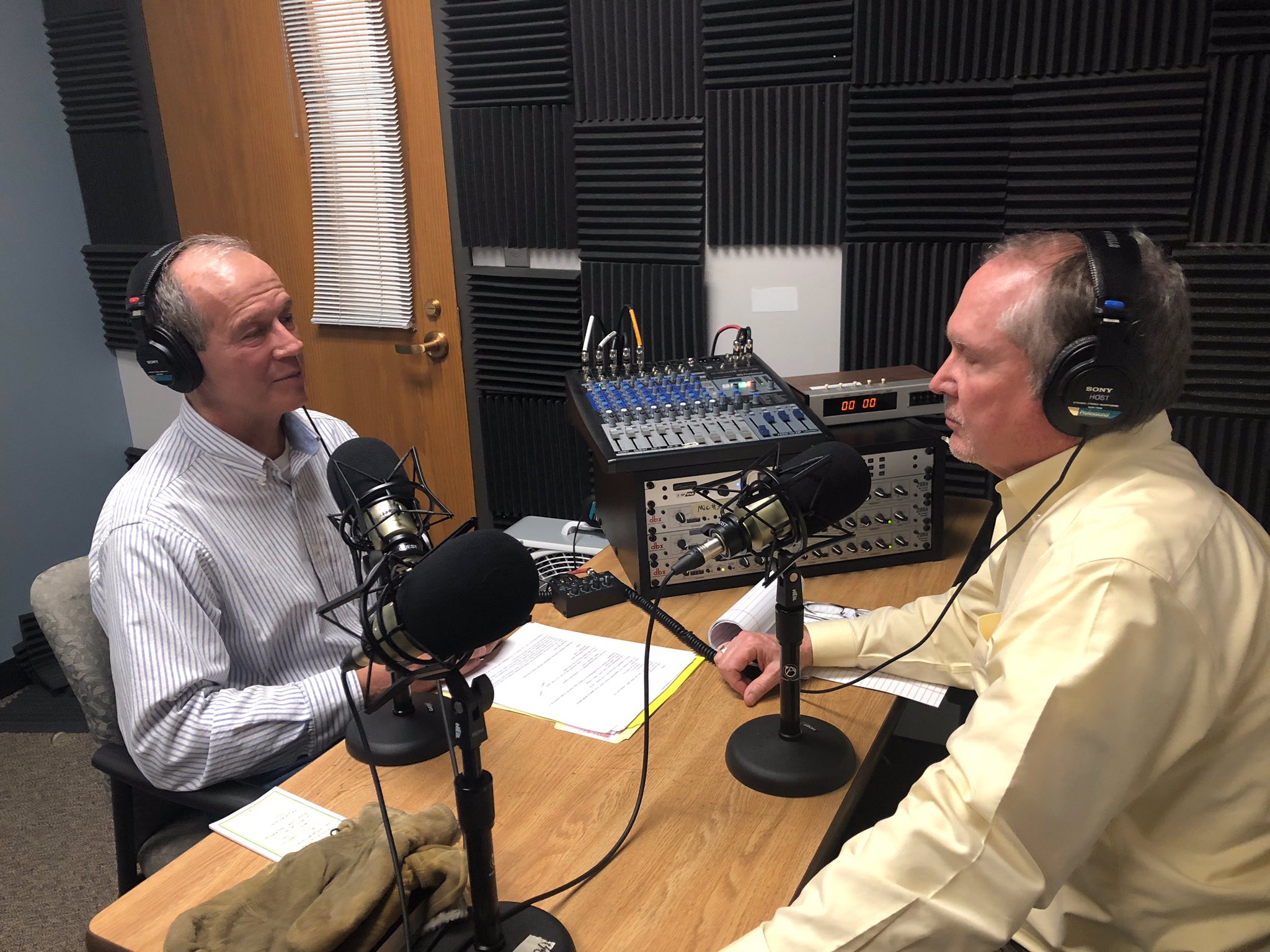
Dr. Jon Laansma, the Gerald F. Hawthorne Professor of New Testament Greek and Exegesis at Wheaton College, has published works on Hebrews, 2 Timothy, Titus, Sabbath, Lord’s Day, and Greek verbs, among other things, and is in the early stages of a commentary on 1 Corinthians. In this episode of Exegetically Speaking, he uses the Transfiguration narrative to illustrate different questions we ask in studying an author’s word choices.

To hear the podcast (12 min) click here.

“Exegetically Speaking” is a weekly podcast of the friends and faculty of Wheaton College, IL and The Lanier Theological Library. Hosted by Dr. David Capes, it features language experts who discuss the importance of learning the biblical languages—Hebrew, Aramaic, and Greek—and show how reading the Bible in the original languages “pays off.” Each podcast lasts between seven and eleven minutes and covers a different topic for those who want to read the Bible for all it is worth.

If you’re interested in going deeper, learn more about Wheaton’s undergraduate degree in Classical Languages (Greek, Hebrew, and Latin) and our MA in Biblical Exegesis

You can hear Exegetically Speaking on SpotifyStitcherApple Podcasts, and YouTube. If you have questions or comments, please contact us at exegetically.speaking@wheaton.edu. And keep listening. 
Archaeology and Biblical Languages, with Dan Master

Dan Master, Wheaton College

Dr. Daniel Master is Professor of Archaeology at Wheaton College. Since 1992, he has been part of the Leon Levy Expedition to Ashkelon, and in 2016 he began a new project at Tel Shimron in Northern Israel. In this conversation with Dr. Capes, he recalls his beginnings in the biblical languages and their ongoing importance for his own work and for students majoring in archaeology.

To hear the podcast (10 minutes) click here.

“Exegetically Speaking” is a weekly podcast of the friends and faculty of Wheaton College, IL and The Lanier Theological Library. Hosted by Dr. David Capes, it features language experts who discuss the importance of learning the biblical languages—Hebrew, Aramaic, and Greek—and show how reading the Bible in the original languages “pays off.” Each podcast lasts between seven and eleven minutes and covers a different topic for those who want to read the Bible for all it is worth.

If you’re interested in going deeper, learn more about Wheaton’s undergraduate degree in Classical Languages (Greek, Hebrew, and Latin)and our MA in Biblical Exegesis

You can hear Exegetically Speaking on SpotifyStitcherApple Podcasts, and YouTube. If you have questions or comments, please contact us at exegetically.speaking@wheaton.edu. And keep listening. 
Genesis, Literary Structure and Creation, with John Walton

John Walton, Wheaton College

Dr. John Walton, Professor of Old Testament at Wheaton Graduate School, author of many books and articles relating to the background, literature, and theology of the Old Testament, has contributed several episodes to this podcast. How does the literary structure of Genesis 1, when compared with other creation accounts from the ancient near east as well as other biblical texts, inform the meaning of all the days of creation and highlight God’s rest on the seventh day?

To hear the podcast (8 minutes) click here.

“Exegetically Speaking” is a weekly podcast of the friends and faculty of Wheaton College, IL and The Lanier Theological Library. Hosted by Dr. David Capes, it features language experts who discuss the importance of learning the biblical languages—Hebrew, Aramaic, and Greek—and show how reading the Bible in the original languages “pays off.” Each podcast lasts between seven and eleven minutes and covers a different topic for those who want to read the Bible for all it is worth.

If you’re interested in going deeper, learn more about Wheaton’s undergraduate degree in Classical Languages (Greek, Hebrew, and Latin)and our MA in Biblical Exegesis

You can hear Exegetically Speaking on SpotifyStitcherApple Podcasts, and YouTube. If you have questions or comments, please contact us at exegetically.speaking@wheaton.edu. And keep listening. 

Leadership, according to Paul with Vuyani Sindo

Vuyani Sindo, George Whitefield College

Vuyani Sindo is Lecturer in Biblical Studies and head of the Biblical Studies department at George Whitefield College in Cape Town, South Africa.  He earned his PhD at the University of Stellenbosch.  In this podcast he talks with David Capes regarding what he’s discovered about leadership by reading Paul’s first letter to the Corinthians.  Although Paul founded the church, he found himself rejected by the church.  Most leadership studies, Sindo argues, focus the leader him/herself (anthropocentric).  Paul instead makes leadership theocentric, that is, all about God. Most leadership studies dabble in worldly wisdom and success strategies; Paul emphasizes that God is the one who gives the increase through the foolishness of the cross.  As more and more church leaders fail—often in public ways—Sindo believes that Christ-followers should identify with Christ and not their leaders.  Sindo offers some great insights on leadership for the church today!

To hear the podcast (20 minutes) click here.

All the Stone Chapel Podcasts can be found on Apple, Google, iHeartRadio, Spotify, and other platforms. Subscribe and you will be notified whenever a new podcast has posted.