
God Hasn’t Forgotten You with Robert Morgan
To hear the podcast click here.
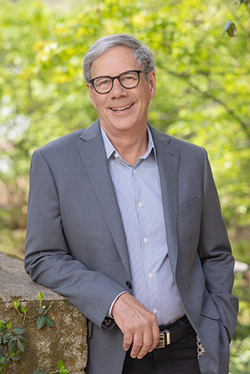
David Capes
Hi everybody. Welcome back to the Stone chapel podcast. My name is David Capes. If this is your first time to hear the podcast, please share it with a friend. We hope you will enjoy the conversation that I’m going to have in just a minute with Dr. Robert Morgan. Now, Dr. Morgan has been with us before, but it’s been a few years ago, and he’s written a number of books since then; but we’re going to be talking about a special one today. He is an associate pastor in Murfreesboro, Tennessee. He is also a podcaster himself, and he does a variety of things in terms of teaching the Bible as an expositor of the Bible.
And the other thing that you need to know is he is quite a prolific author. In fact, his books have sold 5 million copies. Now, for an academic, if we sell 500 copies, we’re happy. So, 5 million copies! Wow! Now one of those books we talk about around here a lot, and it’s called The Red Sea Rules. Mark Lanier, our founder, buys these by the truckload, and he gives them away. He loves this book. It’s a great book. The subtitle is The Same God Who Led You In, Will Lead You Out. It’s a great, great book. It’s short; you can read it in probably an afternoon or maybe an evening. And he also wrote another book, Then Sings My Soul. He’s got a new one he just told me about, and we’ll be saying something about that as well in connection with a movie. Dr. Robert Morgan, thanks for being with us today on The Stone Chapel Podcast.
Robert Morgan
I love being with you. I told you off air that your podcast, this one, and Exegetically Speaking, are my favorite podcasts. I look forward to every new episode dropping, and so it’s an honor to be with you, David.
David Capes
It’s an honor, really, to speak with you. And I’m looking forward to you getting back to the Lanier library soon to speak, maybe to some of our certificate students. Now we’re here today to talk about your book. God Hasn’t Forgotten You, and the subtitle is 24 Remarkable Ways God Is Working in You and through You. It’s a terrific book. Now, I was supposed to write this book. I don’t know if you knew this, but I could only come up with 23 ways. And so, I think you ended up writing it because you had 24 ways! I think you ended up getting the nod from the publisher. Just kidding, of course.
It’s a terrific book, and I love what you’ve done with it. It’s a meditation throughout. It’s a devotional kind of book. It’s a scriptural thing, very deeply, and I love the way it begins. Let me just read it. I’m just going to ask you to comment on it because it grabbed me immediately. And it’s things that I hadn’t thought about. Transcribed by https://otter.ai – 2 –
“So, the blazing sun had fallen over the Negev desert for 146,100 days without a single word from the God of Israel. Four centuries had passed since the last inspired Hebrew prophets, Zechariah and Malachi had discharged their ministries. In the Judean Hills lived one elderly couple who had not lost faith. And that was Zechariah and Elizabeth.”
That’s a great beginning. How did you come up with that? What was the inspiration?
Robert Morgan
Well, maybe three or four years ago, I wanted to prepare a series of Christmas sermons. And we always go right to Luke two. And I thought, I’m just going to begin here. At the beginning of Luke, we have that marvelous preamble or prologue that Luke has in verses 1-4. And then the more I studied Zechariah and Elizabeth, the more astounded I was at how little I really knew about them. And I just got into that chapter. It’s a very long chapter, and there’s a lot of details given. It’s a very vivid chapter, a very picturesque chapter. And David, everything began with them. Before there was Joseph and Mary and baby Jesus, there was Zechariah and Elizabeth and Baby John, and the whole program began with them.
The Old Covenant began with an old couple who couldn’t have a baby, but they were given a miraculous son. The new covenant story of redemption began with an old couple who couldn’t have a baby but were given a miraculous son. God began everything over again, and as I read through this chapter, there were so many transferable lessons there. This is not an academic book. This is a book of taking Bible lessons that are just beneath the surface and transferring them to our lives. And I just fell in love with Zechariah and Elizabeth and the story of Mary. His visit and the ritual of the temple when Zachariah saw the angel. All of it is fascinating, and we overlook it because we jump right to chapter two and go to the story of Bethlehem.
David Capes
You know, we do that. It’s very interesting because, as you write somewhere in the book, you say you never begin a book with Chapter 2. You always start with chapter 1. Why have we leapt over that? I have the same feeling when people skip over the genealogy in Matthew, because I think there’s a lot of things beneath the surface in that genealogy.
Robert Morgan
Yes, yes, there are jewels just under the surface on every pathway of Scripture, and if you don’t look down and scrape a little of the dirt away, you’ll miss them. It’s just absolutely astounding how much there is. Here is an example in the English Old Testament. The last book is Malachi, and the last thing Malachi says is, and I’m paraphrasing, but I will send you the prophet Elijah, who will turn the hearts of children back to their parents.
Then we have 400 years of silence and the next word, the next canonical or inspired Word, the next infallible Word from God, is what Gabriel said in that temple. And Gabriel’s first words were, I’m going to give you a son who will be like the prophet Elijah, who will turn the hearts of children back to their parents. The last words that God spoke in Malachi and the first words that He spoke in the New Transcribed by https://otter.ai – 3 –
Testament era are like lynch pins on a train. They just link everything together. God is amazing in the way he has these patterns of Scripture.
David Capes
Yes, it is amazing. And to think that 146,000 days had gone by. Four centuries, and you stopped to do the math, apparently on that well.
Robert Morgan
It’s very similar to our own day. During that time period, there was a lot of great literature being produced. The second temple literature and the rabbis were teaching and preaching and writing, and the scrolls were just like today. There’s a lot of books and wonderful material. And the Lanier Library has, I don’t know how many thousands of volumes of things that have been written in the last 2000 years.
But none of it is inspired. Nothing that I write is inspired unless I’m quoting the scripture in what I’m saying. So, there was a lot of great literature being produced in the Second Temple period, but God had not spoken in that prophetic or inspired way since Malachi. Until Gabriel showed up, and then everything started up again, as though it had never stopped. And it went on from there. And an old couple in the Judean Hills who thought their lives were behind them, became the trigger points for everything God was going to do now in the future, through his program of redemption for the world.
David Capes
I think sometimes, Robert, that we neglect John the Baptist as we just skip over him as well. He was there. He did important work. John had a tremendous influence, didn’t he?
Robert Morgan
He did. He was the revival preacher of his day. This carpenter in Nazareth heard about the revival taking place down in the Judean desert near the Jordan river and the Jericho or in that region. And he went down, and that’s where he was anointed by the Holy Spirit and assumed the role of Messiah. Later Paul, when he was in Ephesus, they hadn’t heard of Jesus, but they knew John, so he was a sensation in his days.
And one thing that I speculate about some here in the book is because Zechariah was a priest and Elizabeth was the daughter and the wife of a priest. John had priestly legacy. He was in the priestly line, but we don’t know that he served in the temple in Jerusalem. He seemed to have been set aside to serve the living temple, and he had an extraordinary ministry there, I think, in that priestly role of ushering in the ministry of the one who said, destroy this temple, and in three days I’ll rebuild it. There’s just a lot beneath the surface of Luke 1 that I haven’t gotten to the bottom of. But I went as far down as I could without losing consciousness.
David Capes
You ended up writing 24 chapters, and all of it really is a meditation on Luke 1 which is brilliant, and you pull out so many things, and the way that you translated Zechariah’s name is the title of the book. God hasn’t forgotten you. That’s essentially what his name means. Transcribed by https://otter.ai – 4 –
Robert Morgan
Yes, and the story, the real theme of the book, I think, is that we are more useful to God now than we’ve ever been. Zechariah and Elizabeth were described as being very old, and Zachariah said gingerly about Elizabeth, she is well up in years. And they probably thought, like we’re prone to do, we’re going to be faithful until we die, but we don’t have a lot of time left. But what God wanted to do with their lives was just beginning.
They were more useful than they had ever been before, and I think that’s true for you and me and for all of us, regardless of our age. But especially as we get a little older, our society tends to tell us that we’re not as useful as we once were. But I think what this chapter tells us is that we are more useful to the Lord now than we’ve ever been before, because of the growth and the grace and the experience and the maturing that happens over the course of years.
David Capes
Talk pastorally for a second, because, and I’m curious what your thoughts are. How common do you see this feeling or this sense that people have for whatever reason, that God has forgotten them, or that they have been put on a shelf. Do you see that a lot?
Robert Morgan
Yes, yes. People are very stressed. They’re beaten down by life. There’s a lot of pressure. Everybody seems to be too busy. They’re overwhelmed. And you know, David, the thing that has made the difference in my whole life? I was taught when I was 19 years old to have my daily quiet time, to wake up in the morning, to meet with the Lord, to pray with him, and to study the Bible. And I find that is, to me, the source of all of my strength.
I think Zechariah and Elizabeth did something similar to that, but when people are so busy, they don’t have time for that, or they haven’t been taught, and they’re just overwhelmed with life. They think that everybody has forgotten them, but particularly they don’t have a sense that God is watching over them, caring for them, that he’s got a plan for their lives. That he wants to use them now more than ever, and they feel a lack of purpose or a lack of fulfillment. And I think this is endemic in our times.
David Capes
Yes, I think it is too, for all sorts of reasons. One of those reasons you discuss here is the reason of grief in chapter 4. I know you’ve had your own bit of grief that you have been working through as have I. I’ve told you a little bit of our story of losing our son at 36 years old. But I didn’t realize that Streams In the Desert was 100 years old. I needed to say that because it’s a great book and an important, influential book. But one of the things that you cite here is a statement made by the author, Letty Cowman.
“It is such a comfort to drop the tangles of life into God’s hands and leave them there.”
Robert Morgan Transcribed by https://otter.ai – 5 –
Wonderful, it really is. I know she and her husband were very, very involved in ministry overseas as missionaries. And when he developed heart issues, they had to come home. He was hardly able to do anything. They both were discouraged and depressed. But Letty, began clipping out things that would encourage them from sermons and newspapers, and she would read them to him, and if they really helped them, she would set them aside. And that later became this book, Streams In the Desert.
To me, that is one of the best quotes in the whole book. We have to take the tangles of life and leave them in God’s hands. There is a sense in which we do need sometimes to let go and to let God. It’s like when Jacob said about Benjamin. “Take him on. And if I am bereaved, I am bereaved.” It’s like when Job said, “Though He slay me, yet will I trust him”.
There comes a time when we just say, Lord, I cannot solve this problem. I don’t know if it’s ever going to be solved. I’m just going to trust you anyway. But for John and Elizabeth, it was their inability to have a child they had prayed about over and over and over again, and now they were old, and the child had never come. And yet, what Gabriel said was, Zechariah, your prayers are answered. Your wife will have a son. He was so startled that he couldn’t believe it!
David Capes
He couldn’t speak for how long?
Robert Morgan
That’s right, nine months. It was a great gift to Elizabeth.
David Capes
I think it probably was! I think that you have done a marvelous job in setting the tone to help people deal with whatever life has given them, whatever kind of situation. It could be grief, it could be the sense that they are getting older and they feel like God doesn’t need them or my best days are behind me. I think at 70, there’s many good days left. What do you think?
Robert Morgan
I think so. I’m 73 and 5/6, almost 74 and I feel like, Lord willing and if he is merciful, my best days of ministry and work are ahead of me. I think that with aging, it’s a matter of attitude more than arteries, and we just keep going on. I don’t think we should ever stop in our service for the Lord. You know, David, there’s a verse that says, “The eyes of the Lord range to and fro throughout the earth to strengthen those whose hearts are fully devoted to him”. And at a particular point in time, the eyes of the Lord ranged to and fro the hills of Judah to find an older couple who were faithful and whose hearts were devoted to the Lord. And he found this couple, Zechariah and Elizabeth, and what he did with them has changed history. I just think we need to keep going and rejoice and praise the Lord every step of the way.
David Capes
Yes, and good things will follow. Well, my sense is that you have the spiritual gift of teaching and also encouragement. Transcribed by https://otter.ai – 6 –
Robert Morgan
I think the same for you. I really do. You’re a great encouragement to me. David, thank you so much.
David Capes
You’ve got a new book about the origin of hymns as well.
Robert Morgan
Yes, it’s called The Origin of Hymns. When the movie, “I Can Only Imagine 2,” was being filmed partly in Nashville, I was asked to have prayer over the cast and crew one morning. Then I stayed to watch some of the filming. And the producer came up, and he has read my books, and wanted to talk. And we talked a long time, and we talked about the hymns. “I Can Only Imagine 2” has a lot to do with the story of “It Is Well with My Soul.”
So later he called me and he said, you know, all the way through the movie, the main character, Tim Timmons is reading a book. It’s a prop in the movie, but it’s called The Origin of Hymns, and I would just love it if we could have that book to go along with the movie when it’s released. So, we said, I think we can do it. We curated a few things from my Then Sings My Soul Series. I created some other fresh material. We put it together in a beautiful, little easy to read paperback, and it is full of information about the classic, timeless hymns that have existed ever since the first one at the Red Sea.
In Exodus 15, the Israelites begin singing and praising God for delivering them from Egypt. And the history of our hymns is like sinking a shaft into Christian history and studying it from age to age and singing all the way as we go. And this book has been in the top 200 to 300 of all of the books in the US for the last couple of weeks because of the movie. Not a lot to do with me, but people watch the movie, and they see it and they want to get so we’re very grateful. I’ll send you a copy.
David Capes
Thanks, I’d love to see it, and I’d love to have you back to talk a little bit about that, because there’s some great stories there that we need to know. And I think there is, as you and I’ve talked before, a kind of a revival of those legacy hymns, those hymns that have been around for some cases, hundreds of years.
Robert Morgan
Yes. They are objective. They are theologically sound. They focus more on God than they do on us. They direct our attention upwards, “immortal, invisible, God only wise and light inaccessible, hid from our eyes”. We need to sing songs that have deep theology. In fact, a good hymn is simply singable theology. It’s a good Bible study set to music that lets us sing and meditate on the words. I’m a champion. I love the new music. I’m not anti-new music at all, but I’m just not in favor of excluding all of the hymns that people have been singing for hundreds of years.
David Capes
We’ve got to get you back here to talk more about that on another occasion. Dr Robert Morgan, great to see you. Thanks for being with us today on The Stone Chapel Podcast. Transcribed by https://otter.ai – 7 –
Robert Morgan
My pleasure. Thank you. Thank you, David.


You must be logged in to post a comment.