Page 7 of 9

Elijah Thundered

Drew Burlingame, Wheaton College

Andrew Burlingame is Assistant Professor of Hebrew at Wheaton College within the Department of Modern and Classical Languages. He has authored several articles, one of which received the 2018 Sean W. Dever Memorial Prize of the W. F. Albright Institute of Archaeological Research, Jerusalem. He observes that until now we have had to guess at the meaning of a rare Hebrew word translated as “bowed down” in 1 Kings 18:42. Recent scholarship devoted to cognate languages has led some to believe that Elijah was actually making a rumbling sound, imitative of thunder.

To listen to the seven minute podcast click here.

“Exegetically Speaking” is a weekly podcast of the friends and faculty of Wheaton College, IL and The Lanier Theological Library. Hosted by Dr. David Capes, it features language experts who discuss the importance of learning the biblical languages—Hebrew, Aramaic, and Greek—and show how reading the Bible in the original languages “pays off.” Each podcast lasts between seven and eleven minutes and covers a different topic for those who want to read the Bible for all it is worth.

If you’re interested in going deeper, learn more about Wheaton’s undergraduate degree in Classical Languages (Greek, Hebrew, and Latin) and our MA in Biblical Exegesis

You can hear Exegetically Speaking on SpotifyStitcherApple Podcasts, and YouTube. If you have questions or comments, please contact us at exegetically.speaking@wheaton.edu.
Poetry and Metaphor in Psalm 1

Travis Wright

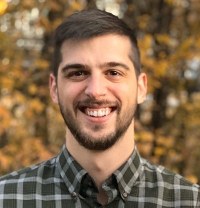
Not long ago I sat down with Travis Wright, a PhD Student at Cambridge University, to discuss some of the beauty and poetry found in Psalm 1. He reads Hebrew beautifully. You get a sense not only of what it means but how it sounds.

To hear the 7 minute podcast click here.

Here is his faculty of divinity webpage:

“Exegetically Speaking” is a weekly podcast of the friends and faculty of Wheaton College, IL and The Lanier Theological Library. Hosted by Dr. David Capes, it features language experts who discuss the importance of learning the biblical languages—Hebrew, Aramaic, and Greek—and show how reading the Bible in the original languages “pays off.” Each podcast lasts between seven and eleven minutes and covers a different topic for those who want to read the Bible for all it is worth.

If you’re interested in going deeper, learn more about Wheaton’s undergraduate degree in Classical Languages (Greek, Hebrew, and Latin) and our MA in Biblical Exegesis

You can hear Exegetically Speaking on SpotifyStitcherApple Podcasts, and YouTube. If you have questions or comments, please contact us at exegetically.speaking@wheaton.edu. And keep listening. 

The Name of God

Dr. Aubrey Buster, Assistant Professor of Old Testament at Wheaton College, joins me on “Exegetically Speaking” to discuss the meaning of the Hebrew Name that God takes for himself during his first appearance to Moses. What its meaning was, why it was given, how it has been spelled and pronounced in the Hebrew and English traditions, and why these later forms were adopted.

The podcast is about 7 minutes.

To listen, just cut and paste the following URL into your favorite browser:

http://exegeticallyspeaking.libsyn.com/the-name-of-god-exod-314

or click here.

“Exegetically Speaking” is a weekly podcast of the friends and faculty of Wheaton College, IL and The Lanier Theological Library. Hosted by Dr. David Capes, it features language experts who discuss the importance of learning the biblical languages—Hebrew, Aramaic, and Greek—and show how reading the Bible in the original languages “pays off.” Each podcast lasts between seven and eleven minutes and covers a different topic for those who want to read the Bible for all it is worth.

If you’re interested in going deeper, learn more about Wheaton’s undergraduate degree in Classical Languages (Greek, Hebrew, and Latin) and our MA in Biblical Exegesis

You can hear Exegetically Speaking on SpotifyStitcherApple Podcasts, and YouTube. If you have questions or comments, please contact us at exegetically.speaking@wheaton.edu. And keep listening. 
The Literary Style of Hosea

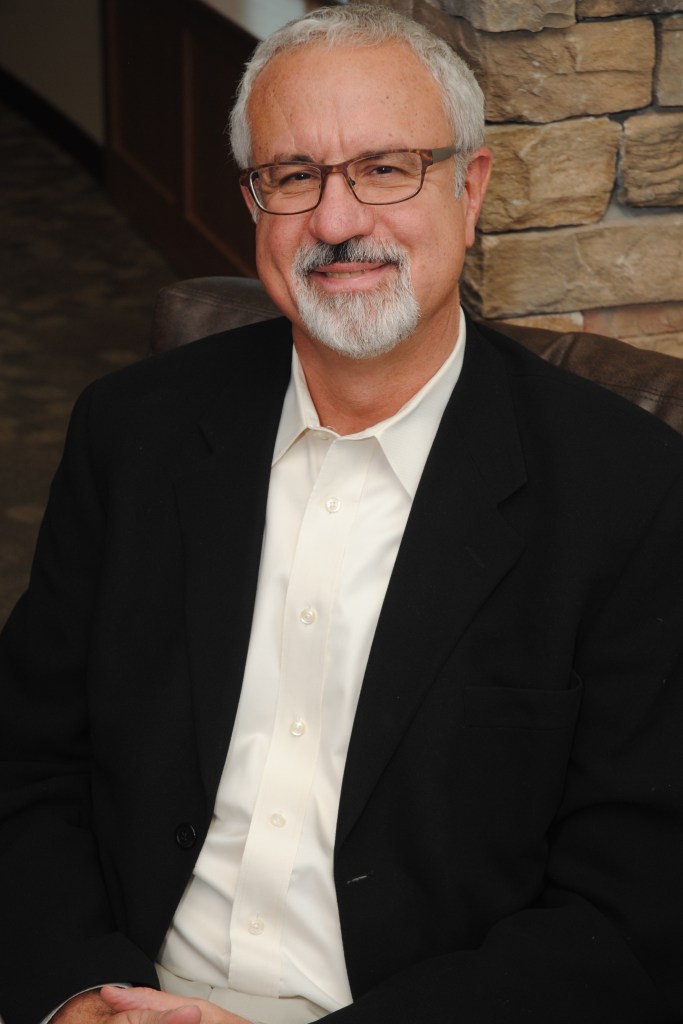
Recently I sat down with a friend, Danny Carroll, to discuss the ways in which Hosea attempted to persuade the people of Israel and Judah that they needed to change their ways. Here’s a more formal description:

Dr. Danny Carroll Rodas, Scripture Press Ministries Professor of Biblical Studies and Pedagogy at Wheaton College, moves us beyond Hosea 1-3 to consider the various metaphors used by the prophet to communicate the nature of God and the serious afflictions of God’s people.

Dr. Danny Carroll

You can cut and paste this URL:

http://exegeticallyspeaking.libsyn.com/literary-style-of-hosea

or click here.

Chaim Cohen

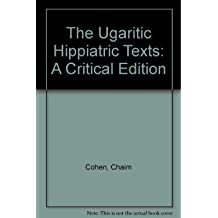
One of the recent collections added to the Lanier Theological Library came from Chaim Cohen.  It is an amazing collection of books, thousands, mostly in Hebrew. 61O4RLcWiTL._AC_US218_.

Chaim Cohen (1947-2017) was a world-renowned biblical linguist.  Through his career the American-born scholar showed the benefits of reading biblical Hebrew in the light of texts written in Akkadian and Ugaritic, two ancient Semitic languages that have not been spoken in 3000 years.  Instead of being written on parchment (animal skin), Akkadian and Ugaritic were inscribed upon clay tablets and predate written Hebrew.  Cohen’s comparative work helped to clarify the meanings and usages of many obscure Hebrew words and phrases. He taught in the departments of Hebrew Language and Bible at Ben-Gurion University of the Negev. This gentle, humble man believed his research could help situate religious faith in a “respectable academic framework,” for both secular and religious Israelis.

Friends who knew him said he delighted in the study of the Bible more than anyone they had ever met.  He was a living, walking Book of the Torah.  Cohen loved being a cohen, that is, a priest, and would regularly recite the priestly prayer (Num 6:24-26) with passion and grace.  Cohen also loved music, and he trained generations of readers in how best to read and recite Scripture publicly for worship.