
Page 5 of 9

Curse or Consequences? with John Walton

Genesis 3
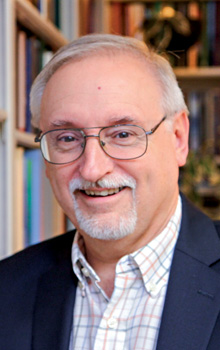
John Walton, Wheaton College

Dr. John Walton, Professor of Old Testament at Wheaton Graduate School, author of many books and articles relating to the background, literature, and theology of the Old Testament, has contributed several episodes to this podcast. Currently, he is collaborating with his Wheaton colleague, Dr. Aubrey Buster, in writing a commentary on Daniel. In this conversation with David Capes, he gives some fresh and helpful attention to some of the language that God addresses to the rebellious actors of Genesis 3. Consequences of their acts bring, among other things, anxiety about conception and a desire for spousal support in the form of domestic stability and order.

To hear the podcast click here.

“Exegetically Speaking” is a weekly podcast of the friends and faculty of Wheaton College, IL and The Lanier Theological Library. Hosted by Dr. David Capes, it features language experts who discuss the importance of learning the biblical languages—Hebrew, Aramaic, and Greek—and show how reading the Bible in the original languages “pays off.” Each podcast lasts between seven and eleven minutes and covers a different topic for those who want to read the Bible for all it is worth.

If you’re interested in going deeper, learn more about Wheaton’s undergraduate degree in Classical Languages (Greek, Hebrew, and Latin) and our MA in Biblical Exegesis

You can hear Exegetically Speaking on SpotifyStitcherApple Podcasts, and YouTube. If you have questions or comments, please contact us at exegetically.speaking@wheaton.edu. And keep listening. 
The Fall of a King or the Fall of Satan? with John Walton

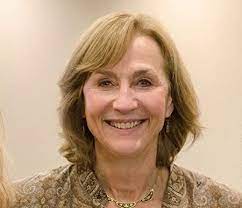
Dr. John Walton, Wheaton College

Dr. John Walton, Professor of Old Testament at Wheaton Graduate School, author of many books and articles relating to the background, literature, and theology of the Old Testament, has contributed several episodes to this podcast. In this conversation with David Capes he discusses a passage widely thought to be about the fall of Satan. Where did that tradition originate, and what does the context of Isaiah 14 tell us about the intended referent of the taunt?

To hear the podcast (7 minutes) click here.

“Exegetically Speaking” is a weekly podcast of the friends and faculty of Wheaton College, IL and The Lanier Theological Library. Hosted by Dr. David Capes, it features language experts who discuss the importance of learning the biblical languages—Hebrew, Aramaic, and Greek—and show how reading the Bible in the original languages “pays off.” Each podcast lasts between seven and eleven minutes and covers a different topic for those who want to read the Bible for all it is worth.

If you’re interested in going deeper, learn more about Wheaton’s undergraduate degree in Classical Languages (Greek, Hebrew, and Latin) and our MA in Biblical Exegesis

You can hear Exegetically Speaking on SpotifyStitcherApple Podcasts, and YouTube. If you have questions or comments, please contact us at exegetically.speaking@wheaton.edu. And keep listening. 
The Good News in Isaiah with Ingrid Faro

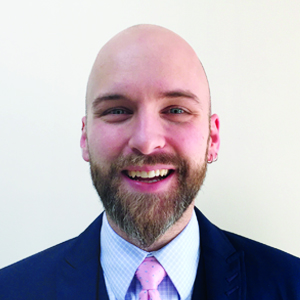
Dr. Ingrid Faro, Northern Seminary

Dr. Ingrid Faro is Visiting Professor of Old Testament at Northern Seminary in Lisle, IL, and also teaches at the Scandinavian School of Theology in Sweden. Among other things, she is the author of Evil in Genesis: A Contextual Analysis of Hebrew Lexemes for Evil in the Book of Genesis. She tells of how she learned modern Hebrew in Israel, separately experienced the deep pain of relational abuse and loss, and eventually studied both ancient Hebrew and Greek. From that learning, she draws out the aspects of meaning appreciated through a knowledge of the Hebrew wording of Isaiah 61:1-3, the passage Jesus applied to himself in Luke 4.

To hear the podcast (12 minutes) click here.

“Exegetically Speaking” is a weekly podcast of the friends and faculty of Wheaton College, IL and The Lanier Theological Library. Hosted by Dr. David Capes, it features language experts who discuss the importance of learning the biblical languages—Hebrew, Aramaic, and Greek—and show how reading the Bible in the original languages “pays off.” Each podcast lasts between seven and eleven minutes and covers a different topic for those who want to read the Bible for all it is worth.

If you’re interested in going deeper, learn more about Wheaton’s undergraduate degree in Classical Languages (Greek, Hebrew, and Latin) and our MA in Biblical Exegesis

You can hear Exegetically Speaking on SpotifyStitcherApple Podcasts, and YouTube. If you have questions or comments, please contact us at exegetically.speaking@wheaton.edu. And keep listening. 

Oi, what is a particle?

Dr. Chris Fresch

Dr. Chris Fresch is Lecturer in Biblical Languages and Old Testament at Bible College SA in Adelaide, South Australia. He has authored A Book-by-Book Guide to New Testament Greek Vocabulary (Tyndale House, 2019) and co-edited with Steven Runge The Greek Verb Revisited: A Fresh Approach for Biblical Exegesis (Lexham, 2016). After recalling his early years learning the biblical languages, he explains how a Hebrew particle used in Genesis 1:31 and 6:12 functions to underline and bold two key pronouncements.

To hear the podcast click here.

“Exegetically Speaking” is a weekly podcast of the friends and faculty of Wheaton College, IL and The Lanier Theological Library. Hosted by Dr. David Capes, it features language experts who discuss the importance of learning the biblical languages—Hebrew, Aramaic, and Greek—and show how reading the Bible in the original languages “pays off.” Each podcast lasts between seven and eleven minutes and covers a different topic for those who want to read the Bible for all it is worth.

If you’re interested in going deeper, learn more about Wheaton’s undergraduate degree in Classical Languages (Greek, Hebrew, and Latin) and our MA in Biblical Exegesis

You can hear Exegetically Speaking on SpotifyStitcherApple Podcasts, and YouTube. If you have questions or comments, please contact us at exegetically.speaking@wheaton.edu. And keep listening. 

Biblingo.org

Kevin Grasso, PhD

Kevin Grasso and Nick Messmer are co-founders of Biblingo.org, a website dedicated to helping people learn and retain Greek and Hebrew. Kevin stopped by to talk with David Capes on “The Stone Chapel” regarding their project and how their approach differs from other programs or website.  The bottom line is this: they draw from some of the best practices and literature on second language acquisition. Spend just 30 minutes a day and you will find yourself learning Greek or Hebrew and retaining it in ways you had not before.  Even 15 minutes a day will help you down the road.  They encourage students not to memorize words or paradigms but internalize the language.  Their innovative approach is catching on around the world.  The costs to learn Greek or Hebrew with biblingo.com for one year are about ½ the costs of one credit hour at a college or university.  $18 gives you complete access to learn one language for a month.  And if you have already taken Greek or Hebrew, the site will help you keep up with and improve your biblical languages skills.  Want to learn Greek and/or Hebrew and learn it for LIFE: www.biblingo.org

To listen to the podcast (20 minutes) click here.

The Stone Chapel is a podcast of the friends and staff of the Lanier Theological Library in Houston, Texas.  It is hosted by Dr. David Capes, Senior Research Fellow at the library and former faculty member at Houston Baptist University and Wheaton College.  The purpose of the podcast is to bring to our audience great conversations from the world’s leading experts in theology, biblical studies, archaeology, Church history, the Dead Sea Scrolls, ethics, ministry, and a host of other topics close to the mission of the library.

The Lanier Theological Library is a magnet for scholars, church leaders and influencers.  For the last ten years, it has welcomed hundreds of academics and church leaders from across the globe for public lectures, study, panel discussions, consultations, and encouragement.

These podcasts as well as the Lanier library and the Stone Chapel are generously underwritten by Mark and Becky Lanier and the Lanier Theological Library Foundation.  If you have questions or comments, please be in touch: Email david.capes@lanierlibrary.org