Page 4 of 9

The Rewards of Learning Greek and Hebrew with McDowell & Towner

To hear the podcast click here.

Both Cathy McDowell and Phil Towner join David Capes on “The Stone Chapel Podcast” to talk about their new book: The Rewards of Learning Greek and Hebrew: Discovering the Richness of the bible in its Original Languages (Tyndale House Publishers). So much of the richness of the Greek New Testament and Hebrew Old Testament is hidden in translation or not translatable. 

They wrote their book to promote the study of the Biblical languages.  These days it has become less common for seminarians to study Biblical languages. Many seminaries and graduate schools do not require the languages any longer. Also, they do not offer enough courses so people can actually use the language after graduation.  Forty to fifty years ago that was not the case.

Why the change?  McDowell thinks the root is money.  Enrollment is down, and schools are making their degrees shorter and easier. To be honest, the language courses are some of the most difficult. 

Many popular ministers today do not focus on expository preaching.  When they did, they talked about the Greek and the Hebrew in their sermons. So younger people are not being exposed to these insights in sermons. Another factor. The advances in computer technology cause Bible students to imagine they can avoid the hard work of language learning.  

At the Lanier Theological Library we are interested in teaching people Greek and Hebrew.  That is why we regularly offer Greek classes at the library. 

Keep watching the Library website because soon we are going to teach Hebrew too. 

Catherine McDowell is associate professor of Old Testament at Gordon Conwell Seminary in Charlotte, NC.

The Rev’d Dr. Philip H. Towner is a professor at Pontifical Urbaniana University in Rome, where he teaches translation studies. He is also a visiting professor of New Testament exegesis and translation at the Pontifical Biblical Institute, Rome.

Stick around for a nugget of wisdom!

To hear the podcast click here.

If you are interested in Biblical languages, you may enjoy this previous lecture at the library. Click on the title.

“Between the Chairs” New Testament Evidence for the Hebrew Jesus Spoke

Ruth: Boaz’s Generosity with Catherine McDowell

Dr. Catherine McDowell is Associate Professor of Old Testament at Gordon-Conwell Theological Seminary, having previously taught at Wheaton College. She also serves part-time as a professor of Hebrew and Old Testament at Séminaire Théologique Mondelus in Milot, Haiti. Among other things, she has authored, The Image of God in the Garden of Eden: The Creation of Humankind in Genesis 2:5-3:24 in Light of the mīs pî, pīt pî, and wpt-r Rituals of Mesopotamia and Ancient Egypt. Today’s topic: Though some English translations have failed to convey this, the author of Ruth 3:17 was using word order to emphasize both Boaz’s excessive generosity and God’s care for the poor and marginalized.

To hear the podcast (8 minutes) click here.

In the Beginning God Established Order with John Walton

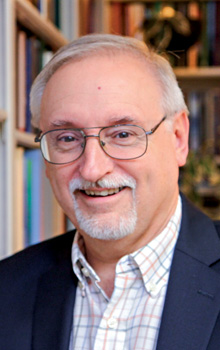
John Walton, Wheaton College

Dr. John Walton, Professor of Old Testament at Wheaton Graduate School, is a frequent contributor to this podcast. His publications include Ancient Near Eastern Thought and the Old Testament: Introducing the Conceptual World of the Hebrew Bible and Old Testament Theology for Christians: From Ancient Context to Enduring Belief. He is presently working on a commentary on Daniel with his Wheaton colleague, Dr. Aubrey Buster. In response to a podcast listener’s question, Dr. Walton and Dr. Capes discuss God’s work as portrayed in Genesis 1-2.

To hear the podcast click here.

Transposing an Old Song with Andy Abernethy, Isaiah 12

Dr. Andrew Abernethy, Associate Professor of Old Testament and Director of the M.A. in Biblical Exegesis in Wheaton Graduate School, has authored Discovering Isaiah: Content, Interpretation, Reception, among other things. He helps us meditate on the rich and allusive Hebrew phraseology of Isaiah’s song in chapter 12, which recalls the salvation song of Exodus 15.

To hear the podcast click here.

SUBSCRIBE TO “Exegetically Speaking,” a weekly podcast of the friends and faculty of Wheaton College, IL and The Lanier Theological Library. Hosted by Dr. David Capes, it features language experts who discuss the importance of learning the biblical languages—Hebrew, Aramaic, and Greek—and show how reading the Bible in the original languages “pays off.” Each podcast lasts between seven and eleven minutes and covers a different topic for those who want to read the Bible for all it is worth.

If you’re interested in going deeper, learn more about Wheaton’s undergraduate degree in Classical Languages (Greek, Hebrew, and Latin) and our MA in Biblical Exegesis

You can hear Exegetically Speaking on SpotifyStitcherApple Podcasts, and YouTube. If you have questions or comments, please contact us at exegetically.speaking@wheaton.edu. And keep listening. 

A Listening Heart with Nathan Lovell

Dr. Nathan Lovell is Senior Lecturer in Old Testament and Director of Research at George Whitefield College in Cape Town, South Africa. Among other things, he has authored The Book of Kings and Exilic Identity: 1 and 2 Kings as a Work of Political Historiography and Sing for Joy. In this episode, he discusses what Solomon asks God for in 1 Kings 3, what God gives him in response, and what Solomon lacked in the end.

To hear the podcast click here.

“Exegetically Speaking” is a weekly podcast of the friends and faculty of Wheaton College, IL and The Lanier Theological Library. Hosted by Dr. David Capes, it features language experts who discuss the importance of learning the biblical languages—Hebrew, Aramaic, and Greek—and show how reading the Bible in the original languages “pays off.” Each podcast lasts between seven and eleven minutes and covers a different topic for those who want to read the Bible for all it is worth.

If you’re interested in going deeper, learn more about Wheaton’s undergraduate degree in Classical Languages (Greek, Hebrew, and Latin) and our MA in Biblical Exegesis

You can hear Exegetically Speaking on SpotifyStitcherApple Podcasts, and YouTube. If you have questions or comments, please contact us at exegetically.speaking@wheaton.edu. And keep listening.