The Impact of Joanna on Jesus’ Ministry

To hear the podcast click here

David Capes  

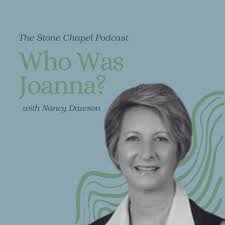
Hi everybody, and welcome to The Stone Chapel Podcast. My name is David Capes. Joining me today is Dr Nancy Dawson, who has been with us before, several times to talk about remarkable women in the Bible, and she’s working on this amazing book called All the Women of the Bible. We’re going to be talking today about one of those women, and her name is Joanna. Dr Nancy Dawson, welcome back to The Stone Chapel Podcast.

Nancy Dawson

Thank you, Dr. Capes!

David Capes  

You’ve been here before to talk about the women who are mentioned in the genealogy of Jesus in the Gospel of Matthew. And you’ve also been here before to talk about your book, All the Genealogies of the Bible. You’re working on another one called All the Women of the Bible. Tell us about that project.

Nancy Dawson  

There was a theme there. It’s a very exciting project. Broadman and Holman have asked me to write that book. Of course, it covers Old Testament and New Testament women. There’s around 350 women. So it’s a comprehensive, and a little bit daunting task, But very exciting and insightful to see the roles that women have. And why are they there? Why are they mentioned? How do their stories dovetail with what else is going on in the narratives and their overall importance. When you look at a fleshed out view of the women, you see how important they are. They do counter cultural things. I see that they foreshadow many of the characteristics of Christ and also divine characteristics. Through their actions, sometimes words, but definitely through their actions, they do these remarkable things. They are noteworthy.

David Capes  

All right, so when should we be able to go to Amazon or go to our local bookstore and pick that up?

Nancy Dawson  

It’ll probably be a couple of years. I’m in the middle of the research right now, which I enjoy so much, but getting that down into words and edited takes time.

David Capes  

You like the research better or the writing better?

Nancy Dawson  

I definitely like the research better. That’s my background but I’ve always been interested in teaching the Bible and writing about men and women.

David Capes  

Well, you’re a great teacher. I’ve seen you teach here. I’ve had you come to the course I teach for Truett seminary on the gospels and the book of Acts. You’ve done a great job in those classes. You’re a good teacher as well as a good researcher, and a great writer. 

All right, Joanna, let’s talk about Joanna.  Joanna is a person that a lot of people may not know very much about. She’s mentioned in passing in some ways, but she’s mentioned in some very important times and places. Let me read one of these texts from the Gospel of Luke. And it’s Luke, chapter eight, verse one. 

Soon afterward, he (Jesus) went on through the cities and villages, proclaiming and bringing the Good News of the Kingdom of God. And the 12 were with him, and also some women who had been healed of evil spirits and infirmities. Mary called Magdalene, from whom seven demons had gone out, and Joanna, the wife of Chuza, Herod’s household manager. And Susanna and many others who provided for them out of their means.

Nancy Dawson  

Remarkable. Number one, you probably haven’t ever heard a sermon about her, but she’s this Galilean aristocratic woman who is healed by Jesus of evil spirits, along with Mary Magdalene and Susanna. And remarkably, she becomes a disciple or follower of Jesus. The text says that she’s the wife of a Herodian official. And of course, they’re talking about Herod Antipas, who was the successor of Herod, the Great, his father. And this is a real poignant place in the text that tells you about her background and what information she might have about that royal court. And then, she becomes this faithful follower throughout Jesus’s ministry, and she’s going to be a witness, along with other women, to the crucifixion and the empty tomb.

David Capes  

She’s gone from Galilee at that point, the Galilean ministry, down to Judea, so she’s traveled with them. Is that correct?

Nancy Dawson  

Yes. Her name means “God has given graciously”. She’s named after her father, which might be common these days. Her father’s name was John or Yohanan, and this was a common practice in the Second Temple period. There was research done by a wonderful scholar named Tal IIan, who worked on Jewish women in the Greco Roman world and about 3- 4% of the women are called Joanna. It’s a very common name. Around 46% of the women are called Mary. So, this is why you always see terms of disambiguation for the Mary figures, like Mary of Magdala or Mary mother of Jesus. 

And some scholars have speculated that she should be equated with the Junia figure of Romans 16. I don’t adhere to that, but some scholars have said this is a possibility, but they’re usually very tentative, in making that association. She’s married to Herod Antipas’ steward named Chuza. He was an appointee of Herod and had a lot of court responsibilities, overseeing his estates, possibly acting like a steward or a guardian over the ones that would be up and coming for inheritance under Herod Antipas.

David Capes  

And they lived in Tiberias you said.

Nancy Dawson  

They lived in Tiberias, which was on the western shore of the Sea of Galilee. That town was basically built by Herod Antipas around AD 18-20 but noteworthy is it was built over a cemetery, and so this is not something that goes down well.

David Capes  

That’s not really kosher! Tiberias is a thriving city today. If you go to Israel, you’ll see it on that western shore.

Nancy Dawson  

It’s part of Galilee. It’s one of the major cities. Jesus grew up in this small Nazareth hometown in the Sepphoris area and so that’s the general area. But what we see with Joanna is that she’s definitely from this elite, aristocratic background. She’s Jewish, and whether her husband was a believer or not, is not clear. 

David Capes  

You mean a believer in Jesus?

Nancy Dawson  

In Jesus. She seems to be a type of informant, both to the Herodian court and also to Jesus and his followers of what’s going on. More than once she said Herod Antipas has heard about Jesus, and he’s curious, and he wants to see him. But he wants to see him so that he’ll perform a miracle for them.

David Capes  

He wants to see a show, doesn’t he?

Nancy Dawson  

Yes, that’s exactly right. But you can see that there’s this definitely negative overlay. She’s from a wealthy background, so has the luxury of the socially elite. Also, this is a highly Romanized place. The Jews do not like the taxation. They do not appreciate any of the political domination, the economic exploitation. Heron Antipas actually had to pay people to come and live in Tiberias.

David Capes  

Like Alaska today, you have to pay people to go live up there. There’s a couple of things I found fascinating from this. She’s mentioned specifically, as well as Susanna, as providing for Jesus and his ministry out of their own means. Let’s discuss that part of it.

Nancy Dawson  

These women are following Jesus and that’s strange and counter-cultural for the day. You don’t hear about women being in the entourage of John the Baptist. This is something you hear about only with Jesus. So, this is very striking for that time. Jesus invites women and approves of them being a part of a mixed entourage. So that’s very noteworthy. 

What you see is that she is supporting Jesus out of her own personal finances. There was a great book written in 2002 by Richard Bauckham called Gospel Women, and he researched where women would have the ability to have discretionary funds that they could use, possibly separate from their husband. Because Chuza may not have been supportive of this. She has at least some disposable funds at her discretion. 

And there’s seven sources. One is that you could have inheritance from your father. Usually, this is like the prodigal son. The father is dead, and then you receive it. But there’s also property that can be acquired by a deed of a gift from your father or mother or your husband. That she could use also. There was at the time of marriage, ketubah money, the marriage contract money. That was what her husband would pay to her in case they were ever divorced or something would happen to him. 

David Capes

A prenuptial agreement in a way,

Nancy Dawson

Exactly, yes. She could have tapped into that. The dowry that was paid by her husband to her father, sometimes that is given to the daughter. 

David Capes  

This could be considerable money that you’re talking about.

Nancy Dawson  

Yes, or possibly property. Something like Barnabas, who sold his property to support the ministry. And it could be something like this that she availed, this source of funds and monies to give. And this is so consistent with her name which means “God has given graciously”. Then you see that she, in turn, gives graciously. This is a striking aspect of ministry.

David Capes  

There’s a lot of talk these days among scholars about benefactors and patrons and those kinds of things. Benefaction is a particular kind of giving, but what I hear you saying is this is not really “benefaction.”

Nancy Dawson  

Not according to that traditional female patron benefactor role where a wealthy person is giving money or provisions for a community in return for status or honor. Instead, she actually joins this itinerant band of followers of Jesus. She is not regarded in any special way. We know from the story of the widow with two mites, she gave everything that she had, and so that was what was praised. Not how much you give, but that you give willingly and graciously. And this is what she does. 

David Capes  

It’s striking to me that she leaves behind a rather a luxurious life for this itinerant life, sleeping in tents and walking lots of distance and probably doing lots of washing clothes at the river, those kinds of things.

Nancy Dawson  

Yes. We don’t really know. The text is silent on what these women actually do. But Luke is so poignant in mentioning this; that it’s women who support the ministry. It doesn’t mean that men did not support the ministry, but Luke is making a statement on what is generally true. And so, you see the mention of her in a Luke 8:3 and then we’re going to see that Luke mentions her again in Luke 24. There’s an inclusio, a literary inclusio about Joanna that I find is again, remarkable.

David Capes  

Let me read that text. We’re looking at Luke 24:9.

Now at daybreak on the first day of the week Jesus had been discovered as raised from the dead. Then they, (that is these women) who observed this returned from the tomb and announced all these things to the eleven and all the others. The women were Mary Magdalene, Joanna and Mary, the mother of James, and others who accompanied them, also told this to the apostles. But their story, (that is, the women’s story,) seemed like nonsense, so they did not believe them.

What do you learn from that?

Nancy Dawson  

The testimony of women was considered unreliable. I think it was J.D. Atkins on one of the Exegetically Speakingpodcasts that said the old lexicons say that sounded like hum-bug. It’s like just an old wives tale. We’re not going to believe that. It’s just a silly tale that women are saying. But what you see is in all the Gospel accounts, it is women who are present at the crucifixion, at his burial, at the empty tomb and at the resurrection. Now John 19:25 also mentions one of the disciples that was at the crucifixion, and that was John the Beloved Disciple, but you don’t hear any mention about men. And again, this is noteworthy. These women have a staying power, a presence, even in these difficult moments. They’re not running away. 

They’re not afraid. They’re there at the crucifixion and they’re at a distance, it says. But then at the burial, they’re taking spices to the tomb of Joseph of Arimathea; and they prepared the body, but because it was a Sabbath, it wasn’t completed. It was done in haste.

David Capes  

They had to, by the rules the Sabbath, stop what they were doing with the idea that the when the Sabbath is over, the first day of the week has arrived, which was a day of work, then they would go back finish the job.

Nancy Dawson  

And so, this is what the women do. They complete this proper burial ritual. They prepare spices and take them in. They complete that process. But when they arrive at the empty tomb, two angels are there, and they say to the women, 

“Why are you looking for the living among the dead? He is not here, but he has risen.”

And the next phrase that’s used is, 

“Remember how he spoke to you when he was still in Galilee, and He would be crucified and rise on the third day”.

And then they remembered his words.

David Capes  

In other words, the women were there when Jesus was saying all this.

Nancy Dawson  

Yes. You see that they don’t even have to touch Jesus or eat with Jesus, or remember the scriptures. They remember his words. And this is what we’re all called to do, is recall the scriptures, recall what Jesus has said. And so, they become these incredible eyewitnesses and servants. Joanna left a life of ease. She reminds me a little bit of Old Testament Abigail, who was married to Nabal, the fool. And she leaves that life of luxury and becomes a wife and follower of the Son of David, and so, there’s these interesting parallels.

David Capes  

Yes, there are interesting parallels. What’s one thing you take away from Joanna as you think about your own life here in the 21st Century?

Nancy Dawson  

What I see is that we always need to be flexible. We need to consider and be ready to leave that life, that maybe we have had, and be willing to follow a new path. And that Jesus can use you with whatever you bring. For Joanna it was possessions, but it was also a kind of fidelity, and this is what we’re called as Christians to do. And Luke probably uses Joanna as a source for information. The material that’s unique to Luke is called the L material in text criticism. She is giving these personal insights. This is what we all bring. It’s a personal insight. God can use you and remake you. And transform you.

David Capes  

I like the idea that Luke is naming his sources, throughout the gospel. He does it, I think, with Mary as well, and in an earlier passage. This is a great, great help, honestly. Maybe somebody will feel now they need to do a sermon on Joanna and encourage women and others who are there, who have the ability to give a gracious gift and be a gracious blessing. Dr Nancy Dawson, thanks for being with us today on this podcast.

Nancy Dawson  

Thank you so much. 

Description

Dr. Nancy Dawson is back on The Stone Chapel Podcast to talk with Dr. Capes about a woman in the New Testament who followed Jesus.  Few could name her or tell us anything about her. Her name is Joanna.  She came from elite circles to follow the Nazarene in a less than luxurious life. Luke tells us (Luke 8:1-3) that she supported Jesus’ work financially and was a close follower of him. 

Staying Christian in College

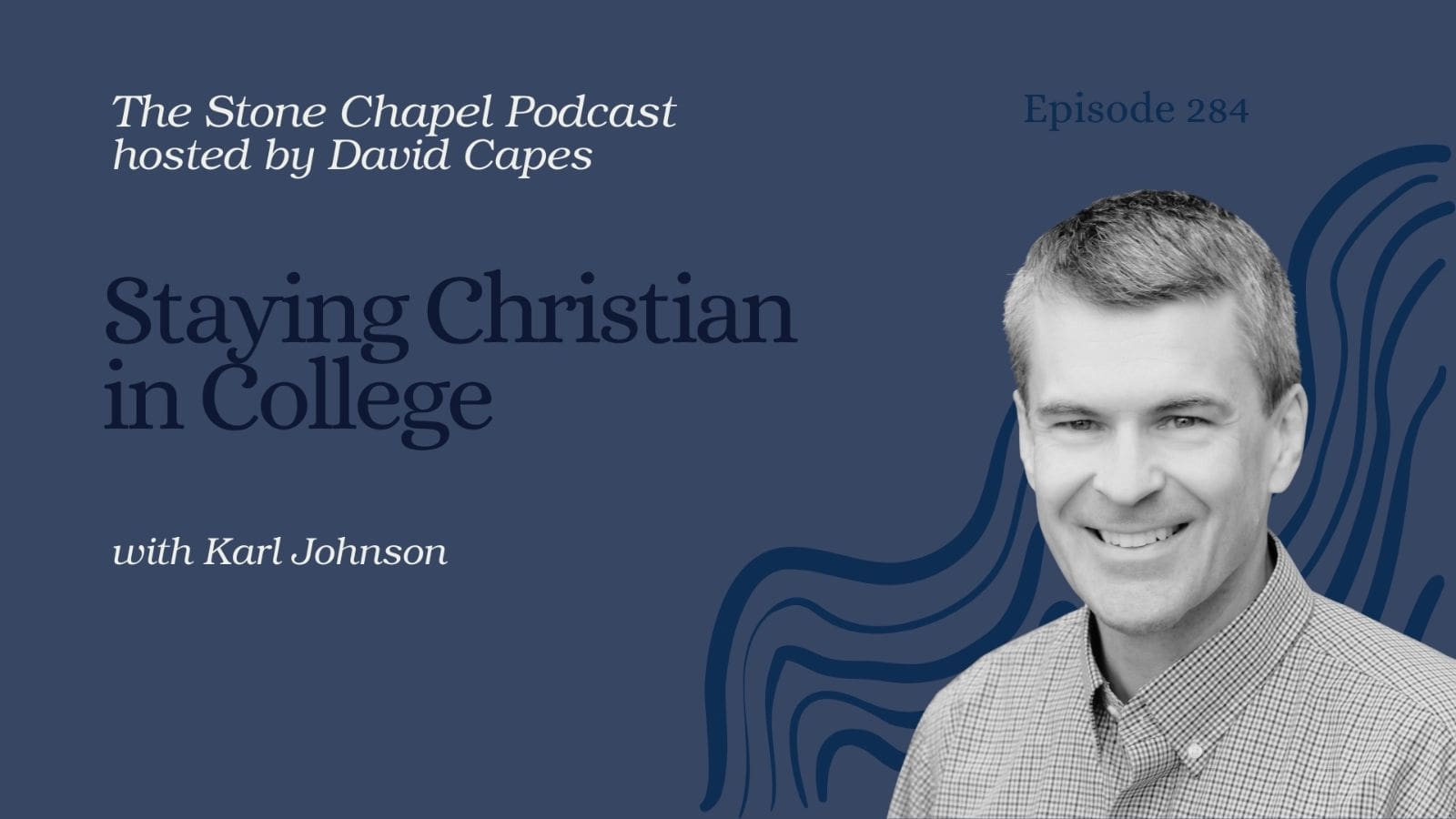
Here is a transcript of my conversation with Karl Johnson. You can hear the podcast here.

This transcript has been edited for clarity and space.

Carl Johnson  

This is Carl Johnson. I’m the Executive Director of the Consortium of Christian Study Centers.

David Capes  

Dr Carl Johnson, good to see you. Welcome to The Stone Chapel Podcast.

Carl Johnson  

Thank you. It’s great to be here with you, David.

David Capes  

We are here face to face, and that’s always better. I like it when that happens. We’re going to talk about Christian study centers here in just a few minutes. But before that, let’s talk about you. For those who don’t know you, who is Carl Johnson.

Carl Johnson  

Well, a brief way to put it is, I am an accidental Christian educator. I never, never imagined I would be doing what I’m doing now. I’m from the metro New York area. I went to Cornell University, and I had a career in outdoor adventure education. So, I was teaching rock-climbing, white-water paddling, back country travel, wilderness medicine, climbing big mountains internationally. And it was great. I mean, who doesn’t enjoy that sort of thing, right? But somewhere in my 30s, I was at the university, and I got to thinking, the university can hire somebody else to do what I’m doing here. I also have this itch to start a new kind of organization that bridges the gap between the church and the Academy and brings a Christian intellectual presence to the secular university. The university is not going to hire somebody else to do that. And so ,I need to do it.

David Capes  

So you were the guy. It sounds like you sensed a call.

Carl Johnson  

Yes. I sensed a call. Pulled together a group of pastors and professors. I said, here’s what’s burning in my heart. I don’t know if it’s a crazy idea or not. What do you all think? And they said, we think we should do it. This was back in the late 90s, early 2000s.

David Capes  

There are a lot of people today who are concerned about what’s happening in higher ed. And particularly if they send their sons or daughters off to places like Cornell, will they come back with any faith intact at all, or will it be dashed on the rocks.

Carl Johnson  

Yes, this is a question that people have been asking me for about 25 years or more. There’s not an easy answer to that. There are real challenges with secular universities. I think we want to steer a middle course between not underestimating these sorts of concerns, but also not overstating them. Probably the most important thing I can say, is that right now, I think it’s actually a better time to attend secular universities for Christian students than a generation ago.

David Capes  

Really now, why do you say that?

Carl Johnson  

There’s more vibrant Christian intellectual activity on many of our campuses and more resources. And I think part of the change is this. A few generations ago, the difference that it made being a Christian on a campus where there was a greater cultural consensus around certain sorts of issues, the difference wasn’t as stark. Then you get into the post 60s. That’s when those who were in graduate school in the 60s became professors say, in the 80s. That might have been a kind of peak secular moment around that time. 

But then in the 90s, Christians start finding their voice, their scholarly voice. And there’s a whole renaissance of Christian scholarship and philosophy and history that began trickling over to other disciplines. Christian professors start having fellowships and organizations where they’re convening association of Christian economists and so forth, where they become more comfortable speaking in a Christian voice. Now you go to some campuses, and you have not just the traditional campus fellowship ministries that have been there for a long time, but you also have on at least three dozen campuses now, these Christian study centers. Which typically have a building that provides a physical hub for the Christian community on campus. And you’ve got students involved in all those fellowships, coming and going, coming and going with the door swinging thousands of times a week. Some of them even have residential facilities. 

There’s this visible hub of Christian intellectual activity on these campuses. And there’s speaker series that are coming in monthly or more. Christian professors, some from Christian colleges, some from other secular universities, Veritas Forums and other events that are just giving students plenty of reason. A generation ago, students would go to campus and they have this crisis of faith. Oh, it looks like all the smart people here, all the professors and most of the other students are not believers. And it’s just not like that anymore. Now, there’s so much visible Christian intellectual activity on many campuses, though not on every campus. So, I say it’s actually a better time than it was a generation ago.

David Capes  

That’s great to hear. When you “heard” this call was the Christian Study Center movement up and running?

Carl Johnson  

Not really. When this idea started burning in my heart there were important intellectual questions that it’s hard to get an answer for either from the church or the university. Because pastors are very busy with other sorts of things or because the university is often just so secular and the faculty members, frankly, are so very specialized that they often are not very well equipped to deal with broad questions of meaning and purpose in the good life.  

But these things were burning in me and I started talking to people. Finally, somebody said, you should take a look at what’s happening in Charlottesville, Virginia, because there’s this thing there. It’s called the Center for Christian study. And so, I wrote a letter to the director, and he wrote back, sent me some of their materials, and I saw what they were doing with this public speaker series. I thought, wow, that’s incredibly exciting. I want to do something like that. 

And at the very same time, I drove from Ithaca down to New Haven for one of the very first Veritas Forum events. And I heard this whole lineup of speakers that included people like N. T. Wright, who at that time nobody had really heard of. He was a much younger guy at that time, as we all were, and so I got this vision of Christian scholarship. I pulled together these pastors and professors, and I said, hey, let’s do something. Let’s create a new organization and bring in visiting Christian scholars. 

But at that time, we’re talking late 90s, early 2000s there was really only one very well established Christian Study Center in Charlottesville. And then there were, a few other very fledgling centers. And so, I started one at Cornell. At that time, I would say, in the early 2000s there was one big center and a handful of others. And in 2007 I invited all the folks I knew doing similar work up to Ithaca for a long weekend. We put our heads together, and we’ve resolved to form what is now the consortium of Christian Study Centers. And in our first year, we had half a dozen member centers. 

2008 was when we incorporated. The first little get together that I referred to was in 2007 and in 2009 we’ve got a full-time director, Drew Trotter. Over the years, we’ve grown from that original half dozen member centers to now three dozen, and we’ve got another dozen that are in the startup phase. 

David Capes  

The goal is to be on secular university campuses, right?

Carl Johnson  

That’s the concept, yes.

David Capes  

How does your organization exist alongside of InterVarsity and maybe the Catholic Newman Centers and those kinds of things? 

Carl Johnson  

What we’re seeking for is a very collaborative relationship with the campus ministry ecosystem. And I’ll just use a concrete illustration of what that can look like in practice. When I was on the Cornell campus working in outdoor education back in the 90s, there were probably a dozen or more campus fellowship organizations, and they would occasionally bring in a visiting speaker, and I would sometimes go to hear the speakers. They would usually have 30 or 40 students in attendance, because it was just the students in that organization that would come to hear the speaker. I started networking with the campus minister saying, hey, let’s work together. If one of us is going to bring in a speaker, let’s all co-sponsor and make it a campus wide event. We started doing that, and the attendance increased tenfold. We started getting 300-400 people showing up at events. And it wasn’t really rocket-science. All these students were already there on campus. 

David Capes  

It was just a matter of using a university facility.

Carl Johnson  

Yes. We’re on campus for these events. Part of the origin of the center that I started was, in fact, collaboration. That’s part of the DNA of the organization. And now that most of our centers have buildings, we try to let our buildings be a resource that helps all those other organizations advance their mission and their ministry. We have libraries that are available for them to use, whether it’s for Bible study prep or something else. We have meeting space for them to use, which is increasingly important, because some organizations are actually getting kicked off campus, and it’s harder to have access to space on campus for certain ministers. Providing a space, you know, is a value. We like to say, we gather, we serve and we unify the campus ministry organizations on a weekly basis.

David Capes  

What would the ministry look like on a weekend when you don’t have a big speaker? Are students coming and going and are there other meetings going on? How does that work?

Carl Johnson  

Yes, t varies a little bit from one campus and one center to another. Many of our centers now have what we call fellows programs. These are cohorts of students that commit to meeting together over the course of usually a semester or a year to go through some sort of a great books type curriculum. They are reading certain books and articles together and discussing them. So it might be every Sunday evening or every Monday evening for a semester or for the year, and some of our centers are now sufficiently built out that they’ve developed that curriculum over not just two or three years, but even four years. 

It really ends up adding up to something like a Christian liberal arts education that’s getting layered on top of whatever their major is. And many, many, many students these days are in the STEM disciplines, right? And we’re at a lot of state universities. There are big engineering schools and whatnot. My own son is at Cornell, studying engineering, and he’s involved in the center there, and he’s getting a pretty good liberal arts education layered on top of his technical training. So, the Fellows program is a key aspect of what we do, because there’s sustained, ongoing, formative impact on the students. 

But then there are other sorts of discussion groups and movie nights that might be one off sorts of things we do, a lot of public reading of Scripture events on some campuses. My successor at the Cornell center does this thing every fall where he gets some food trucks and they read an entire Gospel, say the Gospel of Mark out loud, out on the patio. And they’ll have over 100 students come and just sit just in silence while they listen to the entire book of Mark being read out loud. 

David Capes  

It’s like the way Mark wrote it, not verse by verse, but the whole thing.

Carl Johnson  

Right, exactly! It’s almost like this ancient monastic practice that’s getting reincorporated into the modern secular universities, with food trucks.

David Capes  

I love it. That’s exciting. You’re heading off to Singapore. Is this becoming an international thing, or is it mainly North America? What’s the geographic?

Carl Johnson  

Yes, I am. It’s mainly North America. I get a fair number of calls and inquiries from folks in other countries, and there are a few fledgling Christian study centers in other countries that are modeled after what they see happening here in North America. There are challenges to getting these centers established in other countries. One aspect of that is financial, and then there’s also just networking kinds of challenges. But there’s a lot of interest out there. 

I’m going to spend an entire week in Singapore, and the purpose of the visit is three-fold. There’s a lot of Christian families in a place like Singapore who are sending their children to the United States for higher education. They’re asking the same kinds of questions that you were asking earlier. What happens if I send my kids to these institutions? What are the opportunities there? How concerned should I be? I’m going over to let them know what the landscape looks like here and what the opportunities are. 

But then the other part of it is to let them know more about this model and to let them figure out what if any implications it may have for their local context. For example, in Germany, there’s now several of these small Christian study centers. And one of the reasons is precisely that the theological seminaries are not flourishing. As they shrink and die, the Christians who are there are very concerned about what is the future of Christian education in our country? And where can we provide theological training for future pastors as well as lay persons? And so the question arises, well, where are the students? And in almost every country these days, the answer is, they’re at the state funded universities. That’s where the overwhelming number of students are, and so it makes sense for Christian organizations to essentially set up camp where the students already are and to provide some education and training opportunities right there.

David Capes  

So a freshman student arrives on campus in the fall. How does he find you?

Carl Johnson  

Well, these days, if they’re looking, it’s not hard. With all the online searches, an awful lot of the students will find these centers before they arrive.

David Capes  

So they already know it exists. 

Carl Johnson  

Exactly. It’s not that hard. Many of the centers also run a 24- or 48-hour pre-orientation retreat, so that students can actually arrive a day or two early. They might be in a group with anywhere from a couple dozen or even more than 100 other students that they can get to know so they have some semblance of Christian community with other students in their class before orientation kicks in. But we can also mix in some upper-classmen Christian students to provide them with a little bit of here’s how life works at this university. We bring in a couple of Christian faculty members to give some brief talks. Yes, there are Christians here on the faculty, even though we don’t always speak in a Christian voice. So you might not know that, but yes, we’re here. We bring in a few pastors to give some short talks, to let them know about their local churches, and extend an invitation to join them for Sunday worship. And so by the time orientation begins, the incoming students have met other fellow first year students, upper class Christian students, Christian faculty members and local pastors.

David Capes  

That’s a great strategy. This is bound to cost a lot of money. I’m thinking about the buildings right next to a place like University of Virginia or Cornell. How is all this funded?

Carl Johnson  

Mostly from alumni, parents secondly, and there’s occasionally, a few foundation grants that will help with a particular project, here and there. But it’s individual donors, mostly alumni and parents. And it’s not impossible to kick things off in a very bootstrapped kind of a way. That’s certainly the way I did things, back in the day. And we would just have faculty members and parents doing talks on faith and vocation, and I would interview them, and students would come out and listen. You do what you can with the resources that you have. 

But yes, it’s true, especially once you get into buildings, it requires a lot more resources, millions of dollars, to be sure. One of the reasons, among others, that I’m enthusiastic and even bullish on this movement is precisely because there’s a business model that works pretty well. One aspect of that is that, depending on the building you have, the buildings themselves can generate revenue. The ministry that I started, we purchased two large Greek houses that each have about 20 residents, so now we have 40 residents paying rent to the ministry. And we purchased the building outright with money that was donated. And we don’t pay tax, because we’re a non-profit organization, so we’re not paying property tax. 

So all of that revenue is funding ministry staff who are ministering to the student residents. You know, it’s what I tell the donors. It’s like a double return on investment. Because if you put all that money in an endowment account, you put a million dollars in an endowment account. You might get $80,000 a year, or something like that. Now we get that much money in rent for every million dollars of equity in the house, and that rent is going directly to support the staff who are serving the students who are living in the asset. It’s really a remarkable model. And then some of the centers have commercial real estate. In Florida, there’s this very, very well built out coffee house, Pascal’s Coffee House as part of the Center at the University of Florida in Gainesville. Up in Minnesota, Anselm house, they’ve purchased a building that has 70,000 square feet, and the majority of it is rented out to commercial organizations that are paying rent supporting the ministry. So there’s all kinds of opportunities here, I think, even on the building front, for the ministries to become sustainable as a byproduct of getting into real estate.

David Capes  

That’s an exciting kind of project that you’re helping to lead right now. You estimate that there are about three dozen centers. Do you see that growing?

Carl Johnson  

Absolutely. I get more inquiries all the time. In the month of December, I think I received about 10 inquiries through our website from people saying, I would like to start a study center on such and such a campus. I received another one yesterday. I mean, these things are coming in as fast, almost faster than we can respond to them. It’s really incredible. But there are very healthy startup efforts at UCLA, in particular right now. It’s one that I’m watching. We have inquiries from some other well-known universities, and then there are some other universities that are not as well known. But that’s one of the signs of the spread of the movement, is it’s not just the campuses with 1000s of students and big resources and big recognizable names. Sometimes I get inquiries from institutions, and I have to look them up to see where they are. I’m not familiar with them, but you know, the persons inquiring have been exposed to the movement at one of the larger campuses. 

David Capes  

I think parents who hear this, grandparents who hear this, might be encouraged and not so discouraged from sending their sons and daughters, grandsons, granddaughters, off to a well-known university because they know that they can find Christian community, Christian Fellowship, Christian teaching, and maybe even almost like a liberal arts degree in Christian theology there. This is a great movement’

Carl Johnson  

I’ll say, for the record, I want it to be known. I’m a huge fan of Christian colleges. My wife, Julie, and I have five children, we sent three of them to Christian colleges and two of them to secular universities. When people ask me, what’s the better route to go, my answer is, there is no one right answer. It depends on the child, their interests and the opportunities that are before them. 

We’ve had students come to some of the universities where we have centers, and they said, well, actually, my first choice was a Christian college, but I got so much more financial aid here that I didn’t really have a choice. I had to come here. But now that I’m here, I’m happy that I’m here, because I didn’t know there were all these opportunities for Christian learning here. But the bottom line, reality is that approximately 80% of students from Christian homes and families attend secular universities. That’s just the way the numbers work, and so I think it’s important in the broadest sense of church strategy. If we want to serve the next generation, we need to be thinking about, what are we doing for the Christian students at secular universities. And of course, it’s not just the Christian students. I mean, we’re doing a lot of public events as well.

David Capes  

Some non-Christian students become Christians. I’ve talked to so many people who became Christians in college.

Carl Johnson  

Absolutely, it’s a very incredible time.

David Capes  

And a lot of that has to do with movements like the Christian Studies Center Movement.

Carl Johnson  

Yes, absolutely.

David Capes  

Carl Johnson, thanks for being with us today on The Stone Chapel Podcast

Carl Johnson  

Thank you, David.

Description 

TSCP 284 Staying Christian in College with Carl Johnson

Many parents (and grandparents) are concerned to send their sons and daughters off to secular colleges because they may lose their faith.  But Carl Johnson, Executive Director of the Consortium of Christian Study Centers, thinks this is a good time to send them to them to certain elite universities.  Why?  Well keep listening and you’ll find out. 

The Stone Chapel Podcast is part of the Church Leaders Podcast Network. 

For more information about the Christian Study Centers see their website: https://cscmovement.org/

The Stone Chape Podcast is created and produced by the Lanier Theological Library and Learning Center in Houston, TX. 

Abraham: Friend of God

Here is a transcript of a recent conversation I had with John Lennox regarding Abraham and his role as an exemplar of faith. The conversation comes from a podcast I do called “The Stone Chapel Podcast” on the ChurchLeaders Podcast Network.

John Lennox  

Hello, I’m Dr. John Lennox. I’m an Emeritus Professor of Mathematics in the University of Oxford. But I’m also passionate about scripture, teaching scripture, and Christian apologetics.

David Capes  

Dr. John Lennox, welcome back to The Stone Chapel Podcast.

John Lennox  

Thank you very much. I’m delighted to be with you again. 

David Capes  

Well, you’ve been with us and some of the most hits and downloads we’ve gotten on our podcast have come from you, because you’re such an inspiration to all. The last one we did was on AI. And it’s been a little while, but I’m glad to be back talking to you. Today we are in Oxford at St. Ebbes Church, with John Lennox. Today we’re here to talk about his book, A Friend of God: the Inspiration of Abraham in an Age of Doubt. It’s a great book. 

John Lennox  

Well, I’m glad you’ve read it. I think that’s immensely encouraging. And I have been in general, extremely encouraged by the response to it since it’s only been out a short while.

David Capes  

This is not the first biography you’ve written of important Old Testament figures. 

John Lennox  

No, I started with Daniel. I wrote a book about his entire prophecy. It’s not just a character study of him. But then I did a fairly substantial book on Joseph within the context of his family. In other words, the last major section of Genesis.

David Capes  

That’s a lot of chapters dedicated to Joseph. 

John Lennox  

That’s right. So I thought that the next logical subject to tackle would be Abraham. It was actually a friend of mine, who suggested that I give some lectures on Abraham for a conference, the ELF conference in Europe. And I did that. And immediately afterwards, people said, you must turn this into a book. Henc

David Capes  

Well, it’s a wonderful read. And it’s the kind of character study, the kind of investigation into Abraham’s life that I think helps us. We were talking earlier about my concern that we as Christians, short circuit things by not reading the Old Testament very long, or very well. I did a study years ago and about 82% of sermons (in US Protestant churches) are on the New Testament, which leaves only 18% of sermons for the Old Testament.

John Lennox  

That’s a very interesting statistic. I wasn’t aware of it. But Abraham, of all people is held forth in the New Testament as the major exemplar of a person who trusts God. He’s the man of faith. And he’s held out for us to follow that faith in God. And so that certainly catapulted me into really saying, let’s have a serious look at him. And the whole palette of Scripture information about him. In other words, the whole sequence of chapters in Genesis that deal with him without leaving anything out. 

David Capes  

Warts and all, we might say.

John Lennox  

Warts and all, because he is a complex figure. Well, we all are. And I suppose that’s a major point worth making that if God can do something with a man like Abraham then there’s hope for me.

David Capes  

Yes. Same thing with the figure of David. Maybe one day you’ll write a book about David! I have a rabbi friend in Jerusalem who says that David broke 9 of the 10 commandments. Now he never told me which one he didn’t break! But anyway, though he’s called a man after God’s own heart. A Friend of God, tell us a little bit about the title?

John Lennox  

Well, he’s one of the only people in Scripture who’s called a friend of God. And it’s a very interesting concept, that idea that God can in any way be thought of as a friend of human beings. And really, it goes back in my mind to the pinnacle of creation at the beginning of Genesis. God created the universe by his word, but the very final use of the phrase “and God said” is actually “and God said to them”. God speaks to the humans. And the way in which he interacts with human beings is of course, what the Bible is all about, and offering friendship. And of course, the Lord Jesus, who was the greatest son of Abraham, so to speak, said of his disciples, I call you friends. The information he gave to them as definition of a friend, is someone who knows what his other friend is doing. In other words, the Lord speaks to them and takes them into his confidence. And I think that is such a glorious idea that God can take us into his confidence and along the journey with Abraham. God seems to consult Abraham, which is really an incredible thing to imagine.

David Capes  

And Abraham seems to be able to persuade God of things.

John Lennox  

Even that is true. But the fact is that there is a real, what we might call friendly, discussion between them about big issues. And that’s encouraging because God encouraged us to talk to him as well.

David Capes  

Yes, we can be friends as well. 

John Lennox  

Yes, that’s right. 

David Capes  

And enter into God’s friendship. To know not only his works externally, but to know his ways.

John Lennox  

Yes indeed. And it delivers us from thinking of God as somehow remote and unapproachable. This is the exact opposite of that. And it’s speaking to us in terms we understand. We know what friendship means as human beings. And the idea of being a friend of God in one sense, is mind blowing. But in another sense, if we’re created in God’s image, you would expect something like that to be possible.

David Capes  

Exactly. If we are in God’s image, there ought to be a complementary connection. Your subtitle talks about the inspiration of Abraham. Seeing him as an inspirational figure like Saint Abraham, some traditions might do. But you say that within an age of doubt. The stories about Abraham are about faith, being a man of faith, as an exemplar of faith. But we live in this time of doubt. How do you think Abraham now can address us as a man of faith who stumbled, but he also can be an inspiration for us in our time.

John Lennox  

The first thing I would say is that as far as we can understand from scripture, Abram came from a pagan background. And that’s quite important, because our world has changed very much recently, in the West, at least, from a world strongly influenced by the Judeo-Christian tradition to one that’s largely influenced by any traditions other than Christianity. And therefore, him starting at point zero, so to speak, I think can encourage us to see that God’s revelation to him, which led him to increasingly be sure of God and His promises. And the story is very much about promises, delayed fulfillment, and do you hang on in there, and so on. And it’s very true to life. And we are in an age of uncertainty and doubt, by and large. Though there are some people who are very sure of themselves. But without a deep anchor, all of us would be unsure. And I think, the marvelous thing about this story, if we follow it along, and respond to God, as Abraham did, however imperfectly, then our confidence increases. And we no longer are influenced deeply by existential doubt, that would cause us to sadly miss the purpose that God has for us.

David Capes  

To miss our purpose and our meaning. I was amazed and I didn’t know this. I should have known this is a New Testament scholar, that Abraham is mentioned [in the New Testament] more than any of the other OT person. And he’s quoted, he’s referred to, he’s the exemplar, as you said, of faith. Let’s talk about faith itself. There’s a lot of people writing about, thinking about faith these days. What is faith? What does John Lennox say about what is faith?

John Lennox  

What I’ve tried to do is to understand what is being said here. We’re talking about trust in God. And if you start simply with etymology, the word faith in English comes from the Latin fiidem, which has more to do with trust. I mean, we get from it the word fidelity. So, the idea is one person trusting another person. And that’s in short supply today, which is why we need so many lawyers. And it’s a real problem in the economic world. People are desperate to find trust.

David Capes  

Who can you trust? I keep hearing that question, who can you trust? We’re here at the OCCA summer school. You spoke this morning. One of the first speakers was talking about that very question. Who can you trust? Because there’s so much information out there. There’s so much bad information out there. Who or what can you trust?

John Lennox  

The story of Abraham begins with this pagan man in the Middle East, the ancient Near East. And God reveals Himself to him. And it’s summed up in the New Testament, in a very short phrase: “the God of glory appeared to our father Abraham”. Now, we’re not told much about that. But I find the idea very interesting, because a similar thing happened to the major Christian Apostle Paul, when he was on the Damascus Road, persecuting Christians. Then he saw a very bright light. And the God of glory appeared to him as well. And God showed him something of how great and glorious he was. And Abraham responded and went on this incredible journey. He didn’t really know where he was going. But he knew who he was going with.

David Capes  

He had no map; he had no GPS. He knew there were roads this way. And there are people down that way.

John Lennox  

No, God spoke to him and said get going to the land that I will show you. And it’s utterly remarkable. It pays to sit and think about that. How would we feel about doing that? How would our families feel about that? That’s an amazing thing in any culture, and at any time. But the idea behind it is that God speaks, He reveals Himself. And that’s hugely important, because scripture itself claims to be a revelation from God. And God speaks to us through that revelation, to which we are invited to respond.

David Capes  

Well, I have a friend who’s written a book recently making the case that in the New Testament, at least, the word pistis, which is often translated “faith,” or sometimes trust, but also has the sense of an allegiance. And allegiance to God. We are connected. Maybe that’s the friend part. We are connected and I have allegiance to you because we are friends.

John Lennox  

Yeah, I like that idea. I think it’s hugely important, that idea that we’re following someone we trust, and to whom, therefore, we owe allegiance. I think that fills it out in a very important way. Because that’s the essence of the Christian gospel. And you asked me about the nature of faith, the Christian faith is evidence based. That is, it’s not a leap in the dark as so often people think. It’s a step, following something that you’ve experienced or seen, and Abram must have seen something very powerful when God spoke to him. It wasn’t some mere chimera of the imagination, that God revealed himself in some special way. And that’s what we’re promised in New Testament terms. Why would I want to trust Christ? Well, we’re given a lot of evidence. Now what happened to Abraham all the way along? A lot of things happen that built up the evidence that God was with him. it didn’t all happen at once.

David Capes  

He didn’t become a great nation, develop his reputation, be blessed by God, overnight. No, it was something that took a lifetime.

John Lennox  

Yes, for most of his life. He was a small nomadic tribe wandering about the Middle East.

David Capes  

At the very end of that charge, and also promise, God says, “I will make you a great nation and through you, all the families of the earth will be blessed.” How do you interpret that last phrase? Through you all the families of the earth will be blessed.

John Lennox  

Well, the interesting fact, as pointed out by many people, including the late chief rabbi of the UK, is that a huge proportion of the world population actually owe their allegiance in some way to Abraham. Jews, Muslims and Christians. But I think we begin to see the answer to that within the book of Genesis itself. Because as I said a moment ago, most of his story, he’s just a small tribe. But at the end of the book, you find that one of his descendants, Joseph, becomes something like the Minister of Agriculture of Egypt, and economically saves the world. And it seems to me that’s an indicator within the book of how this is going to happen. And the answer, the ultimate answer to it is that one of the descendants of Abraham, the greatest descendant, the most important is Christ. He offers forgiveness to everybody that trusts him, and new life, and a power to live. And in that sense, Christianity has spread around the globe, and is still spreading in spite of all the opposition.

David Capes  

[The influence of Christianity] seems to be waning in the West. But in places like Africa, and China and South America, I mean, it’s blowing the doors off.

John Lennox  

You make a very important point. The West has been very much sustained by Christian ethical dimension and the Old Testament commandments for centuries. But that has waned, as you say.  But in the majority world, Christianity is growing and very obviously growing and in a thrilling way. And so, I don’t think the evidence for that promise being fulfilled is diminishing in any way. It’s rather increasing.

David Capes  

In Paul’s language, it’s for Jew and Gentile, male and female, slave and free. 

John Lennox  

Yes, everybody on the same basis of faith in Christ, so that I can say that I am a son of Abraham, in the sense that I share his faith and trust. And that is a wonderful thing. It includes us, in the people of God, from whatever background we come.

David Capes  

There are some sons of Abraham genetically through DNA that have left Abraham behind. But we have been, as Christians, (again Paul’s language), grafted in, made part of the family. Adopted, if you want to use that language.

John Lennox  

That’s exactly right. And what has happened there, according to Paul, and those famous chapters of Romans 9 to 11, is that the burden of witness to God has shifted from the Hebrew nation to Gentiles. And it is predominantly Gentile at the moment. But there are signs that that may change according to the biblical record.

David Capes  

It could well be. I love the way the book of Revelation sums it all up when there’s a vision of 144,000. And that’s what he hears. He hears that there’s 144,000, and they’re all out of Israel. There’s 12,000 from this tribe etc. And then when he turns, he sees a multitude that cannot be numbered and it’s of every tribe, and of every language, and every people, every ethnic group.

John Lennox  

That’s right. Many words are used in that sentence. Which is very interesting, which is hammering the fact that this is a message for the whole world. And, that sense is traceable back to Abraham. I felt it was important, at least to make an effort to reverse the point that you made earlier that we pay far too little attention to the biblical roots of the Christian faith in the Old Testament.

David Capes  

[And the Old Testament] was the Bible of Jesus. The Bible of Paul and the early church, so we should be paying more attention to it. I don’t know exactly what the right percentages ought to be. But I think we should be reading and absorbing and just digesting these stories as exemplars, as you said. Right now as part of our worship, as part of our devotion.

John Lennox  

Absolutely because a lot of the New Testament depends on it. Paul uses Abraham again and again to reason his theological case, as well as the moral and spiritual implications of the gospel. And the last book of the Bible that you’ve mentioned, has an absolute huge store of allusions and citations of the Old Testament. So, it all culminates there and to remove the Old Testament from our thinking and preaching is to cut off part of the lifeblood of the Bible.

David Capes  

Well, it’s a great book, and I would recommend it. It’s called A Friend of God: The Inspiration of Abraham in An Age of Doubt by Dr. John Lennox. John, you’re a good friend to the Lanier Foundation. We thank you and I’m grateful that you could be a part of our podcast today.

John Lennox  

Well thank you very much. Delighted to be with you.

The Surprising Rebirth of Belief with Justin Brierley

Justin Brierley, a broadcaster, author, and speaker, will join us September 22, 2023 at 7.00 pm in the Stone Chapel. He will offer a talk on his book, The Surprising Rebirth of Belief in GodThe subtitle of the book is actually the big idea of the book: Why New Atheism Grew Old and Secular Thinkers Are Considering Christianity Again. 

Who is Justin Brierley? 

Justin lives in London.  For decades he has been hosting conversations between atheists and believers on his popular show, The Unbelieveable Show.  His show has been at the cutting edge of what is happening in culture. 

A few years ago, he had Mark Lanier as a guest on his show, and he recently came into our Houston orbit.  He is an amazing thinker, a gifted communicator, and hospitable host for people with differing worldviews.

To hear the podcast click here.

About Brierley’s first book

After hosting his show for ten years, he wrote his first book: Unbelievable: Why After Ten Years of Talking with Atheists I’m Still a Christian.  He shares some of that story here, in this podcast.

Here is what Philip Yancey has said of Justin’s upcoming book:

“[T]his wide-ranging and stimulating book sounds a hopeful note… a fearless engagement with the most daunting issues of our time.”

And John Lennox:

“Eminently readable… Brierley has done us a huge service… This is a first-rate book: get it, read it, and give it to others.”

The Surprising Rebirth of Belief podcast

This is a great podcast, one you will not want to miss.  He is addressing very pressing issues of our time. 

More Resources including The Surprising Rebirth of Belief book

For a link to his first book click here: Unbelievable: Why After Ten Years of Talking with Atheists I’m Still a Christian.

 For a link to his newest book (2023) click here: The Surprising Rebirth of Belief in God: Why New Atheism Grew Old and Secular Thinkers Are Considering Christianity Again.

To hear the podcast click here.

Broken Planet with Sharon Dirckx

Dr. Sharon Dirckx

Broken Planet is the title of a new book by Sharon Dirckx (PhD, Cambridge) with InterVarsity Press (2023). The subtitle describes the question she hopes to address: If There’s a God, Then Why Are There Natural Disasters and Diseases?  She joins David Capes on The Stone Chapel Podcast to talk about her most recent book.

To hear the podcast (approx 20 minutes) click here.

Who is Sharon Dirckx, author of Broken Planet?

Sharon Dirckx is a freelance speaker and author who occasionally teaches courses for OCCA, The Oxford Centre for Christian Apologetics.  She has been with us before on this podcast and has lectured at the Lanier Theological Library in Houston in November 2022. Links to those episodes and to her other books are below.

While her PhD from Cambridge is in brain imaging, Dr. Dirckx has turned her attention to our broken planet. She and her husband live in Oxford, UK.

Are we living on a Broken Planet

A great deal of suffering is caused by natural disasters: tsunamis, earthquakes, floods, hurricanes, pandemics, and other catastrophes. How do we account for such disasters if there is a God who is all powerful?  Is our planet broken or is this the best of all possible worlds as some regard it?

It is one thing to make a case for the origin and impact of moral evil or “man’s inhumanity to man.”  But it’s quite another to talk about the planet itself as being our home and our nemesis.

Dirckx mixes her own style of apologetic argument with stories of people who suffered and survived to create a compelling book. This podcast captures a bit of her book and aims to help readers deal with those tragedies not caused by humans.

Click here to watch Sharon Dirckx’s lecture at the Lanier Theological library, on her second book, Am I Just My Brain.

Watch a short video here of Sharon discussing the topic, Can you be a credible scientist and believe in God.

For Sharon’s Podcast’s on her book, Am I Just My Brain, click here.