Page 24 of 31

God of All Comfort

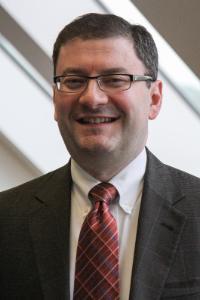
Dr. Scott Harrower, Ridley College, Melbourne Australia

Dr. Scott Harrower, Associate Professor of Theology and History at Ridley College, Melbourne, Australia, has written a timely and significant book: God of All Comfort: A Trinitarian Response to the Horrors of This World (Lexham Press, 2019).  Prior to his academic career, he grew up in Argentina and saw the horrors that went on there.  Then he became a trauma nurse and saw deeply disturbing things.  The world is full of horrors: dismemberment, assault, disease, death.  How do we make it through?  Dr. Harrower has written a terrific book that brings together insights from philosophy, theology, psychology and medical studies.  You need to hear this!  If not now, then one day.

To hear the podcast on The Stone Chapel (about 20 minutes) click here.

The Stone Chapel is a podcast of the friends and staff of the Lanier Theological Library in Houston, Texas.  It is hosted by Dr. David Capes, Senior Research Fellow at the library and former faculty member at Houston Baptist University and Wheaton College.  The purpose of the podcast is to bring to our audience great conversations from the world’s leading experts in theology, biblical studies, archaeology, Church history, the Dead Sea Scrolls, ethics, ministry, and a host of other topics close to the mission of the library.

The Lanier Theological Library is a magnet for scholars, church leaders and influencers.  For the last ten years, it has welcomed hundreds of academics and church leaders from across the globe for public lectures, study, panel discussions, consultations, and encouragement.

These podcasts as well as the Lanier library and the Stone Chapel are generously underwritten by Mark and Becky Lanier and the Lanier Theological Library Foundation.  If you have questions or comments, please be in touch: Email david.capes@lanierlibrary.org

“I am black and beautiful . . . “

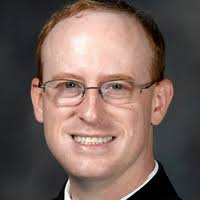
Dr. Aubrey Buster, Wheaton College

Dr. Aubrey Buster, Assistant Professor of Old Testament at Wheaton College, contemplates how a translation of an ambiguous word can reflect and/or lead to serious errors of perception, including perceptions of race and social class. A common Hebrew conjunction used in Song of Songs 1:5 could be read as “black but beautiful” or “black and beautiful.” The latter, “and,” is more likely contextually, though it has long been translated as “but.”

To hear the podcast (about 7 minutes) click here.

“Exegetically Speaking” is a weekly podcast of the friends and faculty of Wheaton College, IL and The Lanier Theological Library. Hosted by Dr. David Capes, it features language experts who discuss the importance of learning the biblical languages—Hebrew, Aramaic, and Greek—and show how reading the Bible in the original languages “pays off.” Each podcast lasts between seven and eleven minutes and covers a different topic for those who want to read the Bible for all it is worth.

If you’re interested in going deeper, learn more about Wheaton’s undergraduate degree in Classical Languages (Greek, Hebrew, and Latin) and our MA in Biblical Exegesis

You can hear Exegetically Speaking on SpotifyStitcherApple Podcasts, and YouTube. If you have questions or comments, please contact us at exegetically.speaking@wheaton.edu.

“Dark Joy”

Dr. Julie Newberry, Wheaton College

Dr. Julie Newberry, Assistant Professor of New Testament at Wheaton College, joins Dr. Capes on “Exegetically Speaking” to consider the ramifications of the kind of “dark joy” found among the Jerusalem leaders who conspired with Judas to betray Jesus (Luke 22:5).  Joy itself is morally ambivalent in Luke’s Gospel. Scoundrels can have joy over some dark act or evil agency.

To listen to the podcast (about 7 minutes) click here.

“Exegetically Speaking” is a weekly podcast of the friends and faculty of Wheaton College, IL and The Lanier Theological Library. Hosted by Dr. David Capes, it features language experts who discuss the importance of learning the biblical languages—Hebrew, Aramaic, and Greek—and show how reading the Bible in the original languages “pays off.” Each podcast lasts between seven and eleven minutes and covers a different topic for those who want to read the Bible for all it is worth.

If you’re interested in going deeper, learn more about Wheaton’s undergraduate degree in Classical Languages (Greek, Hebrew, and Latin) and our MA in Biblical Exegesis

You can hear Exegetically Speaking on SpotifyStitcherApple Podcasts, and YouTube. If you have questions or comments, please contact us at exegetically.speaking@wheaton.edu.

Why It’s All Greek to a Theologian

Dr. Dan Treier, Wheaton College

Dr. Daniel J. Treier is the Gunther H. Knoedler Professor of Theology at Wheaton Graduate School, and Ph.D. program director. He has authored numerous books and articles, including the award-winning Introducing Evangelical Theology. He has written a commentary on Proverbs & Ecclesiastes, and is starting another on Philippians. He reflects on the question: Why would a theologian who majors in Christian doctrine value knowledge of Greek? (Spoiler alert: He does very much value and promote this knowledge.)

To listen to the podcast (about 7 minutes) click here.

“Exegetically Speaking” is a weekly podcast of the friends and faculty of Wheaton College, IL and The Lanier Theological Library. Hosted by Dr. David Capes, it features language experts who discuss the importance of learning the biblical languages—Hebrew, Aramaic, and Greek—and show how reading the Bible in the original languages “pays off.” Each podcast lasts between seven and eleven minutes and covers a different topic for those who want to read the Bible for all it is worth.

If you’re interested in going deeper, learn more about Wheaton’s undergraduate degree in Classical Languages (Greek, Hebrew, and Latin) and our MA in Biblical Exegesis

You can hear Exegetically Speaking on SpotifyStitcherApple Podcasts, and YouTube. If you have questions or comments, please contact us at exegetically.speaking@wheaton.edu

Abba, Father

Dr. Scott Callaham, Baptist Theological Seminary, Singapore

Dr. Scott Callaham is Lecturer of Hebrew and Old Testament at Baptist Theological Seminary, Singapore. He has authored and edited a number of books and articles and is currently completing a new teaching grammar of Biblical Aramaic. Dr. Callaham discusses the form, meaning, and theological significance of the Aramaic term Abba, which Jesus uses in his prayer in the Garden of Gethsemane and which also appears twice in Paul’s writings.

To listen to the podcast (about 7 minutes), click here.

“Exegetically Speaking” is a weekly podcast of the friends and faculty of Wheaton College, IL and The Lanier Theological Library. Hosted by Dr. David Capes, it features language experts who discuss the importance of learning the biblical languages—Hebrew, Aramaic, and Greek—and show how reading the Bible in the original languages “pays off.” Each podcast lasts between seven and eleven minutes and covers a different topic for those who want to read the Bible for all it is worth.

If you’re interested in going deeper, learn more about Wheaton’s undergraduate degree in Classical Languages (Greek, Hebrew, and Latin) and our MA in Biblical Exegesis

You can hear Exegetically Speaking on SpotifyStitcherApple Podcasts, and YouTube. If you have questions or comments, please contact us at exegetically.speaking@wheaton.edu.