
Page 18 of 31

Peter, the Rock: Matthew 16–Gene Green
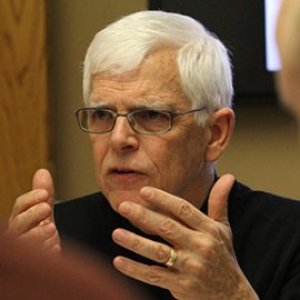
Dr. Gene Green,
Dean of Trinity International University Florida

Dr. Gene Green is Professor Emeritus of New Testament at Wheaton College and Graduate School, and Dean of Trinity International University – Florida. Among his many and diverse publications are Vox Petri: A Theology of Peter (Cascade, 2019); The Scalpel and the Cross: A Theology of Surgery (Zondervan, 2015); Jude and 2 Peter (Baker, 2008); 1 and 2 Thessalonians (Eerdmans, 2002); the co-authored New Testament in Antiquity (Zondervan, 2020); and the co-edited Majority World Theology (IVP Academic, 2020). He shares the reasons he believes that it was Peter himself whom Jesus designated the “rock” on which his church would be built.

To hear the podcast click here.

“Exegetically Speaking” is a weekly podcast of the friends and faculty of Wheaton College, IL and The Lanier Theological Library. Hosted by Dr. David Capes, it features language experts who discuss the importance of learning the biblical languages—Hebrew, Aramaic, and Greek—and show how reading the Bible in the original languages “pays off.” Each podcast lasts between seven and eleven minutes and covers a different topic for those who want to read the Bible for all it is worth.

If you’re interested in going deeper, learn more about Wheaton’s undergraduate degree in Classical Languages (Greek, Hebrew, and Latin) and our MA in Biblical Exegesis

You can hear Exegetically Speaking on SpotifyStitcherApple Podcasts, and YouTube. If you have questions or comments, please contact us at exegetically.speaking@wheaton.edu. And keep listening. 

How many ways can you translate a Greek participle?


Dr. Michael Graves,
Wheaton College

Dr. Michael Graves is the Armerding Professor of Biblical Studies at Wheaton College. Among his publications are The Inspiration and Interpretation of Scripture: What the Early Church Can Teach Us (Eerdmans, 2014), and the forthcoming How Scripture Interprets Scripture: What Biblical Writers Can Teach us About Reading the Bible (Baker, 2021). In this episode he illustrates the fascinating range of nuances carried by Greek adverbial participles and the interpretive, sometimes debated choices that translators must make. Our translations are good, but knowledge of the Greek is better!

To hear the podcast click here.

“Exegetically Speaking” is a weekly podcast of the friends and faculty of Wheaton College, IL and The Lanier Theological Library. Hosted by Dr. David Capes, it features language experts who discuss the importance of learning the biblical languages—Hebrew, Aramaic, and Greek—and show how reading the Bible in the original languages “pays off.” Each podcast lasts between seven and eleven minutes and covers a different topic for those who want to read the Bible for all it is worth.

If you’re interested in going deeper, learn more about Wheaton’s undergraduate degree in Classical Languages (Greek, Hebrew, and Latin) and our MA in Biblical Exegesis

You can hear Exegetically Speaking on SpotifyStitcherApple Podcasts, and YouTube. If you have questions or comments, please contact us at exegetically.speaking@wheaton.edu. And keep listening. 
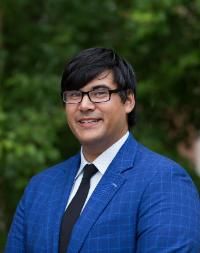
The “Synagogue” of James 2:2–Dr. Jordan Ryan

Dr. Jordan Ryan, Wheaton College

Dr. Jordan Ryan, Assistant Professor of New Testament at Wheaton College, has published The Role of the Synagogue in the Aims of Jesus (Fortress, 2017), followed by, From the Passion to the Church of the Holy Sepulchre: Memories of Jesus in Place, Pilgrimage, and Early Holy Sites Over the First Three Centuries (T&T Clark, 2021). He talks with David Capes about his beginnings with Greek and its place in his work before reflecting on how we understand and translate the word συναγωγή (synagoge) in general and in James 2:2. For instance, is James addressing Christian members of a Jewish synagogue?

To hear the podcast click here.

“Exegetically Speaking” is a weekly podcast of the friends and faculty of Wheaton College, IL and The Lanier Theological Library. Hosted by Dr. David Capes, it features language experts who discuss the importance of learning the biblical languages—Hebrew, Aramaic, and Greek—and show how reading the Bible in the original languages “pays off.” Each podcast lasts between seven and eleven minutes and covers a different topic for those who want to read the Bible for all it is worth.

If you’re interested in going deeper, learn more about Wheaton’s undergraduate degree in Classical Languages (Greek, Hebrew, and Latin) and our MA in Biblical Exegesis

You can hear Exegetically Speaking on SpotifyStitcherApple Podcasts, and YouTube. If you have questions or comments, please contact us at exegetically.speaking@wheaton.edu. And keep listening. 

The “Heart” of Philemon, Clint Burnett

Dr. Clint Burnett

Dr. D. Clint Burnett, Lecturer in New Testament at Johnson University, specializes in the study of the material culture of the classical world and how it aids interpretation of the New Testament. In that vein, he has authored Studying the New Testament through Inscriptions (Hendrickson, 2020). In this conversation with David Capes he recounts his earliest years with the Greek language and demonstrates how even a little knowledge of Greek can illuminate a letter like Philemon.

To hear the podcast (7-8 minutes) click here.

“Exegetically Speaking” is a weekly podcast of the friends and faculty of Wheaton College, IL and The Lanier Theological Library. Hosted by Dr. David Capes, it features language experts who discuss the importance of learning the biblical languages—Hebrew, Aramaic, and Greek—and show how reading the Bible in the original languages “pays off.” Each podcast lasts between seven and eleven minutes and covers a different topic for those who want to read the Bible for all it is worth.

If you’re interested in going deeper, learn more about Wheaton’s undergraduate degree in Classical Languages (Greek, Hebrew, and Latin) and our MA in Biblical Exegesis

You can hear Exegetically Speaking on SpotifyStitcherApple Podcasts, and YouTube. If you have questions or comments, please contact us at exegetically.speaking@wheaton.edu. And keep listening. 

Walk-away-Joe and Deuteronomy 22, Sandy Richter

Dr. Sandy Richter, Westmont College

Dr. Sandra Richter, formerly Professor of Old Testament at Wheaton College, is The Robert H. Gundry Chair of Biblical Studies at Westmont College. Among her many publications are The Deuteronomistic History and the Name Theology (BZAW 2002) and Stewards of Eden: What Scripture Says About the Environment and Why It Matters (IVP 2020). In this podcast, she discusses the importance of Hebrew language in her work, Deuteronomy as an ancient law code, and how parallel texts and a shift of verbs in Deut 22:23-29 illuminate the laws regarding seduction and “rape” in vv. 28-29.

To hear the podcast click here.

“Exegetically Speaking” is a weekly podcast of the friends and faculty of Wheaton College, IL and The Lanier Theological Library. Hosted by Dr. David Capes, it features language experts who discuss the importance of learning the biblical languages—Hebrew, Aramaic, and Greek—and show how reading the Bible in the original languages “pays off.” Each podcast lasts between seven and eleven minutes and covers a different topic for those who want to read the Bible for all it is worth.

If you’re interested in going deeper, learn more about Wheaton’s undergraduate degree in Classical Languages (Greek, Hebrew, and Latin) and our MA in Biblical Exegesis

You can hear Exegetically Speaking on SpotifyStitcherApple Podcasts, and YouTube. If you have questions or comments, please contact us at exegetically.speaking@wheaton.edu. And keep listening.