How We Got the New Testament

To hear the podcast (20 min.) click here.

One of the questions I often get is “How did we get our Bible?”  As you’re going to hear on this podcast, there is not a quick, easy answer. 

It’s an important historical question that had a few questions marks around it.  Dr. Lee McDonald has given a lifetime to the question and has authored more than a dozen books on the topic.  You can find a link to some of those down below.

Dr. McDonald joined David Capes on the Stone Chapel Podcasts to talk about this question.

Who Is Lee McDonald?

Lee McDonald earned his PhD at the University of Edinburgh.  Prior to that he earned his masters at Harvard. 

Today he is retired.  But he spent many years as professor of New Testament Studies and President of Acadia Divinity College in Nova Scotia. 

He has written a number of books on the canon of the Bible.  See the notes below for some of those.  In retirement he lives in southern California. 

How We Got Our New Testament

McDonald is interested in the question of how we got our Bible.  But this podcast deals only with part two of the Bible, the New Testament. 

The issues are challenging.  We have minimal historical sources that discuss the canon.  The presence of manuscripts themselves help us somewhat. 

Canon is a technical term for the list of inspired books referred to today as the New Testament.  There are historical forces and factors that led to the development of the canon. 

Capes and McDonald outline a few of these in the podcast.   But there are also theological factors and concerns at the same time.  Geographically, the church was scattered.  So, practices in Ethiopia were different than those in Italy. 

Early Christians were a very bookish people.  They wrote a lot of books.  I suppose you could say they also read a lot of books. Some of those books were included in the canon, but many were excluded.  In this podcast Capes and McDonald discuss the criteria for apostolic authorship. 

Resources

Click here for a transcript of today’s podcast.

A key book on the question which he wrote with interested lay people in mind:

Formation of the Bible: The Story of the Church’s Canon (Hendrickson, 2012).

A bit more technical is:

The Biblical Canon: Its Origin, Transmission, and Authority (Baker Academic, 2006)

To see a lecture by Dr. Lee McDonald at the Lanier Theological Library click here.

More Resources

Want more Stone Chapel Podcasts on some great topics? Just click here.

You can get information on upcoming lectures at Lanier Theological Library by clicking here

Theology on the Web

Rob Bradshaw’s full time job is librarian at Spurgeon’s College in London. But he also has a passion for making theology available on the Internet.

Here is the website you need to know:

https://theologyontheweb.org.uk

Rob has digitized 40,000 articles from dozens and dozens of journals.  Some you have heard of.  Some you have not.  But he has done his due diligence to contact the authors and/or their heirs to make sure he has permission to put their work on the web so that people across the world can see it.

In this time of Covid-19 when libraries are closed and resources are scarce, it is great to have access to these articles.  They are cross-referenced by author, publication, topic, etc.

Rob has articles on a variety of disciplines: theology, church history, Old Testament, New Testament, and archaeology.  The website above mentioned above curates and organizes the entire collection of digitized articles.

Now, Rob does this on the side, as a gift to scholars, pastors, and students.  Access to the articles are free, but if you’d like to help him with some of the expenses, leave some money in the tip jar before you go.


One God, One Lord (Part 7)

I continue to work through the preface of Larry Hurtado’s classic, One God, One Lord: Early Christian Devotion and Ancient Jewish Monotheism. It has been published in its 3rd edition recently by Bloomsbury T. & T. Clark, as a part of its Cornerstones Series. Larry-Hurtado-1756565

In the 1990s there were a number of books published  on theology and Christology which Hurtado felt deserved special notice.  They were:

Larry Kreitzer, Jesus and God in Paul’s Eschatology (JSNTSup 19; Sheffield: JSOT     Press, 1987).


David Capes, Old Testament Yahweh Texts in Paul’s Christology (WUNT 2/47; Tubingen: Mohr-Siebeck, 1992)


Carl Davis, The Name and Way of the Lord: Old Testament Themes, New Testament Christology (JSNTSup 129; Sheffield:Sheffield Academic Press, 1996).


Carey Newman, Paul’s Glory-Christology: Tradition and Rhetoric (NovTSup 69;  Leiden:Brill, 1992).


Neil Richardson, Paul’s Language about God (JSNTSup 99; Sheffield: Sheffield Academic Press, 1994).


Philp Davis rightly noted three patterns of mediation established in Jewish religious texts of the time.  He referred to (a) the legacy pattern—which had to do with the role a mediator figure played in the past (e.g., creation); (b) the present pattern—which emphasized the role of a mediator in the present; (c) the future pattern—which anticipated a future or eschatological figure (e.g. messianic).  Davis, however, in Hurtado’s opinion, could never account adequately for the kind of honor and reverence early Christians granted to Jesus as Messiah.  All three patterns come together in a single figure in Christ.

John Collins’ critique of Hurtado was that he did not pay enough attention to royal messianic figures.  Hurtado does speak of messianic figures in ch. 1 of ONE GOD, ONE LORD, but his point is not to dwell on messianic figures.  His purpose was to focus on those kind of figures that had some analogous heavenly status to the risen Jesus in early Christianity.  Messianic figures in most Jewish sources (except 1 Enoch).could be characterized as having a more earthly orientation.  This is why Hurtado paid attention to exalted patriarchs and principal angels.

Most studies during this period were focused more on religious language and religious beliefs related to the Lord Jesus.  Hurtado’s primary emphasis was and continued to be the practices of early Christians, particularly as they related to granting Jesus any sort of divine status.

Max Turner proposed that experiences of revelation and inspiration by the power of the Holy Spirit or what believers took to be the spirit sent by the risen and exalted Jesus contributed heavily to the notion that Jesus was divine and was therefore worthy of worship.  Hurtado appreciated Turner’s study and the work of his student, Mehrdad Fatehi.

Hurtado ends his preface to the second edition expressing appreciation for the renewed interest in Christology at the time.  The final word on the subject had not been written by Wilhelm Bousset (Kyrios Christos) and Oscar Cullman (A Christology of the New Testament).  More was yet to be discovered for anyone daring enough to take a second look.


Tongues Speaking in the Early Church (Pt. 1)

Here is an article I wrote a few years ago for The Biblical Illustrator.   

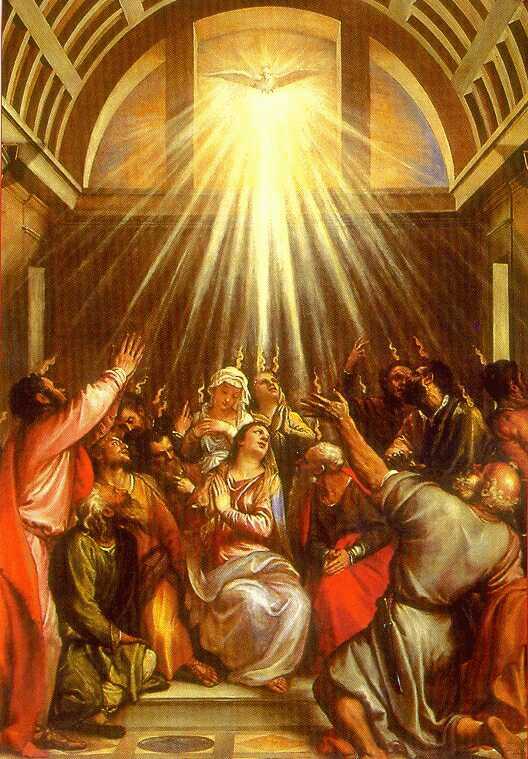
In 1 Corinthians 12-14 Paul provides the first record of the Christian practice of speaking in tongues, or glossolalia.  Those who study Scripture and early Christianity find the practice a bit baffling for a number of reasons.  First, the earliest, firsthand description of speaking in tongues depicts a church divided over the practice with Paul urging restraint on the part of those who do and tolerance by those who don’t.  In the final analysis to forbid tongues speaking is no better than flaunting it (1 Cor 14:39).  Second, it is not at all clear how pervasive the practice is.  pentecost_crossAlthough Paul wrote thirteen letters in the New Testament, the practice is mentioned only in 1 Corinthians.  Moreover, in the two other places where Paul catalogs spiritual gifts–Romans 12 and Ephesians 4—tongues fails to make the list.  Some have concluded the practice is so widespread it is hardly worth mentioning except when there was a problem (as at Corinth).  Others read the evidence to say there was little or no tongues speaking going on in Paul’s other churches.  Third and perhaps most puzzling, it is also not clear whether Luke’s account in Acts of the disciples speaking in tongues is of the same sort as what we find happening in Corinth.  In Acts 2 Luke recounts the coming of the Spirit on the followers of Jesus in Jerusalem during Pentecost after Jesus’ crucifixion.  When the Spirit comes, they see visions and begin speaking in tongues.  Those Jewish pilgrims who have come to Jerusalem for the festival hear the disciples praising God in their own languages (Acts 2:1-11).  Some interpreters have understood this not so much a miracle of speaking as it is a miracle of hearing for the pilgrims say: “Why, are not all these who are speaking Galileans?  And how is it that we each hear them in our own language to which we were born?” (Acts 2:7-8, NASV).[1]  Despite this way of reading the text, it may well be that Luke meant to describe miraculous speech.  Therefore, let the reader understand that Galileans began speaking the native languages of Parthians, Medes, Cappadocians and many others although they had never studied or learned those languages.  The other accounts in Acts which describe speaking in tongues (Acts 10:44-48; 19:1-7) occur with the newly converted but no mention is made whether these “gifts of the Spirit” should be understood as real, human languages.  Paul’s description in 1 Corinthians 12-14, on the other hand, points to the fact that tongues speaking does not involve a known, human language; rather it is Spirit-inspired speech directed toward God not other people (1 Cor 14:2).[2]  For these and other reasons, the origin and practice of tongues speaking in the early church lays shrouded in mystery.

The situation is complicated to some extent by the fact that similar practices are found in other religions.  The Old Testament records that some early Hebrew prophets experienced episodes of ecstasy and inspired speech which may border on glossolalia (1 Sam 10:5-13; 19:18-24; 2 Sam 6:13-17; 1 Kings 20:35-37) although not all are agreed on this.  Perhaps more to the point is the pagan phenomenon known as mantic prophecy.  In mantic prophecy a divine spirit so possesses a prophet (known as a mantis) that the person falls into a trance-like state and speaks messages from a god.  Evidence suggests the language used was inarticulate and had to have an interpreter to be understood by the one seeking the oracle.[3]  Similar phenomena appear in the ancient cults of the Dionysius and Cybele.[4]  The relationship of early Christian glossolalia to any parallel phenomona is not self-evident.


pentecost 3


[1] Luke Timothy Johnson, Religious Experience in Earliest Christianity (Minneapolis: Fortress, 1998), 111.

[2] Gordon Fee, The First Epistle to the Corinthians NICNT (Grand Rapids: Eerdmans, 1987), 598.

[3] Johnson,  113-4.

[4] E. Andrews, “Tongues, Gift of,” in The Interpreter’s Dictionary of the Bible (Nashville: Abingdon), 4:671-2.

[5] Fee, 571.

Christian Women

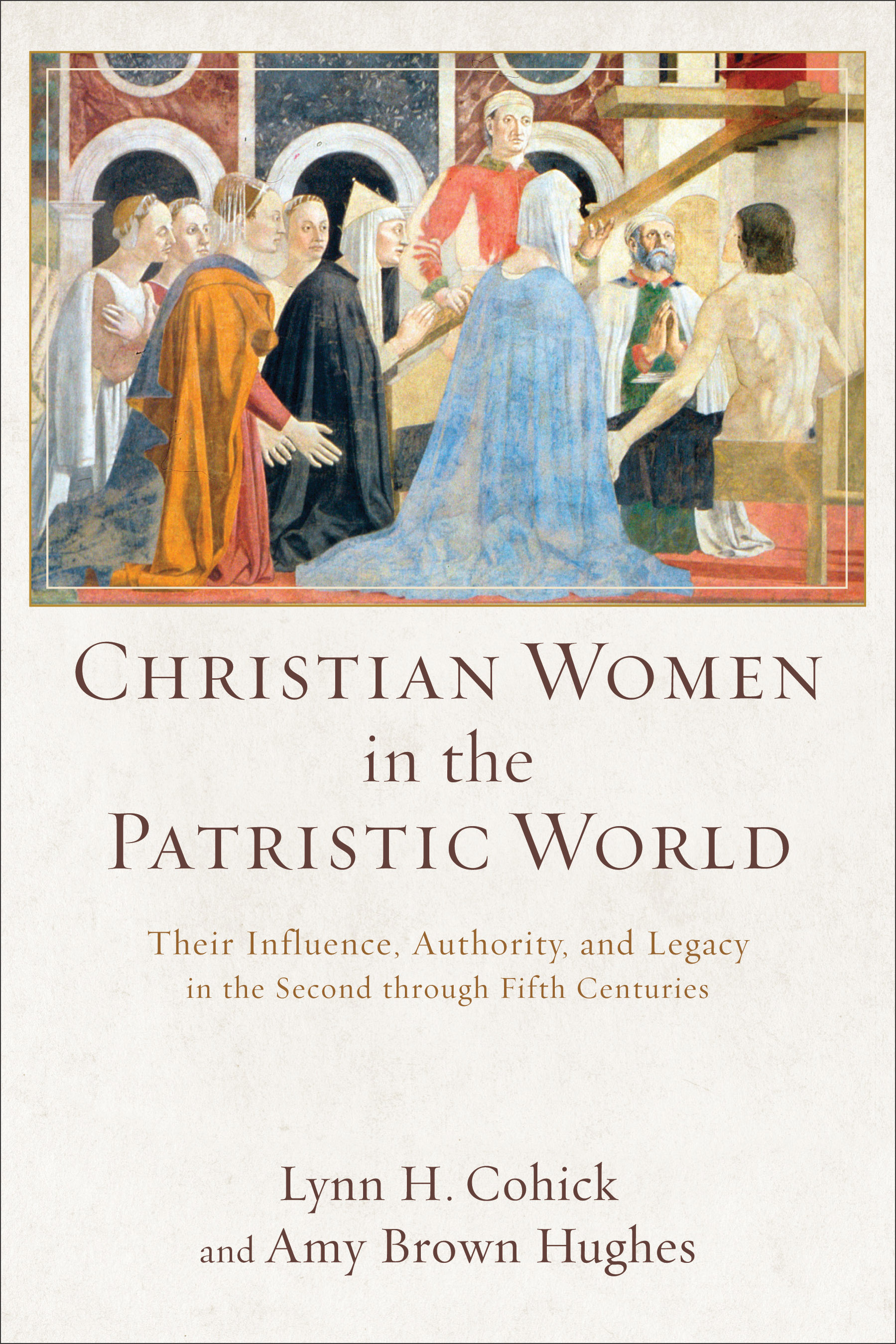
My friend, colleague, and collaborator in all things good at Wheaton College, Dr. Lynn Cohick, and her former student Amy Hughes have written an important and timely book on the role of many key women in church history in the second to fifth centuries (Christian Women in the Patristic World: Their Influence, Authority and Legacy in the Second through Fifth Centuries [Grand Rapids: Baker Academic Press, 2017]).  It has just been published and I’ve had a chance to read through much of it in digital form.  I’m looking forward to getting my SIGNED copy when I return to Chicago in a couple of weeks. Christian Women book by Cohick and Hughes

When most of us took church history, we were introduced to dozens of men who defended the nascent community and/or led it during tumultuous times.  Names like Ignatius, Clement of Rome, Justin Martryr, Athanasius, Theodore of Mopsuestia, Gregory of Nyssa, and Augustine were just a few of the men we studied.  But fortunately the record of many women who defended and led the church still exists, and there are scholars eager to tell their stories.

In their own words this “book will educate readers who are exploring the patristic period about the lives of the most important women from this period, so that their influence can be better integrated into the history of the church.”  And that is the story they tell, a story of integration. They do not silence the men who contributed to the growth and development of the church, but they do correct them in gracious tones. I would characterize their approach to the evidence available as a “charitable feminism,” an advocacy for the role of women in church history as leaders, martyrs, examples in their own right, understood against a culture that in ways were hostile to women who dared to speak outside the private, domestic fear (though the male-public, female-private distinction is often overblown).  Both Cohick and Hughes clearly appreciate the cultural limits placed people living in 1500-1800 years ago.  Few of us have eyes to see beyond our own cultural limits.

If you are interested in church history—particularly the formative centuries that brought Christianity from its status as a persecuted sect to one of the most influential forces in the west—you will want to get and read this book. Don’t think you can claim any expertise in the history of Christianity, if you don’t take into account the contributions of Macrina, Felicitas, Thecla, Perpetua, Egeria, Helena and many others.

If you’d like to pick up your own copy, click here.