Jesus among the Gods with Mike Bird

To hear the podcast click here.

David Capes and Michael Bird have been friends for many years.  And they share some common academic interests.  Recently, Mike released an important new book.  He joined David Capes from his home in Australia to talk about it on the Stone Chapel Podcasts.

Who is Michael Bird? 

Michael (Mike) Bird is a New Testament scholar, an Anglican priest, and he is Deputy Principal at Ridley College in Melbourne, Australia. 

He loves the Bible and takes delight in calling himself a Bible nerd.  Mike has a wonderful sense of humor, and he knows more about American politics than most Americans. 

He loves tennis, and he hates coffee.  Mike is the author of lots of books.  You can find many of them at the Lanier Theological Library.

Jesus among the Gods

Jesus among the Gods: Early Christology in the Greco-Roman World (Baylor University Press, 2022) is one of Michael’s newest books. 

He dedicated it to David for the years of friendship and his contributions to Christology. 

In the book Mike looks at the question: what does it mean to call Jesus “God” or “god”?  That may seem self-evident 2000 later, but the question is more complex. 

Bart Ehrman’s work encouraged Mike to look into this question. What he found is a spectrum of divinity from unbegotten and absolute gods. To begotten gods, who were often people elevated to some divine status or deity, like Caesar or Heracles. 

So did this way of thinking influence early Christians as they were struggling to express the significance of Jesus?

More topics in the discussion

The conversation weaves through a number of topics including whether monotheism is a term that is useful or should it be retired.

And the depth of Hellenistic culture in the Bible, and the unlikely prospects that Judaism and Hellenism are petitioned off and did not influence one another. 

The book is fascinating and a must read for anyone interested in understanding the earliest Jesus communities. 

Jesus among the God endorsed by Capes

David Capes endorsed the book before he knew Michael was going to dedicate it to him:

With his characteristic good humor and judicious attention to detail, Michael Bird pushes the conversation regarding early Christologies in new and constructive directions. 

Having an ear attuned to both Jewish and Greco-Roman voices, Bird offers a straightforward taxonomy of what constituted ‘divinity’ in the ancient world and makes a serious case that elements of early Christologies are inherently ontological.

David B. Capes, Director, Lanier Theological Library

Additional Resources

You can watch Michael Bird’s lecture, An Invasive Story: Paul’s Theology Between Messianic Event and Salvation History at the Lanier Theological Library in 2016 by clicking here.

To learn more about Michael Bird click here.

For a transcript of this podcast, click here.

More resources

Want more Stone Chapel Podcasts on some great topics? Just click here.

What’s more, you can get information on upcoming lectures at Lanier Theological Library by clicking here.

To hear the podcast click here.
Early Praise for THE DIVINE CHRIST

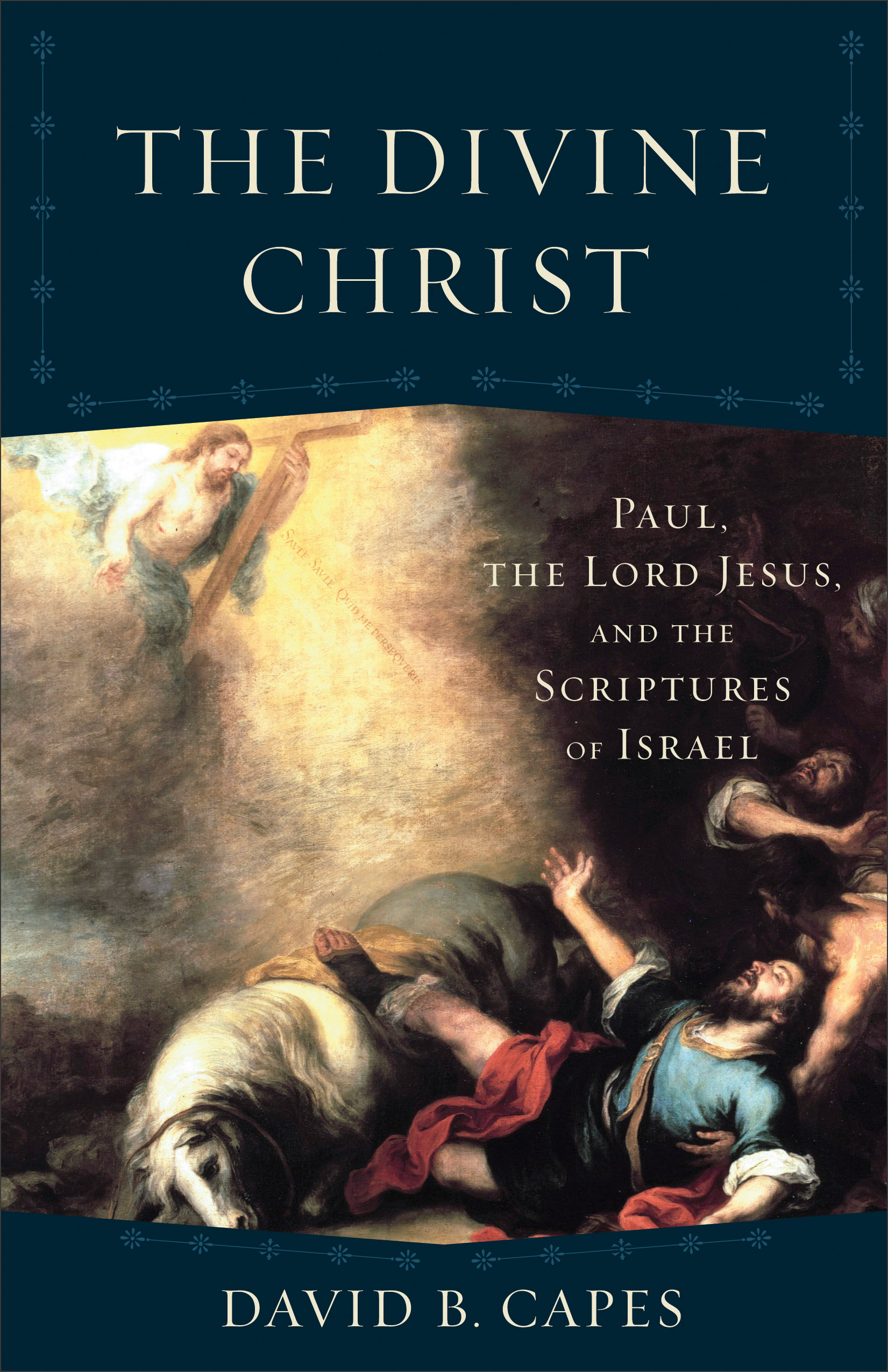
This week (Dec 2-7, 2017) I’m working through the page proofs for my new book The Divine Christ: Paul, the Lord Jesus, and the Scriptures of Israel (Baker Academic, March 2018).  Not long ago I received word of the cover art for the book which I present here for the first time.The Divine Christ

Recently I have received endorsements from a number of scholars whom I deeply respect.  Here are few of those:

“What is the most amazing thing the New Testament writers do to exalt Jesus of Nazareth? Is it reporting all his ‘I am’ sayings in the Gospel of John or calling him ‘the Messiah, God blessed over all’ in Romans 9:5? Maybe it’s all the ways he is worshiped, starting during his life but especially after his death and resurrection? Perhaps, but when do we consider all the New Testament texts that quote the Old Testament and apply to Jesus what is said about Yahweh, the one and only God of creation? English readers don’t usually think of these passages because we just see the word ‘Lord’ and move on. David Capes leads us on a sleuthing exercise to discover and understand the significance of these passages. Readers will be astounded at how many there are and will be greatly encouraged by what their meanings add up to.”—Craig L. Blomberg, distinguished professor of New Testament, Denver Seminary

“What does it mean when Paul says ‘Jesus is Lord’? In a clear and engaging style, David Capes takes us to the heart of Paul’s theology, revealing the depth and nuance of this seemingly simple claim by showing how it is shaped by Paul’s Old Testament citations and allusions. Capes extends the conclusions of his seminal work on Paul’s early high Christology and makes the best of contemporary scholarship accessible without getting lost in the weeds. Both beginning students and seasoned scholars will benefit from this valuable work.”—Ben C. Blackwell, assistant professor of Christianity, Houston Baptist University

“In this volume Capes extends the argument he first presented in his important book Old Testament Yahweh Texts in Paul’s Christology and responds to some recent developments in scholarly discussion. By pressing home useful distinctions and carefully attending to textual and contextual features, Capes elucidates crucial aspects of the earliest and fully divine Christology. This volume sparkles with common sense and judicious judgment, shedding light on a perennially contentious issue. These debates concern matters of great significance, and I am grateful that Capes has once again contributed to these discussions.”—Chris Tilling, senior lecturer in New Testament Studies, St. Mellitus College

“Every generation of students has to struggle anew with complex questions regarding the status and nature of Christ in the New Testament and early Christian thought. Capes proves himself an expert guide through Paul’s Letters, especially Paul’s use of Old Testament texts that apply the divine title ‘Lord’ to Jesus. When Christians called Jesus ‘Lord,’ what did this mean? Did the first Christians consider Jesus divine? How did they conceive of the unique lordship of Jesus in relation to the one God? To this weighty subject Capes brings proven expertise, crystal clarity of expression, and penetrating analysis of interpretations past and present.”—Nijay K. Gupta, associate professor of New Testament, Portland Seminary

“Capes offers a brilliant examination of the meaning of ‘Lord’ in ancient Judaism, in modern scholarship, and in the Pauline Letters. What Capes demonstrates, with acumen and insight, is that Paul was among those who considered Jesus as Lord in the strongest possible sense, and the highest Christology we can imagine was indeed among the earliest. This erudite and learned volume is for anyone interested in the Christology of the early church.”—Michael F. Bird, lecturer in theology, Ridley College, Melbourne, AustraliaN

Thanks to all these scholars who took time to read the book and take it seriously.

Now . . . back to work . . .

How Did Jesus Become God?

I am fortunate to be chair of an SBL Program Unit called: “The Extent of Theological Diversity in Earliest Christianity.”

Here is our description as listed on the SBL site:

Description: Focusing on the evidence for Jesus’ death and resurrection as a narrative used to shape the identity of emergent communities, and on the alternatives to this narrative preserved in early Christian sources, this Consultation explores the origin, nature and extent of theological diversity in earliest Christianity from the beginnings until approximately 180 CE. By fostering a conversation involving the testing of various reconstructions of early Christian history against the range of relevant evidence, the unit seeks to bring greater precision to the study of “orthodoxy and heresy in early Christianity.”

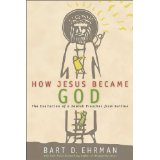
This fall one of the two sessions we will sponsor seeks to address the question: “How Did Jesus Become God?”  Bart Ehrman has written a book on the topic and it will be published in March 2014 by HarperCollins.  Here is the full title: How Jesus Became God: The Exaltation of a Jewish Preacher from Galilee.  Ehrman has agreed to let us offer a session in review of his book.  We are in the process of putting together the panelists for the review session.  Ehrman will give a response to his reviewers.  I haven’t seen the book yet.  I am still waiting for my advance copy.How Jesus Became God

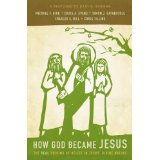
Ironically, a daughter company of HarperCollins, Zondervan, commissioned a book in response which is scheduled to be published this spring as well.  Michael Bird pulled together a group of contributors to “answer” Ehrman’s historical reconstruction.  Other than himself these include Simon Gathercole, Chris Tilling, Craig Evans, and Charles Hill. Zondervan will release the book this March as well under the title: How God Became Jesus: The Real Origins of Belief in Jesus’ Divine Nature—A Response to Bart Ehrman.   Apparently HarperCollins shared the electronic manuscript of Ehrman’s book with Zondervan in order to provide—what can only be described as—a timely response.  I’d be interested in how all of this happened.  If you compare the front covers of each book, you can see how similar they are. How God Become Jesus

Needless to say this promises to be a great conversation over an important and controversial topic.

Here are some of the people we are talking with about being on the panel.  I’ll announce the final panel in about a month:

Bart Ehrman, University of North Carolina, Chapel Hill

Larry Hurtado, University of Edinburgh

Dale Martin, Yale University

Michael Bird, Ridley Melbourne College

James McGrath, Butler University

Craig Evans, Acadia Divinity College

If you are planning on being at SBL in San Diego in November 2014, be sure to look up our group and join us for the dialogue.