This post is part three of a series on Paul’s missionary strategy. Make sure that you go back and see parts 1-2.
Spent Time
When Paul was on his mission, he didn’t pop in for brief appearances only to pop out the next day at dawn. He spent time with people, living with them in the cities he targeted for mission. On occasion, he stayed for months or years in the same place. On mission, he accepted their hospitality, ate their bread, slept in their homes, and shared the gospel. He lived life and journeyed with his people. He knew the gospel was too important to just drop in for a short visit. This part of Paul’s mission strategy is challenging to apply in our day when travel is easy. We are often discouraged, ready to shake the dust off our feet and move to greener pastures. Of course, short-term mission opportunities are not without value. When it comes to beginning new churches, however, the only strategy that works is spending time in a particular place with a particular people. It means preaching the gospel and living the gospel in full view of everyone.
Appointed Leaders
When it was time for Paul to move on to the next city, he appointed leaders to guide the fledgling community until he or an apprentice could return. He looked for people whose giftedness by the Spirit was obvious. His letters demonstrate how he would match duties with gifts. But Paul insisted that every gift was for the common good, not for individual enjoyment or power. He believed every member of Christ’s body had a gift, and every gift was important. The need for leaders has never been greater than it is today. We must work diligently to match duties with gifts. Discerning gifts is not as tricky as some have made it. We don’t need a spiritual gift inventory to figure out what gifts we or someone else has. Rather, it is a matter of knowing members of the congregation well and recognizing when the grace of God is present in their service. We need to be in tune to the working of the Spirit of God to see His gifts at work in the midst of our churches.
Prayed for His Churches
In Acts and in all his letters, we read that Paul constantly prayed for the individual churches. This may seem obvious, but it is amazing how much work and how little prayer go into our missions. For Paul prayer was not just a nice thing to do when time allowed; it was a strategic part of his work. A study of Paul’s prayers for his churches is revealing. How a person prays and what a person prays reveals much about his or her understanding of the mission. As Paul prayed for his churches, he grew in love, compassion, respect, and grace toward those he called his spiritual children, his brothers and sisters.
I continue some thoughts today on Paul’s missionary strategy. Make sure you go back to read part 1!
Found—Common Ground
When Paul began his ministry in a city, whether with Jews or Gentiles, he worked hard to find common ground. In the synagogue, marketplace, and homes that welcomed him, Paul preached Christ after connecting with his audiences. Generally speaking, when Paul stood with the Jews, he found common ground in the Scriptures, their common heritage, and shared history. As he read and reread his Bible, Paul saw the story of Jesus in the characters, plots, hopes, and warnings of the scrolls. Today, the entire Bible, both Old and New Testaments, forms a vital backdrop to our culture and lives. In our Western culture, there is a residue of the Christian story. Who hasn’t met a “Good Samaritan” or heard “the Golden Rule”? This residue offers us a location where we can move deeper with our friends and fellow citizens into the Scriptures. If we are open to these kinds of conversations, we will find ample opportunities to share our unique stories. Too often, Christians today avoid music, movies, and literature that are not immersed in obvious Christian themes. When we isolate ourselves in this way, we cut ourselves off from a great source of inspiration and truth. Art, music, literature, and movies are all created by people made in the image of God. Even if the divine image has suffered under the domination of sin, “secular” art betrays what it means to be human. We see in secular forms the beauty of creation, the ugliness of sin, and the need for redemption, meaning, and life. We should recognize secular art for what it is: attempts to capture and express truth in a world longing for reconciliation. When we study a culture respectfully, we will find in every expression an opportunity to bear witness to the broader, deeper truth recognized by the church, that part of the world already reconciled to God through Christ.
Preached the Kerygma
Paul laid a foundation with a simple message, the kerygma. Kerygma is a Greek term, meaning “preaching” or “proclamation.” It does not refer to the style (how) or location (where) of the preaching. It refers to the content of the gospel. In short, Paul’s kerygma consisted of these essential points:
Jesus inaugurated the fulfillment of messianic prophecy.
He did good and performed miracles.
He was crucified according to God’s plan.
He was resurrected and exalted to the right hand of God the Father.
He will come again in glory, honor, and judgment.
Therefore, repent, believe, and be baptized.
When he was permitted, Paul declared this gospel message among Jews and Gentiles. The message was simple, but powerful. God has acted decisively in and through Jesus, who is the long-awaited Messiah or Liberating King. In Jesus God has come to us and acted in history for all to see. At the heart of the message is a crucified Messiah, vindicated in the resurrection. For Paul, Christ had changed everything; a new creation had begun. The parousia (second coming) of Jesus would complete what He started. Because all this is true, the only proper response is for men and women, Jew and Gentile, slave and free, to change how they think and act, put faith in Christ, and undergo baptism (ceremonial washing) in His name.
Over the next couple of posts I’m going to lay out some key elements to Paul’s missionary strategy.
Paul’s Example
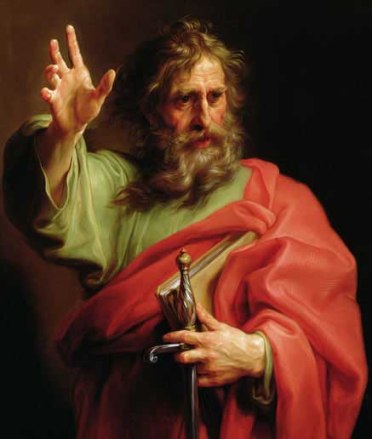
By all accounts, Saul the Pharisee, the former persecutor of the church, is credited as the one who engineered and established the mission to the nations. More than any other, he dislodged “the Way” from its cultural and territorial moorings so that it could reach the ends of the earth, just as Isaiah had predicted. Luke’s insistence that believers remember Paul’s example is more than an interesting feature of Luke’s story. It’s a central theme. In other words, Luke wants us to learn from Paul how our congregations can extend the mission of the Liberating King into our changing culture. Everything Paul did was intentional, strategic. We see his strategies on every page of Luke’s Acts. We discover them as we read between the lines of his letters. Often, today’s church leaders look to mega-churches to see what they are doing and which programs are working. Then we try to duplicate those programs or methods in our own fields. Results are frequently mixed. Watching the strategies of the mega-churches can provide us some help, but they’re not the only places where we ought to seek guidance. Rather than looking to modern trends, Luke invites us to learn from the Apostle to the Gentiles, then to return to our times and situations with a renewed sense of what the church is and how we ought to tactically approach our own mission.
Paul’s mission strategy took him first to the cities. This was appropriate for two reasons. First, Paul himself was a city-fellow, and Paul knew he would be most effective with people like himself. Some call this the “homogenous unit principle.” Rather than retreat in embarrassment from this principle of social behavior, we ought to accept it and then exploit it. This doesn’t mean, of course, that we shouldn’t try to transcend the limitations of our unique “flocks.” If we want to be effective in our own mission strategies, then we have to know who we are. But there is second reason that Paul’s mission strategy was primarily urban: he went to where the people gathered. They might live outside the city, but weekly they would journey to the city to shop, trade, and worship in the synagogues and temples lining the main roads of these Roman cities. Paul’s strategy is clear: we must go to where most of the people are.
Two Heads—Better than One
Paul was a man of his time, not of ours. In Paul’s day, there were no rugged individualists, no self-made men. He knew well what modern generations have forgotten: humans are hard-wired for community. He knew the mission would be most effective with the vitality, support, protection, help, and wisdom of a community of like-minded, otherwise-gifted men and women deeply committed to “the Way.” Paul taught that the church was a body, not a business. In this body, members are organically connected, mutually dependent, and spiritually animated. The church is a family, a household of faith, with God as Father, Jesus as elder brother, and fellow believers as brothers and sisters. If we gain anything from a gentle read through Acts, we will lose the business mentality and embrace a more organic, human, team approach to kingdom work.
Cross-cultural Mission
Paul was no fool. He didn’t enter a city and immediately look up the local atheists and skeptics. His strategy took him to communities and places where people already believed in God, knew the Scriptures, and shared similar perspectives on the world. He went to the Jews first. Whenever Paul entered a city, he looked first for the local synagogue. Paul did this not only because it made sense. He did it because the prophecies had to be fulfilled. To Paul’s profound sorrow, often Jews in the cities he visited rejected both the gospel and Paul himself. He worshiped with them, shared with them, argued the meaning of Scripture with them, and sometimes ran from their stones. When the opposition became stiff—or should we say hard as a rock—Paul shook the dust off his feet in symbolic protest and took the message of Jesus to the God-fearing Gentiles (those non-Jews who were attracted to the one God of Israel and closely identified, without losing their skins, with the Jews). We don’t know the depth of his discomfort the first time he ate a meal prepared by one who didn’t follow the purity rituals. We didn’t invent cross-cultural missions. It started in Antioch and Galatia, around a common table, as Jews and Gentiles broke bread together. There is something unique about table fellowship. For us the table means friendship. It is an overture to enter with us in a relationship that is risky, open, and transparent. To be “on mission” means we sit often at the table with new friends, we open up our lives, and we bear witness. It means that we learn of other cultures, eat strange foods, and stop insisting that everybody be like us. Like Paul we may start our mission by sharing Christ with people who look, talk, and act like we do, but we had better not stop there. One day we will sit at the table with people gathered from the four corners of the world, representing every family, every tribe, and every nation. A good deal of ministry happens “in church” around liturgies, especially as we break the bread and drink the wine of the Eucharist. But the spiritual power of the Eucharist is ultimately found in the love feast and in dinners at our homes, with people like and unlike us.
*******************
This is part one of Paul’s Missionary Strategy. Come back for parts two and three over the next week or so.
A few days ago I posted a brief review of Dr. Crispin Fletcher-Louis’ recent book, Jesus Monotheism (Cascade, 2015). This particular volume is entitled Christological Origins: The Emerging Consensus and Beyond. I made a statement in trying to summarize Crispin’s position that mischaracterizes and goes beyond what he is claiming. So I want to correct the record.
Let me quote my earlier paragraph in full:
Fletcher-Louis thinks that there are antecedent traditions which anticipate the inclusion of Jesus in the divine identity (Bauckham’s phrase). While the worship of Jesus alongside God and beliefs in his divine identity are new and surprising, they could have been anticipated if we were attuned correctly to certain movements and ideas within second temple Judaism.
The sentence in question is the second sentence of that paragraph. In private correspondence Crispin indicated he agreed with the first part, that is, that including Jesus within the identity of Israel’s One God and worshipping him alongside God are new and surprising claims and actions on the part of early Jesus followers. He does not, however, agree with the second part.
In his own words (used by permission):
I agree with the first half of that sentence, but not the second. Christological monotheism is so surprising no one could have anticipated it. There are ideas in the Bible and there were movements in the Second Temple period that are in some ways conceptually continuous with Christological monotheism, but in several respects the Christian worship of Jesus and associated beliefs about him and his deity are without clear precedent. We have no evidence that anyone did anticipate the full pattern of Christ devotion that the NT texts describe (and that Hurtado has laid out in his work), and I would be rather surprised if some new text emerged that showed anyone did anticipate the full pattern. Furthermore, the evidence of the earliest Gospels is that Jesus’ followers were not expecting a messiah who would receive precisely the kind of devotion that those same followers apparently ended up giving to Jesus after his death and resurrection.
I find myself in broad agreement with Crispin on this and I’m grateful for his clarifying for me this aspect of his project which is scheduled to take four volumes to work out. Scholarship is about putting forth an idea, presenting the evidence, and drawing conclusions with the hope that you’ll get a fair hearing. I certainly want to read, understand and present his work fairly. So I’m grateful for the kind and generous way he approached me on this. Dr. Fletcher-Louis has been and continues to be an important partner in the conversation regarding how Christ devotion developed so quickly after the execution of Jesus.
The official HGST blog launched August 1, 2016. The link is here. Or if you want to type it into your browser, here is the address: http://www.hgstblog.wordpress.com
The first post was by our own, Dr. James Furr, president of HGST. Every week one of our faculty, friends, trustees and/or students shares some thought or insight with our readers. You’ll find book announcements and book reviews there. You may even find an occasional movie review. We use the site to share with you podcasts and videos you will want to see. Our Bible faculty offer insights from Scripture and theology. Our counselors share recent trends in counseling theory and technique. Just enough to whet the appetite. Our preaching faculty may give us a sermon outline or two. Who knows?
Why are we doing this? Well, it is simple. We see it as furthering the important mission of HGST: to equip women and men to be ministers and messengers of God’s mission of reconciliation through academic excellence, personal transformation and leadership development.
Are you looking for a seminary? Why not check out Houston Graduate School of Theology: www.hgst.edu.





 A Word in Edgewise
You must be logged in to post a comment.