Page 92 of 129

Wheaton College, Wheaton, IL

A few weeks ago I announced to my president that I had accepted a position as Associate Dean in the Biblical and Theological Studies Department at Wheaton College.  Dr. Furr, always gracious, received the news with a kind disposition.  So my wife and I will be moving to Wheaton, IL, in mid-summer to take on those responsibilities. Wheaton college sign

The decision to leave Houston Graduate School of Theology (HGST) for Wheaton was a difficult one.   The gravity of family, friends, ministry, and familiarity with Houston were not easy to break.  My family has lived in and around Houston for 27 years.  All our children and grandchildren live close by.  And we have a grand-daughter on the way!  She should make her entrance in less than one month.  In addition, the mission of HGST is very important, and its challenges are great.  Still, President Furr has done an excellent job setting the goals and making things happen here.

I’m looking forward to working with President Ryken, Provost Diddams, and the interim Dean of Humanities, Dr. Lynn Cohick.  The mission at Wheaton and its flagship status make it a desirable place for people to study and for faculty to teach & research.  I hope to be able to go there and contribute.

More details will follow.  Prayers are welcome as my wife and I make the transition.  From time to time I’ll post about our progress.  If you have any recommendations about living in Chicago, let me know!

Retrieving History

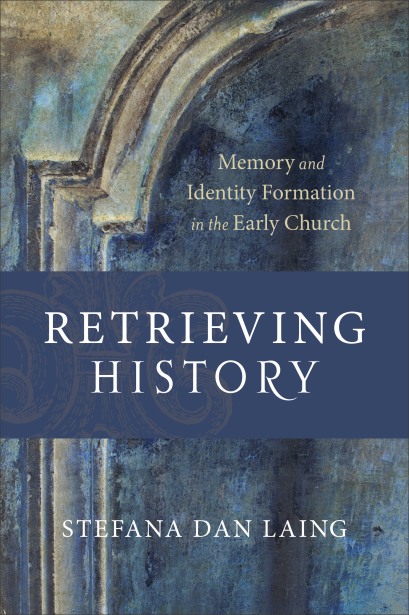
Stefana Dan Laing has recently published her book, Retrieving History: Memory and Identity Formation in the Early Church (Baker Academic, 2017).  Laing is the assistant librarian at Southwestern Baptist Theological Seminary (Houston, TX) and has taught for HGST for a number of years.  She has also taught at Houston Baptist University and Beeson Divinity School (Birmingham, AL).  She earned her PhD at Southern Baptist Theological Seminary in church history, with an emphasis on the first few centuries of the Church.  Laing Retrieving History

Laing’s book is not just an introduction to first five centuries of the Church; there have been plenty of them of late.  Her point seems to be that here we are as Christ-believers in the 21st century and our identity is formed more by our culture than by our faith.  She thinks, and I agree, that the Church has an identity crisis.  We reflect more of the culture today than our own heritage.  Culture today has a tendency to focus on who or what is trending.  It is whatever is happening at the moment.  She asks a great question: would the saints of the past be able to tell the difference between Church and theater?

She writes: “While Israel was admonished to ‘remember’ and to stand at the crossroad seeking out the ‘ancient paths,’ the church today is merely looking around rather than looking back.”

Laing’s book has a lot to do with memory.   But you can’t remember what you didn’t know in the first place, so she helps us understand our past.   She helps us to “retrieve history,” with its beauties, wonders, and warts.  She has chapters on the martyrs, the saints, and what it means to write a history.  History is more than “what happened,” as Laing delicately shows us.

Dr. Laing is not only concerned with the shape of the church in the second through fifth centuries (AD); she is deeply concerned with  the shape of the Church today.  She wants to help us through the current identity crisis by helping us know from where we have come.  To borrow a line from “The Lion King” (and adapt it just a little): “We are more than what we have become.”

This is a book that can and ought to be on your reading list this summer.  Not only do people like George Kalantzis, Bryan Litfin, and Paul Hartog recommend it.  So do it.  I can’t wait to really sink my teeth into it.

F. F. Bruce and W. E. Vine

Most pastors I know, and a few laypeople, have a particular book in their library.  It is typically referred to as “Vine’s Expository Dictionary of New Testament Words.”  It was originally published in four volumes but is available now in a single volume.  Vine’s refers to W. E. Vine.

Recently a friend of mine, Frank Couch, sent me some information which I find compelling and likely true, but I’ve never read it before.  It is in a document from Robert F. Hicks, and it indicates that when Vine was writing his now-famous book, F. F. Bruce, who was destined to become one of the finest NT scholars of his age, was hard at work with him. Vine's expository dictionary

Hicks it seems is now in charge of the works of the late W. E. Vine.  He knows Vine’s immediate family and his personal secretary, John Williamson.

Hicks came to understand through his contact with the surviving family members and his secretary how important F. F. Bruce was to proofing, correcting, checking and adding to Vine’s important work.  Bruce and Vine had a great deal in common.  They both belonged to the Brethren Church.  In the USA, this denomination is known as the Plymouth Brethren.  Both men also had a good deal in common academically.  Both trained in the Greek classics.  Both were well versed in textual criticism and knew the Greek manuscripts behind the New Testament.   In addition, both scholars knew well the Greek Old Testament and were familiar with how NT writers read and incorporated the OT into their letters, history and Gospels.

From what Mr. Hicks relates, F. F. was a major contributor to Vine’s Expository Dictionary, a bit of information which I did not know but I now pass on to you.   I have to admit that I felt I graduated on from Vine’s decades ago when I picked up my copy of Kittel’s Theological Dictionary of the New Testament.  As Bruce himself notes in the forward  to the single volume versions of Vine’s:  “this Expository Dictionary comes as near as possible to doing for the non-specialist what is being done for the specialist by Kittel’s encyclopaedic Theological Dictionary of the New Testament.”  I now repent in sackcloth and ashes because I’ve had a chance to go back to Vine’s and see what a massive and important work it is, even if it is a bit dated.  Vine’s finished his work in the late 1930s, so it is nearly eighty years old.

Vine himself gives praise to Bruce in the Preface to the 1939 edition: “It is with a sense of deep gratitude that I express my indebtedness to a friend Mr. F. F. Bruce, for his wholehearted assistance in going through the typescript and making corrections and valuable suggestions previous to its being printed, and in proofreading subsequently, whose efficiency, as a classical scholar, and whose knowledge of the originals, have enhanced the value of the work.”

The book is published today by Thomas Nelson Publishers.  Vine’s work in the NT has been supplemented by Nelson’s Expository Dictionary of the Old Testament, edited by Merrill Unger and William White.

 

Writing is Better Than . . .

Almost everyone these days shows up to class with a computer.  I’m not sure exactly what people do on them because I only see lid of the computer; the screen is pointing away from me.  They could be checking their email or posting on Facebook or, please God, they could be taking notes or keeping up with the class PowerPoint.  writing

There is some new research which says that the act of writing is better than typing on a computer or other digital device when it comes to learning and retaining information.  Why? First because writing engages a different part of your brain, a part more suited to memory and learning.  Second, writing forces you to process information in a different way.  In other words, it forces you to think more about what you are doing.  I’ve seen secretaries type letters and then when you ask them what was that letter about, they had no idea. Third, research shows that it creates a better pathway for your memory and helps to facilitate recall.  Last, writing things down is a different kind of kinetic experience (moving) which gives you an edge when it comes to remembering and understanding concept.

Now, I have to admit that I have sensed this for a while, but it has been confirmed by a number of things I’ve read recently from Michael Hyatt, who is a leadership guru and a giant techie.  Still he has had to admit that going back to the old fashioned way of taking notes and writing down tasks is superior to just typing it on a screen.

One last thing.  I alluded to it earlier.  Computers and technology have a way of distracting us from what we should be thinking and doing.  We’ve all seen families out to eat in a restaurant, and all are on separate devices.  Instead of talking to one another and enjoying the meal together, they are distracted by what might be the phone.   I have seen students on Facebook or email in class instead of being on track with a lecture or class discussion.  Not a pretty sight, especially if you’re the professor.  These devices do one thing well; they distract us from what is truly important.

So instead of going to Best Buy and spending $700 to $1700 on a new computer for class, just go to Walmart spend about $7 on a notebook and a good pen (or pencil).

Jesus, the Eternal Son

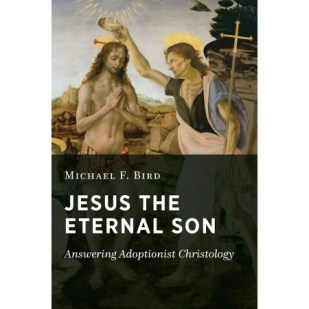
I just read a new book my Michael Bird, Jesus the Eternal Son: Answering Adoptionist Christology, Eerdmans.  I think it is scheduled for release later this year by the good folks at Eerdmans Publishing. Bird Jesus the Eternal Son

Adoptionism was a second and third century “heresy” that has persisted in theological corners to today.  Adoptionism  claims that Jesus was a human being and not inherently divine.  He acquired divine status as God’s Son sometime during his earthly life.  Some say it happened at his birth, others his baptism, still others at this resurrection.  One way to say it is that Jesus was not the Son of God but he became the Son of God.   His elevation from human to divine status is often considered the default Christology of the Ebionites, Theodotians, and Paul of Samosata.  A number of modern scholars (Knox, Dunn and Ehrman) think it was also the most primitive form of Christology expressed in texts like Rom 1:3-4 and Acts 2:36.  Only later, do they say, that a fully incarnational Christology emerges.

In this brief and compelling book Michael Bird challenges those scholars who think the earliest recoverable Christology was adoptionism.  Instead he proposes that the earliest Christologies formed a pattern of convictions and practices which featured Jesus at the center of Christian devotion.  Only later, in the second century among the Theodotians, did adoptionism emerge full scale in debates over select texts and how they should be interpreted.   A careful answer to the perennial question: who was/is Jesus?