For Paul the salvation he experienced in Christ was greater than words could describe. That is why the apostle to the Gentiles used so many different kinds of images and metaphors to express the blessings of knowing Christ. Under the Spirit’s guidance he mined the OT and the culture around him to find ways to articulate an experience and reality that lay beyond words. With terms like “reconciliation,” “redemption,” “justification,” and “forgiveness,” he attempted to parse the blessing of salvation and create a new type of theological grammar for the young church.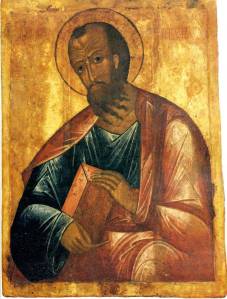
One of those metaphors, “adoption” (Greek huiothesia), was a common part of family life in the Mediterranean world. It means literally “to make [someone] a son”. Paul used it to describe a change of status from an existence marked by slavery and Father-lessness to a new family or community characterized by freedom and Spirit.[i]
Human societies have practiced adoption in one form of another since the beginning of recorded history. Broadly speaking adoption refers to the creation of kinship relationships between two or more people through legal and/or ritualistic means. Archaeologists have unearthed adoption contracts and law codes that provide us with some information regarding its practice in ancient Babylon. While most adoptions were of a son or daughter, it was also possible to adopt a brother, sister or father. Slaves were typically manumitted by adoption. In the Jewish community identified today as Elephantine, an Aramaic papyrus dated to 416 BC describes the manumission and adoption of a slave.[ii] The same practice is referred to in Gen 15:2-3 when Abraham suggests that his slave Eliezer will likely become his heir unless God acts. First Chronicles 2:34-35 indicates that a son-in-law could become an heir when there was no male descendent.[iii]
When Pharoah’s daughter drew baby Moses out of the water, we are told: “he became her son” (Exod 2:10).[iv] Although this account appears to reflect Egyptian customs, the fact that Moses continued in Pharoah’s household indicates a change of family, a new kinship relationship had been formed. In Acts 7:21 Stephen retold these foundational stories and said: “Pharoah’s daughter took him away [adopted him] and nurtured him as her own son”. Since Egypt and slavery had become synonymous, Hebr 11:24 indicates that Moses refused to be called the son of the Pharoah’s daughter, chosing instead to identify with his own people. This statement makes sense only if Moses’ family status was indeed “the son of Pharoah’s daughter.”
Still adoption does not seem to have been a common practice in Israel since no biblical or post-biblical laws legislate for it. We can cite four reasons: (1) the importance of natural or blood lineage; (2) the practice of polygyny (having multiple wives); (3) the custom of levirate marriage; and (4) the belief that barrenness reflected God’s will and displeasure, a situation which adoption could remedy.[v] In other words, if it is God’s will for a woman not to have children, adoption could set aside God’s will. There may well have been other reasons, but these seem sufficient to account for the fact that adoption appears rare among the people of Israel.
Paul used the term “adoption” (huiothesia) fives times in his letters (Gal 4:5; Rom 8:14, 23; Rom 9:4; Eph 1:5). In each case it refers to God’s adoption, not of an individual, but of his covenant people. In one instance Paul described his “kinsmen according to the flesh” as “Israelites, to whom belongs the adoption as sons (huiothesia), and the glory and the covenants and the giving of the Law . . . “ (Rom 9:4). His usage clearly reflects the language of Scripture. Hosea 11:1 says famously: “When Israel was a youth I loved him,/ And out of Egypt I called My son”. Moses is to say to Pharoah: “Thus says the LORD, Israel is My son, My firstborn . . . “ (Exod 4:22). So when Paul referred to Israel as having “the adoption as sons” (Rom 9:4), he is echoing a long standing tradition codified in the Bible.
The majority of Paul’s references to adoption, however, refer to God’s people of the new covenant. The apostle wrote: “But when the fullness of the time came, God sent forth His Son, born of a woman, born under the Law, so that He might redeem those who were under the Law, that we might receive the adoption as sons (huiothesia)” (Gal 4:5). In Rom 8:15 he said: “For you have not received a spirit of slavery leading to fear again, but you have received a spirit of adoption as sons (huiothesia) by which we cry out, `Abba! Father!’” Later he continued (8:23): “And not only this, but also we ourselves, having the first fruits of the Spirit, even we ourselves groan within ourselves, waiting eagerly for our adoption as sons (huiothesia), the redemption of our body.” Among the many spiritual blessings in heavenly places Paul included adoption when he wrote: “He predestined us to adoption as sons (huiothesia) through Jesus to Himself, according to the kind intention of His will, . . . “ (Eph 1:5). These passages indicate that “adoption” was an important metaphor for Paul in describing the glories and blessings of salvation. In fact, Paul is the first Christian theologian to use “adoption” as a way to talk about the affects of Christ’s redeeming work upon His people. So where does this come from?
Many interpreters of the Bible think Paul took “adoption” as a legal category from contemporary Greco-Roman family life. That makes sense for two reasons. First, in the Roman world adoption (adoptio) was commonplace. So both Paul and his audiences would have been familiar with the practice even if it were unusual among the minority population of Jews in the empire. Second, inheritance rights were an essential component of adoption in Roman society in terms of both property and power. Likewise, Paul connected the believers’ adoption with their spiritual inheritance obtained through faith in Jesus. In Rom 8:17 the apostle claimed that God’s adopted children are “heirs of God and fellow heirs with Christ”; and in Gal 4:7 he affirmed that an adopted believer is “no longer a slave, but a son; and if a son, then an heir through God.” So it may well be that adoption practices in the Greco-Roman world provided Paul and his audiences with a ready-made image to describe the baptized-believers’ inclusion into God’s eternal family. But there may well be another place from which Paul adapted this image.
As we suggested above, the OT indicates that God looked upon His covenant people as “son” or “sons.” This was one of the ways Scripture described God’s unique relationship with Israel that began with the exodus (e.g., Exod 4:22). Paul, having a mind steeped in Scripture, reflected the same notion in Rom 9:4 writing that God had adopted Israel as His son (huiothesia). But earlier in Romans the apostle used that exact term to refer to the new status of believers, both Jew and Gentile, in Messiah Jesus. Fortunately, Jewish documents from the intertestamental period provide an appropriate analogy. Although they are not “Scripture,” they do provide evidence of a robust belief in God’s salvation during the time when Christianity is born. They promise that God will free his people from exile in a second exodus, restore the covenant and adopt them as sons based upon 2 Sam 7:12-14: “I will be a father to him, and he will be a son to me” (e.g., Jub 1:24; T.Judah 24:3; 4QFlor 1.11).[vi] This means that at least some Jews during Paul’s day expected God to end the exile and establish them as sons. Paul seems to have shared this conviction but found its fulfillment in what God had already accomplished in Jesus’ incarnation, death and resurrection. Scripture then and its later interpretation appears to have been Paul’s main reason for choosing “adoption” as one of his major soteriological motifs.
It is important to note that Paul never used the word “adoption” (huiothesia) to refer to Jesus’ Sonship. He referred to Jesus as “the Son of God,” “His Son,” or simply “the Son” (e.g., Rom 1:3-4; Gal 4:4). This indicates two truths: (1) Jesus’ Sonship is unique and of a different order than ours and (2) our “adoption as sons” derives from Jesus’ life and work. We cannot be adopted into God’s eternal family without relying on Jesus. Furthermore, Paul explained our sonship in two stages, present and future. In Rom 8:15 the apostle contrasted our prior condition of slavery (to sin, death and malevolent spiritual forces), animated by fear, with our present experience of “adoption as sons,” animated by the Spirit of God.[vii] It is the Spirit who brings about this adoption by uniting people with Christ through the gift of faith. Indeed it is only by the Spirit that we can cry out, “Abba! Father!” (Rom 8:15; Gal 4:6). Still there is a “not-yet” component to our salvation, including our adoption. That is why Paul wrote that those who have the first fruits of the Spirit groan along with the rest of the created order as we wait for “our adoption as sons, the redemption of our body” (Rom 8:23). This is another example of the already/not-yet feature of Paul’s Christian hope. As James Scott notes: the “present and future aspects of huiothesia [adoption] in Romans 8 reflect successive stages of participation in the Son by the Spirit . . . “[viii] In other words, God adopts all who believe in Christ into his forever family; but the fullness of our inheritance awaits us when Christ returns. It is then that the living and the dead will be raised, that the new creation will be complete and that all God’s family will be home again.
[i] C. F. D. Moule, s.v. “adoption,” The Interpreter’s Dictionary of the Bible (Nashville: Abingdon, 1962) 1:48-49.
[ii] Frederick Knobloch, s.v. “adoption,” Anchor Bible Dictionary (Doubleday) 1:76-77.
[iii] Moule, 1:48. Other biblical examples may include Naomi’s adoption of the son of Boaz and Ruth (Ruth 4:16), but by the laws of levirate marriage the son is already her descendent. Mordecai also adopted the orphaned Esther (Esther 2:7, 15).
[iv] All Scripture is quoted from the New American Standard Version.
[vi] James Scott, s.v. “Adoption, Sonship,” Dictionary of Paul and His Letters, 15-18.
[vii] C.E.B. Cranfield, Romans: A Shorter Commentary (Grand Rapids: Eerdmans, 1985), 186.






You must be logged in to post a comment.