Page 112 of 126

It’s All about The Story

The university where I teach, Houston Baptist University, is hosting a consultation this week for the International Orality Network. I will be attending the consultation and learning all I can regarding this new and important missions emphasis that recognizes that most of the world consists of people who are oral preference learners. What excites me about the movement is that they focus on sharing the gospel by learning to tell great stories from the Bible in the mother language of the unreached people. This is exactly what we hoped to do with The Voice Bible.International Orality Network 1

One of the articles I read in preparation for the consultation is from Tom A. Steffen, former professor at Biola University and missionary for 20 years in the Philippines. In an article entitled, “Why Communicate the Gospel through Stories?” Steffen tells his own story about trying to teach new believers a simple version of systematic theology in the Ifugao language (one of Philippine dialects). Basically, his teaching fell flat because he insisted on relating the content using a western model of education, that is, teaching propositions and concepts. When he saw it wasn’t working, he decided to join his content with some wonderful stories from the Old Testament. He told stories of creation, the fall, Cain and Abel, the flood, and other stories on his way to telling the Jesus story. Once Steffen switched from teaching propositions and concepts to stories, the people caught on, got excited, and began to catch the essence of God’s redemptive love and purposes for the world.

I’ve said all along that human beings are hard-wired to tell stories. God has built that into our minds and hearts. So we are at our bests when we do tell stories. And we are good at it. Go on a trip and have something interesting happen to you and you can’t wait to tell someone. You call your best friend and tell them what happened. You put it on facebook. You may tweet it out. The point is that we are great producers and consumers of stories.

In the article I read Steffen quoted a statistic which I did know. I probably could have guessed at these numbers and gotten close but it is good to see it in print by someone who knows. Here is what he said: the Scriptures contain three kinds of literature: stories, poetry, and thought-organized material. Stories make up 75% of the Bible. Poetry makes up 15%. And thought-organized comprises the remaining 10%. By thought-organized he was referring to a good bit of Paul’s letters that make logical, linear arguments. But as N. T. Wright and others have pointed out, a lot of Paul’s theologizing involves retelling the essentially Jewish story around Jesus; so for Paul Jesus is the climax of the covenant story. In other words, even when Paul is making an argument for a particular idea (e.g., the resurrection of Jesus, the centrality of the cross) he is nibbling around the edges of narrative.
Amazing isn’t it that God chose primarily to reveal himself to us in these marvelous stories. I would have probably guessed that poetry was a higher percentage. I’d be interested to know how these decisions were made. For example, of Job’s 40+ chapters, all but 2 ½ are poetry. But Job’s poetry still tells a story. We might call it poetic narratives. The creation “story” in Genesis 1 is very poetic in its form. So how are these classified? I don’t know. And what about all the Proverbs, were they classified as poetry? I think they probably should have been because they are written in Hebrew poetic style.

It excites me to think is that in doing The Voice Bible we did something very different from other translations. We invited story-tellers, novelists, poets, and song-writers to help us retell the stories and poetry of Scripture. Scholars are very good at the technical bits of translation but we aren’t good at telling a story or of capturing the beauty and rhythm of a good poem. That’s why I think The Voice Bible has come of age when it has; we are moving deeper into a digital age that still recognizes the value of orality. Some scholars have taken to calling it a “digitoral age.” (I’m grateful to Dr. Samuel Chiang, executive director of the International Orality Network, for this useful term.) Too often we’ve tried to analyze the biblical stories using western logic to break them down into (4) points all beginning with the letter “P.” This way of preaching and teaching has had a tendency to obscure the story and make it hard to remember. Storytelling—God’s preferred method—has a way of capturing both the heart and mind for the sake of kingdom purposes.

If you’d like to know more about the International Orality Network, check out their website: http://www.orality.net/

Jesus and Mighty Works

Last week I traveled to Arlington TX to B. H. Carroll Theological Institute (bhcarroll.edu).  Founded in the 1990s, the institution exists to provide graduate-level theological education for men and women who are called to serve Christ in the diverse and global ministries of His church.  My professor, Dr. Bruce Corley, was founding president and continues in retirement to help direct the effort. I can’t begin to describe how influential he has been on a generation of scholars and church leaders. B. H. Carroll is the second largest seminary in Texas with students around the world in Russia, Cuba, Vietnam and China.  They have a great model for how to do education in this technological world.  They keep overhead low and are making a difference in the lives of many people.Image

Every spring BHCTI holds a colloquy for its PhD students.  There have been many times I have wanted to attend but final exams and grading have typically interfered.  But this time I got a special dispensation to turn my grades in just a wee bit late.  Thanks to my dean.

In addition to sharing with these pastors and church leaders about The Voice Bible project, I had the privilege of listening and responding to Dr. Craig Keener, professor at Asbury Seminary in Kentucky. 

The topic for the colloquy was “Jesus and Mighty Works.”  Much of the discussion has centered around Dr. Keener’s two volume work Miracles: The Credibility of New Testament Accounts (Baker Academic, 2011).  It is the best book available on miracles as a modern phenomenon.  Dr. Keener brought together a staggering number of accounts from the modern world about miracles that are taking place now in order to help us understand the miracles in the Bible.  Keener said that these two volumes (1100 pages) began as a footnote in his Acts commentary regarding eyewitness accounts of miracles. Some people (known as cessationists) have claimed that miracles stopped centuries ago when the Bible was complete. Dr. Keener offers ample evidence to the contrary.  Others are skeptical about miracles because they have never seen one, but Keener finds easily over 200,000,000 people who claim to have had direct experience with ‘extranormal’ events. He interviewed scientists, doctors, and eyewitnesses from several continents.

 In the 18th century David Hume, the Scottish philosopher, argued that miracles are impossible because they violate natural law and are only testified among uncivilized and uneducated folks.  Keener does a masterful job at deconstructing Hume’s argument and showing that his perspective is based on an ethnocentric bias against non-whites.  Essentially, Hume rejected the testimony of the majority of people in the world because they were not educated in western culture.  He then declared that “uniform human experience” tells us that miracles do not occur.  Apparently, the “us” Hume was referring to were Scottish professors living in the 18th century. “Uniform human experience” only applied to Hume and his friends.  

If you are curious whether miracles are still happening today, you will be amazed at the evidence Keener produces.  Not only are miracles still happening but they are more common than you think.


Imitatio Christi

Over the last decade I have given a good deal of thought and effort to exploring what it means to imitate Christ.  Recently I sat down with Dr. Holly Ordway to discuss what it means and how we go about it.  I have two academic articles on it which I hope to make available here on my blog soon.  Stay tuned.  In the meantime, take a listen.Image

http://www.civitate.org/2014/05/the-city-podcast-how-to-imitate-christ/


Jesus’ Wife Fragment is almost certainly a forgery

Scholars have been weighing in on the badly named “Gospel of Jesus’ Wife” fragment since Harvard University’s Karen King announced it about 20 months ago.  Now after publication in the Harvard Theological Review, closer scrutiny by scholars has almost certainly determined the fragment is a forgery.  By whom we do not know?

Gospel of Jesus' Wife
Fragment containing phrase reference to Jesus’ wife alongside a Coptic fragment (also forged) of GJohn

The most up-to-date presentation of the details can be found on Mark Goodacre’s blog on May 5, 2014.  Here is the link:

http://ntweblog.blogspot.com/

Forgeries of antiquities are nothing new.  A lot of money has been made by creating fake relics and smuggling them out of their supposed countries of origin.  Likewise, careers have been made (and sometimes broken) by scholars who discover and argue for the authenticity of new documents, particularly when those documents present information which goes against the prevailing knowledge of a field.

Let’s not be too hard on Dr. Karen King and Harvard University.  This is exactly how scholarship is supposed to work.  Research is conducted and ideas are put forward by a scholar in a publication. Those ideas are tested and examined by another group of scholars.  Over time–it sometimes takes several years–the truth comes out.


The Imitation of Christ


Jack Wisdom and I taught a Lenten series at Ecclesia Houston on the Imitation of Christ.  Jack is an elder at Ecclesia and one of the scholar-writers who helped us with the translation.  He is a lawyer during the day and a New Testament scholar all the time.  He is a good friend, and I admire the way he carefully reads through the Scripture.

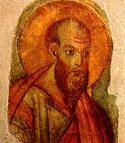
One of my favorite biblical texts urging us to follow Jesus and have his mind is Philippians 2.5-11.  It is one of those passages I think about and quote often.  At the heart of it is an early Christian hymn that sets the story of Jesus within poetic verse.  A lot of modern translations obscure the fact it is a hymn.  The New American Standard Version (NASV), for example, formats every verse like a paragraph so you never really know you’re dealing with a hymn.  Now I like the NASV, but that is one of its shortcomings.  In The Voice we decided to take seriously not only the words but the forms as well.St. Paul

The Bible contains more than prose.  It contains poems, hymns, acrostics, and wordplays.  Now, to be honest there are aspects of the original Greek, Hebrew and Aramaic that you cannot replicate in another language; but there are features which you can at least attempt to bring over into the target language—in our case English.  For example, Lamentations is written in an acrostic poem.  So our scholar-writer Dr. Kristin Swenson, research professor at the University of Virginia, did an excellent job at approximating the look, sound, and meaning of the Hebrew acrostic.  An acrostic is a type of poem where each line or set of lines begins with a new letter in alphabetic order: A, B, C, etc.  It’s a challenge to do because English has more letters than Hebrew.  Still we sensed there was beauty and meaning in the form.  Take a look at how we did Lamentations 3.  If you don’t have a copy of The Voice, you can always look it up on www.biblegateway.com.

Back to Philippians 2.  Here is how we translated the Philippian hymn to Christ.

Though He was in the form of God,

He chose not to cling to equality with God;

But He poured Himself out to fill a vessel brand new;

a servant in form

and a man indeed.

The very likeness of humanity,

8 He humbled Himself,

obedient to death—

a merciless death on the cross!

So God raised Him up to the highest place

and gave Him the name above all.

1So when His name is called,

every knee will bow,[a]

in heaven, on earth, and below.

11 And every tongue will confess[b]

“Jesus, the Anointed One, is Lord,”

to the glory of God our Father!

The hymn captures the career of Jesus from his preexistent glory with God to his incarnation, suffering and then exaltation.  Paul urges the Philippians to have the same mind (2:5).  Larry Hurtado, retired New Testament professor at the University of Edinburgh, offered a phrase a few years ago that has helped me think about this.  Jesus, he said, is “the lordly example” of humility and service.  Most lords through history have demanded others serve them.  This Lord emptied himself, humbled himself and ultimately gave his life for others.  We can’t do those actions, but we can strive to have the same mind.  Now that we are beyond the Lenten season, my hope is that we might follow the lordly example of Jesus in service to God, his people, and his creation.

Many thanks to David Taylor and Paul Owen who hosted me recently at Montreat College in western North Carolina.  I had a wonderful time sharing with hundreds of students, faculty, and staff in class and in chapel.  Their students asked some great questions.  Some of which I’m still pondering and hope to answer later, here on this blog.  Montreat College is a great school in one of the most beautiful settings I’ve ever seen.  I can see why people want to go there to study, hike, and do life together.