Page 111 of 126

Paul Straddled Four Worlds

There is a place in the western part of America where a person can straddle four states .  It is often referred to as the “four corners” region because four US states come together at one spot: Colorado, New Mexico, Arizona, and Utah.  You can see it on any map.  Theoretically, it would be possible for a person to stand with his right foot planted firmly in New Mexico, his left foot in Arizona, and reaching to the north his right hand would be in Colorado and his left would be in Utah.

When we think about it, all of us straddle different worlds.  Some in my business straddle academic and church life in America.  Then, to make things more complicated, they go home to family that speaks Spanish and has little formal education.  We all have to make our way through a complicated maze of worlds.St. Paul
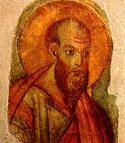
This was Paul’s story too.  Paul straddled four different worlds.  The first happened to be the world and culture of his birth.  His right foot was firmly planted in the world of second temple Judaism.  It was a world shaped in large measure by what Christians call the Old Testament or what someone like Paul would have called the law, the prophets and the writings (the Tanakh).   The Hebrew Scriptures boldly declared the existence of One, True God who created all things and had made covenants with Abraham and Israel at Sinai.  Israel’s God stood in sharp contrast to the many gods and lords worshiped by the nations.  Second temple Jews lived with a sturdy expectation that God’s Kingdom would come one day to right all the wrongs and make Jerusalem the center of the world instead of an occupied city on the outskirts of the Roman empire.

This brings me to the second world Paul occupied: the world ruled by Rome.  According to Acts, Paul was a Roman citizen and used it to his advantage when it suited him.  Though Paul makes no direct mention of this in his letters, it is not unlikely that someone like Paul enjoyed its favored status.  Paul’s Jewish heritage would have placed him at odds with many aspects of Roman empire, particularly their ultimate religious claims about their gods and a growing cult devoted to Caesar.  The empire’s political claim to provide peace and security were laughable for Jews who lived everywhere—but especially in Judea–under the heel of Rome.  In some ways Rome provides the perfect foil for Paul to rail against. Pagan sacrifices were not neutral; they were offerings to demons  (1 Cor 10:20).  As many NT scholars have noted: if Jesus is the true Lord and king and king of the world, then Caesar is not.

A third world Paul straddled was Greek.  Though Paul was certainly multilingual, the letters we have from him are all written in Greek.  Greek had become the lingua franca of most places Paul traveled, even though he would have encountered dozens of different local languages and dialects.  Language is only one thing but it is a big thing because with language goes literature, poetry, education and ideas which slowly but inevitably permeate society.  When Paul quoted the OT in his letters, more often than not he quoted from some Greek translation of the OT.  It’s possible he made up his own translations on the fly, of course. But since his quotations appear so similar to translations we know today, its more likely he drew from some standard version available to him.  Furthermore, Paul’s letters and accounts about him in Acts reflect a knowledge not only of Greek language but Greek oratory, literature, and rhetoric.  In Martin Hengel’s massive volumes translated into English as Judaism and Hellenism (1974), he argued that Jesus’ homeland, the land of Palestine, had been Hellenized by the middle of the 3rd century BC.  Judaism had not escaped the hellenizing edge of Alexander’s sword.

The fourth and final world Paul occupied was relatively new.  In fact, by the time he entered it and became one of its greatest advocates it had only been around a few years.  Saul the Pharisee became a Christ-follower probably only 3-5 years after Jesus’ execution.  But already there were traditions, practices, and beliefs which were beginning to mark out this first century Jesus movement.  We don’t have access historically to any material and literary evidence that come prior to Paul’s conversion. His letters contain a few hints here and there of the kinds of things early Christians may have been saying.  For example, the Philippian hymn (Phil 2:6-11) may have been sung, chanted, or recited in Christian gatherings before Paul came to faith.  What seems more likely is that Jesus’ death and resurrection are already seen as the fulfillment of God’s plan.  To put it another way, they are the climax of God’s covenant promises to Abraham, Moses and Israel.  In 1 Corinthians 15:3ff Paul writes:

For I handed on to you as of first importance what I in turn had received: that Christ died for our sins in accordance with the scriptures, and that he was buried, and that he was raised on the third day in accordance with the scriptures, and that he appeared to Cephas, then to the twelve.

Paul says he “hands on” what he “had received.” The apostle to the Gentiles employs the language of tradition to let us in on some of the content of the church’s message before Paul.  Already the death of Jesus the Messiah was being understood as an atoning sacrifice.  Already the death, burial, and resurrection of Jesus were seen as complementary to the Scriptures.  Not only do these crucial events not contradict what God had said previously through the prophets; they fulfill them.  Already, Cephas (namely, Peter) and the twelve had gained prominence as some of the first witnesses to Jesus’ resurrection.

Paul not only straddled these four worlds, but as destiny would have it, he would go on to shape them as well.  It is hard to imagine what Christianity today would be like without Paul.  He is credited with having written nearly 1/2 the books of the New Testament. The  Protestant Reformation of the 16th century found in Paul its inspiration. And what of Judaism? As my friend Alan Segal often said, Christianity and rabbinic Judaism were like Rebekah’s children; both religions were very different twins formed in the womb of second temple Judaism. And what of Greece and Rome? Well, Rome soaked up much of the best of Greek culture.  Then after centuries of persecution, Christianity would go on to become the dominant religion of the empire.  In the end the many gods and lords of Rome would yield to the One God in three Persons.  Or as the apostle would put it (1 Cor 8:6):

Indeed, even though there may be so-called gods in heaven or on earth—as in fact there are many gods and many lords— yet for us there is one God, the Father, from whom are all things and for whom we exist, and one Lord, Jesus Christ, through whom are all things and through whom we exist.
Nick Peters and Deeper Waters

Nick Peters is a remarkable young man.  He hosts a popular blog and podcast on his website: www.deeperwaters.wordpress.com

Take a look at his story and I’m sure you’ll be impressed as I am with his heart, mind, and spirit.  Recently I sat down with Nick to talk about The Voice Bible project. We talked for 2 hours.  It was the most extensive interview I’ve done to date on the translation. 


Nick Peters of Deeper Waters

My Interview with N. T. Wright

I recently sat down with N. T. Wright to talk about his book Paul and the Faithfulness of God (Fortress, 2013).  I’ve put a link to my interview.N. T. Wright

http://www.civitate.org/2014/07/the-city-podcast-n-t-wright/?utm_source=rss&utm_medium=rss&utm_campaign=the-city-podcast-n-t-wright

The Early High Christology Club

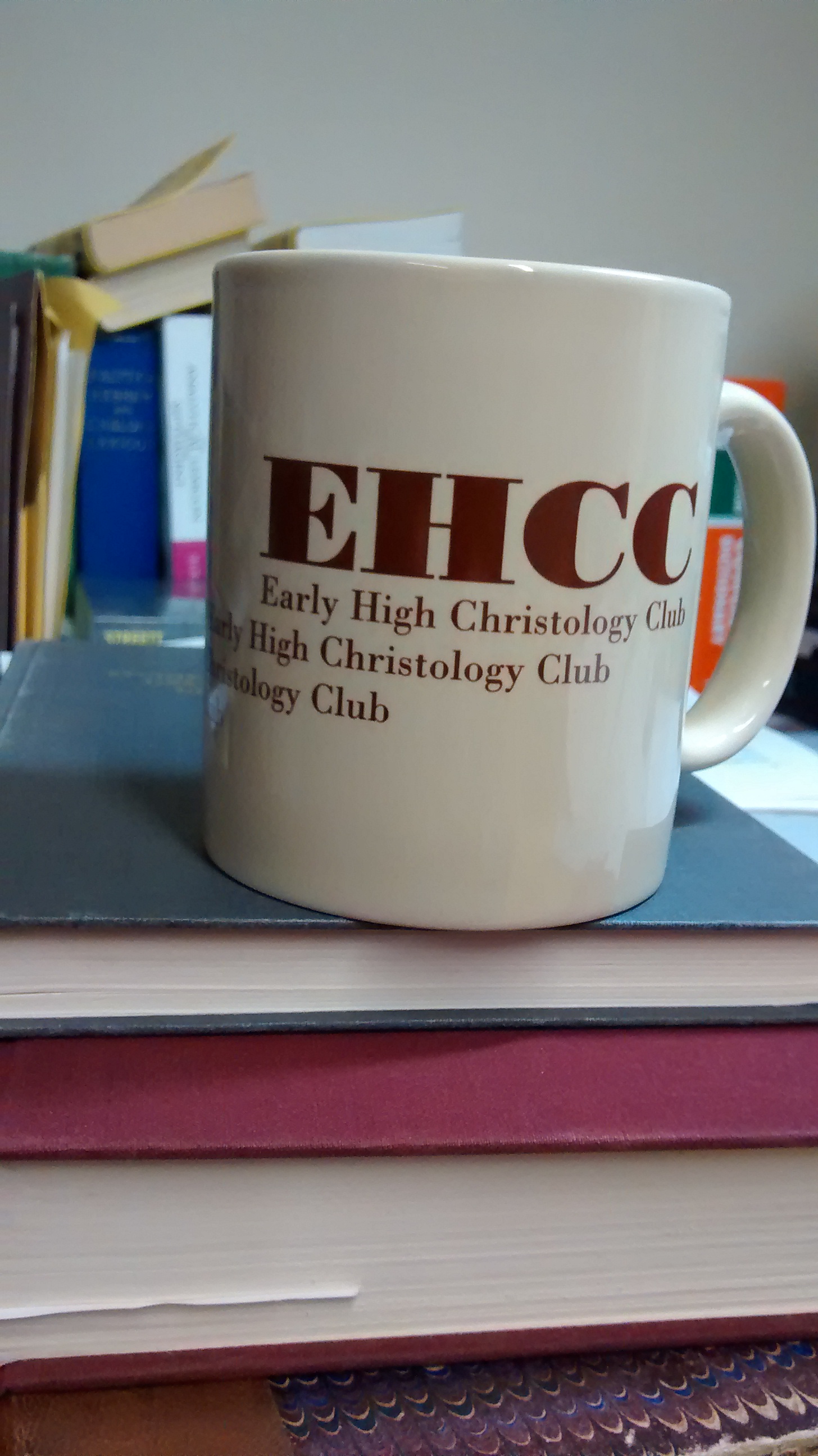
I am a card-carrying member of The Early High Christology Club (EHCC).  Well, in the spirit of full disclosure we don’t actually have cards, we have a mug.  It is a highly sought-after prize.  If you are mug-worthy and see one, do everything you can short of stealing it to get one.  Carey Newman of Baylor University Press, also an EHCC charter member, made the first investment in the mugs.  A bit of explanation is in order.EHCC mug

The Early High Christology Club is a loose affiliation of scholars who have written books or articles arguing that the early followers of Jesus—as early as we have evidence—had a high Christology, that is, their assessment of his significance included that he was, in some sense, divine. Now this is actually an historical conclusion based on our reading of the literary evidence; it does not depend on any confession. The earliest evidences we have in the New Testament or any Christian sources are the letters of Paul; so much of this historical construct has been built upon a close reading of his letters.  There are all sorts of issues involved: how did Paul and other NT writers express their “Christology”? what kind of language was used? where did that language come from?  how does this comport with their reading of the Christian Bible, the Septuagint? how early is “early”? how high is “high”? –how did these early Jewish Christians regard Jesus as divine without setting aside their monotheistic heritage?  Paul, for example, claims to be a monotheist and yet he appears to regard Jesus as divine (e.g., 1 Cor 8.6; Phil 2:5-11).  If Jesus were divine, then did early Christians worship him?  If so, did they worship him the same way they would have worshiped God?

Not all people agree, of course, with the members of the EHCC.  There is the Late, Low and Slow Club (LLSC)—though I don’t think they have a mug—which concludes that the early followers of Jesus regarded him as a human being only. Many decades later when Christianity moved beyond the constraints of its Jewish heritage, Christians began to regard Jesus as divine. The LLSC posits a lengthy period of development from a low to a high Christology, anywhere from 60 to 100 years.   Now, members of the EHCC also posit a period of development in the Church’s Christology, but they think this development happened rapidly, perhaps even within a few years after Jesus’ crucifixion.

Founding member, Larry Hurtado, presents an official EHCC mug to Professor Martin Hengel (seen here with his wife)

The EHCC meets regularly and informally at the annual meeting of the Society of Biblical Literature.  Carey Newman and Larry Hurtado, distinguished (now retired) Professor of New Testament and Christian Origins at the University of Edinburgh, co-sponsor the annual gathering.  Carey provides the room.  Larry brings the food and drink.  Stories are told.  Friends catch up. There is a lot of laughter.  At a given moment in our gathering someone recites our founding myth.  Some who have heard it say that it is so good it cannot possibly be true; but those of us who were there know it happened just as we say.


They Come in Pairs (No, its not about Noah’s Ark)

I’ve been inspired recently by posts from Dr. Creig Marlowe and some comments I heard recently by N. T. Wright.  There is some new thinking here for me, but as Ecclesiastes reminds us: “there is nothing new under the sun.”

It has to do with a series of binaries in Genesis 1.   Here is a list:

1.1       heavens and earth

1.4       light and darkness

1.5       evening and morning

1.9-10  seas and dry land

1.14     sun and moon

1.27     male and female

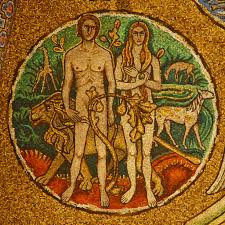
Now there may be other binaries here in Genesis 1, but these are the ones I want to focus on.  “Formless and void” (tohu wavohu) comes to mind as a distinct possibility. creation Adam and Eve

These binaries form complementary pairs which are not only created by God but participate with God in the next steps of creation.  In a way they become co-creators with God because they provide the raw materials for the coming days of creation.  There is a logic to the days of creation which you have probably already noticed.  Days 1-3 provide the raw materials and realms into which the creatures of days 4-6 live (I use the term “creature” here not so much as a living thing but a thing which is created):


Realm                                           Inhabitants

Day 1   light                                      Day 4   sun, moon, and stars

Day 2   sky and waters                 Day 5   birds and fish

Day 3   dry land                             Day 6   land creatures and humanity

This structure is intentional at several levels but it does show order coming from chaos, countering the formless and void state described in Genesis 1.2.

Dr. Marlowe is correct that some of these binaries form a hendiadys (literally, one through two). A hendiadys is an expression of a single idea by the use of two words often connected with “and” or some other conjunction.  “His legal case is not black and white” uses a hendiadys.  “Black and white” is not describing the color of the case but essentially that the facts of the case are not clear.  In Genesis 1.1 “heavens and earth” describe not so much two things but one for which there is no Hebrew word “the universe.”  “Heaven” means everything above your head and “earth” means everything below your feet, in a sense then everything.  That is why we translated Gen 1.1 in The Voice: In the beginning God created everthing, the heavens above, the earth below . . . ”

Here again is our list of binaries with a suggestion of how to see the hendiadys.

1.1       heavens and earth = the universe

1.4       light and darkness = the progression of time

1.5       evening and morning = a day

1.9-10  seas and dry land = the earth

1.14     sun and moon = signs and seasons (again, the progression of time)

1.27     male and female = humanity

In each case God, as it were, turns to the created thing to invite it to work with him in the ongoing task of creation.  So, for example, God says to the earth to bring forth vegetation, plants and seeds (1:11-12). He says to the waters/seas and the skies: bring forth fish and birds (1.20-23). Then God says to the land: bring forth land creatures of every kind (1.24-25).  When God says, “let us make humanity . . . ” people have wondered about the “us.”  Is God speaking to and for the Trinity?  Not necessarily.  That certainly is one way Christians have read the text.  Given everything that has gone on so far in Genesis 1, however, I think God is speaking to the created order itself.  The “us” would include God, the sun, moon, stars, waters, seas, dry land, and other land creatures.  Human beings are made up of the same elements as the stars, the earth, and all the critters.  Now, I’m not arguing that we should have a scientific reading of Genesis; what I am suggesting is that there is an internal logic to the creation story of Genesis 1: God creates something and then uses that creation to create the next thing. In this way all things are dependent and related. Genesis 2 reinforces this when it says that God sculpted Adam/humanity from the earth/dust and breathed in him the breath of life (2.7-9).  So Adam is made up of previously created elements along with the divine breath.

The final binary “male and female” deserves special attention.  Male and female make up one thing, humanity, and this humanity reflects the image of God.  But it is in their differences, their complementarities that male and female reflect the imago dei.  Male has no greater claim than female on imaging God.  It is in their union together and distinctions from one another that God’s likeness is on full display. We live at a time when people want to deny or erase the male-female distinction: to do so is to  assault humanity itself and diminish God in the process.  Here is the commentary embedded at Genesis 1:27 in The Voice:

The crown of God’s creation is a new creature, a creature that can sound the heartbeat of its Creator. That creature, made male and female, reflects God’s own relational richness. The human family is to join God in the ongoing work of creation. The earth below and the sky above with all their inhabitants are too beautiful and too good to be left alone. They need the tender care and close attention that only God’s favored creature can give.

In Genesis 1:28ff. God blesses the humans and gives them the prime directive: be fruitful, multiply, and fill the earth.  In other words, humans are now directed to participate with God in the ongoing work of creation.  God no longer creates ex nihilo.  He uses preexisting elements and persons in order to fashion the next generation. Through the sexual union male and female become one flesh and life as we know it goes on.