Maternal Paul, with Amy Peeler

To hear the podcast (8 min) click here.

In Gal. 1:16 Paul uses the arrestive phrasing that God had revealed his Son “in me.” Taken together with other expressions used by Paul in Galatians, it looks as if one of the ways Paul thought of the gospel was through a pregnancy/maternal metaphor. Amy Peeler is the Kenneth T. Wessner Chair of Biblical Studies Professor of New Testament at Wheaton College. One of her most recent publications is Women and the Gender of God and she is presently working on Paul’s Letter to the Galatians.

Check out related programs at Wheaton College:

B.A. in Classical Languages (Greek, Latin, Hebrew): https://bit.ly/48pRa5t

M.A. in Biblical Exegesis: 

Made Son with Amy Peeler (Hebrews 3: 1-6)

Dr. Amy Peeler, Associate Professor of New Testament, has authored You Are My Son: The Family of God in the Epistle to the Hebrews (T&T Clark, 2015) along with articles on a range of NT texts and topics, and her study, Women and the Gender of God (Eerdmans), is forthcoming. Jesus’ identity as a son is highlighted in the figurative comparison with Moses in Heb. 3:1-6, but close attention to the Greek wording appreciates that it is Jesus’ divinity that stands out as the key distinction.

To hear the podcast click here.

“Exegetically Speaking” is a weekly podcast of the friends and faculty of Wheaton College, IL and The Lanier Theological Library. Hosted by Dr. David Capes, it features language experts who discuss the importance of learning the biblical languages—Hebrew, Aramaic, and Greek—and show how reading the Bible in the original languages “pays off.” Each podcast lasts between seven and eleven minutes and covers a different topic for those who want to read the Bible for all it is worth.

If you’re interested in going deeper, learn more about Wheaton’s undergraduate degree in Classical Languages (Greek, Hebrew, and Latin) and our MA in Biblical Exegesis

You can hear Exegetically Speaking on SpotifyStitcherApple Podcasts, and YouTube. If you have questions or comments, please contact us at exegetically.speaking@wheaton.edu. And keep listening. 

Women in Leadership, Lynn Cohick

Dr. Lynn Cohick, Northern Seminary

Lynn Cohick serves as provost and dean of academic affairs at Northern Seminary in Chicagoland.  She joins David Capes on The Stone Chapel podcast to talk about her spiritual journey and calling.  She discusses the unique niche Northern Seminary has in theological education.  Recently, the school has created a MA in Women’s Studies and Center for Women in Leadership which they believe will inspire many gifted women to seek training for a variety of leadership positions in their churches. For those interested they can go to www.seminary.edu to learn more.

To hear the podcast (30 minutes) click here.

The Stone Chapel is a podcast of the friends and staff of the Lanier Theological Library in Houston, Texas.  It is hosted by Dr. David Capes, Director of the Library and former faculty member at Houston Baptist University and Wheaton College.  The purpose of the podcast is to bring to our audience great conversations from the world’s leading experts in theology, biblical studies, archaeology, Church history, the Dead Sea Scrolls, ethics, ministry, and a host of other topics close to the mission of the library.

The Lanier Theological Library is a magnet for scholars, church leaders and influencers.  For the last ten years, it has welcomed hundreds of academics and church leaders from across the globe for public lectures, study, panel discussions, consultations, and encouragement.

These podcasts as well as the Lanier library and the Stone Chapel are generously underwritten by Mark and Becky Lanier and the Lanier Theological Library Foundation.  If you have questions or comments, please be in touch: Email david.capes@lanierlibrary.org

Mothers on the Margin?

In this episode of The Stone Chapel

I talk with Dr. Anne Clements from her home in the UK about a book entitled Mothers on the Margin? The Significance of the Women in Matthew’s Genealogy, published by Pickwick Publications out of Eugene, OR. I’ve always been fascinated with the fact that Matthew annotates his genealogy by referencing five women who “begat” children (there’s something charming about the King James Version). Each of these women had a fascinating story and the part they play in Jesus’ lineage points to a different kind of future where outsiders are made insiders and where women occupy a significant place in the kingdom of God.

Here’s a link to the podcast (20 min) on iTunes:

https://podcasts.apple.com/us/podcast/tsc-039-anne-clements-mothers-on-the-margin/id1537425950

The Stone Chapel is a podcast of the friends and staff of the Lanier Theological Library in Houston, Texas.  It is hosted by Dr. David Capes, Senior Research Fellow at the library and former faculty member at Houston Baptist University and Wheaton College.  The purpose of the podcast is to bring to our audience great conversations from the world’s leading experts in theology, biblical studies, archaeology, Church history, the Dead Sea Scrolls, ethics, ministry, and a host of other topics close to the mission of the library.

The Lanier Theological Library is a magnet for scholars, church leaders and influencers.  For the last ten years, it has welcomed hundreds of academics and church leaders from across the globe for public lectures, study, panel discussions, consultations, and encouragement.

These podcasts as well as the Lanier library and the Stone Chapel are generously underwritten by Mark and Becky Lanier and the Lanier Theological Library Foundation.  If you have questions or comments, please be in touch: Email david.capes@lanierlibrary.org

or click here.

Christian Women

My friend, colleague, and collaborator in all things good at Wheaton College, Dr. Lynn Cohick, and her former student Amy Hughes have written an important and timely book on the role of many key women in church history in the second to fifth centuries (Christian Women in the Patristic World: Their Influence, Authority and Legacy in the Second through Fifth Centuries [Grand Rapids: Baker Academic Press, 2017]).  It has just been published and I’ve had a chance to read through much of it in digital form.  I’m looking forward to getting my SIGNED copy when I return to Chicago in a couple of weeks. Christian Women book by Cohick and Hughes
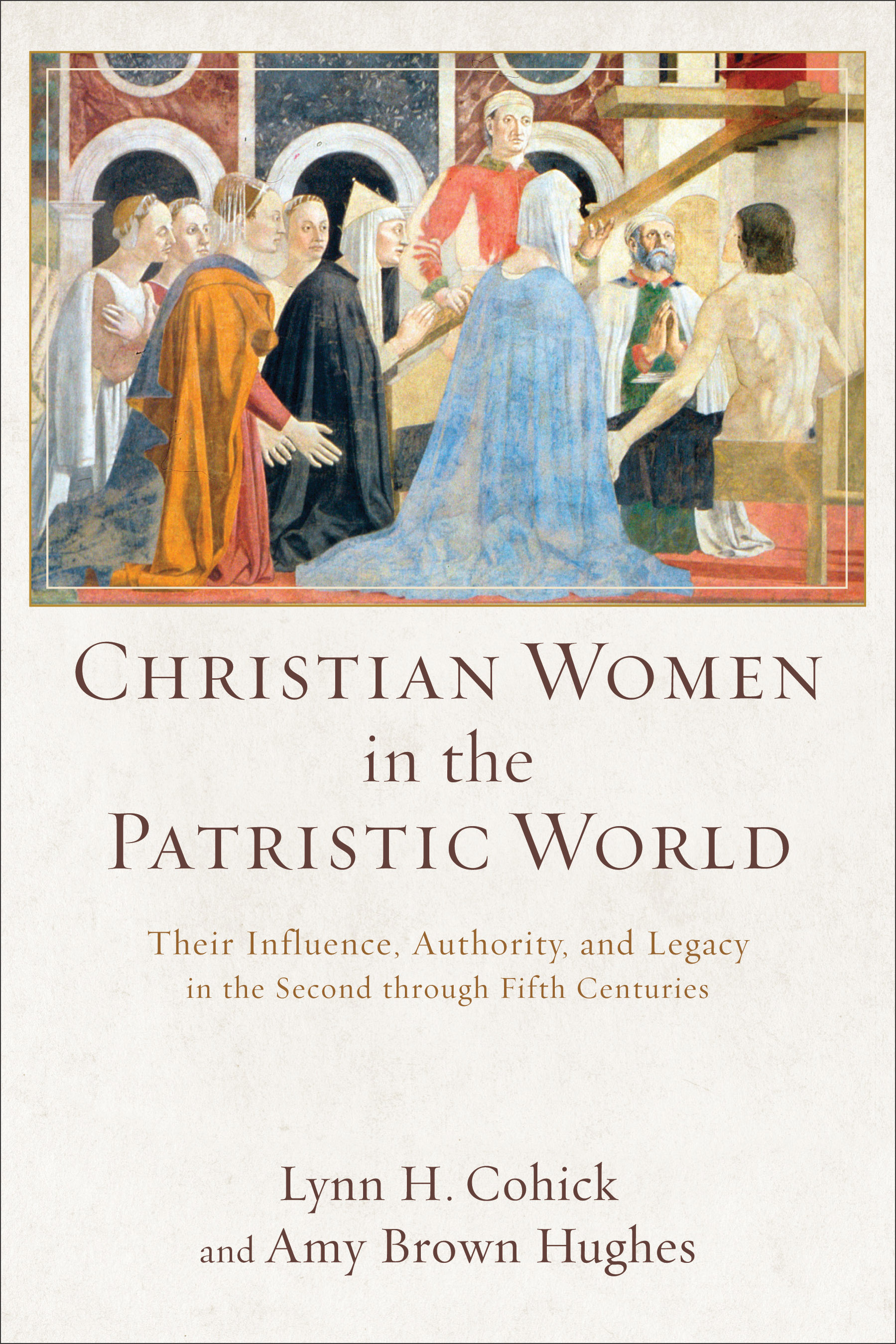
When most of us took church history, we were introduced to dozens of men who defended the nascent community and/or led it during tumultuous times.  Names like Ignatius, Clement of Rome, Justin Martryr, Athanasius, Theodore of Mopsuestia, Gregory of Nyssa, and Augustine were just a few of the men we studied.  But fortunately the record of many women who defended and led the church still exists, and there are scholars eager to tell their stories.

In their own words this “book will educate readers who are exploring the patristic period about the lives of the most important women from this period, so that their influence can be better integrated into the history of the church.”  And that is the story they tell, a story of integration. They do not silence the men who contributed to the growth and development of the church, but they do correct them in gracious tones. I would characterize their approach to the evidence available as a “charitable feminism,” an advocacy for the role of women in church history as leaders, martyrs, examples in their own right, understood against a culture that in ways were hostile to women who dared to speak outside the private, domestic fear (though the male-public, female-private distinction is often overblown).  Both Cohick and Hughes clearly appreciate the cultural limits placed people living in 1500-1800 years ago.  Few of us have eyes to see beyond our own cultural limits.

If you are interested in church history—particularly the formative centuries that brought Christianity from its status as a persecuted sect to one of the most influential forces in the west—you will want to get and read this book. Don’t think you can claim any expertise in the history of Christianity, if you don’t take into account the contributions of Macrina, Felicitas, Thecla, Perpetua, Egeria, Helena and many others.

If you’d like to pick up your own copy, click here.