Page 18 of 29

Daniel Master, Tel Shimron

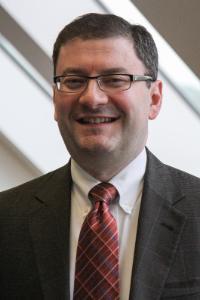
Dr. Daniel Master, Wheaton College

Daniel Master (PhD, Harvard University), Professor of Archaeology at Wheaton College, talks with David Capes about how he became an archaeologist.  He has spent much of his career digging up, processing, and writing archaeological reports on Ashkelon.  In recent days he and his dig partners from various institutions have turned their trowels to Tel Shimron, a large archaeological site just north of the Jezreel Valley about 8 miles west of Nazareth.  Despite Covid-19, the excavation had a full season in 2021.  If you want more information about Tel Shimron, check out the website: www.telshimronexcavations.com.  Dr. Master is always looking for volunteers.  If you’ve ever wanted to try your hand at archaeology, why not spent three or six weeks in Israel next summer? It’s hard work, but it’s worth it!

To hear the podcast (21 minutes) click here.

The Stone Chapel is a podcast of the friends and staff of the Lanier Theological Library in Houston, Texas.  It is hosted by Dr. David Capes, Senior Research Fellow at the library and former faculty member at Houston Baptist University and Wheaton College.  The purpose of the podcast is to bring to our audience great conversations from the world’s leading experts in theology, biblical studies, archaeology, Church history, the Dead Sea Scrolls, ethics, ministry, and a host of other topics close to the mission of the library.

The Lanier Theological Library is a magnet for scholars, church leaders and influencers.  For the last ten years, it has welcomed hundreds of academics and church leaders from across the globe for public lectures, study, panel discussions, consultations, and encouragement.

These podcasts as well as the Lanier library and the Stone Chapel are generously underwritten by Mark and Becky Lanier and the Lanier Theological Library Foundation.  If you have questions or comments, please be in touch: Email david.capes@lanierlibrary.org

Songs, Hymns and Spiritual Songs (Colossians 3:16)–Amy Whisenand Krall

Amy Whisenand Krall, Fresno Pacific University

Dr. Amy Whisenand Krall is Assistant Professor and Assistant Program Director of Biblical & Theological Studies at Fresno Pacific University. Her doctoral research (Duke Divinity School) was in New Testament with an emphasis on theology and music. In this conversation with David Capes she recalls that as a middle-schooler she learned Greek from her father and enjoyed it so much she kept with it through high school, college, seminary, and doctoral studies, eventually branching out to other biblical and modern languages. She sheds some light on the Greek sentence structure of Col. 3:16 and the significance of these lines in the context of Paul’s letter to “God’s holy people in Colossae.”

To hear the podcast (9.5 minutes) click here.

“Exegetically Speaking” is a weekly podcast of the friends and faculty of Wheaton College, IL and The Lanier Theological Library. Hosted by Dr. David Capes, it features language experts who discuss the importance of learning the biblical languages—Hebrew, Aramaic, and Greek—and show how reading the Bible in the original languages “pays off.” Each podcast lasts between seven and eleven minutes and covers a different topic for those who want to read the Bible for all it is worth.

If you’re interested in going deeper, learn more about Wheaton’s undergraduate degree in Classical Languages (Greek, Hebrew, and Latin) and our MA in Biblical Exegesis

You can hear Exegetically Speaking on SpotifyStitcherApple Podcasts, and YouTube. If you have questions or comments, please contact us at exegetically.speaking@wheaton.edu. And keep listening. 

I Can Endure All Things (Philippians 4:13)–Matthew Norton

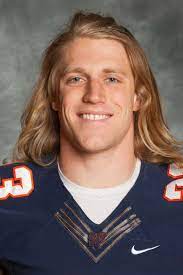
Matthew Norton, Wheaton College Football

Matthew Norton is an alum of Wheaton College’s Classical Languages major and its MA in Biblical Exegesis. He is presently enrolled in the School of Medicine at Louisiana State University Health Shreveport. His journey with the classical languages took him from high school through college until he determined that he would serve through a career in medicine. He remains a student of the languages, and in this episode he unpacks a commonly cited line of Paul: I can do (endure) all things through Christ who strengthens me.

To hear the podcast (8.5 minutes) click here.

“Exegetically Speaking” is a weekly podcast of the friends and faculty of Wheaton College, IL and The Lanier Theological Library. Hosted by Dr. David Capes, it features language experts who discuss the importance of learning the biblical languages—Hebrew, Aramaic, and Greek—and show how reading the Bible in the original languages “pays off.” Each podcast lasts between seven and eleven minutes and covers a different topic for those who want to read the Bible for all it is worth.

If you’re interested in going deeper, learn more about Wheaton’s undergraduate degree in Classical Languages (Greek, Hebrew, and Latin) and our MA in Biblical Exegesis

You can hear Exegetically Speaking on SpotifyStitcherApple Podcasts, and YouTube. If you have questions or comments, please contact us at exegetically.speaking@wheaton.edu. And keep listening. 

Christ in Ephesians (1:1-14)–Dan Treier

Dan Treier, Wheaton College

Dr. Daniel J. Treier is the Gunther H. Knoedler Professor of Theology at Wheaton Graduate School. He has authored numerous books and articles, including the award-winning Introducing Evangelical Theology. He has written a commentary on Proverbs & Ecclesiastes (Brazos, 2015), is starting another on Philippians, and is presently working on Lord Jesus Christ for Zondervan’s New Studies in Dogmatics series. What does the language of Ephesians 1 entail about who Jesus Christ is for this Scripture, and who he is for us?

To hear the podcast (9 minutes) click here.

“Exegetically Speaking” is a weekly podcast of the friends and faculty of Wheaton College, IL and The Lanier Theological Library. Hosted by Dr. David Capes, it features language experts who discuss the importance of learning the biblical languages—Hebrew, Aramaic, and Greek—and show how reading the Bible in the original languages “pays off.” Each podcast lasts between seven and eleven minutes and covers a different topic for those who want to read the Bible for all it is worth.

If you’re interested in going deeper, learn more about Wheaton’s undergraduate degree in Classical Languages (Greek, Hebrew, and Latin) and our MA in Biblical Exegesis

You can hear Exegetically Speaking on SpotifyStitcherApple Podcasts, and YouTube. If you have questions or comments, please contact us at exegetically.speaking@wheaton.edu. And keep listening. 

The Gift of God (2 Timothy), Ray Van Neste

Ray Van Neste, Union University

Dr. Ray Van Neste is dean of the School of Theology & Missions and Professor of Biblical Studies at Union University. He has written Cohesion and Structure in the Pastoral Epistles (T&T Clark, 2005) along with many other essays and edited volumes. He recalls what first excited him about learning Greek and then reflects on what Paul’s language in 2 Tim. 1:6-7 indicates that he has in mind by the “gift of God” and the “spirit of cowardice” in this letter.

To hear the podcast (11 minutes) click here.

“Exegetically Speaking” is a weekly podcast of the friends and faculty of Wheaton College, IL and The Lanier Theological Library. Hosted by Dr. David Capes, it features language experts who discuss the importance of learning the biblical languages—Hebrew, Aramaic, and Greek—and show how reading the Bible in the original languages “pays off.” Each podcast lasts between seven and eleven minutes and covers a different topic for those who want to read the Bible for all it is worth.

If you’re interested in going deeper, learn more about Wheaton’s undergraduate degree in Classical Languages (Greek, Hebrew, and Latin) and our MA in Biblical Exegesis

You can hear Exegetically Speaking on SpotifyStitcherApple Podcasts, and YouTube. If you have questions or comments, please contact us at exegetically.speaking@wheaton.edu. And keep listening.