
Great Theology and Warm Hearts

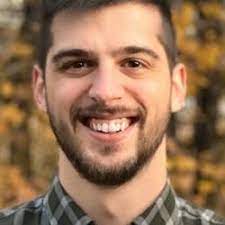
Here is my interview with Rob Trenckmann, director of the Newton House, Oxford.
To hear the podcast click here.
Rob Trenckmann 00:00
Hi, my name is Rob Trenckman. I’m the director of Newton house in Oxford, England.
David Capes 00:22
Rob Trenckmann. Good to see you, Rob. Thanks for being with us today on the Stone Chapel.
Rob Trenckmann 00:29
Oh, it’s my pleasure. Looking forward to this, David.
David Capes 00:31
Yeah, I have met you last summer. And you’re very gracious to spend a little bit of time with me and give me a bit of an update on what was happening in Newton House. The way I heard about Newton House was through Phil Ryken, who’s a friend of mine. He was my former President at Wheaton College. When I told him about what we were doing in Oxford with Yarnton Manor and everything. He said, ‘Oh, you’ve got to connect with Newton house’. So let’s begin with this, who is Rob Trenckman?
Rob Trenckmann 00:59
My background is this. I was a pastor in the States for a number of years. And then in 2012, God called my family and I to move to Europe and be part of a missions organization in Central and Eastern Europe called Josiah Venture. And we were with Josiah Venture in the country of Hungary for nine years. We got to work with a number of churches in in the region. And I also had the privilege of leading our international training conference that worked with about 20 countries across the region. While we were there, we added two more kids to our family. So I’ve one born in the States and two born actually in Vienna, Austria. And then a couple of years ago, the Lord moved us to the UK. And really our vision has remained the same. And that is, we want to be part of energizing a movement of God in Europe and really around the world. And we felt like for us and our gifting and our calling, the best way we could do that is through inspiring and equipping the next generations of of theologians and theological communities in Europe and around the world to have great theology and warm hearts. So that’s what drew us to Newton House and to be part of what’s happening here.
David Capes 02:12
Alright, so when did you become affiliated with with Newton House?
Rob Trenckmann 02:16
Yeah, I’ve been with Newton House from the beginning. So we’re a fairly recent project we started a couple of years ago, and we’ve had our physical location here in Oxford open for just about a year. So I’ve been part of that from the beginning.
David Capes 02:31
Now, when you say Newton House, is there a really a Newton house?
Rob Trenckmann 02:35
Yes, we’re a global theological research community that’s headquartered in Oxford. So we serve people really all around the world. But we do have a physical location here in Oxford and have a number of Oxford D Phil students that come and study with us and enjoy some Evangelical community while they’re working on their doctorates in biblical studies, or theological studies, or church history or things like that.
David Capes 03:00
So if you were to say what the mission of Newton House, what is it exactly?
Rob Trenckmann 03:06
So Newton House in a nutshell is is is we’re trying to raise up people, specifically theologians, those pastors, scholars, teachers of the next generation, to have great theology and warm hearts. And as you can imagine, in today’s world, we desperately need men and women who are deeply committed to the key doctrines of the faith and can speak that with winsomeness and warmth and wisdom into what is an increasingly complicated world.
David Capes 03:39
Yeah, it surely is. You know, we we exist here at the Lanier Theological Library to help bring the the church together with the Academy. And it seems to me like that, that is that is a perfect match for what you’re talking about.
Rob Trenckmann 03:54
Yeah, absolutely. We want to see theologians raised up who really serve the church and whether they’re serving the church as theologians in an academic environment, or they’re serving the church as pastor theologians, as so many people do really well. We not only want to bridge that gap between the academy and the church, but there’s other things that get wrongly separated too, aren’t there? So so all too often the people that have have great doctrine can have cool hearts. People that have warm hearts can not pay attention to their theology as they should. And and we would say with with Torrance, that that great theology is theology that sings You know? Great theology should always lead to doxology. So we want to hold those two things together and not neglect one at the expense of the other.
David Capes 04:43
I heard a lecture years ago in the states by Sidney Alstrom, who was a church historian, he was lamenting the fact that we had developed at that point and we’re developing you know, pastors on the one hand and then theologians on the other hand, and yeah, at one point in our history, our great pastors were theologians and our theologians were pastors. So I love the movements that are trying to pull that back together. And to say that, you know, pastors ought to be deep people. They ought to be, not just great communicators, we hope that that’s the goal, and pastoring big staff, but also be be deeply theological. And they’re both teaching, preaching and living. And I think that’s what Ostrom was concerned about. And I’ve been concerned about that as well, and many others do as well. So So who were some of the fellows the people, and that don’t mean necessarily males only, but who are some of the people who are affiliated with you there in Newcastle Oxford?
Rob Trenckmann 05:52
Yeah, you’re exactly right. Fellows is that academic term that does include both men and women and going for Gwenfair Adams, for example, is one of our female senior fellows from Gordon Conwell. We have, we have a fantastic group of men and women that have gotten behind this venture. So you mentioned Wheaton, Phil Ryken and the president at Wheaton is one of our senior fellows, Kevin Vanhoozer, from from Trinity Evangelical Divinity School. We have Andrew Atherstone, who’s here at Oxford. Michael Reeves, who’s president of Union School of Theology. We just welcomed the new dean of Newton House who’s providing theological oversight and direction that’s Donald Fairbairn from Gordon Conwell. Thrilled to have him involved. And there’s more Michael Hagen, Gerald Bray, Bradley Green, Robert Letham, Corneliu Simut. It’s it’s a, it’s really a world class group of senior fellows that have said, we’re committed to investing in the next generation of evangelical theologians and theological communities, and we’re thrilled to have their involvement.
David Capes 06:58
Now, when you look at your website, it’s clear that sort of the identity of a number of these leaders is in from the reform side in a Reformed Church. But a lot of times that term reform gets a little muddy for people. I don’t think everybody in the audience understands what Reformed Theology means. Could you sort of simplify that? Unpack that a little bit for us?
Rob Trenckmann 07:22
Yeah, you’re exactly right, that Reformed Theology gets used in in a variety of ways as well. And I would say, for us, we are, we are distinctly a group of people that are from that reformed camp. But it’s also not the only badge that we wear, we wear it with courage, but it’s not the only thing that we emphasize. But But specifically, that usually talks about a couple of things. One, it you know, that’s all, generally coming downstream from from John Calvin. And so one emphasis of that is the emphasis of God’s sovereignty and saving people, that God is the one who, who reaches in and rescues people out of darkness into light. And then the second thing that usually is associated with Reformed Theology is more of a coventional reading of Scripture than a dispensational reading of Scripture. So to look at the major covenants of Scripture, as one of the primary organizing principles for understanding how scripture is revealed, and how God has revealed himself in the world.
David Capes 08:30
Now when I think of those covenants, Abraham comes to mind. And then Moses comes to mind and Israel, yes. And then some would say, and I’m one of those, that God has a covenant with King David, is a promise, I don’t know that everybody uses covenant language there. But then also you come to the New Testament, and then you have what is the new covenant as well, so those are kind of the overarching big picture ideas of reading scripture, and the promises made by God through the prophets and those who spoke for those times, and then for for the future, as well. So when you look at your website, you find out you guys do conferences, and you got publications and tell us a little bit about all of that. I mean, if people wanted to kind of dig into what you’re doing, but they’re living here in the States, what can they find on your website? That might be of some help?
Rob Trenckmann 09:25
Yeah, so we have a number of different communities that are a part of Newton house. So for those who might be listening, in that, specifically they themselves are future theologians or current theologians, their students, their scholars, we have a number of Newton house associates and junior fellows that are studying at PhD institutions really all around the world, multiple continents, multiple countries, global south western world. It’s not a large community, but it’s quite an international community that we have. And for those people that are in that world, we gather monthly online for a conversation with one of our senior fellows. So this is a chance to get behind the scenes with Kevin Vanhoozer. And ask him those questions that you might not otherwise get a chance to ask, or to hear the latest research from Mike Reeves and what he’s digging into and get a chance to look at that before it, before it hits publication, that sort of thing. And then occasionally, we also will take some time for some, from some group member presentations in that in that conversation. So that’s a smaller group that gathers online once a month for about an hour and a half to just have some rich, theological, evangelical theological conversation together. And for many of our students, they’re studying at institutions where they may not have a lot of evangelical community, or perhaps they’re coming from countries where they don’t have much academic interaction if they’re from more of a developing world situation or something like that. And so we’re trying to provide that evangelical theological conversations that they might not get somewhere else. And here’s why that’s exciting. You know, I’m from the church world, I’m from the missionary world. So I don’t get that excited about a bunch of academics sitting around reading papers to each other, you know, but that’s not, that’s not the point here. The point is, for somebody who’s joining us, from Rwanda, they’re getting an access to cutting edge theological conversations that really matter. And then that that is spreading through them to the people in their context. And that has the opportunity to shape the conversation for an entire country. And that’s really, really exciting to us. So that’s one of the ways that people can get involved on a little bit more public facing level. We also host a number of conferences, lecture series, things like that, for the theologically minded pastor, which I hope is most or all pastors, for the theologically minded pastor, for the theologically minded layperson, a chance to come and hopefully have access to some of, some of what I hope is really the best of what the the evangelical academy is wrestling with, and offering that to the church. So last spring, we had a conference here in Oxford, but we had people come from all over where we were looking at the role of, what’s the role of the heart, what’s the role of the affections, in that whole area of faith. And so we got to hear from Mike Reeves from Phil Ryken. And from Michael Hake, and Bradley Green. And we just had a fantastic couple of days together. In fact, one of the pastors who came-longtime pastor, he just said, that was the best conference I’ve been to. And I’m sure not everyone felt that way. But I was sure glad to hear that. For him, that was a really, really rich time of fellowship, but also digging deep into key key theological issues.
David Capes 12:57
I’ve been to conferences, Rob, that are, you know, thousands of people, you know, go to the conference. Yeah. And then I’ve been to conferences where there’s 25-30, maybe 50-60 people. And by far, I appreciate the smaller ones better. Because you really get a chance to engage in conversation and you, you get to meet people, you get to hear things that you don’t get to hear in much larger kind of context. So do you do all of those in Oxford or around Oxford? Or you do, do you do conferences elsewhere around the world?
Rob Trenckmann 13:32
Well, for for that conference, for example, we had an in-person here in Oxford, but we also did offer a live stream option as well, so people could buy a package and get the recordings afterwards. And and that’s what I mean, when I say we’re really an international theological community that’s headquartered here in Oxford, so so we have far more people involved with Newton House that aren’t in Oxford than those that are. But we also do specifically serve the Oxford community. So it’s really are both and starting in April, we’re just putting the final details together on this, we’ll be offering an online lecture series with some of our senior fellows. And that’ll culminate with a visit from Don Fairbairn here in Oxford in June. But again, we’ll be looking to livestream those events as well, so people can tune in or catch the recording, if they can’t be with us in person here in Oxford.
David Capes 14:26
Well you guys are just a few years old, and yet you’ve brought together a just, a great group of scholars and thinkers. And if you’re an undergraduate student, can they come to these conferences or for Masters student? Or is it just for PhDs?
Rob Trenckmann 14:43
We have all sorts of people involved with our our conferences, our lecture series. That I mean, those are, those are pastors. Those are church elders, those are undergraduate students. So those are really public facing events. For those who would like to be, you know, an associate or are a Junior fellow of Newton House. Those are typically, those who are at least, are working on a high level Master’s, or are doing doctoral work or have completed a PhD. And that’s because those conversations tend to be, you know, explicitly academic in nature where we’re digging into some more finely tuned stuff that that we still trust is very much serving the church but is happening at a, at a level that’s assuming a certain level of knowledge and familiarity with the subject.
David Capes 15:30
Yeah. So if people want to know more about Newton house, how would they? How would they do that?
Rob Trenckmann 15:36
The best is to take a look at our website, that’s just Newto- house.com. So Newton-house.com. That gives all the information. And you’ll also see there that there’s a place where you can sign up for our mailing list. And we don’t send out emails very often. So don’t worry about your inbox getting full of tons of spam from Newton House. But what we do is we send out just the occasional event, notices that says, ‘Hey, by the way, this lecture series is coming up if you’d like to join us on Zoom, here’s where you can register, don’t miss our conference’. Those sorts of things that just give people a sense of how they can tune in to the conversations that we’re having. So for example, last year, we hosted a five part series looking at the theology of Augustine, and we had people join us, you know, from all over the world for conversations, a chance to hear a paper from one of us, from a veteran scholar in that field, and then a chance to ask questions. And those tend to be conversations that are, you know, enough people to be interesting, but not so big that you’re afraid to raise your hand and really ask a world expert. ‘Hey, tell me more about this.’ So, so those are, those are really interesting conversations to be able to really dig in with a group of like minded people around some interesting topics.
David Capes 16:51
So it’s Newton-house.com. Okay, very good. Well, Rob Trenchmann, thanks for being with us today to talk about the Newton House there in Oxford. I look forward to seeing you sometime this year in 2023. I’ll be heading that way I think in April. So I’ll let you know. Be good to, be good to share a coffee or a meal or something together. But I’m grateful for what you guys are doing. I look forward to connecting when I see you.
Rob Trenckmann 17:17
Great. Great. Likewise. Hey, thanks so much for having me on. And for the chance to talk about this. It’s a real privilege. Appreciate it, David.
David Capes 17:25
What a great conversation. I hope you agree. Only 168 hours until the next podcast drops. I can’t wait. Subscribe to Our Podcast, rate us, give other people the opportunity to find us. Tell a friend about us as well. Thanks to the Lanier Foundation, Jocelyn Soliz, Phil K, and Cathy Capes, who helped make this podcast possible. Till next time. Thanks for listening. Standby for a nugget of wisdom from Rob Trenckman.
Rob Trenckmann 17:58
One of my favorite ministry Proverbs is ‘good ministry always starts with a stare.’ Do you remember being a little kid or a teenager and pulling over at the side of the road and staring at nothing just to see how many people you could make look? I think sometimes in ministry, we forget that the most, the most compelling thing is someone who’s so deeply captivated by Jesus that everyone around them goes ‘What on earth are they looking at?’ And they instead of looking at us, they try to figure out what has captured our attention and in the process they to get captured by Jesus. So one of my favorite ministry proverbs “Ministry always starts with a stare.’


 A Word in Edgewise
You must be logged in to post a comment.