“To Cast the First Stone” with Tommy Wasserman

To cast the first stone is an expression in English and in Swedish.  It comes from a beloved passage in John’s Gospel (7:53—8:11). 

Tommy Wasserman talked recently with David Capes on The Stone Chapel Podcasts about a book he co-authored with Jennifer Knust.  It is entitled To Cast the First Stone: The Transmission of a Gospel Story (Princeton University Press, 2018).

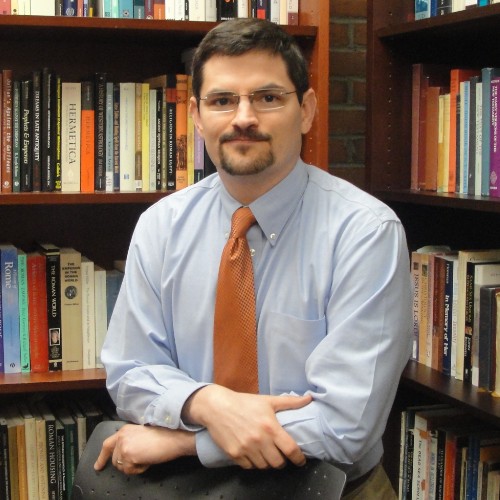
Who Is Tommy Wasserman? 

Tommy Wasserman grew up in Sweden and became a follower of Jesus during his teen years. He has distinguished himself as one of the world’s top textual critics of the New Testament. 

His judgment and attention to detail sets him apart in the discipline.  His enthusiasm for textural criticism is infectious.

He is a professor of New Testament at the Örebro School of Theology in Sweden and a professor of biblical studies at the Ansgar Theological School in Norway. 

To Cast the First Stone Stories

One of the well known stories from the Gospel of John has to do with a dramatic confrontation between Jewish leaders and Jesus over a woman “caught” in the act of adultery. 

Even casual Bible readers observe a change in the type or the addition of brackets around the story.  If they read in the margins, they discover that the earliest and best manuscripts do not contain that story. 

So, it is unlikely that it was in the first version of the manuscript.  Only later did this episode enter into the tradition. 

Jennifer and Tommy take great care to trace how this account came into the early manuscripts and has become a mainstay of our own Bible tradition

What Scholars are saying about the book

Here is what Chris Keith has to say about it:

“Knust and Wasserman use the story of the adulteress to illustrate the fascinating transmission history of gospel literature and the various personalities and forces that contributed to the process. To Cast the First Stone will undoubtedly become the standard book on this story.”

Chris Keith, author ofThePericope Adulterae, the Gospel of John, and the Literacy of Jesus

To watch the panel discussion featuring Tommy Wasserman and Dan Wallace click here.

To watch David Capes’ interview with Tommy Wasserman and Dan Wallace at Biblical Literacy (Champion Forest Baptist Church) click here.  

More resources

To hear the podcast (20 min.) click here.

Want more Stone Chapel Podcasts on some great topics. Just click here.

What’s more, you can get information on upcoming lectures at Lanier Theological Library. Just click here.
Reefs or Stains, and Other Challenges in Jude with Christian Askeland

Dr. Christian Askeland, Senior Researcher at Museum of the Bible, is interested in the origins and diversity of early Christianity, endeavoring to reconstruct historically the movements from which the relevant texts and manuscripts arose. He has authored John’s Gospel: The Coptic Translations of its Greek Text. Jude 12 poses a series of challenges for the interpreter, including the sorting out of the original wording amidst differing manuscripts (textual criticism).

“Exegetically Speaking” is a weekly podcast of the friends and faculty of Wheaton College, IL and The Lanier Theological Library. Hosted by Dr. David Capes, it features language experts who discuss the importance of learning the biblical languages—Hebrew, Aramaic, and Greek—and show how reading the Bible in the original languages “pays off.” Each podcast lasts between seven and eleven minutes and covers a different topic for those who want to read the Bible for all it is worth.

If you’re interested in going deeper, learn more about Wheaton’s undergraduate degree in Classical Languages (Greek, Hebrew, and Latin) and our MA in Biblical Exegesis

You can hear Exegetically Speaking on SpotifyStitcherApple Podcasts, and YouTube. If you have questions or comments, please contact us at exegetically.speaking@wheaton.edu. And keep listening.

To hear the podcast (12 minutes) click here.

The Odd Ending of Mark: Mistake or Invitation?

One of the tasks of exegesis is determining the text. On this edition of “Exegetically Speaking,” a podcast of Wheaton College, Dr. Seth Ehorn, Visiting Assistant Professor of New Testament, considers how the Gospel of Mark ends in modern translations and in early Greek manuscripts: Does the Second Gospel end in 16.8 or 16.20?  Has the last page been lost?  Has someone added some verses which weren’t in the original?  If the Gospel ends in 16.8 with the women afraid and running away, what does that mean? Seth Ehorn

Here is the URL:

http://exegeticallyspeaking.libsyn.com/the-odd-ending-of-mark-mistake-or-invitation

Or click here.

Dan Wallace on NT Manuscripts

Recently, a friend sent me a link to this video of Dan Wallace speaking at Acadia Divinity College on New Testament manuscripts.  Dan is probably the best connected and most informed scholar on the state of NT manuscripts, in America at least.  His  organization continues to discover  manuscripts (hand-written documents) which scholars did not know existed.  There are over 2.5 million pages altogether of the known number of NT manuscripts, over 5800.  This is a remarkable number of manuscripts still in existence given (a) that pagan emperors and governors did their best (during times of persecution) to discover and burn Gospels and letters and (b) the writing material and inks they used are organic, which means they were subject to decay.  Dan’s organization, Center for Study of New Testament Manuscripts, is working feverishly to create digital images of these manuscripts before they degrade further.  It is a great resource for scholars of Christian history.