
Page 3 of 17

Why the Gospel? with Matthew Bates

Dr. Bates has been on the Stone Chapel Podcasts before to talk about his book Gospel Allegiance.  He has also been on another podcast we do with Wheaton College called “Exegetically Speaking.”

See the notes below for a link to some of his insights on Romans 1:3-4. In this podcast he and David Capes talk about his recent book, Why the Gospel? Living the Good News of King Jesus with Purpose

Who is Matthew Bates? 

Matthew W. Bates is Professor of Theology at Quincy University. A Protestant who enjoys the challenge of teaching in a Catholic context, Bates holds an M.C.S. from Regent College in biblical studies.

And a PhD from University of Notre Dame  in theology, and New Testament. He is cofounder of the OnScript podcast.

Bates’s books include Salvation by Allegiance Alone, The Gospel Precisely, Gospel Allegiance, and The Birth of the Trinity.  

Why the Gospel? 

Matthew Bates has been deeply invested in the question, what is the gospel?, along with other scholars like N. T. Wright and Scot McKnight. 

But in this book, Dr. Bates is more interested in a prior question: why the gospel?  Why did God give the gospel to the church?  Dr. Bates thinks that if it’s just to deal with our sin problem, then that is not the complete story.

This is what Scot McKnight of Northern Seminary says about the book in his forward:

“Matthew Bates’s Why the Gospel? will help you discover God’s fullest gospel purposes, so that you and others can more thoroughly embrace a lifestyle of loyal discipleship.”

And Lisa Bowens  of Princeton Theological Seminary says,

“In Why the Gospel?, Matthew Bates seeks to demonstrate that the kingship of Christ is central to the gospel and is the reason for the gospel… The underlying aim of the book is apropos for this historic moment in the church—it challenges the reader to think again about what the gospel is and why the gospel matters for our time. A provocative read.”

Some great insights are coming your way in this book and podcast.  Thanks for listening.

To hear the podcast click here.

More resources

Here’s a link to Dr Capes and Dr Bates discussion on Romans. Click here.

For the OnScript Podcast click here.

You can read a transcript of this podcast by clicking here.

Want more Stone Chapel Podcasts on some great topics? Just click here.

What’s more, you can get information on upcoming lectures at Lanier Theological Library by clicking here.
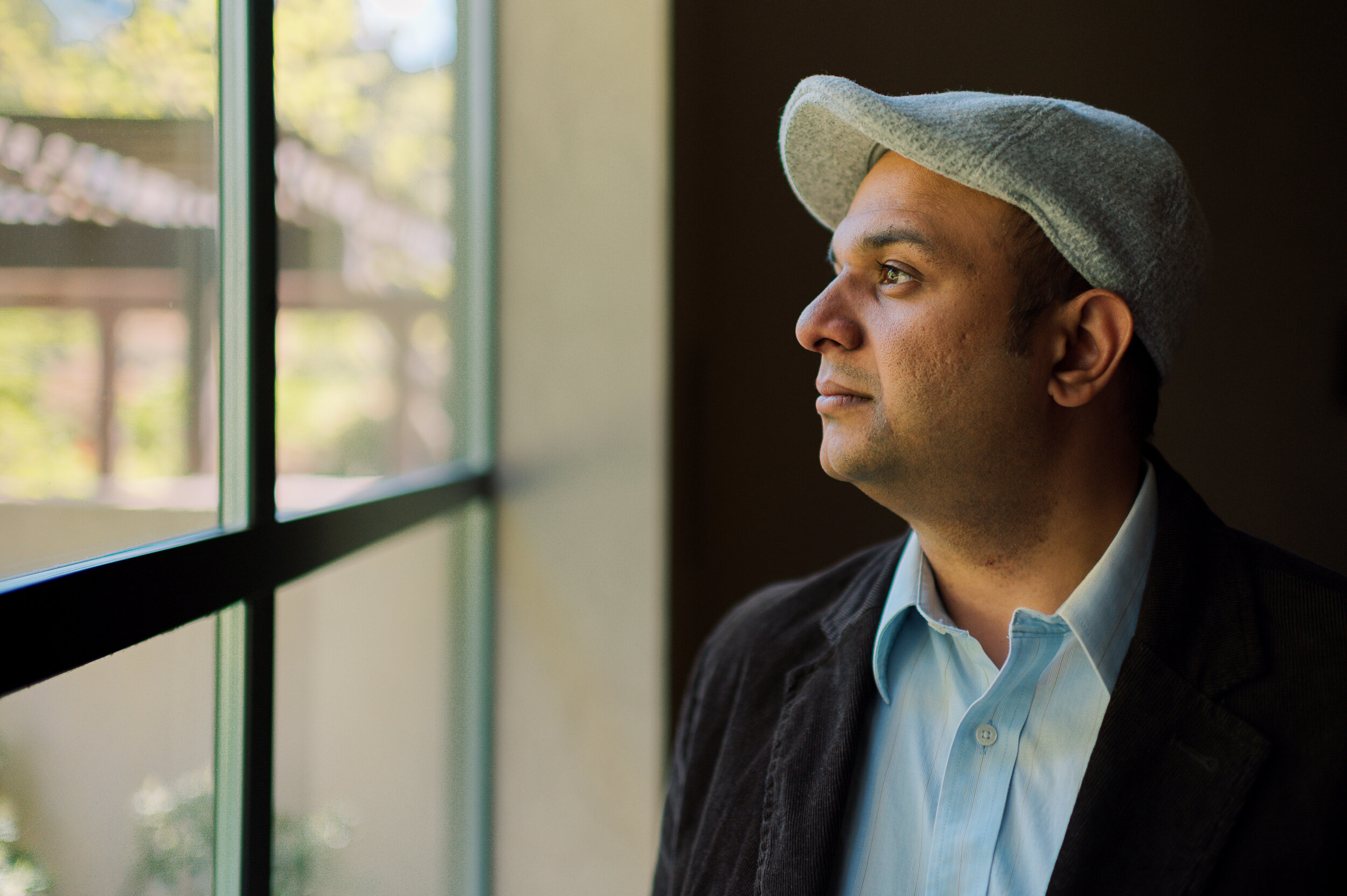
Tell Her Story with Nijay Gupta

Nijay Gupta joined David Capes recently from his home in Portland via Zoom to talk about a new book he has written: Tell Her Story: How Women Led, Taught and Ministered in the Early Church.

Who is Nijay Gupta? 

Nijay Gupta is Professor of New Testament at Northern Seminary in Chicago.  He’s the author of a number of books on faith and the gospel.  He has been with us before on the Stone Chapel Podcasts. 

See the show notes below to listen to them. He writes a regular blog for Patheos called “Crux Sola: Formed by Scripture to Live Like Christ.”

What’s the Big Idea of Tell Her Story?  

Dr. Gupta grew up in a conservative church where all the leaders were men.  During his education, he came across gifted women from other denominations. 

They were leaders, ministers, and teachers.  Ironically, one of his first papers in graduate school argued that women must not be leaders.  His last paper in systematic theology made the case that women must be pastors.

Dr. Gupta’s current book explores the stories and contributions of women in the earliest churches.  We know about them from the New Testament, and in particular the letters of Paul. 

Romans 16 is one of those places where Paul names Jews, Gentiles, men, women, slave, and free.  Andrew Clark says that Paul puts flesh on his admonition in Gal 3:26-29. 

Paul commends women right alongside men as fellow workers, apostles, deacons, and fellow prisoner.

More Resources

To hear Nijay’s earlier podcasts on 15 New Testament Words, click here.

And click here for his podcast on Paul and the Language of Faith.

To hear the podcast click here.

Marriage Relations according to Aristotle and Paul with Lynn Cohick

In his teaching about family relations (e.g. Eph. 5:21–6:9), Paul is echoing descriptions of a household that had been formalized by Aristotle, but in so doing Paul turns Aristotle’s teaching on its head. Dr. Lynn Cohick is Distinguished Professor of New Testament and Director of Houston Theological Seminary at Houston Christian University. Among her many publications are The Letter to the Ephesians (NICNT) and (with Amy Brown Hughes) Christian Women in the Patristic World: Their Influence, Authority, and Legacy in the Second through Fifth Centuries.

To hear the podcast (10 minutes) click here.

“Exegetically Speaking” is a weekly podcast of the friends and faculty of Wheaton College, IL and The Lanier Theological Library. Hosted by Dr. David Capes, it features language experts who discuss the importance of learning the biblical languages—Hebrew, Aramaic, and Greek—and show how reading the Bible in the original languages “pays off.” Each podcast lasts between seven and eleven minutes and covers a different topic for those who want to read the Bible for all it is worth.

If you’re interested in going deeper, learn more about Wheaton’s undergraduate degree in Classical Languages (Greek, Hebrew, and Latin) and our MA in Biblical Exegesis

You can hear Exegetically Speaking on SpotifyStitcherApple Podcasts, and YouTube. If you have questions or comments, please contact us at exegetically.speaking@wheaton.edu. And keep listening. 

Christ among the Messiahs with Matt Novenson

Matthew Novenson joined David Capes on The Stone Chapel Podcasts to talk about his important book, Christ among the Messiahs: Christ Language in Paul and Messiah Language in Ancient Judaism (Oxford University Press).

The book has made a big contribution to the study of Christology in the earliest years of the Jesus movement.  Though it has been out ten years, it is worth sharing with a new audience. 

Who is Matthew Novenson? 

Matthew is originally from Tennessee.  He now serves as the Professor of Biblical Criticism and Biblical Antiquities at the University of Edinburgh. 

Christ among the Messiahs 

For many years some scholars have regarded the word “Christ” as just another name for Jesus in the earliest writings of the New Testament, namely, the letters of Paul.  But Matthew makes a convincing case that the word “Christ” in Paul means “Messiah.”   

This may seem to some only natural, but it is a momentous thing.  It involves a whole new reassessment of Paul’s language and his Jewishness.  

We find messiah language in various places like the Old Testament, Paul’s letters, the Dead Sea Scrolls, and other second temple Jewish texts. 

Novenson often employs the word “honorific” as a noun to discuss Paul’s use of “Christ” in his letters.  It comes from the discipline of “classics,” namely, the study of the ancient Greek and Roman civilizations. 

Honorifics are like titles in a way but they were intended to magnify the name of the person. The most famous is Caesar “Augustus.” 

The idea that “Christos” as it referred to Jesus is not limited to name or title.  There is a third way, an honorific.

Novenson has done a great deal to shape the field of New Testament studies with this and other books.  

Other Books by Matt Novenson

Paul: Then and Now (Eerdmans)

The Grammar of Messianism: An Ancient Jewish Political Idiom and Its Users(Oxford UP)

For a transcript of this podcast, click here.

More resources

Want more Stone Chapel Podcasts on some great topics. Just click here.

To hear the podcast (22 min) click here.

Announcing the Gospel in Fecund Language with Joseph Dodson: Col 2:15

The grammar, metaphors, background, and possible referents of the Greek wording of Colossians 2:15 make for rich challenges and possibilities for interpretation, translation, and application. As Dr. Joseph Dodson explains in this episode, choosing between options may not always be correct. Dodson is the Dr. Craig L. Blomberg Chair of New Testament at Denver Seminary. In addition to other publications, he co-edited, Paul and the Giants of Philosophy: Reading the Apostle in Greco-Roman Context, and is working on commentaries on Romans (Brill) and Colossians-Philemon (Holman).

To hear the podcast click here and scroll down to the podcast that published July 31, 2023.

“Exegetically Speaking” is a weekly podcast of the friends and faculty of Wheaton College, IL and The Lanier Theological Library. Hosted by Dr. David Capes, it features language experts who discuss the importance of learning the biblical languages—Hebrew, Aramaic, and Greek—and show how reading the Bible in the original languages “pays off.” Each podcast lasts between seven and eleven minutes and covers a different topic for those who want to read the Bible for all it is worth. Click on the ⓘ symbol below for each episode to read the description.

If you’re interested in going deeper, learn more about Wheaton’s undergraduate degree in Classical Languages (Greek, Hebrew, and Latin) and our MA in Biblical Exegesis

You can also hear Exegetically Speaking on SpotifyStitcherApple Podcasts, and YouTube. If you have questions or comments, please contact us at exegetically.speaking@wheaton.edu. And keep listening.