Page 4 of 5

2 & 3 John

I had the great fortune yesterday (6/12/2016) of teaching  Mark Lanier’s Sunday School class at Champions Forest Baptist Church.  Mark is one of the best communicators and Bible teachers you will ever hear so I am grateful and humbled for the opportunity.  He and his wife Becky are currently in Oxford awaiting the birth of their first grand baby.

Brent Johnson and his staff at Champions Forest were excellent to work with. They have already made the video available.

I taught on 2 & 3 John because Mark has been working his way through the New Testament for nearly 49 weeks now.  I’m grateful to have the opportunity to talk about these little, neglected books.

To see the video click here.

Or here is the URL: https://www.youtube.com/watch?v=6wJXNu1ncN0

E. Earle Ellis, 1926-2010

Six years ago this week my Doctor Father, Earle Ellis, died.  When he came to his final teaching post in the mid-1980s, I was his first graduate assistant and one of only five students who finished under him in about 25 years of teaching.  Dr. Aaron Son, one of his other students, informs us through Facebook that Southwestern Seminary has established a lectureship in Ellis’ honor.  I’m pleased to learn of this today.  It is an honor well deserved.  He was a great scholar, teacher and mentor. ellis

The inaugural lecture will be given by Professor Craig Evans who recently moved to Texas after decades of teaching in Canada, most recently at Acadia Divinity School in Nova Scotia.  Dr. Evans is a good choice for an inaugural lecture because Ellis thought highly of him, and Evans in many ways continues along the academic trajectory begun by Ellis and many of his colleagues.  My memory may be faulty, but I seem to recall meeting Evans through Dr. Ellis in the late 1980s.

Dr. Son wrote Ellis’ obituary on the website of the Society of Biblical Literature.  The link is here.  It contains a list of his most important publications and some poignant details about his life. Ellis was a rigorous scholar who demanded and received a great deal from his students.  He was a lifelong bachelor and committed Christian.  He lived a life worthy of emulation.

Ellis leaves behind not only a group of grateful students but a number of important books he penned over his impressive career.  He established a research library which is now part of the collection at Southwestern Baptist Theological Seminary.  He also established the Institute for Biblical Research, a collegial organization of scholars dedicated to the kind of reverent biblical scholarship which was the hallmark of Ellis’ life.  Information about IBR can be found here.  I’m pleased to have been elected to the board of IBR last year.

Thanks to Southwestern Baptist Theological Seminary for highlighting and continuing his legacy. I hope one day to be able to attend and be part of the honor.

Rest in peace, Dr. Ellis.


Professor Craig Evans Joins the Faculty at HBU

The announcement was made yesterday, Tuesday June 9, 2015, that Dr. Craig Evans will join the faculty of Houston Baptist University in January 2016.  Here is the official announcement:

http://www.hbu.edu/About-HBU/General-Information/HBU-in-the-News/Press-Releases/2015/June/Dr-Craig-Evans-named-the-John-Bisagno-Distinguishe.aspx

Craig has been a friend for a number of years, and I’m thrilled at the prospect of him being a part of our faculty.  He will add a great deal of expertise to the School of Christian Thought at HBU.  His current post is at Acadia Divinity School in Nova Scotia.  He will find the Houston winters much more agreeable, but he will definitely have to get used to the heat!  Welcome, Dr. Evans!Craig Evans

Are Print Books a Thing of the Past . . . Like Scrolls?

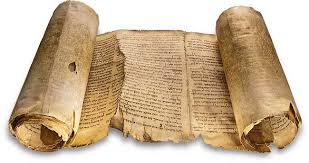
Before the birth of the Christian movement, scrolls were the book-form used by most if not all people.  Scrolls, also known as rolls, were pages sewn or glued together end-to-end to create a long roll, sometimes up to 35 feet long.  The Dead Sea Scrolls are probably the best known and most significant collection of ancient scrolls, but rolls continued in use for 500 years after the birth of Jesus, mostly among non-Christian groups.scrolls

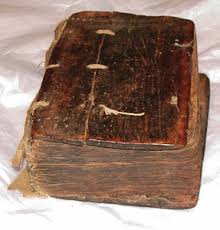
The codex form of the book was invented in the first century about the time Paul was crossing Asia Minor and planting churches in Macedonia and Achaia (modern Greece).  The codex form is the kind of book we use today with individual pages stacked and sewn together along the same edge.  We don’t know exactly who invented the codex, but we do know Christians popularized it and used it for most of their books for the first five hundred years.  With a  couple of exceptions the Greek manuscripts we have of the New Testament from the earliest centuries are written on codex.

Scholars have proposed a number of reasons why Christians adopted the codex book-form. First, codices (the plural of codex) are easier to use than scrolls.  If you want to see something at the end of a scroll, you have to unroll it first. With a codex, you can simply open up the stack to find the right place.  Second, scrolls were written only on the inside which wastes half the space.  A codex is written on the front and back of each leaf.  This makes better use of the pages.  Remember, paper wasn’t available to them so they wrote on papyrus, sheets made of a plant material, or on parchment, sheets made of a well prepared animal skin (the soft underbelly of a goat, cow, or ibex).  Both were expensive writing materials.  There is good evidence that the earliest Christians were poor so they wanted to use every square inch of the writing materials they could get their hands on.  Third, the codex form may help distinguish Christian books from Jewish books.  The Christian movement was started by Jews for Jews (Jesus was a Jew and all his disciples were too!).  But when more and more outsiders (non-Jews) entered the Church, tensions grew and eventually there was a parting of the ways. Judaism became one religion, Christianity another.  At first, there was no real need to distinguish these communities, but as time went on both Jews and Christians wanted to find ways to distinguish themselves from each other.  The scroll and codex form may have been part of that.  codex

For the first 1500 years of Christian history all books were hand-copied.  With the invention of the printing press (around 1450) books could be produced mechanically.  That presented a huge shift in culture.  Hand-copied books took a long time to create, were very expensive, and had variations in them.  A machine-produced book could be printed quicker, were less costly, and had fewer variations.

In the last decade of the 20th century another huge shift took place as digital technology became less expensive and more available.  Today you probably read on computers, a Kindle, a smart phone, or a tablet.  These digital technologies have made books even cheaper, easier to carry around with you, and more available.  When we started work on The Voice Bible project we were all well aware we’d create print copies and digital versions.  I read The Voice in paper sometimes.  My students read it on their smart phones in class.  I often research and write on the computer using www.biblegateway.com, which has The Voice translation (as well as many others).  Exactly where this is all headed it is hard to say.  Some have predicted the end of print books (that is, the codex form).  Others aren’t so sure.

Michael Hyatt, former president of Thomas Nelson Publishing, is a digital guru I like to follow. Hyatt  thinks for many applications and kinds of reading print books are still the best format and will endure.  In a recent article he acknowledges there are good reasons scientifically to continue to use paper books.  Here is a link to his on-line article:

http://us2.campaign-archive2.com/?u=52d5c7778a3adfda535c3b349&id=93dec8a7d3&e=f2d6b7394f

Paul Straddled Four Worlds

There is a place in the western part of America where a person can straddle four states .  It is often referred to as the “four corners” region because four US states come together at one spot: Colorado, New Mexico, Arizona, and Utah.  You can see it on any map.  Theoretically, it would be possible for a person to stand with his right foot planted firmly in New Mexico, his left foot in Arizona, and reaching to the north his right hand would be in Colorado and his left would be in Utah.

When we think about it, all of us straddle different worlds.  Some in my business straddle academic and church life in America.  Then, to make things more complicated, they go home to family that speaks Spanish and has little formal education.  We all have to make our way through a complicated maze of worlds.St. Paul
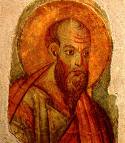
This was Paul’s story too.  Paul straddled four different worlds.  The first happened to be the world and culture of his birth.  His right foot was firmly planted in the world of second temple Judaism.  It was a world shaped in large measure by what Christians call the Old Testament or what someone like Paul would have called the law, the prophets and the writings (the Tanakh).   The Hebrew Scriptures boldly declared the existence of One, True God who created all things and had made covenants with Abraham and Israel at Sinai.  Israel’s God stood in sharp contrast to the many gods and lords worshiped by the nations.  Second temple Jews lived with a sturdy expectation that God’s Kingdom would come one day to right all the wrongs and make Jerusalem the center of the world instead of an occupied city on the outskirts of the Roman empire.

This brings me to the second world Paul occupied: the world ruled by Rome.  According to Acts, Paul was a Roman citizen and used it to his advantage when it suited him.  Though Paul makes no direct mention of this in his letters, it is not unlikely that someone like Paul enjoyed its favored status.  Paul’s Jewish heritage would have placed him at odds with many aspects of Roman empire, particularly their ultimate religious claims about their gods and a growing cult devoted to Caesar.  The empire’s political claim to provide peace and security were laughable for Jews who lived everywhere—but especially in Judea–under the heel of Rome.  In some ways Rome provides the perfect foil for Paul to rail against. Pagan sacrifices were not neutral; they were offerings to demons  (1 Cor 10:20).  As many NT scholars have noted: if Jesus is the true Lord and king and king of the world, then Caesar is not.

A third world Paul straddled was Greek.  Though Paul was certainly multilingual, the letters we have from him are all written in Greek.  Greek had become the lingua franca of most places Paul traveled, even though he would have encountered dozens of different local languages and dialects.  Language is only one thing but it is a big thing because with language goes literature, poetry, education and ideas which slowly but inevitably permeate society.  When Paul quoted the OT in his letters, more often than not he quoted from some Greek translation of the OT.  It’s possible he made up his own translations on the fly, of course. But since his quotations appear so similar to translations we know today, its more likely he drew from some standard version available to him.  Furthermore, Paul’s letters and accounts about him in Acts reflect a knowledge not only of Greek language but Greek oratory, literature, and rhetoric.  In Martin Hengel’s massive volumes translated into English as Judaism and Hellenism (1974), he argued that Jesus’ homeland, the land of Palestine, had been Hellenized by the middle of the 3rd century BC.  Judaism had not escaped the hellenizing edge of Alexander’s sword.

The fourth and final world Paul occupied was relatively new.  In fact, by the time he entered it and became one of its greatest advocates it had only been around a few years.  Saul the Pharisee became a Christ-follower probably only 3-5 years after Jesus’ execution.  But already there were traditions, practices, and beliefs which were beginning to mark out this first century Jesus movement.  We don’t have access historically to any material and literary evidence that come prior to Paul’s conversion. His letters contain a few hints here and there of the kinds of things early Christians may have been saying.  For example, the Philippian hymn (Phil 2:6-11) may have been sung, chanted, or recited in Christian gatherings before Paul came to faith.  What seems more likely is that Jesus’ death and resurrection are already seen as the fulfillment of God’s plan.  To put it another way, they are the climax of God’s covenant promises to Abraham, Moses and Israel.  In 1 Corinthians 15:3ff Paul writes:

For I handed on to you as of first importance what I in turn had received: that Christ died for our sins in accordance with the scriptures, and that he was buried, and that he was raised on the third day in accordance with the scriptures, and that he appeared to Cephas, then to the twelve.

Paul says he “hands on” what he “had received.” The apostle to the Gentiles employs the language of tradition to let us in on some of the content of the church’s message before Paul.  Already the death of Jesus the Messiah was being understood as an atoning sacrifice.  Already the death, burial, and resurrection of Jesus were seen as complementary to the Scriptures.  Not only do these crucial events not contradict what God had said previously through the prophets; they fulfill them.  Already, Cephas (namely, Peter) and the twelve had gained prominence as some of the first witnesses to Jesus’ resurrection.

Paul not only straddled these four worlds, but as destiny would have it, he would go on to shape them as well.  It is hard to imagine what Christianity today would be like without Paul.  He is credited with having written nearly 1/2 the books of the New Testament. The  Protestant Reformation of the 16th century found in Paul its inspiration. And what of Judaism? As my friend Alan Segal often said, Christianity and rabbinic Judaism were like Rebekah’s children; both religions were very different twins formed in the womb of second temple Judaism. And what of Greece and Rome? Well, Rome soaked up much of the best of Greek culture.  Then after centuries of persecution, Christianity would go on to become the dominant religion of the empire.  In the end the many gods and lords of Rome would yield to the One God in three Persons.  Or as the apostle would put it (1 Cor 8:6):

Indeed, even though there may be so-called gods in heaven or on earth—as in fact there are many gods and many lords— yet for us there is one God, the Father, from whom are all things and for whom we exist, and one Lord, Jesus Christ, through whom are all things and through whom we exist.