How We Got the New Testament

To hear the podcast (20 min.) click here.

One of the questions I often get is “How did we get our Bible?”  As you’re going to hear on this podcast, there is not a quick, easy answer. 

It’s an important historical question that had a few questions marks around it.  Dr. Lee McDonald has given a lifetime to the question and has authored more than a dozen books on the topic.  You can find a link to some of those down below.

Dr. McDonald joined David Capes on the Stone Chapel Podcasts to talk about this question.

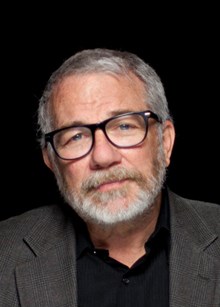
Who Is Lee McDonald?

Lee McDonald earned his PhD at the University of Edinburgh.  Prior to that he earned his masters at Harvard. 

Today he is retired.  But he spent many years as professor of New Testament Studies and President of Acadia Divinity College in Nova Scotia. 

He has written a number of books on the canon of the Bible.  See the notes below for some of those.  In retirement he lives in southern California. 

How We Got Our New Testament

McDonald is interested in the question of how we got our Bible.  But this podcast deals only with part two of the Bible, the New Testament. 

The issues are challenging.  We have minimal historical sources that discuss the canon.  The presence of manuscripts themselves help us somewhat. 

Canon is a technical term for the list of inspired books referred to today as the New Testament.  There are historical forces and factors that led to the development of the canon. 

Capes and McDonald outline a few of these in the podcast.   But there are also theological factors and concerns at the same time.  Geographically, the church was scattered.  So, practices in Ethiopia were different than those in Italy. 

Early Christians were a very bookish people.  They wrote a lot of books.  I suppose you could say they also read a lot of books. Some of those books were included in the canon, but many were excluded.  In this podcast Capes and McDonald discuss the criteria for apostolic authorship. 

Resources

Click here for a transcript of today’s podcast.

A key book on the question which he wrote with interested lay people in mind:

Formation of the Bible: The Story of the Church’s Canon (Hendrickson, 2012).

A bit more technical is:

The Biblical Canon: Its Origin, Transmission, and Authority (Baker Academic, 2006)

To see a lecture by Dr. Lee McDonald at the Lanier Theological Library click here.

More Resources

Want more Stone Chapel Podcasts on some great topics? Just click here.

You can get information on upcoming lectures at Lanier Theological Library by clicking here

Christ among the Messiahs with Matt Novenson

Matthew Novenson joined David Capes on The Stone Chapel Podcasts to talk about his important book, Christ among the Messiahs: Christ Language in Paul and Messiah Language in Ancient Judaism (Oxford University Press).

The book has made a big contribution to the study of Christology in the earliest years of the Jesus movement.  Though it has been out ten years, it is worth sharing with a new audience. 

Who is Matthew Novenson? 

Matthew is originally from Tennessee.  He now serves as the Professor of Biblical Criticism and Biblical Antiquities at the University of Edinburgh. 

Christ among the Messiahs 

For many years some scholars have regarded the word “Christ” as just another name for Jesus in the earliest writings of the New Testament, namely, the letters of Paul.  But Matthew makes a convincing case that the word “Christ” in Paul means “Messiah.”   

This may seem to some only natural, but it is a momentous thing.  It involves a whole new reassessment of Paul’s language and his Jewishness.  

We find messiah language in various places like the Old Testament, Paul’s letters, the Dead Sea Scrolls, and other second temple Jewish texts. 

Novenson often employs the word “honorific” as a noun to discuss Paul’s use of “Christ” in his letters.  It comes from the discipline of “classics,” namely, the study of the ancient Greek and Roman civilizations. 

Honorifics are like titles in a way but they were intended to magnify the name of the person. The most famous is Caesar “Augustus.” 

The idea that “Christos” as it referred to Jesus is not limited to name or title.  There is a third way, an honorific.

Novenson has done a great deal to shape the field of New Testament studies with this and other books.  

Other Books by Matt Novenson

Paul: Then and Now (Eerdmans)

The Grammar of Messianism: An Ancient Jewish Political Idiom and Its Users(Oxford UP)

For a transcript of this podcast, click here.

More resources

Want more Stone Chapel Podcasts on some great topics. Just click here.

To hear the podcast (22 min) click here.

15 New Testament Words of Life

Dr. Nijay Gupta,
Northern Seminary

15 New Testament Words of Life: A New Testament Theology for Real Life (Zondervan) is Nijay Gupta’s most recent book.  He joins David Capes to talk about it on “The Stone Chapel Podcast.” 

Dr. Gupta is a New Testament Professor at Northern Seminary in Lyle, IL.  He is the author of many books and articles.

In 2021 he appeared on “The Stone Chapel Podcast” to talk about another of his books, Paul and the Language of Faith.

The book begins with an assumption: we don’t read the Bible in a vacuum.  We read it in the midst of the ups and downs of our lives.

As a result, a different way of reading the Bible is called for, a strategy that asks the question: “So what?”  

Nijay wrote this book for those who consider themselves students of the Bible, whether seminary students, pastors, or interested laypeople. 

By choosing these particular words, Dr. Gupta hopes to break down “Christian-ese.”  Each of the 15 words are tied to a particular book or set of books.

Most New Testament theologies are written for academics.  They are big books often running 1000 pages or more.  They tend to be esoteric and filled with academic speak. 

Rather than focusing on the day to day, namely, life, many New Testament theologies stay in the abstract.  While Nijay reads these big books and appreciates them, he wanted this book to be much shorter and more to the point. 

The New Testament is filled with church letters, pastoral letters.  The authors were writing amidst the rough and tumble of life.

Since there was not enough time to talk about all these words, David and Nijay focused briefly on three: forgiveness, salvation, and hope. 

Listen carefully to the podcast to pick up on the nuances of these words. 

Here is what one scholar had to say about the book:

“Do you suspect there’s more to the Christian faith than what you’re hearing? Dr. Gupta brings the best of biblical scholarship to the pews, where standard Christian ways of talking about things have grown stale. By highlighting these fifteen key words, he opens a whole new world of understanding that will reinvigorate Christian practice. If you are hungry to move beyond clichés, this book is your invitation to a nourishing feast.” 

—CARMEN JOY IMES, Associate professor of Old Testament, Biola University, author ofBearing God’s Name

David recorded an earlier podcast with Nijay on his book, Paul and the Language of Faith.

To listen to this podcast, click here.

Recently, David Capes was interviewed by Nijay on his book and especially ch. 1 “Righteousness in Matthew.”  To see and hear the post click here.

To learn more about Nijay Gupta, follow his blog: “Crux Sola” on Patheos.

To hear the podcast (20 minutes), click here.

“The Time of Your Visitation” with N. T. Wright

Rev. Dr. N. T. Wright

Rev. Dr. N. T. (Tom) Wright is Research Professor Emeritus of New Testament and Early Christianity at St Mary’s College in the University of St Andrews and Senior Research Fellow at Wycliffe Hall, Oxford. His work has established him as the foremost voice among New Testament scholars of the present generation, not least due to his many commentaries, topical studies, and the multi-volume, Christian Origins and the Question of God. Is Jesus’ parable of Luke 19:11-27 teaching that the kingdom of God is going to be delayed indefinitely or that it is arriving at that moment with Jesus’ descent upon Jerusalem? Verse 44 of the same chapter and Jeremiah’s use of a key Greek word, among other things, ominously suggests the latter.

To hear the podcast (10 min) click here.

Mark through Old Testament Eyes

Andy LePeau

Andy LePeau has been in academic publishing for many years with InterVarsity Press.  He is also a talented writer and the author of a new book with Kregel Academic entitled Mark through Old Testament Eyes.  He serves as series editor for this new background and application commentary called “Through Old Testament Eyes” and stops by to talk with David Capes on “The Stone Chapel” about the series and about some of the things he discovered about Mark’s Gospel after teaching it for over fifteen years. The book begins: “The New Testament writers were Old Testament people.”  He goes on to demonstrate the many ways the Old Testament shaped the minds and hearts of the first Christ followers. He estimates that 90-95% of the Gospel is clarified when we understand the Old Testament view of the God and his people.  It is a terrific book and an impressive series.  In case you were wondering, you can find it at the Lanier Theological Library.  To learn more about Andy, go to his blog “Andy Unedited”: www.andyunedited.com

To hear the podcast click here.

The Stone Chapel is a podcast of the friends and staff of the Lanier Theological Library in Houston, Texas.  It is hosted by Dr. David Capes, Senior Research Fellow at the library and former faculty member at Houston Baptist University and Wheaton College.  The purpose of the podcast is to bring to our audience great conversations from the world’s leading experts in theology, biblical studies, archaeology, Church history, the Dead Sea Scrolls, ethics, ministry, and a host of other topics close to the mission of the library.

The Lanier Theological Library is a magnet for scholars, church leaders and influencers.  For the last ten years, it has welcomed hundreds of academics and church leaders from across the globe for public lectures, study, panel discussions, consultations, and encouragement.

These podcasts as well as the Lanier library and the Stone Chapel are generously underwritten by Mark and Becky Lanier and the Lanier Theological Library Foundation.  If you have questions or comments, please be in touch: Email david.capes@lanierlibrary.org