
Torah for Living
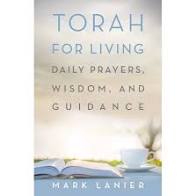
You have probably seen daily devotional books that deal with Psalms, Proverbs or the Gospels. But I doubt you have seen one inspired by the Torah, that is, Genesis, Exodus, Leviticus, Numbers and Deuteronomy. How should Christians reads those texts? How do you find spiritual meaning and direction from the description of the high priest’s garment? Well, Mark Lanier, founder of the Lanier Theological Library, has shown us how to do just that in 366 Scripture readings taken directly from Torah. He stopped by to talk with me on “The Stone Chapel” about his newest book, published by 1845 Books, a division of Baylor University Press. It is an amazing book. I recommend it to you as you consider the new year.
To learn more about the book click here.
To listen to the podcast (18 minutes) click here.
The Stone Chapel is a podcast of the friends and staff of the Lanier Theological Library in Houston, Texas. It is hosted by Dr. David Capes, Senior Research Fellow at the library and former faculty member at Houston Baptist University and Wheaton College. The purpose of the podcast is to bring to our audience great conversations from the world’s leading experts in theology, biblical studies, archaeology, Church history, the Dead Sea Scrolls, ethics, ministry, and a host of other topics close to the mission of the library.
The Lanier Theological Library is a magnet for scholars, church leaders and influencers. For the last ten years, it has welcomed hundreds of academics and church leaders from across the globe for public lectures, study, panel discussions, consultations, and encouragement.
These podcasts as well as the Lanier library and the Stone Chapel are generously underwritten by Mark and Becky Lanier and the Lanier Theological Library Foundation. If you have questions or comments, please be in touch: Email david.capes@lanierlibrary.org


 A Word in Edgewise
You must be logged in to post a comment.