“A High Tower” with Megan Roberts: Psalm 46

To hear the podcast (12 min) click here.

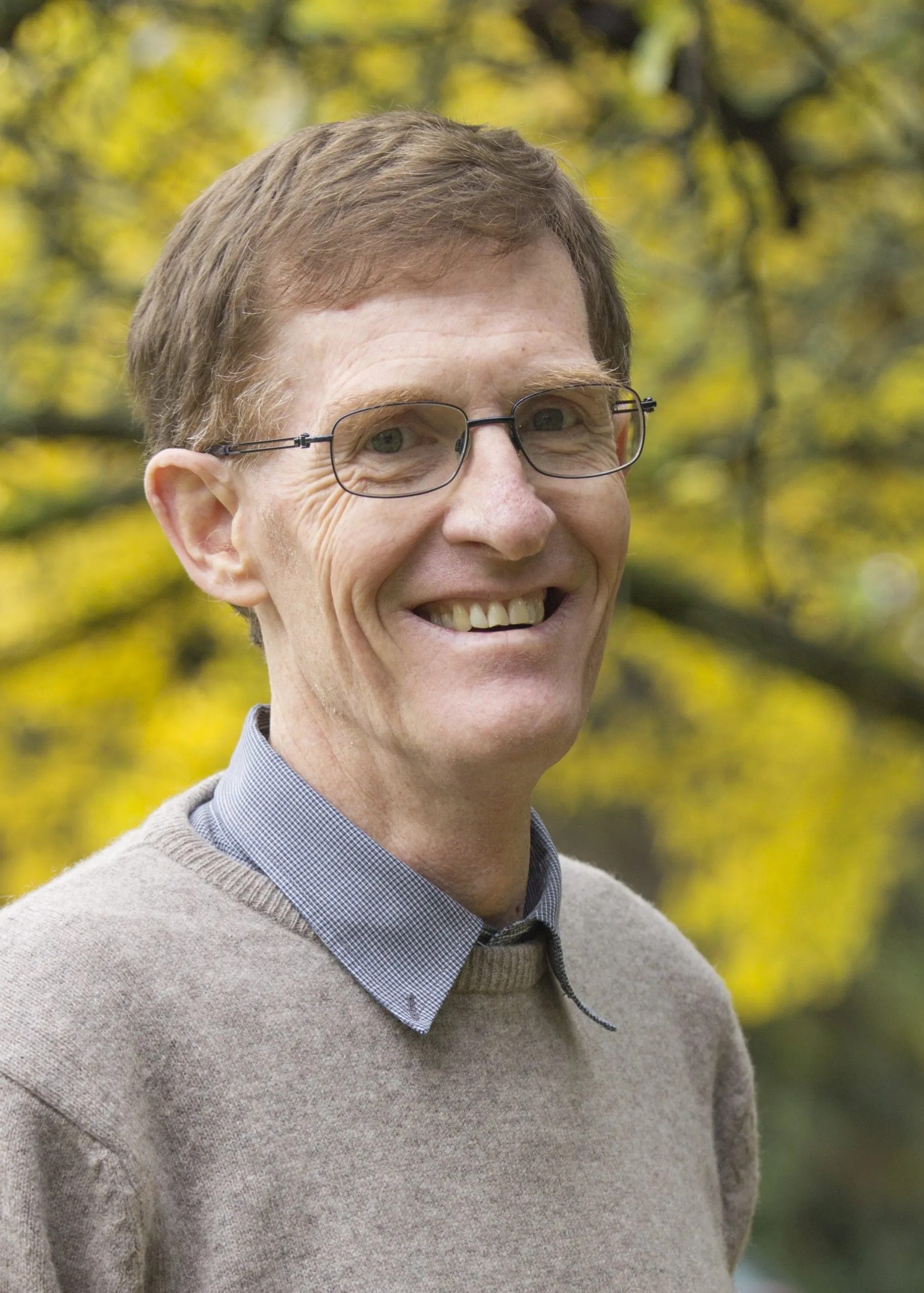
Psalm 46 is a psalm for our moment, and its encouraging message is amplified when read in Hebrew. The psalm reminds us that amidst the nations in uproar, and battles, and devastations, and mountains falling into the sea, the God of Jacob is our high fortress, lifting us above the chaos. Our instinct in turmoil is to tighten our grip on things. The psalmist advises us to let go and know that the Lord is God.

Dr. Megan Roberts is an alumna of the M.A. in Biblical Exegesis at Wheaton College, and Professor of Old Testament and Program Director of Bible/Theology at Prairie College, Alberta, Canada. Her dissertation, Memory Formation in Isaiah 40–55: Healing to Accomplish Comfort, is forthcoming with Brill.

Check out related programs at Wheaton College:

B.A. in Classical Languages (Greek, Latin, Hebrew): https://bit.ly/3As5Gxy 

M.A. in Biblical Exegesis: https://bit.ly/4der6wI 

Elijah the Foreigner from Gilead

To hear the podcast (10 min) click here.

When an OT character is first introduced in narrative literature, we are typically given important clues about who they are and what they are going to do. So it is with Elijah, a foreigner who would seem to be an unlikely opponent of Baal worship. Dr. David Firth is Old Testament Lecturer at Trinity College, Bristol, UK. Among his publications are, Including the Stranger: Foreigners in the Former Prophets, 1 & 2 Samuel: An Introduction and Study Guide: A Kingdom Comes, and (co-edited with Brittany Melton) Reading the Book of the Twelve Minor Prophets. 


Check out related programs at Wheaton College:


B.A. in Classical Languages (Greek, Latin, Hebrew): https://bit.ly/3RMY2E5


M.A. in Biblical Exegesis: https://bit.ly/4cBEcU7

Moses Didn’t Know He Was Jewish

The Hebrew term yehudim in modern Hebrew can be straightforwardly translated as “Jews,” but when it occurs in the Hebrew Bible this is not the best translation. Remarkably, more than half the occurrences in the OT are in one book: Esther. The question can be extended into the NT as well. Rabbi Steven Bob, who has contributed several episodes to this podcast series, is Rabbi Emeritus at Congregation Etz Chaim in Lombard, Il and guest faculty at Wheaton College. He is currently working on a commentary on Ezra and Nehemiah.

To hear the podcast (11 min) click here.

Check out related programs at Wheaton College:

B.A. in Classical Languages (Greek, Latin, Hebrew): https://bit.ly/3uyqT6B

M.A. in Biblical Exegesis: https://bit.ly/48hluhX

The Dead Sea Scrolls (Part One) with Timothy Lim

To hear the podcast (18 minutes) click here.

Recently, David Capes was in Edinburgh, Scotland, and had the chance to sit down and talk with Dr. Timothy Lim about the Dead Sea Scrolls. 

This discovery was one of the most important archaeological discoveries of the 20th century.

Who Is Timothy Lim?

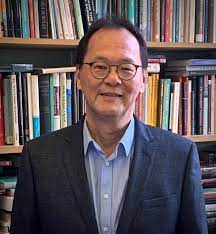
Timothy Lim is Professor of Hebrew Bible and Second Temple Judaism at the University of Edinburgh.  Born in Canada, Timothy and his family made their home in Scotland during his illustrious career. 

He is recognized as one of the world’s leading authorities on the Dead Sea Scrolls.

He loves running, playing tennis, working out, AND he is good guitar player.

What Are the Dead Sea Scrolls?

About seventy years ago, the first of eleven caves was found containing scrolls from the first century BC to the first century AD. 

This is about the time the Jesus movement started. Today, and this is controversial, a 12th cave appears to have been found. More about this on another podcast.

These scrolls are significant in many ways because they give us a window into that period like no other. 

In all, between 800-1000 manuscripts have been discovered.  About twenty-five of those are relatively intact. 

All the rest are fragments.  Scholars have been piecing them together and exploring their significance since the 1950s.

Qumran is the area where these scrolls were found. So, they are sometimes referred to as the Qumran scrolls. 

Both biblical (Old Testament) and non-biblical manuscripts were discovered there. There are many documents we never knew existed. 

Every book of the Hebrew Bible was found except for the book of Esther. There are theories about that. 

In part two of this podcast we explore more about the Dead Sea Scrolls.

Books by Dr. Timothy Lim

Among his many books are:

The Dead Sea Scrolls: A Very Short Introduction, 2nd edition (Oxford University Press, 2017)

The Formation of the Jewish Canon (Yale University Press, 2012)

The Oxford Handbook of the Dead Sea Scrolls (with John Collins, Oxford University Press, 2012)

For a transcript of this podcast, click here.

To hear the podcast (18 minutes) click here.

More resources

Want more Stone Chapel Podcasts on some great topics. Just click here.

What’s more, you can get information on upcoming lectures at Lanier Theological Library. Just click here.

The Bilingualism of Ruth with Timothy Lim: Ruth 2:21-23

The narrator of the book of Ruth preserves small but telling mistakes in the Hebrew uttered by the character Ruth, who was a Moabite immigrant to Israel. How are these clues to the narrator’s intentions? Dr. Timothy Lim is Professor of Hebrew Bible & Second Temple Judaism at The University of Edinburgh. He works broadly in the Hebrew Bible, ancient Judaism, and the origins of Christianity, while concentrating in the biblical canon and the Dead Sea Scrolls. He has published The Earliest Commentary on the Prophecy of Habakkuk, among other things.

To hear the podcast click here and scroll down to the podcast, published July 25, 2023.