Page 9 of 31

There Is No Good Thing within a Person with Lucia Sanders, Ecclesiastes 2:24
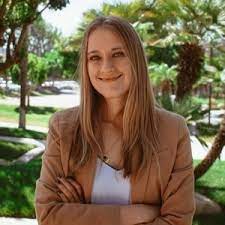
Lucia Sanders, Assistant Professor of Biblical Studies and Director of the Academic Support Center at Life Pacific University (San Dimas, CA), is an alumna of Wheaton Graduate School’s M.A. in Biblical Exegesis and a current Ph.D. student at University of Birmingham. Today’s topic: Eccl. 2:24 is frequently translated something like, “A person can do nothing better than to eat and drink . . .” (NIV). It’s the Hebrew preposition behind the words “better than” that deserves a second look, as it normally does not signal a comparison as appears in typical translations.

To hear the podcast click here.

“Exegetically Speaking” is a weekly podcast of the friends and faculty of Wheaton College, IL and The Lanier Theological Library. Hosted by Dr. David Capes, it features language experts who discuss the importance of learning the biblical languages—Hebrew, Aramaic, and Greek—and show how reading the Bible in the original languages “pays off.” Each podcast lasts between seven and eleven minutes and covers a different topic for those who want to read the Bible for all it is worth.

If you’re interested in going deeper, learn more about Wheaton’s undergraduate degree in Classical Languages (Greek, Hebrew, and Latin) and our MA in Biblical Exegesis

You can hear Exegetically Speaking on SpotifyStitcherApple Podcasts, and YouTube. If you have questions or comments, please contact us at exegetically.speaking@wheaton.edu. And keep listening.

Entering God’s Resting Place with Jon Laansma, Hebrews 4

Jon C. Laansma is the Gerald F. Hawthorne Professor of New Testament Greek and Exegesis in the Classical Languages program at Wheaton College, IL. Among other things he has authored I Will Give You Rest: The Rest Motif in the New Testament with Special Reference to Mt 11 and Heb 3-4 and The Letter to the Hebrews: A Commentary for Preaching, Teaching, and Bible Study. Today’s topic: What does the Greek wording of Heb. 4:1-11 tell us about the writer’s idea of God’s promise of entering into his resting place to celebrate the Sabbath?

To hear the podcast click here.

The Only-Begotten God with Travis Wright, John 1:18

Travis Wright is a Ph.D. candidate in Theology and Religion at Cambridge University. Today’s topic: Pairing a knowledge of Greek with the field of linguistics allows for a sharpened exposition of the crucial statement about God and the only-begotten God in John 1:18.

To hear the podcast click here.

“Exegetically Speaking” is a weekly podcast of the friends and faculty of Wheaton College, IL and The Lanier Theological Library. Hosted by Dr. David Capes, it features language experts who discuss the importance of learning the biblical languages—Hebrew, Aramaic, and Greek—and show how reading the Bible in the original languages “pays off.” Each podcast lasts between seven and eleven minutes and covers a different topic for those who want to read the Bible for all it is worth.

If you’re interested in going deeper, learn more about Wheaton’s undergraduate degree in Classical Languages (Greek, Hebrew, and Latin) and our MA in Biblical Exegesis

You can hear Exegetically Speaking on SpotifyStitcherApple Podcasts, and YouTube. If you have questions or comments, please contact us at exegetically.speaking@wheaton.edu. And keep listening. 

Learned Sufficiency, Sufficiency, or Contentment with Jonathan More

Dr. Jonathan More, Vice-Principal and Academic Dean at George Whitefield College, Cape Town, South Africa, focuses his research on the intersection between the intellectual world of the New Testament and its Graeco-Roman context. Today’s topic: Translation sometimes poses difficult decisions when there is no single word available to the translator in the receptor language. The NIV translates Phil 4:11 as, “. . . I have learned to be content whatever the circumstances.” The word “content” (αὐτάρκης) has a sense that is hard to represent with a single English word.

To hear the podcast, click here.

The Grandmothers of Jesus with Amy Peeler

Dr. Amy Peeler is Associate Professor of New Testament at Wheaton College and Graduate School. Her research has concentrated in the Letter to the Hebrews, Paul and Gender, and the Gospel of Mark. She has contributed previous episodes to this podcast, and among her publications is Hebrews: An Introduction and Study Guide. Today’s topic: The presence and the selection of the women in Matthew’s opening genealogy is a call to reflection. How do their stories contribute to the story of Jesus and the world he came to save from its sins?

To hear the podcast (8 minutes) click here.

“Exegetically Speaking” is a weekly podcast of the friends and faculty of Wheaton College, IL and The Lanier Theological Library. Hosted by Dr. David Capes, it features language experts who discuss the importance of learning the biblical languages—Hebrew, Aramaic, and Greek—and show how reading the Bible in the original languages “pays off.” Each podcast lasts between seven and eleven minutes and covers a different topic for those who want to read the Bible for all it is worth.

If you’re interested in going deeper, learn more about Wheaton’s undergraduate degree in Classical Languages (Greek, Hebrew, and Latin) and our MA in Biblical Exegesis

You can hear Exegetically Speaking on SpotifyStitcherApple Podcasts, and YouTube. If you have questions or comments, please contact us at exegetically.speaking@wheaton.edu. And keep listening. Jesus