
Page 16 of 31

I Can Endure All Things (Philippians 4:13)–Matthew Norton

Matthew Norton, Wheaton College Football

Matthew Norton is an alum of Wheaton College’s Classical Languages major and its MA in Biblical Exegesis. He is presently enrolled in the School of Medicine at Louisiana State University Health Shreveport. His journey with the classical languages took him from high school through college until he determined that he would serve through a career in medicine. He remains a student of the languages, and in this episode he unpacks a commonly cited line of Paul: I can do (endure) all things through Christ who strengthens me.

To hear the podcast (8.5 minutes) click here.

“Exegetically Speaking” is a weekly podcast of the friends and faculty of Wheaton College, IL and The Lanier Theological Library. Hosted by Dr. David Capes, it features language experts who discuss the importance of learning the biblical languages—Hebrew, Aramaic, and Greek—and show how reading the Bible in the original languages “pays off.” Each podcast lasts between seven and eleven minutes and covers a different topic for those who want to read the Bible for all it is worth.

If you’re interested in going deeper, learn more about Wheaton’s undergraduate degree in Classical Languages (Greek, Hebrew, and Latin) and our MA in Biblical Exegesis

You can hear Exegetically Speaking on SpotifyStitcherApple Podcasts, and YouTube. If you have questions or comments, please contact us at exegetically.speaking@wheaton.edu. And keep listening. 
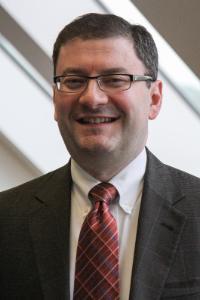
Christ in Ephesians (1:1-14)–Dan Treier

Dan Treier, Wheaton College

Dr. Daniel J. Treier is the Gunther H. Knoedler Professor of Theology at Wheaton Graduate School. He has authored numerous books and articles, including the award-winning Introducing Evangelical Theology. He has written a commentary on Proverbs & Ecclesiastes (Brazos, 2015), is starting another on Philippians, and is presently working on Lord Jesus Christ for Zondervan’s New Studies in Dogmatics series. What does the language of Ephesians 1 entail about who Jesus Christ is for this Scripture, and who he is for us?

To hear the podcast (9 minutes) click here.

“Exegetically Speaking” is a weekly podcast of the friends and faculty of Wheaton College, IL and The Lanier Theological Library. Hosted by Dr. David Capes, it features language experts who discuss the importance of learning the biblical languages—Hebrew, Aramaic, and Greek—and show how reading the Bible in the original languages “pays off.” Each podcast lasts between seven and eleven minutes and covers a different topic for those who want to read the Bible for all it is worth.

If you’re interested in going deeper, learn more about Wheaton’s undergraduate degree in Classical Languages (Greek, Hebrew, and Latin) and our MA in Biblical Exegesis

You can hear Exegetically Speaking on SpotifyStitcherApple Podcasts, and YouTube. If you have questions or comments, please contact us at exegetically.speaking@wheaton.edu. And keep listening. 

The Gift of God (2 Timothy), Ray Van Neste

Ray Van Neste, Union University

Dr. Ray Van Neste is dean of the School of Theology & Missions and Professor of Biblical Studies at Union University. He has written Cohesion and Structure in the Pastoral Epistles (T&T Clark, 2005) along with many other essays and edited volumes. He recalls what first excited him about learning Greek and then reflects on what Paul’s language in 2 Tim. 1:6-7 indicates that he has in mind by the “gift of God” and the “spirit of cowardice” in this letter.

To hear the podcast (11 minutes) click here.

“Exegetically Speaking” is a weekly podcast of the friends and faculty of Wheaton College, IL and The Lanier Theological Library. Hosted by Dr. David Capes, it features language experts who discuss the importance of learning the biblical languages—Hebrew, Aramaic, and Greek—and show how reading the Bible in the original languages “pays off.” Each podcast lasts between seven and eleven minutes and covers a different topic for those who want to read the Bible for all it is worth.

If you’re interested in going deeper, learn more about Wheaton’s undergraduate degree in Classical Languages (Greek, Hebrew, and Latin) and our MA in Biblical Exegesis

You can hear Exegetically Speaking on SpotifyStitcherApple Podcasts, and YouTube. If you have questions or comments, please contact us at exegetically.speaking@wheaton.edu. And keep listening. 

Only Begotten (John 3:16), George Kalantzis

George Kalantzis, Wheaton College

Dr. George Kalantzis is Professor of Theology and Director of The Wheaton Center for Early Christian Studies at Wheaton College. Among his many publications are Theodore of Mopsuestia: Gospel of John (Australian Catholic University, 2004) and Caesar and the Lamb (Cascade, 2012). Having grown up in Greece, he recalls learning classical and Koiné Greek from within modern Greek, before going on to discuss the meaning and significance of the word the KJV translated as “only begotten.” Philology and theology vindicate the traditional translation.

To hear the podcast (16 minutes) click here.

“Exegetically Speaking” is a weekly podcast of the friends and faculty of Wheaton College, IL and The Lanier Theological Library. Hosted by Dr. David Capes, it features language experts who discuss the importance of learning the biblical languages—Hebrew, Aramaic, and Greek—and show how reading the Bible in the original languages “pays off.” Each podcast lasts between seven and eleven minutes and covers a different topic for those who want to read the Bible for all it is worth.

If you’re interested in going deeper, learn more about Wheaton’s undergraduate degree in Classical Languages (Greek, Hebrew, and Latin) and our MA in Biblical Exegesis

You can hear Exegetically Speaking on SpotifyStitcherApple Podcasts, and YouTube. If you have questions or comments, please contact us at exegetically.speaking@wheaton.edu. And keep listening. 
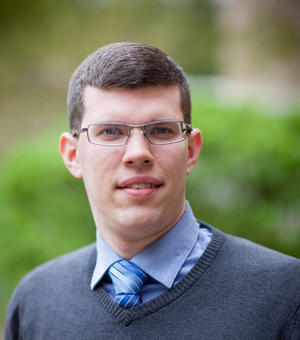
What Does Luke Think He’s Doing? (Luke 1:1) with Jeremiah Coogan

Jeremiah Coogan,
University of Oxford

Dr. Jeremiah Coogan is an alumnus of Wheaton College’s Classical Languages major. He earned his Ph.D. at the University of Notre Dame. His work there, soon to be published by Oxford University Press, focused on Eusebius of Caesarea’s fourth-century reconfiguration of the Gospels as a window into broader questions of technology and textuality in early Christianity and the late ancient Mediterranean. Presently, he is a Marie Skłodowska-Curie Fellow in the Faculty of Theology and Religion at the University of Oxford. He is also the 2021 Paul J. Achtemeier Award for New Testament Scholarship Recipient. In this episode, he talks about his beginnings in Greek and the beginning of Luke’s Gospel: What does Luke’s use of the word translated as “undertaken” signify about the background and purpose of his work?

To hear the podcast (8 minutes) click here.

“Exegetically Speaking” is a weekly podcast of the friends and faculty of Wheaton College, IL and The Lanier Theological Library. Hosted by Dr. David Capes, it features language experts who discuss the importance of learning the biblical languages—Hebrew, Aramaic, and Greek—and show how reading the Bible in the original languages “pays off.” Each podcast lasts between seven and eleven minutes and covers a different topic for those who want to read the Bible for all it is worth.

If you’re interested in going deeper, learn more about Wheaton’s undergraduate degree in Classical Languages (Greek, Hebrew, and Latin) and our MA in Biblical Exegesis

You can hear Exegetically Speaking on SpotifyStitcherApple Podcasts, and YouTube. If you have questions or comments, please contact us at exegetically.speaking@wheaton.edu. And keep listening.