
Page 13 of 31

Job’s Repentance with Amy Nicole Allan

Amy Nichole Allan, adjunct Professor of Theology at Trinity Christian College, is working on her Wheaton Graduate School PhD dissertation, “Anthropomorphic and Anthropopathic Depictions of God in Hosea, Amos, Micah, and Zephaniah: Rhetoric, Interpretation, and Theology.” In this episode of Exegetically Speaking, Amy weighs carefully the last thing Job says in response to God’s long speech in chapters 38-41. Is Job 42:6 about ­self-loathing, or a retraction of Job’s words?

To hear the podcast (about 8 minutes) click here.

“Exegetically Speaking” is a weekly podcast of the friends and faculty of Wheaton College, IL and The Lanier Theological Library. Hosted by Dr. David Capes, it features language experts who discuss the importance of learning the biblical languages—Hebrew, Aramaic, and Greek—and show how reading the Bible in the original languages “pays off.” Each podcast lasts between seven and eleven minutes and covers a different topic for those who want to read the Bible for all it is worth.

If you’re interested in going deeper, learn more about Wheaton’s undergraduate degree in Classical Languages (Greek, Hebrew, and Latin) and our MA in Biblical Exegesis

You can hear Exegetically Speaking on SpotifyStitcherApple Podcasts, and YouTube. If you have questions or comments, please contact us at exegetically.speaking@wheaton.edu. And keep listening. 

From Grammar to Christlikeness with Steve Runge, Philippians 2:1-11

Dr. Steven Runge is Professor of Biblical Languages at Grace School of Theology in Houston and Senior Research Associate at the John W. Wevers Institute for Septuagint Studies at Trinity Western University. Among other things, he has authored, Discourse Grammar of the Greek New Testament: A Practical Introduction for Teaching and Exegesis, and he is General Editor of the Lexham Discourse Greek New Testament. In this episode he helps us notice the linguistic clues in Phil. 2:1-11 leading us to Paul’s main concern: that we should have the mindset that was operative in Christ’s self-giving, self-lowering, obedient service.

To hear the podcast click here.

“Exegetically Speaking” is a weekly podcast of the friends and faculty of Wheaton College, IL and The Lanier Theological Library. Hosted by Dr. David Capes, it features language experts who discuss the importance of learning the biblical languages—Hebrew, Aramaic, and Greek—and show how reading the Bible in the original languages “pays off.” Each podcast lasts between seven and eleven minutes and covers a different topic for those who want to read the Bible for all it is worth.

If you’re interested in going deeper, learn more about Wheaton’s undergraduate degree in Classical Languages (Greek, Hebrew, and Latin) and our MA in Biblical Exegesis

You can hear Exegetically Speaking on SpotifyStitcherApple Podcasts, and YouTube. If you have questions or comments, please contact us at exegetically.speaking@wheaton.edu. And keep listening. 
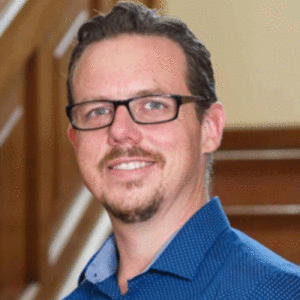
A Listening Heart with Nathan Lovell

Dr. Nathan Lovell is Senior Lecturer in Old Testament and Director of Research at George Whitefield College in Cape Town, South Africa. Among other things, he has authored The Book of Kings and Exilic Identity: 1 and 2 Kings as a Work of Political Historiography and Sing for Joy. In this episode, he discusses what Solomon asks God for in 1 Kings 3, what God gives him in response, and what Solomon lacked in the end.

To hear the podcast click here.

“Exegetically Speaking” is a weekly podcast of the friends and faculty of Wheaton College, IL and The Lanier Theological Library. Hosted by Dr. David Capes, it features language experts who discuss the importance of learning the biblical languages—Hebrew, Aramaic, and Greek—and show how reading the Bible in the original languages “pays off.” Each podcast lasts between seven and eleven minutes and covers a different topic for those who want to read the Bible for all it is worth.

If you’re interested in going deeper, learn more about Wheaton’s undergraduate degree in Classical Languages (Greek, Hebrew, and Latin) and our MA in Biblical Exegesis

You can hear Exegetically Speaking on SpotifyStitcherApple Podcasts, and YouTube. If you have questions or comments, please contact us at exegetically.speaking@wheaton.edu. And keep listening. 

Made Son with Amy Peeler (Hebrews 3: 1-6)

Dr. Amy Peeler, Associate Professor of New Testament, has authored You Are My Son: The Family of God in the Epistle to the Hebrews (T&T Clark, 2015) along with articles on a range of NT texts and topics, and her study, Women and the Gender of God (Eerdmans), is forthcoming. Jesus’ identity as a son is highlighted in the figurative comparison with Moses in Heb. 3:1-6, but close attention to the Greek wording appreciates that it is Jesus’ divinity that stands out as the key distinction.

To hear the podcast click here.

“Exegetically Speaking” is a weekly podcast of the friends and faculty of Wheaton College, IL and The Lanier Theological Library. Hosted by Dr. David Capes, it features language experts who discuss the importance of learning the biblical languages—Hebrew, Aramaic, and Greek—and show how reading the Bible in the original languages “pays off.” Each podcast lasts between seven and eleven minutes and covers a different topic for those who want to read the Bible for all it is worth.

If you’re interested in going deeper, learn more about Wheaton’s undergraduate degree in Classical Languages (Greek, Hebrew, and Latin) and our MA in Biblical Exegesis

You can hear Exegetically Speaking on SpotifyStitcherApple Podcasts, and YouTube. If you have questions or comments, please contact us at exegetically.speaking@wheaton.edu. And keep listening. 
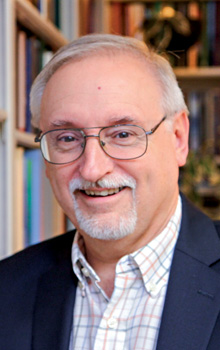
The Fall of a King or the Fall of Satan? with John Walton

Dr. John Walton, Wheaton College

Dr. John Walton, Professor of Old Testament at Wheaton Graduate School, author of many books and articles relating to the background, literature, and theology of the Old Testament, has contributed several episodes to this podcast. In this conversation with David Capes he discusses a passage widely thought to be about the fall of Satan. Where did that tradition originate, and what does the context of Isaiah 14 tell us about the intended referent of the taunt?

To hear the podcast (7 minutes) click here.

“Exegetically Speaking” is a weekly podcast of the friends and faculty of Wheaton College, IL and The Lanier Theological Library. Hosted by Dr. David Capes, it features language experts who discuss the importance of learning the biblical languages—Hebrew, Aramaic, and Greek—and show how reading the Bible in the original languages “pays off.” Each podcast lasts between seven and eleven minutes and covers a different topic for those who want to read the Bible for all it is worth.

If you’re interested in going deeper, learn more about Wheaton’s undergraduate degree in Classical Languages (Greek, Hebrew, and Latin) and our MA in Biblical Exegesis

You can hear Exegetically Speaking on SpotifyStitcherApple Podcasts, and YouTube. If you have questions or comments, please contact us at exegetically.speaking@wheaton.edu. And keep listening.