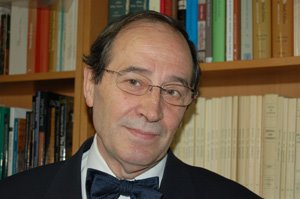
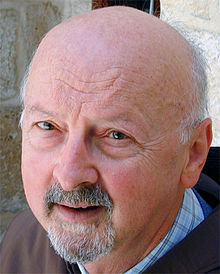
The Dead Sea Scrolls (Part Two) with Timothy Lim

To hear the podcast (22 minutes) click here.

Recently, David Capes was in Edinburgh, Scotland, and had the chance to sit down and talk with Dr. Timothy Lim about the Dead Sea Scrolls. 

This discovery was one of the most important archaeological discoveries of the 20th century.

Who Is Timothy Lim?

Timothy Lim is Professor of Hebrew Bible and Second Temple Judaism at the University of Edinburgh.  Born in Canada, Timothy and his family made their home in Scotland during his illustrious career. 

He is recognized as one of the world’s leading authorities on the Dead Sea Scrolls.

He loves running, playing tennis, working out, AND he is good guitar player.

What Do the Dead Sea Scrolls Tell Us About the Shape of the Cannon?

One of the many contributions the Dead Sea Scrolls have made is that they give us some insight into the books that made up authoritative scripture.

We’d probably like to think of the Bible as containing the same books, in the same order, and using all the same words for all time.

In fact, the Dead Sea Scrolls demonstrate the fluidity of the biblical text at the time of the turn of the millennium from BC to AD, or if you prefer BCE to CE.

It may be good to remember that the Dead Sea Scrolls were the library of a Jewish community contemporaneous to the time of John the Baptizer, Jesus, Peter and Paul.

What Do the Dead Sea Scrolls Tell Us About Biblical Interpretation?

The people of the scrolls had a particular view of the world and that came out in the way they interpreted their biblical books.

Among the books recovered have been biblical commentaries that go by the title pesharim (Hebrew plural). Dr. Lim has done a great deal to illuminate this kind of commentary (pesher is the Hebrew singular). 

It is both a method or approach to Scripture and the results of that method. We find a number of places in the New Testament where writers employed a similar method (though not altogether the same).

To hear the podcast (22 minutes) click here.

Books by Dr. Timothy Lim

Among his many books are:

The Dead Sea Scrolls: A Very Short Introduction, 2nd edition (Oxford University Press, 2017)

The Formation of the Jewish Canon (Yale University Press, 2012)

The Oxford Handbook of the Dead Sea Scrolls (with John Collins, Oxford University Press, 2012)

For a transcript of this podcast, click here.

More resources

Want more Stone Chapel Podcasts on some great topics. Just click here.

What’s more, you can get information on upcoming lectures at Lanier Theological Library. Just click here.

The Dead Sea Scrolls (Part One) with Timothy Lim

To hear the podcast (18 minutes) click here.

Recently, David Capes was in Edinburgh, Scotland, and had the chance to sit down and talk with Dr. Timothy Lim about the Dead Sea Scrolls. 

This discovery was one of the most important archaeological discoveries of the 20th century.

Who Is Timothy Lim?

Timothy Lim is Professor of Hebrew Bible and Second Temple Judaism at the University of Edinburgh.  Born in Canada, Timothy and his family made their home in Scotland during his illustrious career. 

He is recognized as one of the world’s leading authorities on the Dead Sea Scrolls.

He loves running, playing tennis, working out, AND he is good guitar player.

What Are the Dead Sea Scrolls?

About seventy years ago, the first of eleven caves was found containing scrolls from the first century BC to the first century AD. 

This is about the time the Jesus movement started. Today, and this is controversial, a 12th cave appears to have been found. More about this on another podcast.

These scrolls are significant in many ways because they give us a window into that period like no other. 

In all, between 800-1000 manuscripts have been discovered.  About twenty-five of those are relatively intact. 

All the rest are fragments.  Scholars have been piecing them together and exploring their significance since the 1950s.

Qumran is the area where these scrolls were found. So, they are sometimes referred to as the Qumran scrolls. 

Both biblical (Old Testament) and non-biblical manuscripts were discovered there. There are many documents we never knew existed. 

Every book of the Hebrew Bible was found except for the book of Esther. There are theories about that. 

In part two of this podcast we explore more about the Dead Sea Scrolls.

Books by Dr. Timothy Lim

Among his many books are:

The Dead Sea Scrolls: A Very Short Introduction, 2nd edition (Oxford University Press, 2017)

The Formation of the Jewish Canon (Yale University Press, 2012)

The Oxford Handbook of the Dead Sea Scrolls (with John Collins, Oxford University Press, 2012)

For a transcript of this podcast, click here.

To hear the podcast (18 minutes) click here.

More resources

Want more Stone Chapel Podcasts on some great topics. Just click here.

What’s more, you can get information on upcoming lectures at Lanier Theological Library. Just click here.

James A. Sanders (1927-2020)

I share with you an email from a friend and colleague, Dr. Craig Evans, regarding the passing of another great scholar from our midst, Dr. James A. Sanders. Though I did not know him, I did follow, appreciate, and benefit from his many works. J

3 October 2020

Dear SCT Colleagues:

I pass on to you sad news. As some of you may have already heard, James A. Sanders, born 28 November 1927, passed away yesterday morning, 1 October 2020. Jim was nearing his 93rdbirthday. I met Jim in Claremont, California, at the beginning of the fall semester in 1977. It was the beginning of my doctoral studies. Jim was 49 and I was 25. Jim was always a handsome, youthful fellow. In fact, he could have passed for Dick Clark’s brother! Jim had just moved from Union Seminary in New York to the Claremont School of Theology, to launch the newly built Ancient Biblical Manuscript Center (ABMC), which housed in its climate-controlled vault thousands of images of biblical manuscripts, including microfilm and microfiche images of the Dead Sea Scrolls. Jim served as ABMC President until 2004. While at Union Jim’s colleagues included the likes of J. Louis Martyn and Raymond E. Brown.

Although Jim was not my doctoral supervisor (Bill Brownlee was), he played an important mentoring role while I was at Claremont and throughout my career. He and I founded in 1989 and then co-chaired the SBL program unit Scripture in Early Judaism and Christianity. This in turned led to the founding of the Studies in Scripture in Early Judaism and Christianity (SSEJC) series published by Sheffield Academic Press, then later Continuum, and now Bloomsbury T&T Clark. To date, we have published 21 volumes in the SSEJC series and two more volumes are in the works. As you may know, Jim served as the President of the Society of Biblical Literature in 1979. Jim’s best known work is Torah and Canon (1972). Jim was also well known for his The Psalms Scroll of Qumrân Cave 11 (DJD 4; Oxford: Clarendon Press, 1965), whose conclusions were confirmed many years later by Peter Flint’s work on all of Qumran’s Psalms scrolls.

Jim and I co-authored Luke and Scripture (Fortress Press, 1993) and co-edited several books, mostly in the SSEJC series. We presented together at several conferences, at SBL and elsewhere. I had the opportunity to edit, along with Shemaryahu Talmon (1920-2010), a Festschrift in honor of Jim, on the occasion of his 70th birthday. The 700-page book is called The Quest for Context and Meaning (BIS 28; Leiden: Brill, 1997). Contributors included Reginald Fuller and W. D. Davies. In recent years I helped Jim assemble his studies in two volumes: Scripture in Its Historical Contexts. Volume I: Text, Canon, and Qumran(FAT 118; Tübingen: Mohr Siebeck, 2018), and Scripture in Its Historical Contexts. Volume II: Exegesis, Hermeneutics, and Theology (FAT 126; Tübingen: Mohr Siebeck, 2019). Jim was awarded an honorary doctorate at Acadia University, where coincidentally I found myself on the faculty many years later. In fact, while at Acadia Divinity College I became friends with Jim Perkin, former President of Acadia University and himself a New Testament scholar, who had nominated Jim for the award.

Jim Sanders was a prince of a fellow. His wife Dora, whom Jim loved very much, died in June of 2016, at the age of 88. Dora danced, played the piano, the violin, and the organ. Dora participated in the American Dance Festival every summer from 1949 to 2004. She and Jim were quite the pair: Jim from Memphis, Tennessee, and Dora from New Jersey (and, spiritually, from New York). Jim and Dora had one child, a son, Robin David Sanders Sr., and two grandsons Robin David Sanders Jr, and Alexander Jonathan Sanders. It was Alex who in 2017 invited me and Ginny to fly out to California to attend Jim’s 90th birthday party. Although that visit was not possible, we did have opportunities to see Jim on other occasions in California and lunch with him. (Often when I flew to California in summers to teach at Fuller Seminary in Pasadena, I had the chance to visit Jim.)

Jim was one of the best biblical scholars of our era. Of all my professors at Claremont (and they were all good), it was Jim Sanders who could bring together the exegetical and textual minutiae and the big picture. It was he who taught me what textual criticism really was and what biblical criticism was and wasn’t and how it could edify the Church. For Jim faith and scholarship were never at odds but were always complimentary. Some of my former and current grad students have complimented me by making that observation. Well, now you know where I got it. Jim will be sorely missed but his legacy will be a lasting one.

Best,

CAE

Craig A. Evans, Ph.D., D.Habil.

John Bisagno Distinguished Professor of Christian Origins

Houston Theological Seminary

Houston Baptist University

The Dead Sea Scrolls Translated

A few years ago I published a brief review of an important book for scholars of second temple Judaism. I think it is worth another look.

The Dead Sea Scrolls Translated: The Qumran Texts in English.  Edited by Florentino García Martínez.  Translated by Wilfred G. E. Watson.  Second edition.  Leiden: E. J. Brill; Grand Rapids: Eerdmans, 1996, 519pp., $30.00 paper.Florentino Garcia Martinez

Florentino García Martínez is a member of the international team of scholars working on the Dead Sea Scrolls and heads the Qumran Institute at the University of Groningen in the Netherlands.  He has authored numerous books and articles on subjects related to the Scrolls and serves as editorial secretary for Revue de Qumran.  As his credentials reveal,  he is uniquely qualified to pull together a volume such as this.  The first edition appeared in Spanish under the title Textos de Qumrán.  E. J. Brill published the first English edition translated by Wilfred G. E. Watson and has agreed to joint publication with William Eerdmans Publishing Company.

Others have published English translations of the scrolls, e.g., Geza Vermes, The Dead Sea Scrolls in English (Penguin, 1987); Theodor Gaster, The Dead Sea Scriptures (Doubleday, 1976); Robert Eisenman and Michael Wise, The Dead Sea Scrolls Uncovered (Penguin, 1992).  Though valuable, these books do not contain the number of manuscripts which this volume makes available.  As advertised, García Martínez has provided the most comprehensive one-volume English edition of the Dead Sea Scrolls on the market.

Scholars believe the eleven Qumran caves have yielded between 800 and 850 documents.  Of these 225 or so are biblical manuscripts.  Another 275 to 300 are too brief and fragmentary to warrant inclusion in a volume like this.  So García Martínez has published about 200 of the most important non-biblical manuscripts so that interested readers, without any knowledge of Greek, Hebrew or Aramaic, can appreciate the riches of this vast collection of Jewish literature dating from the late Second Temple period.  He offers the reader a literal, neutral translation of the Scrolls and admits he is hesitant to reconstruct the text in lacunae except when parallel passages or formulas render the conjecture nearly certain.  Since he does insist on a such a literal translation, at points the English does not flow well and readers may be left uncertain as to the meaning of the texts.  For ease of reading some may continue to prefer Geza Vermes’ The Dead Sea Scrolls in English, but for serious study of the texts García Martínez’s labors provide the greatest fruit.

One useful feature of this book is that the editor includes multiple copies of the available documents so students may compare the tradition history of the most important documents.  For example, chapter one contains not only the cave one copy of “The Rule of the Community,” but also eleven, more fragmentary copies of it from caves four and five.  To assist students in comparing the English with the Hebrew or Aramaic texts, García Martínez adds column and line numbers to his translation.  Because he anticipates the publication of a companion volume, Introduction to the Literature from Qumran, in the near future, the editor proffers little comment on the meaning or significance of these documents in the present book

García Martínez begins the book with an “Introduction” which details the history of the manuscript discoveries and publications.  He provides a brief and sober account of the intrigue which has surrounded the Scrolls since their initial discoveries.  He covers matters relating to the excavation of Khirbet Qumran and concludes the Scrolls were copied and preserved by the sectarians who inhabited this desert settlement.  He is a proponent of the “Groningen hypothesis,” namely, that the sectarians should not be simply equated with Essenes.  He theorizes that the Qumran community originated in a split among Palestinian Essenes over matters relating to the calendar, feasts, purity laws, worship, temple practices, among other things.  Led by the Teacher of Righteousness, the community which deposited the Dead Sea Scrolls withdrew to the desert to prepare for God’s eschatological visitation.

García Martínez classifies the scrolls into nine chapters: (1) “Rules,” including the Rule of the Community and the Damascus Document; (2) “Halakhic Texts,” including 4QMMT and various purification rules; (3) “Literature with Eschatological Content,” including the War Scroll, 4QFlorilegium, 4QTestimonia and 11QMelchizedek; (4) “Exegetical Literature,” including the Temple Scroll and commentaries (pesharim) on OT books like Isaiah, Hosea, Habakkuk and Psalms; (5) “Para-biblical Literature,” including the Genesis Apocryphon, Books of Enoch and the Book of Jubilees; (6) “Poetic Texts,” including the Thanksgiving Scroll and various wisdom poems; (7) “Liturgical Texts,” including prayers, hymns, blessings and curses, and Songs of the Sabbath Sacrifice; (8) “Astronomical Texts, Calendars and Horoscopes;” and (9) “The Copper Scroll.”  The book concludes with an extensive bibliographic appendix of biblical and non-biblical manuscripts from Qumran.   By-in-large the chapter divisions make good organizational sense, and readers will find them helpful.

With the release of many documents previously monopolized by the small, elite Scroll team, specialists and non-specialists have rediscovered what W. F. Albright called the greatest archaeological discovery of the twentieth century.  García Martínez has labored extensively and expertly to provide what is destined to become the standard textbook of primary resources of Qumran’s non-biblical collection.  For those who teach and those who want to study the Dead Sea Scrolls in translation García Martínez deserves our gratitude.

A Jewish Approach to the New Testament

A few years ago I wrote a review of the following book: 

Manns, Frédéric.  Une approche juive du Nouveau Testament.  Initiations bibliques. 

Paris: Les Éditions du Cerf, 1998.  Pp. 298.  F195.AAA 220px-Frederic_Manns_OFM

I thought I’d share it here with you.  

Frédéric Manns has contributed widely to biblical studies within the Franciscan tradition.  Over the last years he has published translations and commentaries of the Targums from Codex Urbaniti 1.  He has proven to be a competent and insightful reader of both early Christian documents and Jewish literature of late antiquity including the Dead Sea Scrolls, Pseudepigrapha, the Mishnah and Talmud.  Several sections of this book reprint some of Manns’ earlier articles published in Revue des sciences religieuses.

Manns distinguishes between “methods” of interpretation and “approaches” to scripture.  While the former appears more scientific, reading the NT within a Jewish perspective offers rich results, particularly for those who read and interpret within a faith community.  Manns begins by acknowledging that Christianity and rabbinic Judaism emerged from a common heritage, namely, ancient Judaism.  Accordingly, both movements share a canon of inspired texts and use similar principles for interpreting and applying them.  Early Christian interpretations, however, did not simply derive from Jewish thought; they were worked out through the experience of the church, especially through its conflict within the synagogues.  Modern interpreters who privilege the historical-critical method over a Jewish approach to the texts are astonished at the readings of early Christians and Jews.  Manns overall purpose is to analyze Christian texts in light of the traditions and principles of Jewish hermeneutics.  Therefore, he offers a modified “Strack-Billerbeck” approach to the NT.

Part one of the book deals with methodological considerations.  Therein Manns rehearses a brief history of NT interpretation and shows how Jesus’ authority as a teacher would have been understood by his disciples.  Following a survey of Jewish hermeneutical principles, the author reflects on how NT writers utlized them. Manns is interested not only in the rules of Hillel, but also the the popular use of etymologies and word plays from the Hebrew as they relate to the names of people and places.  No doubt he offers a number of creative readings, but it is not at all clear that Greek writers or readers could have caught any of these possibilities.  Similarly, Manns takes up the rabbinic use of al-tiqra and finds evidence of a similar phenomenon in the NT Gospels.  Using al-tiqra (translated, “do not read”) readers could vary the vowels of a word or phrase to discover a different sense to a text.  Since Hebrew texts contain no vowels, this became a common practice for deriving other meanings.  With these principles and methods in mind Manns is ready to approach selected NT passages in light of other Jewish texts from the same period.

Part two deals with Matthew’s treatment the story of Judas’ death (Matt 27:3-10) as a Christian midrash and the parable of the wedding feast (Matt 22:1-10).  In part three Manns argues that the source for Luke’s special material derives from a Palestinian setting. He deals with the question of women in the synagogue during the time of Jesus and shows how the literary and archaeological evidences elucidate Luke’s unique perspective.  In another section Manns argues for a causal reading of hoti in Luke 7:47 based upon the insight that Luke may have modified his account of the sinful woman in light of Jewish reflection on Rahab.  Having gathered ample rabbinic evidence, he relates the conviction that just as God justified Rahab because she acted hospitably toward the spies, so Jesus announced the forgiveness of the sinful woman because of her loving act.  In a sense the story of Rahab provides the basis for the Gospel account.  Manns also deals with other Lucan texts including Luke 1:68-69, 4:16-30 and 24:32.

In part four Manns submits that the Fourth Gospel comes from a Jewish-Christian source as well.  Regarding 1 John 3:4, he suggests that anomia be understood as a personification of those powers hostile to God which lead humans to abandon God’s law.  In his investigation of the phrase “the angel of the church” in the seven letters of Revelation (chs. 2-3), he concludes that “angel” is best read as a symbol of the bishop which heads each Christian community.   Mann also takes up the language of the hymn found in Rev 12:10-12 and explicates it neatly with regard to Jewish apocalyptic and liturgical interests in the period.   In part five Manns expands his investigation into the Catholic letters with sections on (1) a Jewish liturgical tradition behind Jam1:21b, (2) the phrase “confess your sins to one another” in Jam 5:16 and (3) Sarah as the model for an obedient wife from 1 Pet 3:5-6.  In each case Manns finds ample material in Judaism to explain the source and meanings of these texts.

With this book Frédéric Manns joins a long line of researchers who find Jewish approaches to the NT rich and evocative.  No doubt Second Temple Judaism is the fertile  soil from which early Christianity springs.  Manns offers some creative and in some cases persuasive readings of the NT passages he selects.  One is left to wonder, however, to what extent the writers and first readers of these texts would have understood the rich imagery modern interpreters discover as they mine the many volumes of Pseudepigrapha, Dead Sea Scrolls, Talmud, etc., which are readily available to us.  Are we the first to see these images, to hear these echoes?  In some cases the answer is clearly “no,” as Manns shows when he cites the early Christian fathers.  In other cases the answer may be “yes.”  Overall Manns’ book makes a significant contribution to our understanding of how early Christians approached the task of interpreting their faith through theological reflection on Jewish beliefs and practices.  Many useful insights await those willing to consider the playful and creative ways early Christians and Jews made use of their traditions.